
Why You Must Demand a 3 to 2 Natural Blackjack Payout
1.39%. That is how much blackjack house edge a casino adds to a blackjack game simply by changing the natural payout from 3:2 to 6:5. No rule change in casino blackjack history has transferred more money from players to casinos at lower visibility.
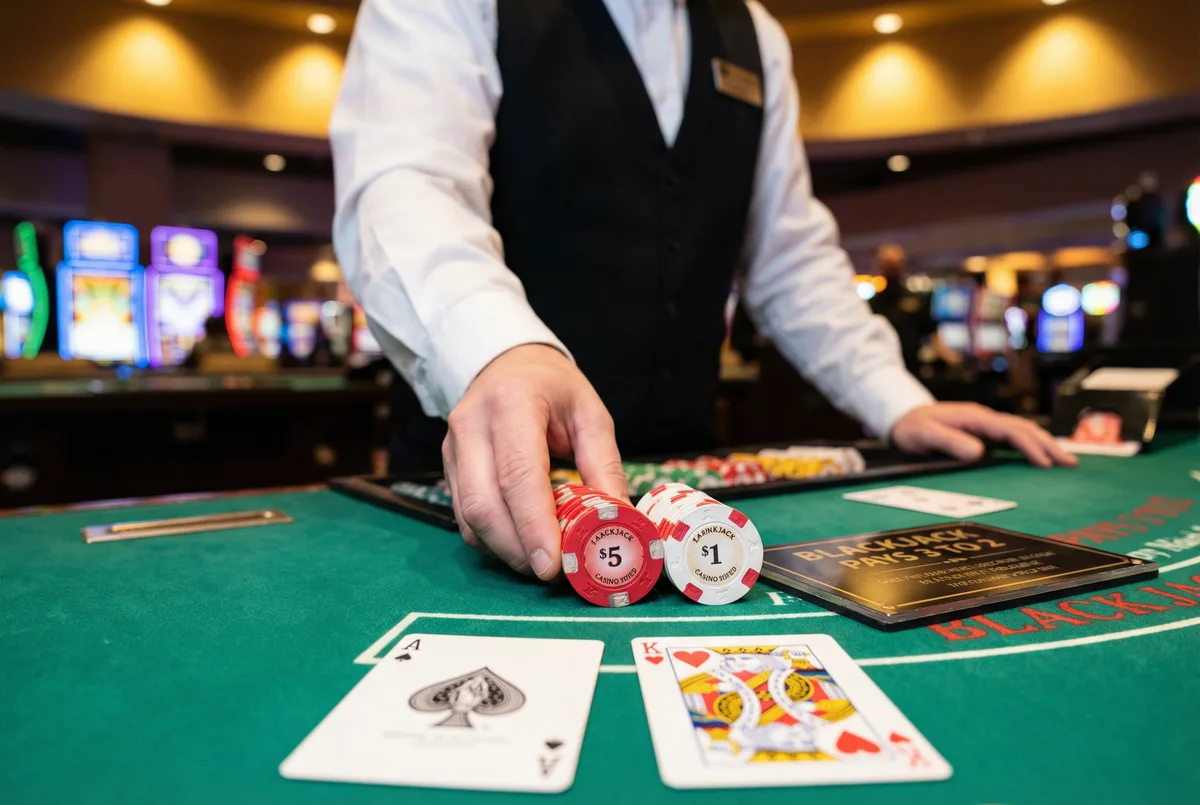
The 6:5 payout is now the default at most Las Vegas Strip single-deck tables and has spread to shoe games at lower-end properties. A player who masters blackjack basic strategy reduces the blackjack house edge to 0.5%.
Sitting at a 6:5 table erases that work and more. Demanding 3:2 is the most important table selection decision in blackjack.
3 to 2 Natural Payout Actually: What It Means for Your Bankroll
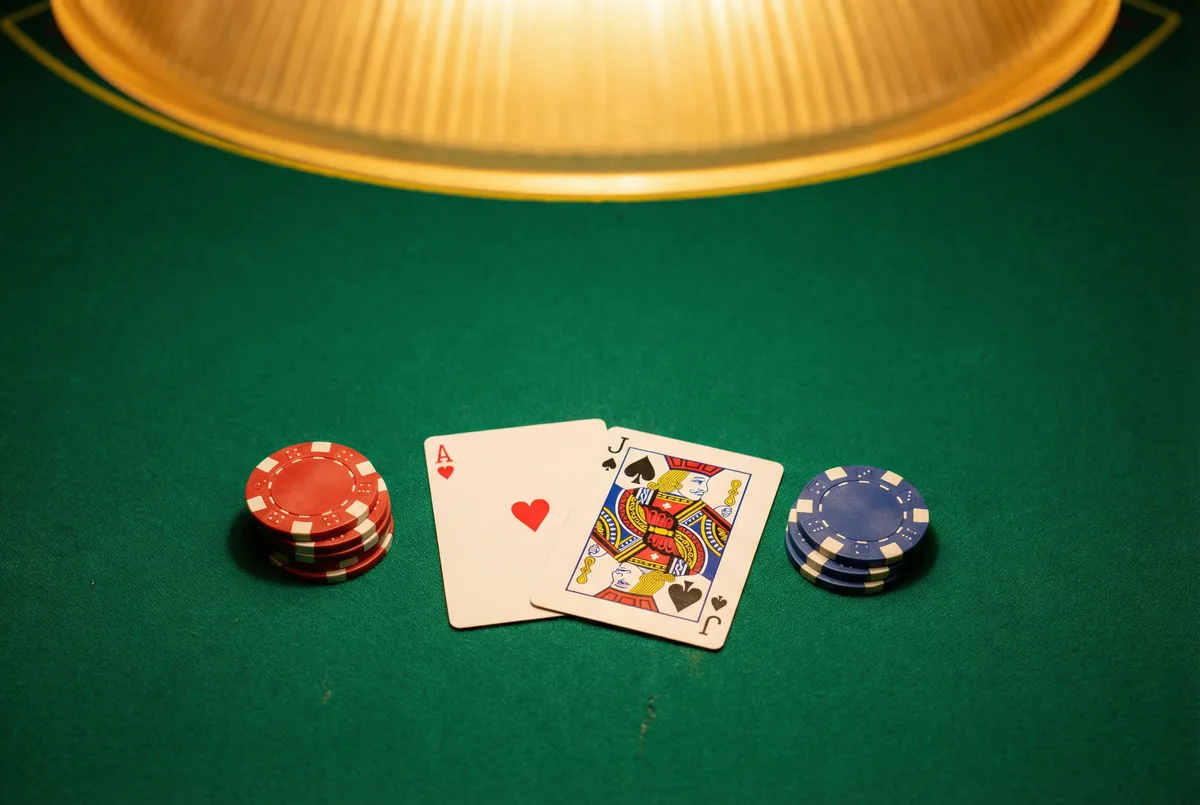
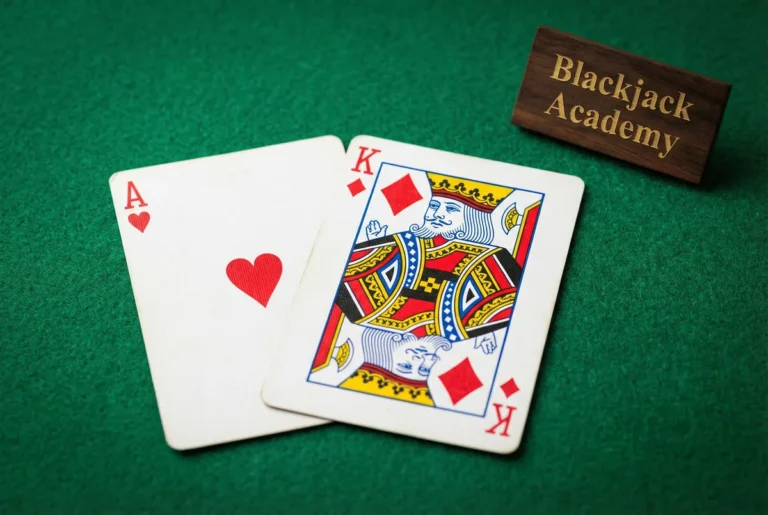
A 3:2 natural payout means that a blackjack (an ace plus a 10-value card) pays one and a half times your bet. A $10 natural pays $15. A $20 natural pays $30. A $100 natural pays $150. This is the mathematically correct payout for the 4.8% frequency at which naturals appear in a single deck.
A 6:5 natural payout means the same hand pays 1.2 times your bet instead of 1.5 times. A $10 natural pays $12 instead of $15. A $20 natural pays $24 instead of $30. A $100 natural pays $120 instead of $150. The difference is $3 on a $10 bet, $6 on a $20 bet, $30 on a $100 bet.
Over 200 hands at a $25 table, a player receives approximately 9 to 10 naturals. At 3:2, each natural returns $37.50. At 6:5, each natural returns $30. The cumulative difference across those 10 naturals is $75 extracted from the player’s bankroll by a single rule change. Basic strategy cannot recover this.
3:2 payout on $25 bet
per natural
6:5 payout on $25 bet
per natural
Loss per natural at 6:5
per hand
How Does a 6 to 5 Payout Change the House Edge Calculation?
The blackjack house edge calculation for the 6:5 change is straightforward. A natural occurs approximately 4.8% of the time. The correct return at 3:2 is 1.5 units; the 6:5 return is 1.2 units.
The difference of 0.3 units multiplied by the 4.8% frequency equals a 1.44% blackjack house edge addition. After adjusting for multi-deck frequency, the standard figure is 1.39%.
A blackjack basic strategy player reduces the blackjack house edge on a 6-deck S17, DAS game to approximately 0.28%. Adding 1.39% from the 6:5 rule pushes that game to 1.67%.
A blackjack basic strategy player at a 6:5 table faces a worse blackjack house edge than a no-strategy player at a standard 3:2 table. The rule change inverts the value of all strategy study.
Even money (the insurance offer when holding a natural) is also affected. Even money on a natural at a 6:5 table locks in 1:1 instead of risking the 1.2:1 return. This makes even money slightly more defensible at 6:5 tables than at 3:2, but the underlying problem remains: you should not be sitting at a 6:5 table at all.
Common Myth
“A single-deck 6:5 game is better than a 6-deck 3:2 game”
Single-deck blackjack is marketed as the premium option because fewer decks improve the theoretical house edge. The deck count label creates a false sense of advantage.
The Reality
A single-deck 6:5 game carries a house edge of 1.45%. A 6-deck 3:2 S17 game carries a house edge of 0.28%. The 6-deck game is 5 times better for the player.
The 6:5 payout more than erases every benefit of a lower deck count. Deck count is irrelevant when the payout structure is exploitative.
Why Casinos Offer 6 to 5 Games?
The 6:5 rule spread because most players do not notice it. The change requires no announcement and no redesign of the table. Players who do not read the felt before sitting down fund the change without knowing it exists.
The primary vehicle was the single-deck game. Casinos marketed single-deck as the premium product, knowing that many players believe fewer decks always mean better odds. The single-deck framing created perceived value that masked the payout reduction.
The result is a single-deck game with a 1.45% blackjack house edge, worse than any standard 6-deck 3:2 game. Reading the felt before every session removes this tactic entirely. The information is printed on the table. Players who look cannot be misled by the deck count marketing.
How to Identify the Payout Rate Before Sitting at a Blackjack Table?
The natural payout is printed on the felt at every licensed blackjack table. Look for text reading “Blackjack pays 3 to 2” or “Blackjack pays 6 to 5.” This text appears near the betting circle or along the dealer’s side of the table. At crowded tables, lean in or ask before placing chips.
If the felt shows no payout information, ask the dealer directly before playing. The question “does blackjack pay 3 to 2 here?” takes five seconds and protects every subsequent bet. No casino will refuse to answer. Dealers are required to provide this information on request.
Online and live dealer blackjack tables display the payout in the game rules panel, visible before the first bet is placed. Every serious player checks this before the session opens.
At live dealer tables at demand a 3-to-2 payout before buying into a live game, the payout rules are visible in the game interface. Real money is on the table from the first bet. Verify before you act.
A $25 6 to 5 table costs you $5 every time you're dealt a natural. At roughly 5% natural frequency over 100 hands, that's one natural every 20 hands, and five hands per hour at a typical pace means one costly shortpay roughly every four hours. Over a weekend trip, the difference between 3 to 2 and 6 to 5 can easily exceed $50 in lost value.
Where to Still Find 3 to 2 Blackjack Games in Modern Casinos
Three-to-two games still exist but require targeting. Downtown Las Vegas casinos (Binion’s, Four Queens, El Cortez) have maintained 3:2 games as a competitive differentiator against Strip pricing. Off-Strip properties in Las Vegas generally offer better conditions than Strip megaresorts, where 6:5 single-deck games dominate the floor.
Regional casinos in competitive markets, particularly in the Midwest and Southeast, often offer 3:2 shoe games at accessible minimums. The supply of good games is directly correlated with competitive pressure among casinos in a given market. Markets with one dominant operator tend to offer worse conditions than markets with multiple competing properties.
Online live dealer blackjack consistently offers 3:2 payouts with favorable rule sets across most licensed European operators. The blackjack house edge on these games typically runs 0.3% to 0.5% with blackjack basic strategy. For players who cannot access a good land-based game locally, licensed online live dealer play is often the best available mathematical option.
Frequently Asked Questions
No. A 6:5 payout adds 1.39% to the house edge, which exceeds the entire advantage that basic strategy provides. There is no compensating rule set that makes a 6:5 game mathematically acceptable for a serious player. Walk to any table with a better payout.
The 6:5 rule applies only to natural blackjacks (an ace plus a 10-value card on the initial two-card deal). All other winning hands pay 1:1 regardless of the payout rule. The house edge impact is entirely concentrated on the natural payout reduction.
Yes, but they are rare on the Strip and require searching. Downtown Las Vegas and off-Strip properties are the most reliable sources. Single-deck 3:2 games with S17 and standard DAS rules carry a house edge near 0.15%, making them among the best games available anywhere.
Before you test these plays at a real table, run them through our free blackjack simulator practice unlimited hands at zero cost until every move becomes automatic.
The Payout Rule Is Printed on the Felt. Read It.
1.39% house edge added by a single rule change erases all strategy advantage. The five-second check before every session is non-negotiable.
Blackjack Academy is an educational resource. All strategy content is based on mathematical expectation. Set a session budget before you play.
Learn More
Continue your education with these related lessons.
Why Blackjack Has the Best Odds of Any Game on the Casino Floor
Blackjack has a house edge of 0.28% to 0.5% with basic strategy. Slots average 5%. Roulette runs 2.7% to 5.26%.…
Why Face Cards are the Most Important Picture Cards in the Deck
Jacks, queens, and kings each count as 10 in blackjack, making them the most frequent 10-value cards in the deck.…
How a Natural Blackjack Works and the Power of the Ace
A natural blackjack hits roughly 4.8% of the time and pays 3:2 at a proper table. The Ace makes it…