
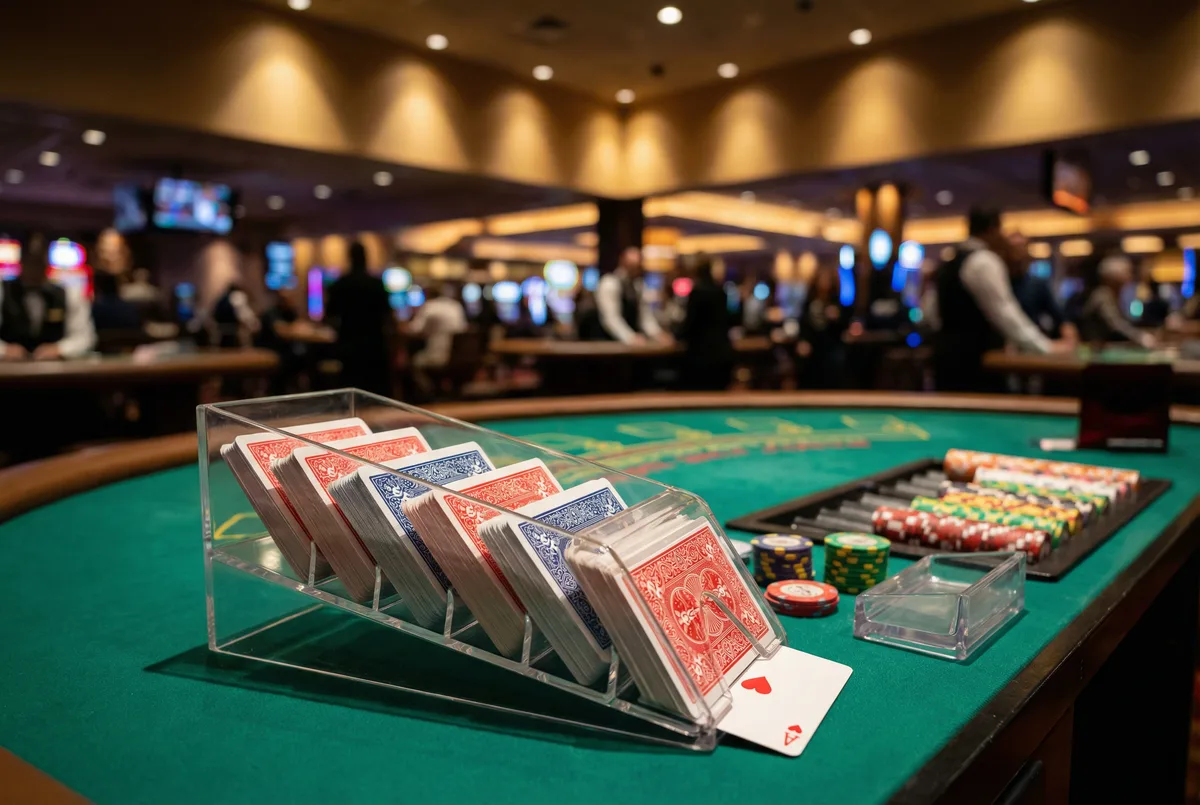
How Many Decks Are in a Blackjack Shoe?
[bja_toc]
The number of decks in play at a blackjack table is one of the most consequential rule variables affecting the house edge. A single-deck game, all other rules being equal, produces a house edge roughly 0.5% lower than a six-deck shoe game. That difference exists because fewer decks mean a higher relative concentration of ten-value cards and aces, which increases natural blackjack frequency and slightly favours the player. Casinos moved from single-deck to multi-deck games in the 1960s specifically in response to card counting, and the modern standard of six to eight decks reflects decades of casino risk management — not player preference. Understanding how deck count interacts with payout structure, penetration, and strategy tells you which games are worth sitting at and which to walk past.
Deck Count Is One of the Most Important Table Variables
Deck count affects house edge through a precise mathematical mechanism: with fewer decks, the ratio of any given card to the remaining pack is more volatile, and the probability of a natural blackjack is marginally higher. In a single-deck game, the probability that an ace follows a ten-value card (or vice versa) is slightly elevated compared to a six-deck shoe because each card removed from a smaller pool shifts the remaining composition more dramatically. This makes single-deck games inherently slightly better for the player — in theory.
In practice, the deck count advantage is consistently offset by the payout structure casinos attach to their single-deck games. The modern standard for single-deck tables in most commercial casinos is a 6:5 payout on naturals — which adds approximately 1.4% to the house edge and more than eliminates the deck count benefit. The result is that a six-deck game paying 3:2 at S17 is structurally better for the player than a single-deck game paying 6:5 at H17. Deck count is a variable to monitor, but the payout ratio is the variable that determines whether a game is worth sitting at.
Fewer Decks
More Decks
- ~0.17% house edge
- —
Why Did Casinos Move to Multi-Deck Shoes and When Did It Happen?
Before 1962, virtually all casino blackjack was dealt from a single deck held in the dealer’s hand. This changed after Edward Thorp published Beat the Dealer, which demonstrated mathematically that single-deck blackjack could be beaten by tracking the ratio of high to low cards remaining in the deck. Casinos initially responded with procedural countermeasures — more frequent shuffles, burning multiple cards — before adopting the structural solution of adding decks. Double-deck games appeared first, followed by four-deck shoes, and eventually the six and eight-deck shoes that now dominate casino floors worldwide.
The shoe itself — the plastic dealing box that holds multiple decks — was introduced to handle the physical bulk of four, six, or eight decks and to maintain consistent dealing pace. Before the shoe, multi-deck games required dealers to hold stacked decks by hand, which was impractical at normal dealing speeds. The shoe also introduced a cut card, placed at a specified penetration depth to trigger a reshuffle when reached. The position of that cut card is one of the most strategically relevant variables in a shoe game — deeper penetration (more cards dealt before reshuffling) provides more information per shoe and is more favourable for card counters.
Today, single-deck games survive primarily as loss-leader or novelty offerings, almost always paired with 6:5 payouts and frequent shuffles that make any card-tracking advantage theoretical rather than practical. True single-deck 3:2 games exist but are rare and typically played at higher minimums. Double-deck games paying 3:2 represent the best standard option in many casino environments, provided you can find them at a manageable minimum with dealer-stands-on-soft-17 rules.
Common Myth
“Single-deck blackjack always gives the player the best odds”
Players learned in textbooks that fewer decks reduce the house edge, and apply that rule without checking the payout structure at the specific table
The Reality
Most single-deck games in modern casinos pay 6:5 on naturals, which eliminates all mathematical benefit of the reduced deck count
A 6:5 single-deck game with H17 carries approximately 1.9% house edge. A 3:2 six-deck game with S17 carries approximately 0.44%. The fewer-decks advantage is entirely cancelled by the payout cut.
How Can You Visually Estimate Decks Remaining During Play?
One deck of cards is approximately three-quarters of an inch thick when stacked. A six-deck shoe contains approximately 4.5 inches of cards. The discard tray sits beside the shoe and accumulates played cards as the round progresses. By comparing the height of the discard tray to the height of cards remaining in the shoe, an experienced player can estimate within roughly half a deck how many remain — a skill that matters for card counters converting running count to true count but is also useful for any player who wants to understand the game’s current state.
Penetration — the percentage of the shoe dealt before the cut card triggers a reshuffle — typically ranges from 65% to 80% in a standard six-deck shoe game. A table with 80% penetration deals roughly 5 of 6 decks before reshuffling. A table with 65% penetration deals approximately 3.9 decks. For basic strategy players, penetration has no mathematical effect — the house edge is the same on every hand regardless of deck depth. For card counters, deeper penetration is essential because it allows the true count to build meaningfully before the shoe ends.
Dealer Shows
Your Hand
Soft 17 (Ace-6) against a dealer 5 in a standard 6-deck game. Correct action?
Your soft 17 is a strong doubling candidate against any dealer upcard from 3 through 6. The ace gives you a safety net — if you draw a 10, you have 17 again (not a bust). If you draw a low card, you improve. Doubling maximises the expected value against a dealer who will bust 42% of the time showing a 5. This decision is identical across single-deck and six-deck games under standard rules.
Applying Deck Count Knowledge Before You Sit at Any Table
The practical application of deck count knowledge at a casino is straightforward: read the placard before sitting, identify the deck count, and then check the payout structure before that number influences your decision. If a single-deck table pays 6:5, it is not a good game. If a six-deck table pays 3:2 with S17, it is a reasonable game. If a double-deck table pays 3:2 with S17 and late surrender available, it is among the best available options in most commercial casino environments.
For players who are developing card counting skills, deck count matters more directly: fewer decks make the true count conversion simpler, the count fluctuates more with each card removed, and the maximum true count achievable in a single shoe is higher in a double-deck game than a six-deck shoe. But for basic strategy players — who represent the majority of the audience developing these skills — the priority ranking is always payout first, soft-17 rule second, deck count third. A perfect basic strategy player in a 6-deck 3:2 S17 game faces 0.44% house edge. That is the baseline to protect.
For practising basic strategy decisions across different deck counts at zero cost, the free blackjack simulator covers both standard multi-deck play and let you run unlimited hands to build accuracy. When you are ready to test your decisions against a real human dealer in a multi-deck shoe game, a live dealer session with real money on the line replicates the pacing and format of a casino floor — verify the payout structure and deck count displayed before placing any chips in a real-money session.
Frequently Asked Questions
Yes, slightly. A small number of basic strategy plays differ between single-deck and multi-deck games — primarily some soft doubling decisions and a few hard total hits against weak upcards. Most players use the strategy chart specific to their most commonly available deck count, which is typically 6-deck S17.
A continuous shuffling machine (CSM) automatically returns played cards to the shoe after each round, keeping the shoe at near-full composition at all times. This makes card counting impossible and slightly increases hands per hour. Basic strategy decisions and house edge are essentially unchanged by a CSM.
Read the felt placard — it often states the deck count. If not, observe the shoe itself: a six-deck shoe is noticeably wider than a double-deck game, and a single-deck game is typically dealt from the hand. You can also ask the dealer directly before sitting down.
Mathematical Risk Warning
Deck count affects your expected loss rate, but payout rules matter more. Never play a 6:5 game regardless of how few decks are in the shoe. Always confirm the payout structure before placing your first bet.
Blackjack Academy is an educational resource. All strategy recommendations are based on mathematical expectation. Always gamble responsibly and within your means.

Written by
Mark AnurakProfessional card counter since 2009 · 500,000+ hands logged · Former Macau advantage player. Studied under Thorp, Griffin & Wong methodology. Full bio →
Learn More
Continue your education with these related lessons.
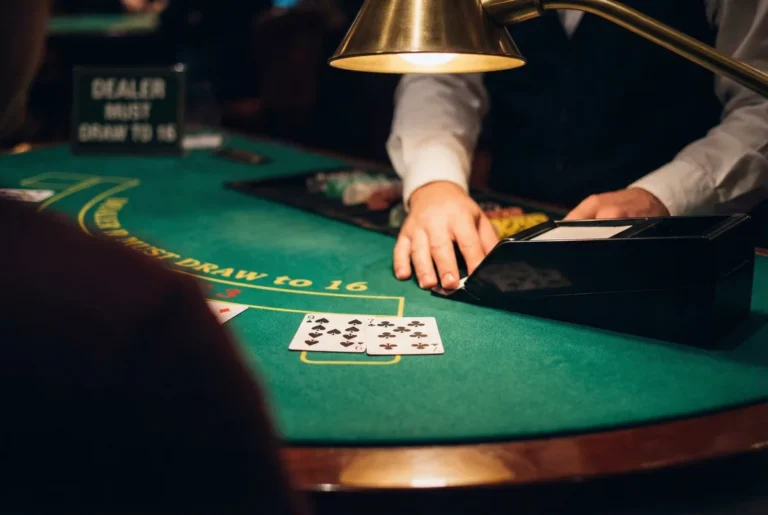
Why Dealers Must Draw to 16 and Stand on All 17s
The dealer is not a player. They are an algorithm. They must hit any total of 16 or below and…
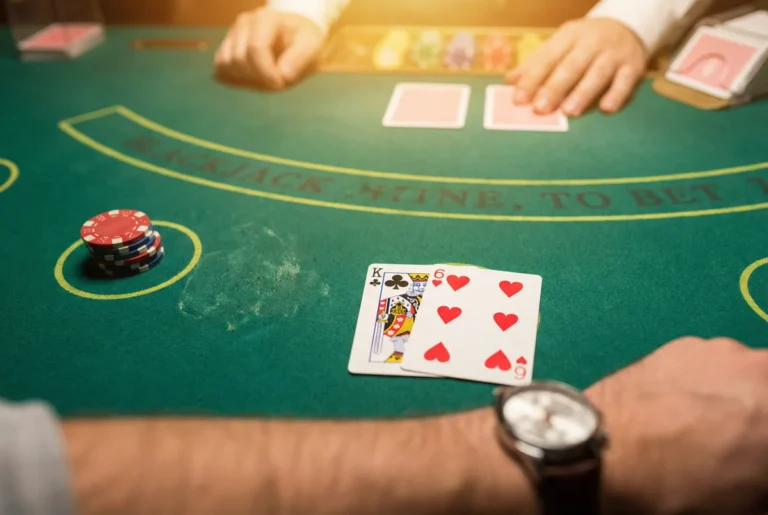
How to Overcome Anxiety the First Time You Play Blackjack
Every first-time blackjack player feels it. The dealer moves fast, other players seem to know exactly what to do, and…

How to Choose a Blackjack Table at a Casino
Not all blackjack tables are created equal. Learn how to read the floor, pick the right minimum, and find the…