
How Basic Strategy Reduces Your Long Term Losses
- How Much Basic Strategy Reduces the House Edge: By the Numbers
- What Is the Long-Term Dollar Cost of Playing Without a Strategy?
- How Basic Strategy Works Differently for Different Rule Sets?
- What Stops Recreational Players From Using Strategy Consistently?
- How to Make Strategy Execution Reliable Across Every Session
Basic strategy is the single most impactful change a recreational blackjack player can make. A player without strategy operates at roughly 2 to 4 percent blackjack house edge from accumulated errors and suboptimal decisions. A player with blackjack basic strategy at a favorable table operates at approximately 0.4 to 0.5 percent blackjack house edge. The difference 1.5 to 3.5 percentage points translates directly into dollars across every session. At $25 per hand for 80 hands, the strategy gap is worth $30 to $70 in reduced expected loss per session. Over 20 sessions, that is $600 to $1,400. Basic strategy does not guarantee winning sessions. It guarantees that the cost of playing is minimized within the structure of the game.
Minimum EV Improvement From Basic Strategy
Conservative estimate: from 2% no-strategy house edge to 0.5% basic strategy edge 1.5% of every dollar wagered recovered
How Much Basic Strategy Reduces the House Edge: By the Numbers
The blackjack house edge without any strategy in a standard 6-deck blackjack game is approximately 2 to 4 percent, depending on the frequency and type of errors made. Common errors standing on hard 16 against dealer 10, not splitting 8s, not doubling hard 11 against dealer 6 each add 6 to 10 basis points per occurrence to the player’s blackjack house edge. A recreational player making five errors per 80 hands operates at roughly 1.5 to 2.5 percent above optimal. Basic strategy eliminates all of these deviations, bringing the blackjack house edge to its theoretical floor: approximately 0.42 to 0.5 percent for a favorable rule set.
The edge reduction is not uniform across all rule sets. At a 6:5 table, even perfect blackjack basic strategy produces a blackjack house edge of approximately 1.82 percent higher than a typical recreational player’s unoptimized edge at a 3:2 table. This is why rule evaluation must precede strategy application. Basic strategy at the wrong table does not achieve optimal reduction. The correct sequence is always: find a 3:2 S17 DAS game, then apply strategy. The strategy reduces edge within the rule set; the rule set determines the floor.
What Is the Long-Term Dollar Cost of Playing Without a Strategy?
A player at 2.5 percent blackjack house edge versus 0.5 percent blackjack house edge, playing 80 hands per session at $25 per hand, pays an extra $40 in expected loss per session from the strategy gap. Over 12 sessions per year, the annual cost is $480. Over five years, it is $2,400 entirely from the difference between playing with and without a blackjack strategy chart. These numbers reflect expected value, not actual session outcomes. Some sessions the no-strategy player wins. But the long-run expectation diverges in proportion to the strategy gap, compounded by the frequency of play.
The hardest dollar to account for is the compounding of small, recurring errors. A player who always stands on hard 16 against dealer 10 adds approximately $0.06 in expected loss per $25 bet per occurrence. In 80 hands, that hand appears approximately 5 to 7 times adding roughly $7.50 to $10.50 in expected loss from one repeated error. Across 20 sessions, that single error compounds to $150 to $210 in excess expected loss. Most recreational players have 3 to 5 such recurring errors. The total compounds quickly.
Dealer Shows
Your Hand
Dealer shows 7. You have hard 13 (10-3). Stand or hit?
Hard 13 against dealer 7: hit. Dealer 7 completes a hand of 17-21 approximately 74% of the time. Standing on hard 13 wins only when the dealer busts about 26% of hands. Hitting hard 13 has a higher bust probability (40%) but creates equity from surviving totals. The EV of hitting (-0.38) is better than standing (-0.48). Against dealer 7 through Ace, hard 13 is always a hitting hand.
How Basic Strategy Works Differently for Different Rule Sets?
Basic strategy achieves different levels of edge reduction depending on the game’s rule set. At a 6-deck 3:2 S17 DAS late-surrender game, strategy reduces blackjack house edge to approximately 0.34 percent. At a 6-deck 3:2 H17 game, the floor is 0.64 percent. At a single-deck 3:2 S17 DAS game, strategy reduces edge to approximately 0.15 percent. The blackjack strategy chart itself contains different decisions depending on deck count and dealer rule the optimal response to some hands differs between single-deck and 6-deck under the same rules. Using the correct chart for the specific game is as important as applying any strategy at all.
Strategy Coverage 6-Deck Player With Common Error Pattern
SAFEWhat Stops Recreational Players From Using Strategy Consistently?
Consistency gaps come from three sources: incomplete memorization, emotional override at stressful hands, and the misconception that strategy adjustment improves results. Incomplete memorization creates hesitation on hard 16, pair splits, and soft doubles exactly the hands with the highest EV impact. Emotional override produces standing on hard 16 after a losing run, not splitting 8s after a bad previous split, skipping the double on soft 18 because doubling has been failing recently. The misconception that personal pattern recognition improves on the chart drives deliberate deviations that systematically lower EV.
The remedy for each: targeted practice eliminates memorization gaps; internal verbalization before decisions interrupts emotional override; understanding EV as a long-run expectation eliminates the adjustment misconception. Each is a separate skill that requires deliberate practice. Fixing all three simultaneously is difficult. The recommended sequence is memorization first, then emotional discipline, then EV thinking each built on the previous.
How to Make Strategy Execution Reliable Across Every Session
Reliable execution requires a pre-session protocol and a during-session anchor. The pre-session protocol is two items: rules check (payout, dealer rule, DAS) and a 30-second mental review of the hardest 5 decisions. The during-session anchor is internal verbalization stating the action before executing it on every hand that triggers deviation temptation. Open the live lobby now, pick a table, run the rules check, and execute the pre-session protocol before placing a single chip with real money on the line. Two minutes of preparation changes the expected outcome of the entire session. Budget your session limit before you start.
Frequently Asked Questions
Basic strategy reduces the house edge from a typical 2 to 4% for unskilled play down to approximately 0.4 to 0.5% in a favorable rule set. That gap 1.5 to 3.5 percentage points translates directly into fewer dollars lost per session and per year.
No. Basic strategy minimizes the house edge but does not eliminate it. Over any individual session, variance dominates a basic strategy player can win or lose regardless of correct play. Basic strategy guarantees the minimum possible cost of playing, not a profit.
Doubling hard 11 against dealer cards 2 through 10 is the most commonly skipped high-value play. Many players hit instead of double out of caution. The EV difference between hitting and doubling hard 11 vs a dealer 6, for example, is approximately 0.25 units per hand the largest missed opportunity in recreational play.
Before you test these plays at a real table, run them through our free blackjack simulator practice unlimited hands at zero cost until every move becomes automatic.
Calculate Your Current Loss Rate vs Optimal
The EV calculator shows expected session loss at any house edge percentage. Enter your actual play patterns and see the gap between your current rate and basic strategy minimum.
Blackjack Academy is an educational resource. All strategy is based on mathematical expectation. Always play within your means.
Learn More
Continue your education with these related lessons.
When to Stand on 12 Through 16 Against a Dealer 2 Through 6
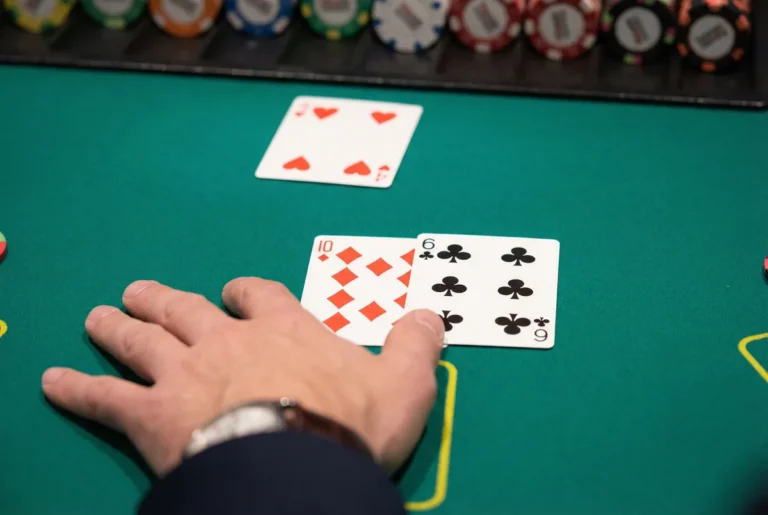
Stiff hands from 12 to 16 are the most misplayed zone in blackjack. Learn exactly when to stand against a…
How to Minimize Losses on Hard 15 and Hard 16
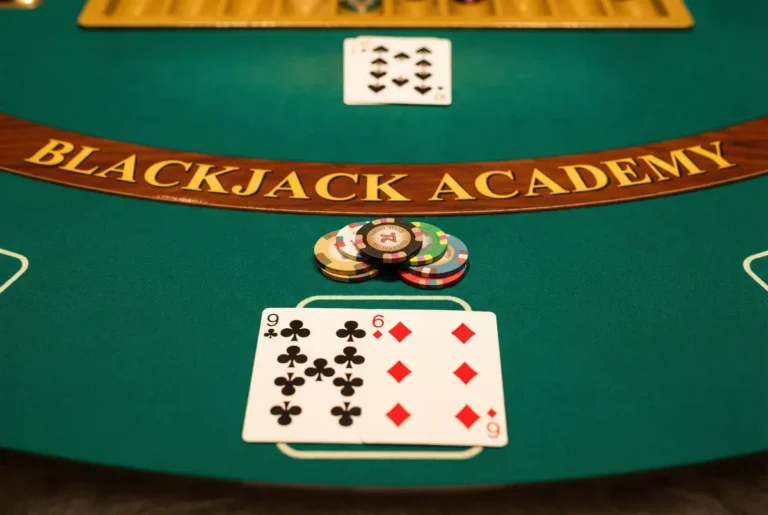
Hard 15 and hard 16 are the two worst hands in basic strategy. Here is how to make every decision…
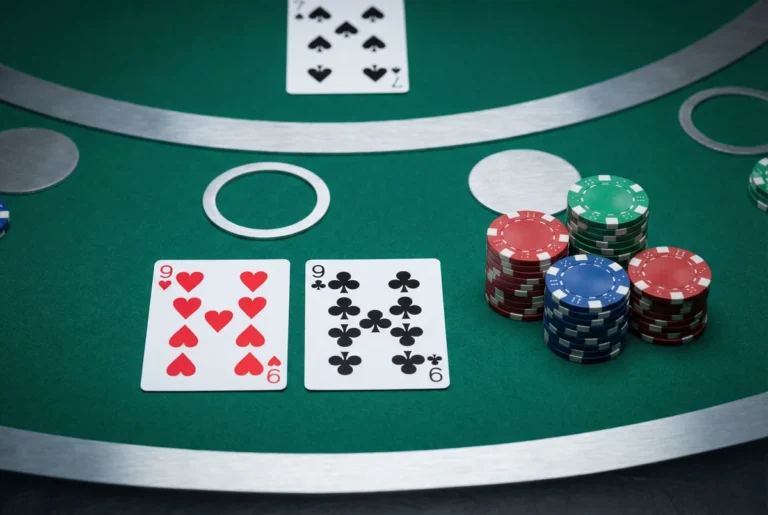
Why Standing on a Pair of 9s is Better Than Splitting
A pair of 9s is an 18 strong enough to win most hands. But three specific dealer upcards should change…