
The Man Behind the Method
Mark
Anurak
Professional blackjack player. Card counter. Founder of Blackjack Academy.
Bangkok, Thailand. Playing since 2009.
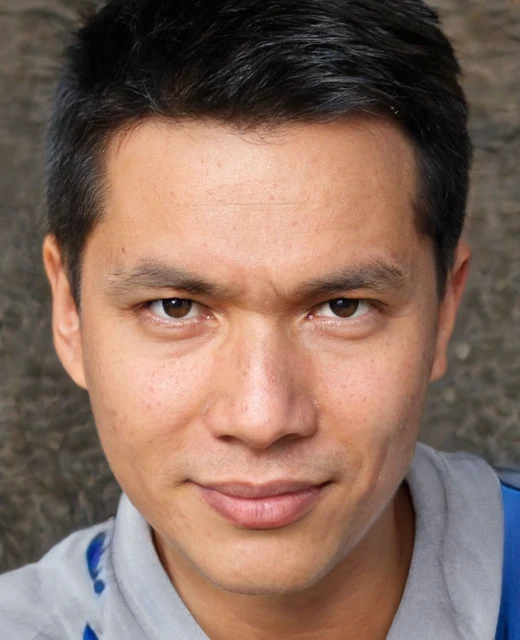
Bangkok, 2009. A Table in a Hotel Basement
I grew up in Bangkok. My father was an accountant. My mother taught secondary-school mathematics. Numbers were the language of our household. Not gambling, not cards, not casinos.
Thailand has no legal casino on its soil, and in the home I was raised in, money was something you worked for, tracked carefully, and protected. The idea that a card game could be approached as a precision instrument would have sounded absurd to anyone in my family. It still sounds absurd to most people. That is exactly why it works.
The first time I saw a blackjack table I was nineteen, visiting a cousin near the Cambodian border. Poipet, the cluster of casinos that Thai nationals have crossed into for decades, was a revelation. Not in the way people usually mean that word.
I did not feel the rush gamblers describe. I felt something colder and more interesting: the sense that the table was a system, that the game had a structure underneath it, and that most of the people around me had no map of that structure at all. A woman next to me was hitting hard seventeen. A man in a suit split tens and lost both.
I sat for two hours, bet the minimum on every hand, and watched. I left roughly even and could not stop thinking about what I had seen.
I went home and found a copy of Edward O. Thorp’s Beat the Dealer. It took me three days to read it twice. I bought Peter Griffin’s The Theory of Blackjack, which required a request to a specialist bookshop in Bangkok that imported English-language academic texts. I read Stanford Wong’s Professional Blackjack with a notebook beside me. I was not planning a career. I was satisfying a compulsion to understand something completely before I touched it again.
The Two-Year Laboratory
Between 2009 and 2011, I did not play a single hand of blackjack in a casino. I drilled card counting at my kitchen table. Every evening after finishing my engineering coursework at university, I practiced the Hi-Lo system with a single deck.
I timed myself. I set benchmarks: a full 52-card deck counted silently in under twenty-two seconds with zero errors, achieved on ten consecutive attempts before moving to two decks. I was methodical in a way that, looking back, probably looked obsessive to anyone watching.
I built a spreadsheet to simulate blackjack sessions. This was 2010, before sophisticated simulators were easily available, so I wrote the logic myself in Excel and later in a rudimentary Python script. I ran one hundred thousand simulated hands at a 1-to-8 bet spread with penetration set to 75 percent.
The expected return was modest, roughly 0.8 percent player edge under favorable conditions. The variance was enormous over short samples. I ran the same simulation two thousand times to build a distribution of outcomes across a fifty-session sample.
That exercise taught me more about bankroll management than any book had. I watched simulated players with theoretically winning strategies go broke repeatedly due to underfunding. I decided I would not do that. I would build the bankroll first, and build it properly.
By mid-2011, I could count a six-deck shoe while holding a conversation, tracking the running count, converting to true count, and adjusting my mental strategy table simultaneously. I had memorized all 18 of Don Schlesinger’s Illustrious 18 index deviations. I could recite the correct play for every hard total from 8 to 17, every soft total, every pair, against every dealer upcard, including the composition-dependent exceptions for hard 12 versus dealer 2 and 3.
I had never been more prepared for anything in my life.
Macau, 2011 to 2014. Learning What Books Cannot Teach
My first serious sessions were in Macau in late 2011. I had graduated from university and taken a short-term engineering contract in Shenzhen that gave me access to the Macau ferry. Over two years of part-time work and strict savings, I had set aside a playing bankroll of approximately USD $8,000.
By Kelly Criterion standards, that bankroll supported a maximum bet of around $160 at the edge I expected to generate. I played at $25 minimum tables. My bet spread was 1-to-6. I was conservative almost to the point of being invisible.
The first three months were a masterclass in humility. I ran at roughly negative two percent over twelve sessions. Statistically this was well within normal variance, but it felt catastrophic in the moment.
I reviewed every session log, cross-referenced my count accuracy against recorded outcomes, and confirmed my technique was sound. The variance was doing exactly what my simulations had predicted. I did not change my approach. I did not increase my bet spread out of impatience. I kept playing correctly and trusted the mathematics.
By month six, results had converged toward expectation and I was slightly ahead. By the end of 2012, I had grown the bankroll by forty-one percent across approximately two hundred hours of live play on Macau’s mid-tier casino floors.
Macau taught me things no book adequately prepares you for. The speed of the game: dealers there are fast, sometimes three rounds per minute on a full table. The noise, the cigarette smoke, the psychological pressure of large bets on adjacent players affecting your read of the table. Continuous shuffling machines appearing without warning and ending a profitable shoe mid-count.
My first backoff came in late 2012 at a Cotai property I will not name. A floor manager approached me mid-shoe, placed his hand flat on the felt, and said: “Sir, we would prefer you play other games.” I was not angry. I had known this was part of the profession. I thanked him, colored up, and walked to the cashier. I had been playing correctly. That too is part of playing correctly.
Singapore, Manila, and the Asia-Pacific Circuit
From 2013 onward, I expanded across the Asia-Pacific casino landscape. Marina Bay Sands and Resorts World Sentosa in Singapore offered six-deck games with penetration typically at 75 to 80 percent, and table limits that suited the bankroll I had built.
Singapore casinos are significantly more rigorous in their surveillance than many Macau operations. That sharpened my camouflage discipline considerably. I learned to vary my session length, buy-in amounts, and demeanor in ways that removed the statistical signature surveillance algorithms are trained to detect, without compromising counting accuracy.
Manila opened a new chapter. The integrated resorts in Entertainment City, Solaire, City of Dreams, Okada, introduced me to high-penetration six-deck games where the cut card was placed deeper than anything I had found in Macau or Singapore.
A shoe dealt to 80 percent penetration with a 1-to-12 spread is categorically different from the same game at 65 percent. The expected hourly return changes materially. I kept detailed records of penetration by property, by shift, and by individual dealer. Not out of obsession, but because that data determined how I allocated my playing time and capital.
By 2015, I had logged over two hundred thousand hands across these markets. My records showed a long-run edge of approximately 0.9 percent on invested capital, consistent with theoretical predictions for Hi-Lo with the Illustrious 18 deviations and a responsible bet spread.
More importantly, I had survived every significant negative variance swing, including a twelve-session downswing in early 2014 that temporarily reduced my bankroll by 22 percent, without abandoning strategy and without going broke. The bankroll management discipline I had built in simulation held under real conditions.
That confirmed something I had suspected: the mathematics is reliable. The human application of the mathematics is where most people fail.
Las Vegas, 2016. The Benchmark
My first extended trip to Las Vegas came in 2016. I went specifically to benchmark my game against the environment where most of the serious advantage play literature had been developed.
The Strip’s game conditions were, by then, inferior in many respects to what I had found in Asia. 6:5 blackjack was proliferating on the main floors of major properties. The double-deck games on Fremont Street that had made the 1980s and 1990s so profitable for advantage players were largely gone, replaced by continuous shufflers or unfavorable rule sets.
But the downtown properties and a handful of Strip locations still offered beatable six-deck shoe games. I found them, played them, and confirmed that the skills I had developed in Asia translated exactly as the mathematics predicted.
Las Vegas also connected me, for the first time, with other serious players. I attended a gambling mathematics conference at UNLV and met researchers whose work I had been reading for years.
One conversation stood out: an academic who had worked with Griffin Investigations, the surveillance consulting firm whose records formed the foundation of modern casino countermeasure development. We talked about how the detection landscape had evolved in the age of facial recognition and algorithmic bet-pattern analysis. That conversation shaped a significant portion of what would eventually become the Pro Secrets section of this site.
Why I Built Blackjack Academy
I spent the better part of a decade playing professionally and largely alone. I kept my methods private. Professional advantage play is not a collaborative sport, and loose talk about technique has a way of reaching casino floors faster than it should.
But over time I began to feel the weight of a specific frustration. Almost everything available to the recreational player learning blackjack was either catastrophically wrong or buried in dense academic literature that assumed mathematical prerequisites most people do not have.
I watched family friends lose money at blackjack tables on holiday in Singapore, playing hunches and superstitions, making decisions with a house edge north of four percent when the correct play would have put the house edge below half a percent. The mathematics to close that gap exists. It is not complicated. It does not require a university degree. It requires clear explanation, patience, and a structured learning path.
None of the resources I found for beginners provided all three.
Blackjack Academy began as a document I wrote for a Thai friend who wanted to learn basic strategy before a trip to Macau. It became a framework when I realized it was exactly what I had wished existed when I was nineteen years old in Poipet, watching a man split tens and wondering why.
I have spent three years developing the content on this site. Every article, every strategy chart, every interactive tool, built to the same standard I applied to my own playing: grounded in mathematics, verified against simulation, and expressed clearly enough that no prior knowledge is required.
I am not trying to manufacture professional players. The casino advantage over an unskilled player is real and it is significant. What I am trying to do is close the information gap. To give any player who is willing to learn the same understanding of the game that took me two years of intensive study to acquire on my own.
If you come to this site and leave knowing why you hit soft 17, why you never take insurance, and why the number of decks in the shoe matters more than any betting system you will ever read about, then this site has done exactly what it is designed to do.
Playing Philosophy
“Blackjack is not a gambling game. It is a decision game that happens to be played in casinos. Every decision you make has a mathematically correct answer. Your job is to make that answer automatic.”
Every strategy recommendation on this site is derived from expected value calculations, not intuition or tradition.
Correct play does not guarantee short-term wins. Understanding variance is as important as learning the strategy itself.
A player with 0.5% edge and disciplined bankroll management will always outlast a player with 1% edge and poor discipline.
Career Timeline
First exposure to blackjack in Poipet, Cambodia. Begins self-study of Thorp, Griffin, and Stanford Wong.
Builds custom EV simulation in Excel and Python. Completes Hi-Lo system to casino-ready standard.
First professional sessions in Macau. Playing bankroll: USD $8,000. Bet spread: 1-to-6.
Bankroll grown 41% on 200 hours of live play. First casino backoff recorded at a Cotai property.
Expands to Singapore (MBS, RWS). Refines camouflage technique against advanced surveillance environments.
Manila circuit begins, Solaire and City of Dreams. Achieves 80% penetration games; highest bet spread: 1-to-14.
200,000+ hands logged. Confirmed long-run edge of 0.9% across all recorded sessions.
Las Vegas benchmark trip. UNLV gambling mathematics conference. Meets leading researchers in casino surveillance and game theory.
Begins developing the Blackjack Academy curriculum. First complete basic strategy framework drafted.
Blackjack Academy launches online. Interactive tools and structured learning path go live.
Site reaches 383 published articles across 5 topic categories. 8 interactive tools available free.
Foundational Reading
Every recommendation on this site is grounded in the academic and professional literature that shaped my own game. These are the books I consider essential:
The founding document of card counting. Mathematically rigorous. Every serious player should read it.
The quantitative backbone. Griffin’s expected value tables remain the benchmark for composition-dependent strategy.
The definitive reference for the Illustrious 18 and serious advantage play analysis.
Introduced back-counting (Wonging). Essential for understanding bet-spread optimization.
Practical camouflage, team play, and casino countermeasures. The field guide.
Editorial Standards
How This Site Is Written
Every strategy recommendation is mathematically derived. No article on this site recommends a play based on intuition, tradition, or what most players do. Every recommendation traces back to expected value calculations against the full probability distribution of dealer outcomes.
Simulations verify all EV claims. Where specific house edge figures or expected return values are cited, they are derived from simulation runs of at least one million hands unless otherwise stated, using rule sets that are explicitly defined.
No casino recommendations or affiliate pressure. This site carries affiliate disclosures where applicable. No strategy recommendation is influenced by commercial relationships. I will never recommend a 6:5 game, a continuous shuffler, or an inferior rule set because a casino partner asked me to.
Responsible gambling is non-negotiable. Blackjack played with perfect basic strategy still carries a house edge. Card counting requires conditions, bankroll, and discipline most recreational players cannot or should not attempt to replicate professionally. This site teaches the mathematics of the game. It does not encourage reckless gambling.
Important: Blackjack involves real financial risk. Even with perfect basic strategy, the house retains a mathematical edge of approximately 0.5%. Card counting is legal but casinos may refuse service at their discretion. Nothing on this site constitutes financial or gambling advice. Play responsibly. If gambling is affecting your life, contact the National Council on Problem Gambling: 1-800-522-4700 or visit ncpgambling.org.