Why the Name Changed from Vingt-Un to Blackjack in the Gold Rush
- The Game Before the Name: Vingt-Un in America
- What Was the Original Blackjack Bonus Hand That Renamed the Entire Game?
- Why the Bonus Payout Disappear but the Name Blackjack Survive?
- How the Gold Rush Bonus Change the Way Casinos Designed Payouts?
- What the Name Change Tells You About Modern Blackjack
I once sat at a table in Reno that had BLACKJACK in gold letters across the felt. It occurred to me that the name is younger than the game by about 300 years. The game you know as blackjack was called vingt-un for centuries before any gambling house renamed it. The name change happened because of a single promotional payout that a casino invented to fill empty tables. That promotion was discontinued within a generation. The name stuck. Understanding why tells you something important about how casinos operate today: every rule, payout, and label is shaped by the house’s need to attract and retain players. The name blackjack is less than 120 years old. The math underneath it is over 400.

The bonus payment for a black ace and black jack was a pure marketing promotion by early American gambling houses, not a rule that survived into modern casinos. The name outlasted the bonus. Today no casino pays a premium for a specific ace-jack combination, but the name blackjack stuck because it already meant something to players.
The Game Before the Name: Vingt-Un in America
Vingt-un arrived in North America with French colonists in the late 18th century and spread rapidly through New Orleans, the continent’s largest gambling hub at the time. American gambling houses called it twenty-one, the literal English translation. By the mid-1800s, twenty-one was the second most popular card game in American gambling establishments after poker, played from Mississippi riverboats to frontier saloons.
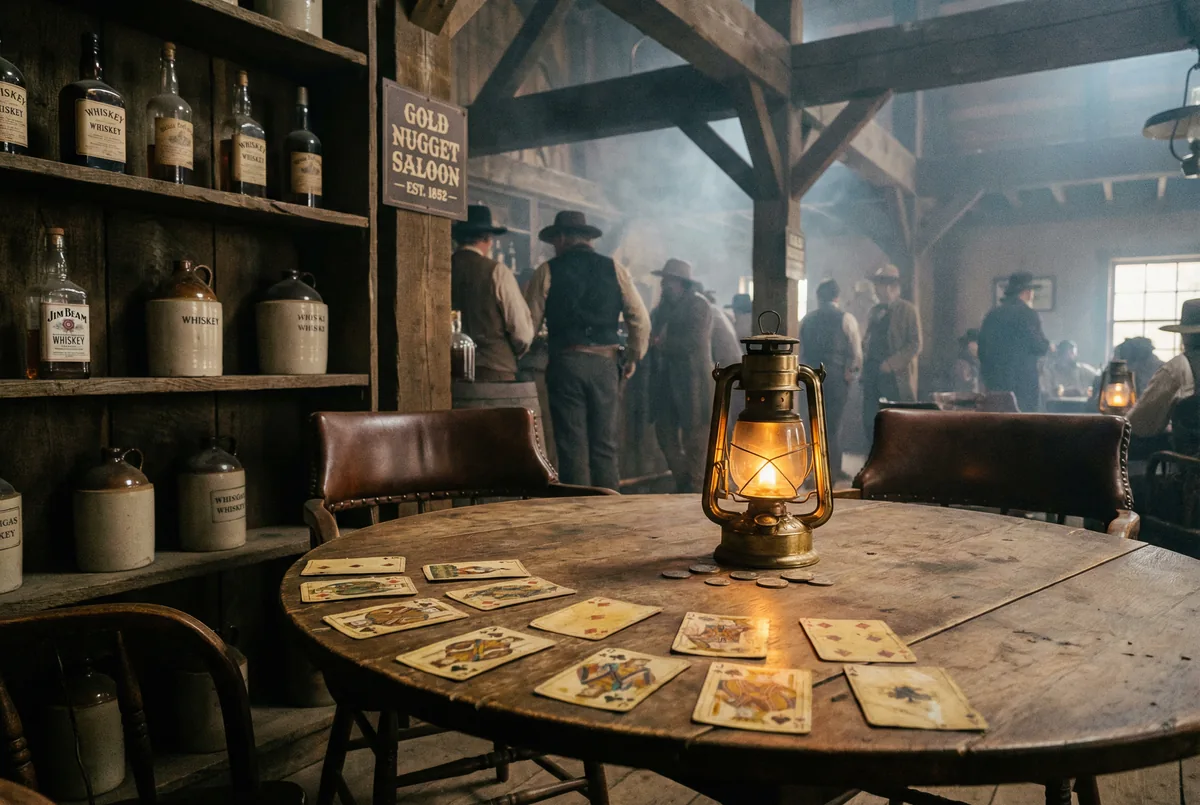
The game’s popularity among Gold Rush miners gave it particular traction in California and the western territories. Gold camps in the Sierra Nevada foothills had functioning gambling tents within weeks of a strike. Twenty-one tables were standard equipment: low blackjack house edge, fast play, and simple rules made it practical in rough conditions where poker’s complexity could lead to disputes. The game spread north through the Oregon Territory and east into Nevada faster than formal law and regulation could follow.
From Ventiuna to Blackjack: The Name Timeline
1601
Veintiuna in Spain: Cervantes names the game Veintiuna in print. The goal is to reach 21 without exceeding it. The name is purely numerical, no cards referenced.
1700s
Vingt-et-Un in France: French players rename it Vingt-et-Un. Still a number-based name. The game spreads across Europe with French rules and French vocabulary.
1825
Twenty-One arrives in America: New Orleans gambling houses use the name Twenty-One. Some offer a 10 to 1 bonus for a hand containing the Ace of Spades plus a black Jack.
1848-1855
Gold Rush saloons adopt the bonus: California Gold Rush saloons spread the bonus-hand rule widely. Players begin calling the winning combination a Black Jack and the name starts to replace Twenty-One.
1931
Nevada legalizes gambling: When Nevada legalizes in 1931, the bonus payout is gone but the name Blackjack survives into the legal era and becomes universal.
What Was the Original Blackjack Bonus Hand That Renamed the Entire Game?
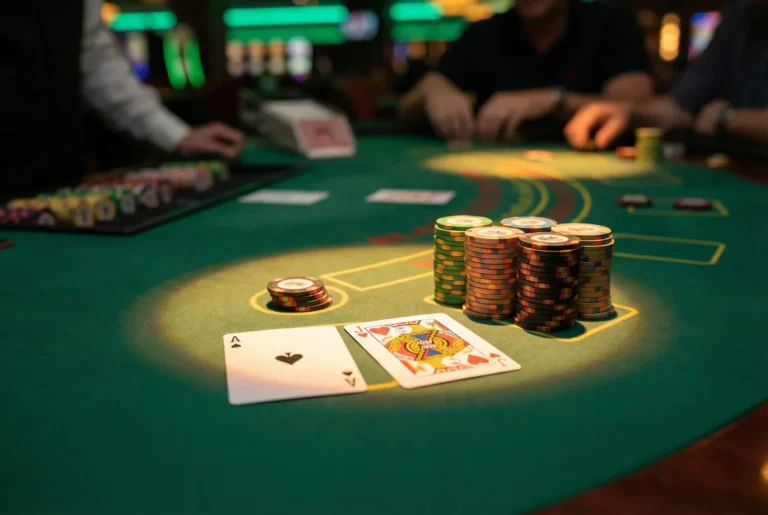
The promotional bonus that gave the game its name rewarded one specific two-card combination: an Ace of spades paired with the Jack of spades or Jack of clubs, both black-suited, paying enhanced odds at American gambling houses in the early 20th century. Both the Ace and the Jack had to be black-suited cards, making this a rare hand with dramatic visual appeal at the table. This combination, called the blackjack, paid enhanced odds, reportedly 10:1 at some establishments, compared to the standard 3:2 payout for any other natural twenty-one.
The promotion worked as designed. Players specifically sought tables offering the bonus, and the term blackjack became associated with the game itself rather than just the bonus hand. Within a generation, the name blackjack had fully displaced twenty-one and vingt-un in American gaming establishments. The Ace of spades with a black Jack remains culturally iconic in gambling imagery precisely because it was the hand that named the modern game.
Vingt-Un (Pre-1900)
Blackjack (Post-1920)
- Called Twenty-One or Vingt-Un
- Natural pays 1:1 or 2:1 by house rule
- Dealer rules varied by establishment
- No standardized shoe depth
- Typically a single deck
- Named after the bonus hand
- Natural pays 3:2 (or 6:5 at trap tables)
- Dealer hits to 17, then stands
- 6–8 deck shoe became standard by 1960
- Cut card controls penetration
Why the Bonus Payout Disappear but the Name Blackjack Survive?
The 10:1 bonus payout for the specific Ace-and-black-Jack combination was mathematically too generous to survive at the volumes of play a regulated Nevada casino floor generates after 1931. Once player volumes increased in regulated Nevada casinos after 1931, the special bonus was quietly dropped. The standard 3:2 payout for any Ace plus any 10-value card replaced it. Every natural became a blackjack, not just the specific black-suited combination. The 3:2 payout that replaced the original bonus is what professional players still seek today when evaluating which tables to sit at.
The name survived because it had already attached itself to the entire game in the public imagination. Renaming it back to twenty-one would have required marketing effort with no obvious benefit to casinos. Language works that way: the word that generates association fastest is the one that sticks, even after the thing it originally described has changed.
How the Gold Rush Bonus Change the Way Casinos Designed Payouts?
The Gold Rush-era blackjack bonus introduced a principle that still drives casino payout design today: a high-ratio payout for a specific rare hand drives more player action than a uniformly generous game. The 10:1 bonus for the Ace of spades plus a black Jack was not charity. It was a customer acquisition tool targeted at the competitive gambling tent environment of the mining camps and frontier casinos.
When the 10:1 bonus was eventually replaced by the standardized 3:2 payout for any natural, casino operators had already learned the lesson. The exact payout ratio is the primary lever for shaping player enthusiasm and table profitability simultaneously. The 3:2 standard they chose after Nevada regulation is better for players than the 6:5 rule many modern casinos have introduced, but the same design logic applies. 6:5 is the Gold Rush bonus inverted: a payout modification presented as standard that extracts value from players who do not read the placard.
Over 80 hands at $25, the difference between 3:2 and 6:5 on a natural costs you $27.80. That calculation is possible because the Gold Rush gambling culture established the convention of a special natural payout in the first place. The number on the placard is always the descendant of that original promotional decision, and the number still tells you everything about whether the table is worth sitting at.
What the Name Change Tells You About Modern Blackjack
The shift from vingt-un to blackjack is a compressed history of how casinos use rule modifications and promotional framing to shape player behavior. The original blackjack bonus attracted players with a high-payout hand. Modern casinos use the same mechanism in reverse with 6:5 payouts on naturals. The word blackjack now appears on tables where the hand it was named after pays less than the rule it replaced. Over 80 hands at $25, the 6:5 rule costs you $27.80 more than a 3:2 table. The name is the same. The game is not.
Every table that uses the name blackjack carries a version of the payout rule that bonus created. I check it every time, at every table, without exception. When you are ready, step up to a live game and verify the payout says 3:2 before you place a single chip. If it reads 6:5, close the table and find another. The money is real and the edge is small, so set your budget before the first card and walk away when you reach it.
Frequently Asked Questions
The name comes from a short-lived promotional bonus payout in early 20th-century American gambling houses. A hand combining an Ace of spades with a black Jack (Jack of spades or Jack of clubs) paid enhanced odds and was called the blackjack. The promotion ended but the name attached to the entire game and replaced vingt-un and twenty-one as the standard name after Nevada legalized gambling in 1931.
The original bonus paid approximately 10:1 for an Ace of spades paired with a black-suited Jack. The modern 3:2 payout for any natural replaced it. Today, any Ace plus any 10-value card on the opening two cards is a blackjack regardless of suit. The specific black-suited requirement was eliminated when Nevada standardized casino rules.
In Spain it was called ventiuna, documented as early as 1601. France formalized it as vingt-un or vingt-et-un in the 1700s. American gambling houses called it twenty-one through the 1800s. The name blackjack displaced all prior names in American casinos after a promotional bonus payout in the early 20th century made the term blackjack synonymous with the game itself.
Before you test these plays at a real table, run them through our free blackjack simulator practice unlimited hands at zero cost until every move becomes automatic.
Know Your Edge Before You Bet
The calculator shows the correct play for any hand total against any dealer upcard under your exact table rules.
Blackjack Academy is an educational resource. All strategy is based on mathematical expectation. Always play within your means.

Written by
Mark AnurakProfessional card counter since 2009 · 500,000+ hands logged · Former Macau advantage player. Studied under Thorp, Griffin & Wong methodology. Full bio →
Learn More
Continue your education with these related lessons.
How to Tell When a New Blackjack Shoe is Starting
A new shoe resets everything: the count, the penetration, and your decision-making baseline. Learn the visual signals that tell you…
History of French Vingt-et-Un the Ancestor of Modern 21
Vingt-et-un was played in French salons for over a century before it crossed the Atlantic. The rules were different, the…
Complete Blackjack Payout Chart for 3 to 2 and Even Money
The payout rate on a natural blackjack is the single most important number on the table. A 3:2 table and…