
How to Calculate Your Blackjack Expected Loss Per Session
Your expected loss at blackjack is not a mystery it is a simple arithmetic fact. The formula is: blackjack house edge × average bet × hands dealt = expected loss. At a standard six-deck game with optimal blackjack basic strategy, the blackjack house edge runs roughly 0.5%. If you bet $25 per hand and the dealer moves through 50 hands in a typical session, your mathematical expectation is $25 × 50 × 0.005 = $6.25 in expected cost for that session. That is less than the price of a cocktail at most casinos. Knowing this number transforms how you think about risk, session length, and bet sizing before you ever sit down.
The Formula Every Blackjack Player Needs to Know
- $10 bet · 50 hands · 0.5% edge = $2.50 expected cost
- $25 bet · 50 hands · 0.5% edge = $6.25 expected cost
- $100 bet · 50 hands · 0.5% edge = $25.00 expected cost
What House Edge Actually Means in Practice?
House edge is the casino’s long-run mathematical advantage expressed as a percentage of every dollar wagered. At 0.5%, the casino expects to retain fifty cents from every $100 cycled through the table in bets not $100 in cash, but $100 in total action. The critical distinction is that this is an average over thousands of hands. In any single session you can easily be up or down many multiples of your expected cost. The expected loss figure is your compass, not a promise about tonight’s result.
The blackjack house edge is not fixed at 0.5% for every game or every player. A single-deck game dealt to 75% penetration can approach 0.1% with perfect play. A six-deck shoe on a table that pays 6:5 on blackjack pushes the edge above 2%. Strategy errors add to the blackjack house edge on top of whatever the rules already impose missing a double on 11 vs. a dealer 5 costs roughly 0.15% of expectation all by itself. The cleaner your strategy, the closer you get to that 0.5% benchmark.
House Edge (6-deck, basic strategy)
%
What Is Hands Per Session?
Speed is the variable that amplifies everything. A heads-up game against the dealer can run 200+ hands per hour. A crowded table with five players averages 50–70. If you play 200 hands at $25 with a 0.5% edge, your expected cost is $25. The same edge, the same bet, but four times the hands your expected cost quadruples. Choosing a fuller table is one of the few free decisions available to a recreational player that directly reduces expected loss. It also slows the variance accumulation that produces big downswings.
Choose a full table when you can. Fewer hands per hour means lower expected loss in absolute dollars, and more time at the table for the same entertainment budget. A six-player table versus heads-up can cut your expected cost by 60-70%.
How Do You Adjust the Formula for Doubles and Splits?
The expected-loss formula needs one refinement for accuracy: your average bet per hand is not the same as your initial bet per hand. When you double down or split, you put more money into action on that hand. In a standard game, doubles and splits increase your total action by roughly 10–15% above the initial wager amount. So if you open every hand at $25 but double or split several times per session, your effective average bet is closer to $27–$28. The formula still works you just plug in the real average, not the opening bet. Tracking this is straightforward: divide total dollars wagered in a session by total hands played.
Using Expected Loss as an Entertainment Budget Tool
The most practical use of this formula is pre-session planning. Decide what you are willing to spend on the experience say $50. At a 0.5% edge and $25 opening bets, your expected cost per 100 hands is $12.50. That means roughly 400 hands of entertainment before you hit your self-imposed limit on expected cost. In reality you might run well and lose nothing, or run badly and hit your stop-loss early. But expected loss gives you an honest baseline. Before you discover more about playing with real money stakes, visit watch this unfold at a live real-money table keep in mind that real-money games carry genuine financial risk and the expected-loss math applies to every chip you put on the felt.
Frequently Asked Questions
At a 0.5% house edge playing 50 hands, expected loss is $6.25. At 100 hands it is $12.50. These are long-run averages short sessions will vary widely.
Yes. Expected loss scales directly with hands played. A heads-up game at 200 hands per hour produces four times the expected cost of a 50-hand-per-hour crowded table at the same bet size.
Every strategy error adds to the effective house edge. Recreational players who deviate from basic strategy often play against a 1.0–1.5% edge instead of 0.5%, doubling or tripling expected loss compared to perfect play.
Before you test these plays at a real table, run them through our free blackjack simulator practice unlimited hands at zero cost until every move becomes automatic.
Mathematical Risk Warning
Expected loss calculations are long-run averages. In any single session, results can deviate significantly above or below expectation. Never bet more than you can afford to lose.
Blackjack Academy is an educational resource. All strategy is based on mathematical expectation. Always play within your means.

Written by
Mark AnurakProfessional card counter since 2009 · 500,000+ hands logged · Former Macau advantage player. Studied under Thorp, Griffin & Wong methodology. Full bio →
Learn More
Continue your education with these related lessons.
Why the Labouchere Betting System Fails Long-Term Blackjack Players
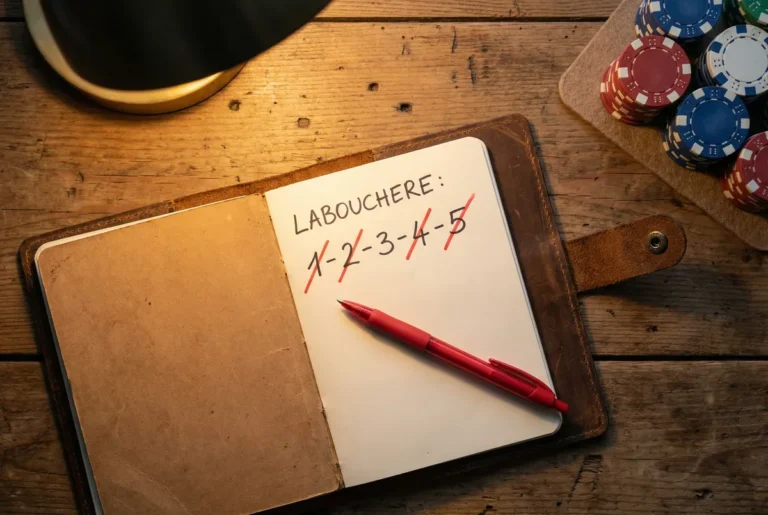
The Labouchere system uses a number sequence to determine bet sizes. Wins cancel numbers from the ends. Losses add numbers.…
Why Winning Streaks are Just Short Term Statistical Variance
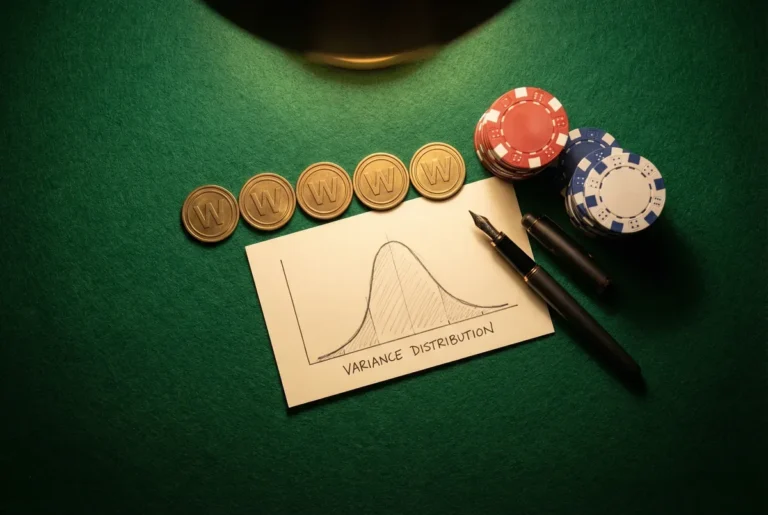
Winning streaks feel like momentum, but the mathematics say otherwise. Every hot run in blackjack is a cluster of positive…
How to Handle a Large Blackjack Win at the Casino Cashier Safely
Winning big at blackjack is great until you handle it poorly. Learn when casinos report winnings, how to color up…