
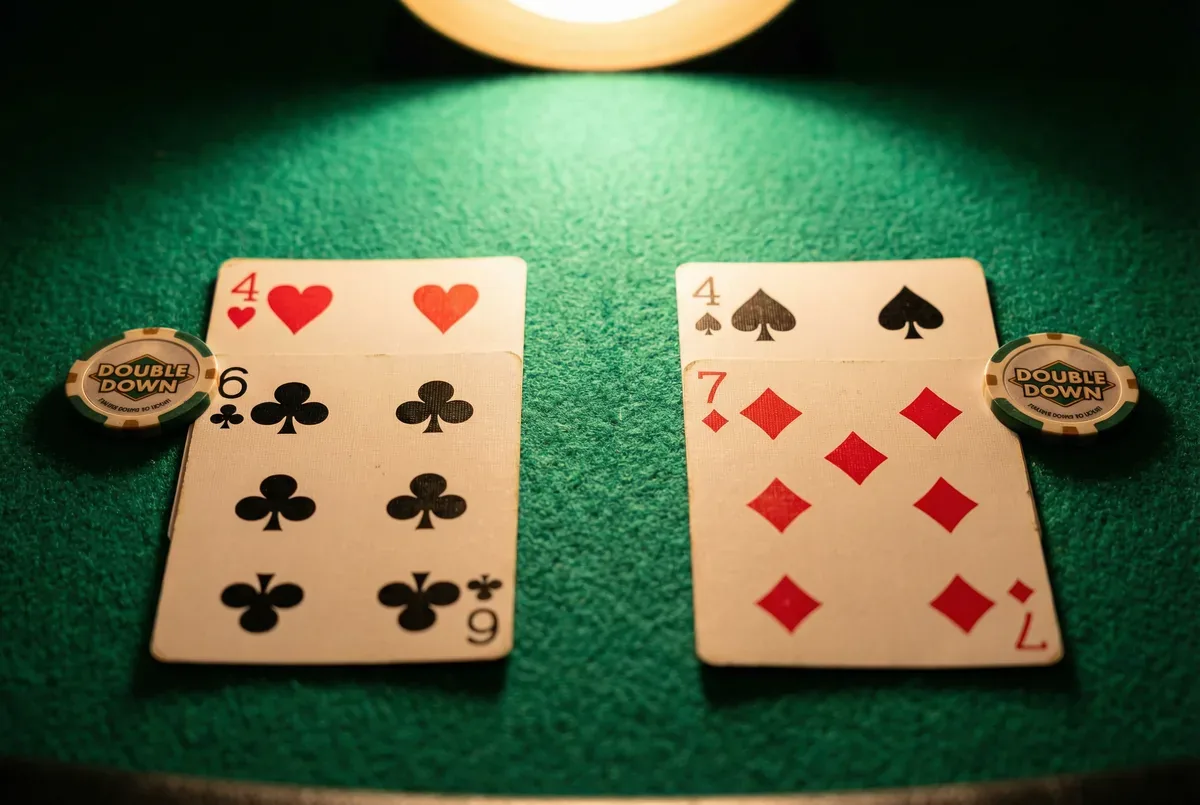
Basic Strategy for Spanish 21
Spanish 21 is played with a standard 6- or 8-deck shoe from which all four 10-pip cards have been removed from each deck. The jack, queen, king, and ace remain only the numerical 10 is gone. This produces a 48-card deck instead of 52. The removal of 10s reduces the frequency of 10-value cards from 16 out of 52 (30.8%) to 12 out of 48 (25%). That 5.8-point reduction in 10-density has cascading effects on expected value for doubles, hits, and splits. Spanish 21 compensates the player with enhanced payouts (suited 6-7-8 and 7-7-7 bonus, any 5-card 21 pays 3:2, player 21 always wins) but the blackjack strategy chart requires meaningful adjustments from standard blackjack. Using standard strategy in Spanish 21 is a significant mistake.
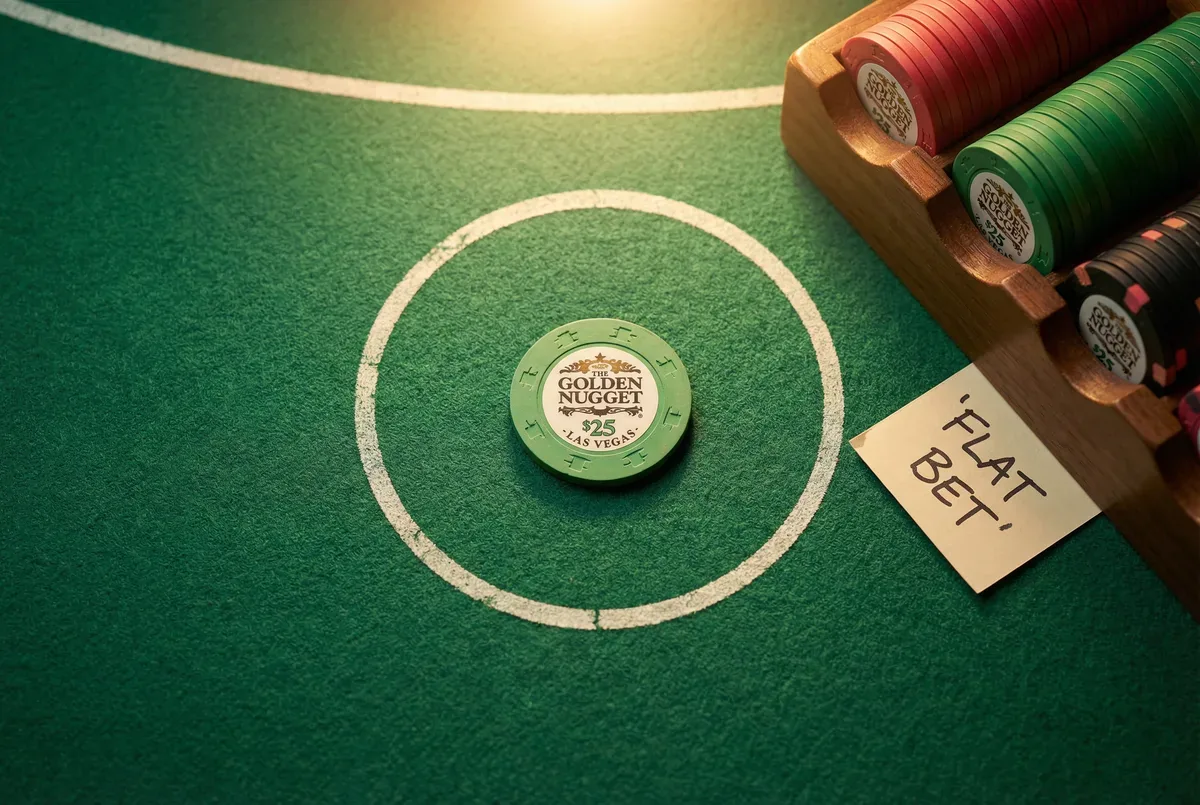
Spanish 21 Uses a 48-Card Deck and It Changes the Strategy Chart Significantly
- 48-card deckall four 10-pip cards removed per 52-card deck
- 10-value card frequency25% (vs 30.8% in standard blackjack)
- Player 21 always wins even vs dealer 21
- Enhanced payouts5-card 21 pays 3:2, 6-7-8 suited pays 3:2 or better
- Late surrender allowed on any number of cards (most venues)
- Re-splitting aces usually permitted
What Is the Hard Total Deviations in Spanish 21?
With fewer 10-value cards available, doubling on hard 10 and hard 11 becomes less aggressive than in standard blackjack. In standard 6-deck, hard 11 doubles against all upcards 2–10. In Spanish 21, the reduced density of 10s means hard 11 doubles against dealer 2–9 only, hitting against dealer 10 and Ace. Hard 10 doubles against dealer 2–8 in Spanish 21 versus 2–9 in standard. These are the most important hard-total deviations: the fewer 10s in the shoe, the lower your probability of completing a 20 or 21 on a double, which narrows the profitable doubling range.
Stiff hand decisions also shift. Because you are less likely to draw a 10 to a stiff hand and bust and the dealer is equally less likely to draw a 10 to complete their own hand the dealer’s effective bust probability against weak upcards slightly changes, and hit/stand borderlines shift accordingly. Hard 15 becomes a hit against dealer 4 in some Spanish 21 rule sets rather than the standard stand. Always use a Spanish 21-specific chart; standard chart deviations compound quickly in this game.
Standard Blackjack
Spanish 21
- Hard 11: Double vs 2-9 only
- Hard 10: Double vs 2-9
What Are Soft Hand and Pair Splitting Deviations?
Soft hand strategy in Spanish 21 follows the same structural logic as standard blackjack but with narrowed doubling ranges. Soft 18 (A-7) is still a double against dealer 4–6 in most Spanish 21 implementations, but the range does not typically extend to dealer 3 as it does in some standard game rule sets. Soft 15 and below (A-4 and below) tend to tighten from double to hit against some of the borderline upcards. The reduced 10-density means drawing to a soft hand produces fewer strong completions than in standard blackjack, reducing the expected value of doubling marginal soft hands.
Pair splitting in Spanish 21 benefits from the enhanced post-split rules: re-splitting aces is typically allowed, and doubling after split is standard. The pair splitting chart itself largely mirrors standard blackjack split 8s always, never split 10s, split Aces always. However, the enhanced 21 bonus payouts mean that five or more card 21s are more valuable, which slightly increases the attractiveness of drawing multiple small cards on split hands to reach bonus-qualifying totals. This is an advanced consideration beyond blackjack basic strategy.
Dealer Shows
Your Hand
Hard 11 vs dealer 9 in Spanish 21. Is this a double or a hit?
Despite fewer 10s, hard 11 vs dealer 9 remains a double in Spanish 21 because dealer 9 still has meaningful bust probability and the two-card 21 completion frequency is sufficient to justify the extra bet. The deviation only kicks in against dealer 10 and Ace, where the risk/reward calculus changes.
What Is Spanish 21 vs Standard Blackjack?
The blackjack house edge in Spanish 21 under optimal strategy is typically 0.40–0.76% depending on the specific rule set. This is competitive with standard 6-deck blackjack (0.44% under ideal rules) but only if you are using the correct Spanish 21 strategy. The enhanced bonus payouts (player 21 always wins, 5-card 21 at 3:2, suited 6-7-8 bonuses) partially offset the cost of the missing 10s but only partially. A player using standard blackjack strategy in Spanish 21 gives up roughly 3–4% additional blackjack house edge. The game rewards players who understand the specific adaptations; it punishes those who assume the same chart applies.
Apply Spanish 21 Adjustments Before Playing for Real
Spanish 21 tables are common in many US and international casinos. If you encounter one and want to play correctly, make sure you have the variant-specific chart memorized before sitting down. For an understanding of how live dealer dynamics feel under these rules, apply this strategy at a live table can help you build comfort with live table pressure though those are real-money games and should only be used when your strategy for whatever variant you’re playing is already sharp.
Frequently Asked Questions
Not inherently. The bonus payouts partially compensate for the removed 10s, but the net house edge in Spanish 21 depends on the full rule set at the specific table. Under optimal Spanish 21 strategy, the house edge is competitive but it requires a different strategy chart than standard blackjack.
No. Using standard strategy in Spanish 21 increases the house edge by approximately 3-4%. The reduced 10-density changes enough decisions particularly around doubles on hard 10/11 and soft hands that the standard chart is not accurate for this variant. Use a Spanish 21-specific reference.
It is a rule compensation for the removed 10s. In standard blackjack, player 21 pushes against dealer 21. Spanish 21 gives the player an outright win on any 21 to partially offset the disadvantage created by playing with a depleted shoe. This rule alone adds approximately 0.3% back to the player.
Before you test these plays at a real table, run them through our free blackjack simulator practice unlimited hands at zero cost until every move becomes automatic.
Mathematical Risk Warning
Spanish 21 has a competitive house edge under optimal strategy but requires a variant-specific chart. Using incorrect strategy in Spanish 21 significantly increases expected losses.
Blackjack Academy is an educational resource. All strategy is based on mathematical expectation. Always play within your means.

Written by
Mark AnurakProfessional card counter since 2009 · 500,000+ hands logged · Former Macau advantage player. Studied under Thorp, Griffin & Wong methodology. Full bio →
Learn More
Continue your education with these related lessons.
How to Memorize Basic Strategy Faster
The fastest methods for memorizing blackjack basic strategy chunking by hand category, color-coded chart technique, realistic time estimates, and practice…
The Complete Guide to Pair Splitting Strategy
Pair splitting decisions separate disciplined players from the rest of the table. Master the always-split rules, the never-split traps, and…
The Real Math Behind Splitting Pairs and Why It Boosts Your Edge
The EV math behind every pair splitting decision in blackjack which pairs always split, which never split, and the conditional…