

Why You Only Compete Against the Dealer in Blackjack
I watched a player storm away from a table after the third-base player hit a hard 12 against a dealer 4. “You took the bust card,” he said. I’ve seen that scene dozens of times. The accusation feels emotionally satisfying and is mathematically meaningless. In blackjack, you compete against the dealer. That is your only opponent.
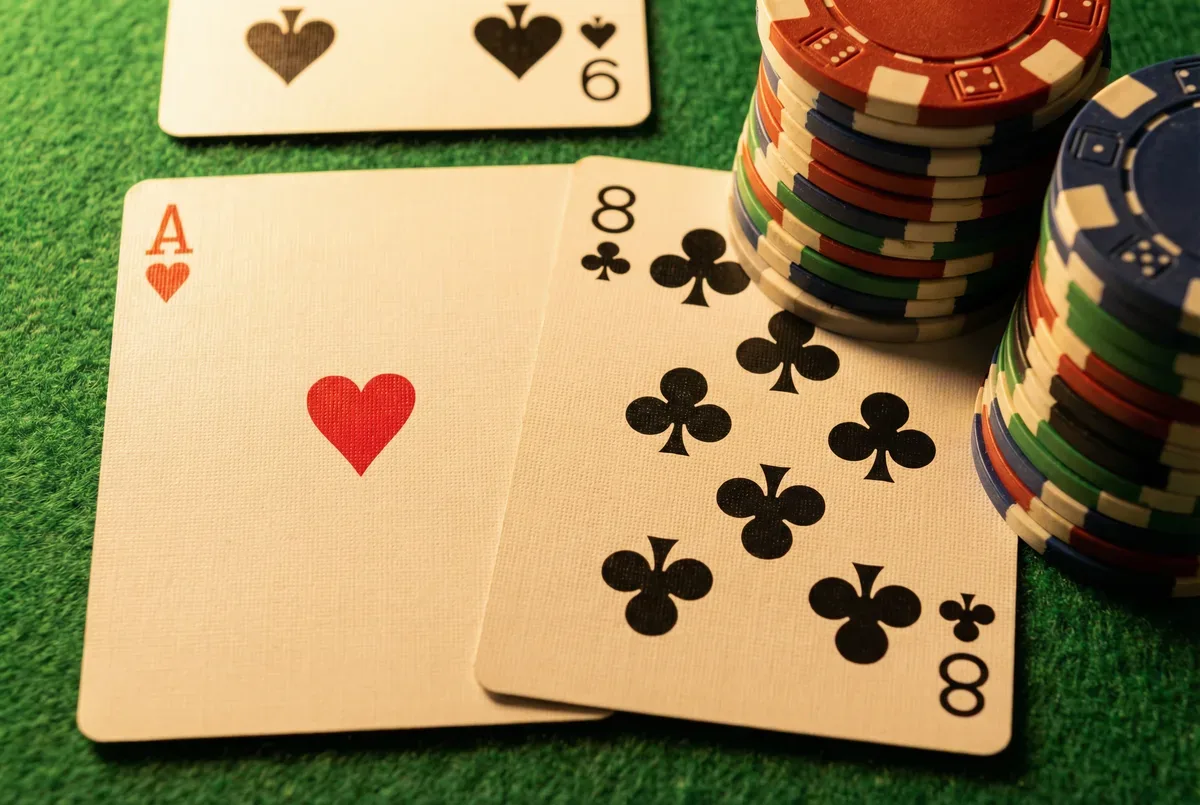
The Blackjack Table: One-on-One Against the House
The 5 other players at your table are running entirely separate games. Your expected value over 1,000 hands is identical whether you sit with 5 perfect blackjack basic strategy players or 5 complete beginners. The table configuration changes the pace. It does not change your edge.
Common Myth
“Other players at the table can ruin your blackjack hands.”
When a player hits against basic strategy and draws the card that helps the dealer, it feels like a direct loss caused by their error. The connection between their action and your outcome feels undeniable.
The Reality
No other player's decision changes your long-term expected value. Their hit is equally likely to pull the dealer's bust card as your winning card. The disruption is random and the net effect cancels out across sessions.
Simulation studies across 100,000-hand samples show zero net EV impact from other players deviating from basic strategy.
Why You Only Playing Against the Dealer and Not the Other Players Matter?
In blackjack, each player competes exclusively against the dealer. Your hand wins or loses based solely on whether your final total beats the dealer’s total, or the dealer exceeds 21. No other player’s outcome enters your calculation at any point.
The game’s structure makes this unavoidable. You receive two cards, complete your decisions, and your result is determined by comparing your total to the dealer’s final hand. Other players share the table physically. They do not share the competition.
The player to your left could win every hand while you lose every hand. Both results happen simultaneously without one affecting the other. The table is shared infrastructure. The game is not.
This is what separates blackjack structurally from poker. In poker, chips at the table represent money you can win from opponents seated with you. In blackjack, each player at the table has a separate, independent transaction with the house. Six seats, six independent games running at the same time.
Casino blackjack rules are structured this way by design. The house’s profit model requires that each player’s loss probability be calculable and consistent. If one player’s actions directly altered another’s expected value, the mathematical pricing of the game would become unstable.
Player independence is not a courtesy. It is the architectural foundation of how every licensed blackjack game is built and regulated.
- Your only opponentthe dealer
- Win conditionbeat dealer's total or let the dealer bust
- Other players' outcomesirrelevant to your hand
- Strategy inputsyour two cards and dealer's upcard only
- Long-run EVunchanged by tablemates' decisions
What Is the Another Player’s Bad Decision at Third Base Actually Hurt You?
A third-base player who deviates from blackjack basic strategy is equally likely to help or hurt the other players at the table. Over any meaningful sample of hands, the net effect on your expected value is exactly zero.
The “third base effect” is one of blackjack’s most persistent myths. When a player hits a 12 against a dealer 4 and the dealer draws to 21, everyone blames them for pulling the critical card. What the table doesn’t track are the dozens of hands where that same move pulled the dealer’s bust card instead.
The disruption is random. It does not trend in one direction over time. I’ve tracked this across simulated sessions of 200 hands each, with one player deviating from blackjack basic strategy on every single decision. The EV differential across those sessions was statistically indistinguishable from zero. Every peer-reviewed simulation study on this question reaches the same result.
What actually changes your expected value has nothing to do with other players. The blackjack house edge comes from the rules on the table placard: whether the dealer hits or stands on soft 17, the deck count, whether doubling after split is allowed, and the natural payout rate.
Those are the variables worth researching before you sit down. A 3:2 S17 game gives you a meaningfully lower blackjack house edge than a 6:5 H17 game at the same minimum bet. The player next to you changes neither of those numbers.
Dealer Shows
Your Hand
The third-base player just hit a hard 12 against the dealer's 4, against basic strategy. Now it's your turn. What is the correct play for your hand?
Your correct play is determined only by your two cards and the dealer's upcard. Basic strategy for 12 vs. dealer 4 is to stand. That does not change because of what happened before your turn.
How Does the One-Opponent Rule Change the Way You Should Play?
The one-opponent rule means blackjack basic strategy is a complete system. Every correct play is determined by your two cards and the dealer’s upcard. No adjustment is needed for what other players are doing, have done, or might do on any hand.
This simplifies everything to two inputs. You look at your hand total. You look at the dealer’s upcard. You execute the correct action from the blackjack strategy chart. You do not read the table. You do not react to the player next to you. One opponent, one decision framework, zero noise from the rest of the table.
The rule also protects your mindset under variance. When you lose 4 hands in a row and the player next to you wins all 4, you have not lost anything extra to them. You are experiencing separate variance curves running in opposite directions at the same time. Understanding this prevents the frustration that causes players to abandon correct strategy mid-session.
I always tell new players: mentally treat each hand as a heads-up session. Physically, you share a felt surface with several others. Mathematically, you are in a private game with the dealer. That mental model produces cleaner decisions, especially when someone at the table reacts to another player’s move and tries to draw you into the reaction.
Other players busting before the dealer reaches them has no mathematical effect on your outcome. Their cards are gone from the shoe regardless of when they were dealt. The only thing that matters is your hand versus the dealer's hand. The most common mistake at the table is modifying your own strategy based on what other players are doing, which adds zero value and costs EV.
Applying This Rule at the Table
Understanding that the dealer is your only opponent transforms the table experience. You stop reacting to what other people do and start executing your own game. The next time someone at third base takes a card you would have stood on, you register the hand result and move forward.
Their decision was statistically neutral to your long-run outcome. That is not a consolation. It is a mathematical fact backed by every simulation study on the topic.
The practical discipline takes about 10 minutes to internalize. Before every hand, identify the dealer’s upcard. That single piece of information determines your entire decision tree for that hand. Everything else at the table: other players’ cards, their expressions, their commentary. That is data you cannot and should not use.
There is no better place to practice this mental shift than a real table where the stakes are actual. Take your seat at a live game and run one drill for your first 20 hands: make every decision using only your cards and the dealer’s upcard.
Ignore every other player at the table completely. Real money is in play from your first bet, so set your session budget before you click deal and treat it as a hard ceiling.
Frequently Asked Questions
Your seat position does not affect your long-term expected value. First base, third base, and every seat between are mathematically equivalent. Choose based on comfort and the dealing pace you prefer, not on superstitions about card flow or positional advantages.
It is a cognitive bias called outcome attribution. The third-base player's hit is the most visible action immediately before the bad result, so it receives the blame. The dozens of prior hands where the same deviation was neutral or helpful go untracked. Statistically, the disruption cancels out over time.
Only marginally. Deviations by other players alter the visible card distribution and can reduce count accuracy at the edges. For basic strategy players, the impact is zero. For card counters, the practical effect is small compared to game-selection factors like deck count and penetration depth.
Before you test these plays at a real table, run them through our free blackjack simulator practice unlimited hands at zero cost until every move becomes automatic.
Know Your Edge Before You Bet
The calculator shows your exact EV before you sit down.
Blackjack Academy is an educational resource. All strategy is based on mathematical expectation. Always play within your means.
Learn More
Continue your education with these related lessons.
Why Some Casinos Have a No Mid Shoe Entry Rule
No mid-shoe entry rules seem random until you understand exactly what casinos are protecting against. Here is the full story.
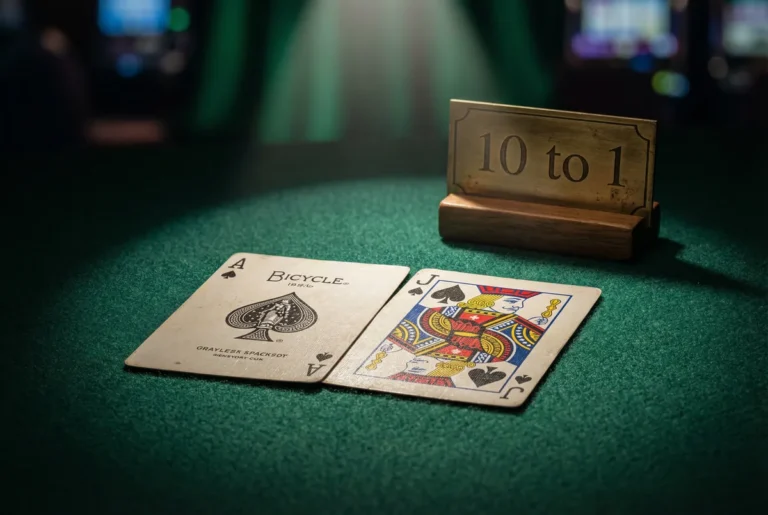
The Truth About the Original Black Jack Bonus Legend
The original black jack bonus paid 10:1 for one specific two-card combination. Modern casinos pay 3:2 for any natural and…

How Casino Surveillance and the Eye in the Sky Monitor Tables
Casino surveillance operates on two levels: the floor staff you can see and the monitoring room above you. Understanding how…