

When to Hit or Stand in Blackjack for the Best Results
I watched a player at a downtown Vegas table stand on every 15 and 16 for an entire shoe. Same move, every time, regardless of what the dealer showed. He lost over $400 in that stretch. The frustrating part? He only needed to change one decision to cut his losses significantly. Hit or stand accounts for roughly 85% of every hand you play. The difference between guessing and knowing the correct play is approximately 2% in blackjack house edge. Over 400 hands at $25, that gap costs about $200. Knowing when to take a card and when to stop is the foundation of everything I teach.
What Hitting and Standing Mean in Blackjack
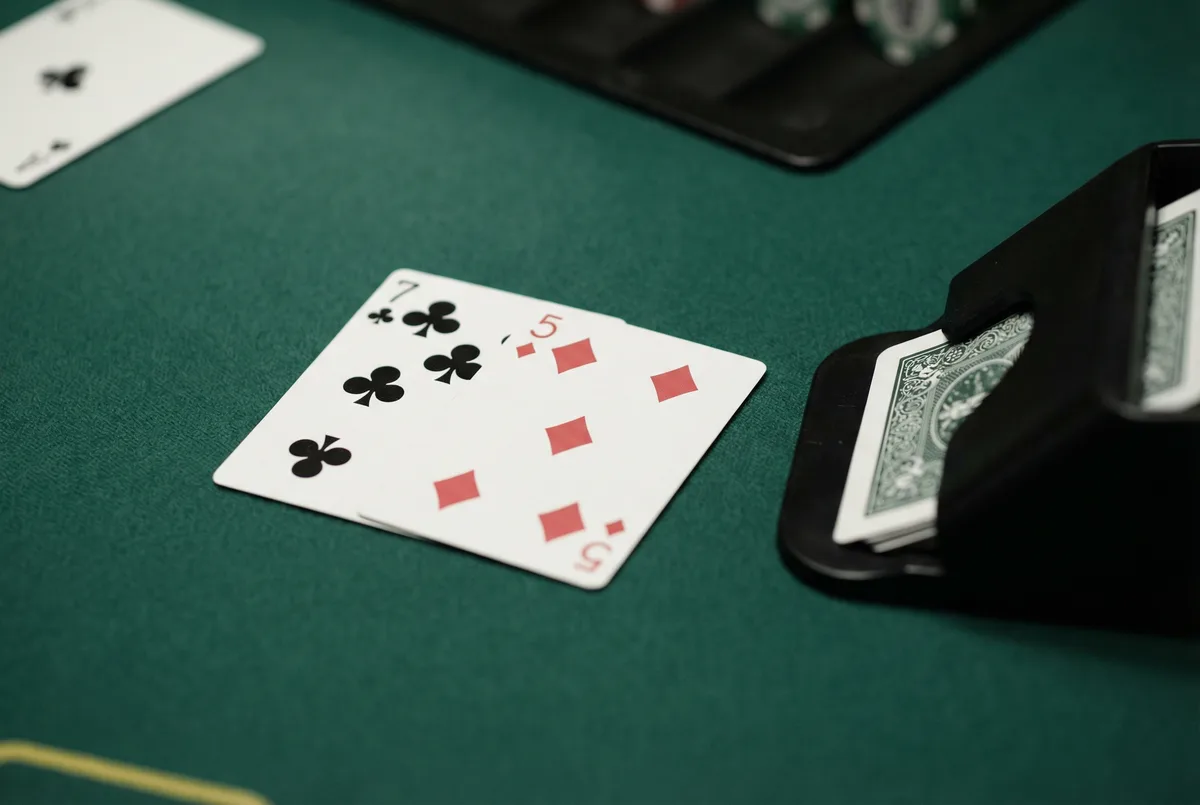
Hitting means requesting one additional card from the dealer. You can hit as many times as you want until you either reach a total you are satisfied with or exceed 21 and bust. Standing means you are done taking cards. Your current total is your final hand. Once you stand, the dealer plays their hand according to fixed house rules.
At a physical table, you signal a hit by tapping the felt behind your cards or scratching toward yourself. You signal a stand by waving your hand horizontally over the cards. These hand signals are required at most casinos because they create a visual record for the surveillance cameras. Verbal requests alone are not always accepted.
⚠ Alert
The Never Bust Fallacy
Standing on every 12 through 16 to avoid busting is one of the most expensive habits in blackjack. Against a dealer 7 or higher, your stiff total will lose most of the time whether you hit or not. Hitting gives you a chance to improve. Standing guarantees you stay weak.
The dealer has no choice in this process. The dealer must hit on 16 or below and stand on 17 or above (at most tables). The dealer cannot choose to stand on 15 because they feel lucky. This mechanical rule is what makes blackjack basic strategy possible. Because the dealer follows a fixed algorithm, you can calculate the exact probability of every outcome based on your hand and the dealer’s visible upcard.
Why Does the Dealer’s Upcard Drive Every Hit and Stand Decision You Make?
Your hand total alone does not determine whether to hit or stand, the dealer’s upcard is equally important and always part of the calculation. The dealer’s upcard is equally important. A hand of 16 plays completely differently against a dealer 6 than against a dealer 10. Against a 6, the dealer has a roughly 42% chance of busting. You stand on 16 and let the dealer take the risk. Against a 10, the dealer is likely to make 17 through 21, so your 16 will lose most of the time whether you hit or stand. But hitting gives you a slightly better expected value than standing, so you take the card.
Dealer Shows
Your Hand
You have hard 16 against a dealer 6. What is the correct play?
Stand on hard 16 against a dealer 6. The dealer has a 42% chance of busting with a 6 showing. Let the dealer take the risk instead of risking your own bust.
This is the core principle of blackjack basic strategy: your decision is always a function of two variables, not one. Your total and the dealer’s upcard together determine the correct play. A chart that maps every combination of player hand versus dealer upcard is called a blackjack basic blackjack strategy chart, and it has been mathematically proven to minimize the blackjack house edge to roughly 0.5% under standard rules.
Dealer upcards fall into two groups. Cards 2 through 6 are weak because the dealer has a higher probability of busting. Cards 7 through Ace are strong because the dealer is more likely to make a pat hand (17 through 21). Your strategy shifts depending on which group the upcard falls into. Against weak upcards, you stand more often and let the dealer bust. Against strong upcards, you hit more aggressively because standing on a low total is almost certainly a loss.
What Is the Hard Hand Rules for When to Hit?
A hard hand is any hand without an Ace counted as 11, and hard hands are straightforward because every card drawn adds directly to your total with no flexibility to adjust. Hard totals are straightforward because every card you draw adds directly to your total with no flexibility. Hard 17 through 21: always stand. You already have a competitive total and hitting risks a bust. Hard 13 through 16 against a dealer 2 through 6: stand. Let the dealer bust. Hard 13 through 16 against a dealer 7 through Ace: hit. Your total is too low to win by standing.
Hard 12 is an exception. Against a dealer 2 or 3, you hit. The dealer does not bust often enough with these upcards to justify standing on such a weak total. Against a dealer 4 through 6, you stand on hard 12 because the dealer’s bust probability is high enough that the risk of busting yourself outweighs the benefit of improving your hand.
Hard 11 and below can never bust on a single hit, so you always take a card (or double down when conditions favor it). There is zero risk in hitting a hard 11. The worst card you can draw is an Ace, giving you 12. You still have a playable hand.
The hardest hands to play correctly are 12 through 16 against a dealer 7 or higher. These are losing hands no matter what you do. The goal is not to win them. The goal is to lose less. Hitting gives you a chance to improve to 17 through 21, which is better than standing on a total that will almost certainly lose when the dealer reveals a strong hand. Over 300 hands, playing these borderline hands correctly instead of guessing saves you roughly $40 to $60 at a $25 table.
What Are the Soft Hand Rules?
A soft hand contains an Ace counted as 11, and soft hands allow more aggressive play than hard hands because the Ace provides bust protection on the next card. Soft hands are more aggressive because the Ace provides bust protection. Soft 19 and 20: always stand. These are strong totals and improving them is nearly impossible. Soft 18 is the most misplayed hand in blackjack. Against a dealer 2, 7, or 8, you stand. Against a dealer 9, 10, or Ace, you hit. Against a dealer 3 through 6, you double if allowed (or hit if doubling is not available).
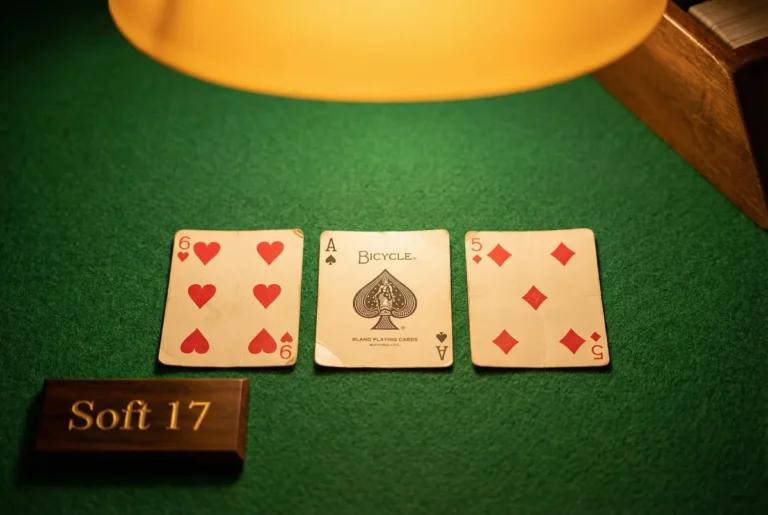
Soft 17 and below: always hit or double. Never stand on soft 17. This total is too weak to compete against any dealer upcard, and the Ace means you cannot bust on the next card. Standing on soft 17 is one of the most expensive mistakes a recreational player can make. The expected value difference between hitting and standing on soft 17 is significant enough that it shows up in your results over a single session.
The single frame of the hit or stand decision that new players get wrong most often is hard 12 against a dealer 2 or 3. Every instinct says stand when the dealer is weak. The correct play is to hit, because the dealer busts less often on a 2 or 3 than on a 4, 5, or 6, and 12 is a weak enough total that hitting recovers EV. That exception is worth memorizing early.
Soft 13 through soft 16 are hands where doubling against a dealer 5 or 6 is the optimal play. If the table does not allow doubling, hit instead. But never stand. These totals are too weak to win on their own, and the Ace gives you the freedom to improve without risk. Think of soft hands as opportunities, not finished totals.
Here is a useful mental shortcut for soft hands: if your soft total is 17 or below, you always take action. If your soft total is 19 or above, you always stand. Soft 18 is the only hand where you need to check the dealer’s upcard carefully. Memorize the soft 18 rules separately and the rest of the soft hand strategy falls into place naturally.
Common Mistakes and How to Avoid Them
The most common mistake is standing on every hand of 12 through 16 regardless of the dealer’s upcard. Many players have been told “never bust” as a strategy. This is mathematically wrong. Standing on 15 against a dealer 10 loses approximately 54% of the time. Hitting that same hand still loses often, but it loses less frequently than standing. The correct play is the one that loses less, not the one that feels safer.
Another frequent mistake is hitting hard 17 or higher. Once you hold 17, the probability of improving is low and the probability of busting is high. Only 4 cards out of 13 possible values (Ace through 4) will improve a hard 17 without busting. The other 9 values bust you immediately. Always stand on hard 17 through 21. No exceptions, no hunches, no gut feelings.
Misplaying soft 18 is the third major error. Players see 18 and think it is good enough to stand on every time. But against a dealer 9, 10, or Ace, soft 18 is an underdog. Hitting gives you a chance to improve to 19, 20, or 21 with bust protection from the Ace. The expected value of hitting soft 18 against a dealer 10 is higher than standing. Trust the math, not the instinct. Over 500 hands, standing on soft 18 against a dealer 10 every time costs you roughly $15 to $20 more than hitting at a $25 table. That is real money lost to a comfortable habit.
Most players try to learn every rule at once and retain none of them. I learned the chart one rule per session. This session, you never stand on soft 17. Next session, you always hit 12 against a dealer 2 or 3. Stack the rules one at a time until the whole chart is muscle memory. I would tell you to practice on paper, but nothing teaches like the real thing. Sit down at a real table and play 25 hands with the blackjack strategy chart visible. Track every time you want to deviate versus what the chart says. That gap is your edge waiting to be claimed. The money is real from the first hand, so set your bankroll before you begin.
Frequently Asked Questions
Hit. Standing on 16 against a dealer 10 loses about 54% of the time. Hitting still loses often, but the expected value is slightly better. Basic strategy says hit hard 16 against any dealer 7 through Ace.
Only soft 17 (Ace + 6). Always hit or double soft 17 because the Ace provides bust protection. Never hit hard 17. Nine out of 13 possible card values will bust a hard 17.
Because the dealer follows fixed rules (hit on 16 or below, stand on 17 or above), the upcard tells you the probability of the dealer busting or making a strong hand. Your decision to hit or stand is optimized against that probability, not just your own total.
Before you test these plays at a real table, run them through our free blackjack simulator practice unlimited hands at zero cost until every move becomes automatic.
Know Your Edge Before You Bet
The calculator shows your exact expected value for every hand combination.
Blackjack Academy is an educational resource. All strategy is based on mathematical expectation. Always play within your means.
Learn More
Continue your education with these related lessons.
Master Blackjack Card Values Including Every Face Card and Ace Rule
31 of every 52 cards in a standard deck are worth 10 or 11 points. That ratio determines when to…

Best Blackjack Books for Learning Professional Strategy
Four books define the canon of serious blackjack strategy. Beat the Dealer started it. Basic Blackjack refined it. Professional Blackjack…

Complete Blackjack Table Etiquette Guide Every Serious Player Must Know
Learn the unwritten rules of the blackjack table hand signals, chip buying, tipping, and everything else that separates a smooth…