
What Really Happens When You Bust in Blackjack and How to Avoid It
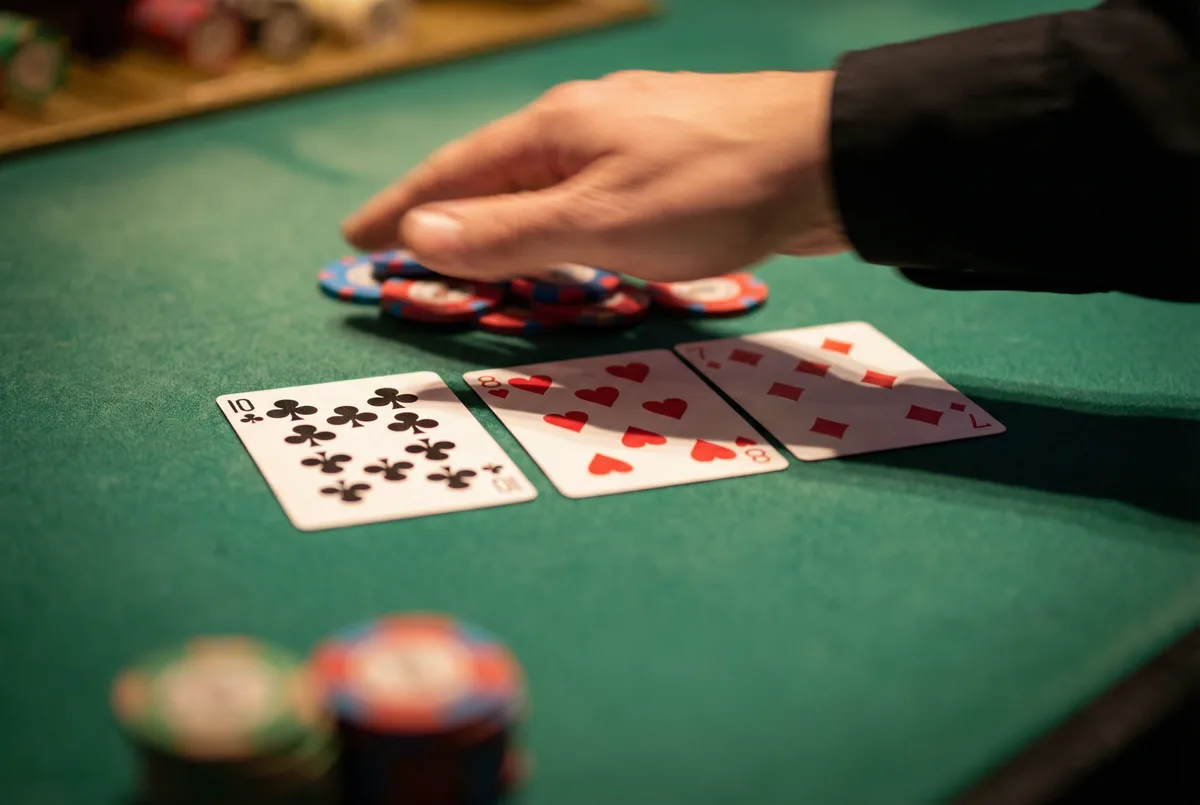
A bust in blackjack occurs when a hand’s total exceeds 21. When you bust, you lose your bet immediately the hand is over without waiting to see what the dealer holds. This is the most fundamental rule asymmetry in the game, and it is the primary source of the casino’s blackjack house edge. Both the player and the dealer can bust, but the player acts first. If you draw to 22 and lose your bet immediately, it does not matter whether the dealer would have also busted your money is already gone. The dealer busting would have been a push if you had survived, but since you busted first, there is no push. This sequencing advantage, sometimes called the double-bust rule, is where the casino’s long-term profit comes from.

What Busting Means in Blackjack
Player bust probability on 12
of draws
What Is the Dealer Acts Last?
If both player and dealer had identical rules and acted simultaneously, blackjack would be close to a 50/50 proposition. The game would be close to break-even because the card distributions are shared every player at the table draws from the same shoe as the dealer. The advantage the house holds comes almost entirely from the sequencing rule: players act first, and if they bust, the house collects without any further play. The dealer could subsequently draw 25 and it would not matter your chips are already in the rack.
The double-bust scenario where both the player and the dealer would exceed 21 in the same round occurs in approximately 8% of hands in a standard game. In a theoretical coin-flip version of blackjack, those hands would be pushes. In the real game, they are losses for the player. This 8% is not pure house profit the player also receives 3:2 on naturals (increasing returns) and has options like doubling and splitting but the double-bust rule is the bedrock of the casino’s structural advantage that no amount of strategic play fully eliminates.
Common Myth
“If the dealer busts a lot, the player must be winning”
Players naturally associate dealer busts with their own wins and mentally link the two.
The Reality
You only win when the dealer busts if you are still alive in the hand not busted yourself.
If you hold hard 16 and hit, you bust 62% of the time. On those hands, a subsequent dealer bust is irrelevant you already lost. Standing on 16 against a bust-prone dealer upcard is often mathematically correct precisely because it preserves your chance to benefit from the dealer's bust.
What Happens to Side Bets When You Bust?
Side bets are settled independently from the main bet on most blackjack tables. When you bust your main hand, the side bet is not necessarily lost it depends on the specific side bet’s rules. The 21+3 side bet (which pays based on your first two cards plus the dealer’s upcard forming poker combinations) is settled before your playing decisions, so a bust on your main hand has no effect on it. Perfect Pairs is also evaluated on the initial deal and settled separately.
However, some side bets are directly tied to the outcome of your main hand. The “Bust It” side bet, available at some casinos, pays when the dealer busts and since that bet pays on a dealer outcome rather than your own, your bust is irrelevant to its settlement. Insurance is an exception to all of this: insurance is a bet on whether the dealer has a natural blackjack, and it is settled before play begins. You can win the insurance bet while busting your main hand, or lose the insurance bet and win your main hand. They are always treated as separate wagers. Regardless, the blackjack house edge on all common side bets exceeds 4%, making none of them mathematically rational for a blackjack basic strategy player.
The correct response to a bust-prone hand is not to avoid hitting it is to make the mathematically correct decision based on probabilities. On a hard 12 against a dealer 2, the bust risk of hitting is 31% but the expected value still favors hitting in some shoe compositions. Strategy charts encode these calculations so you do not have to run them at the table.
What Is Push vs. Loss?
In standard blackjack, any player bust is an automatic loss regardless of the dealer’s outcome. There is no push scenario when a player busts the word “push” (a tie) only applies when both player and dealer complete their hands with equal totals. If you stand on 18 and the dealer also reaches 18, that is a push and your bet is returned. If you bust at 23 and the dealer busts at 24, that is a player loss not a push.
Some blackjack variants alter this rule. Free Bet Blackjack uses a rule where if the dealer busts with exactly 22, all remaining player bets push instead of winning. This rule modification sometimes called the 22 push rule is the trade-off the casino makes for offering free doubles and splits. The 22 push rule adds approximately 6.8% to the blackjack house edge relative to standard rules, which is why the free doubles and splits are required to make the game at all viable. Understanding that bust-rule modifications fundamentally change the game’s math is essential before sitting at any variant.
Practicing Bust Management in Real Conditions
The only way to develop genuine comfort with bust decisions particularly on hard 15 and 16 against strong dealer upcards is repeated exposure with real decisions. The experience this rule with real money on the line in your next session section provides a real-money environment for practicing these edge decisions under genuine pressure. A caution that applies directly to bust decisions: the temptation to stand on a stiff hand to avoid busting is one of the most common deviations from correct strategy, and it is costly over time. Real money stakes can amplify that temptation. Only play there when your blackjack basic strategy is already consistent.
Frequently Asked Questions
No. Late surrender must be declared as your first action on a hand, before any hit cards are taken. Once you draw a card, the surrender option is forfeited and you must play the hand to completion. Early surrender, where available, is declared before the dealer checks for a natural.
Drawing to a hard 16, you will bust on any 6, 7, 8, 9, or 10-value card that is roughly 8 out of 13 possible card values, giving a bust probability of approximately 62%. Despite this high bust rate, hitting hard 16 against a dealer 7 through ace is still correct because the alternative standing loses even more frequently against those strong dealer upcards.
No. In standard blackjack, a player bust is an immediate, unconditional loss. The dealer's outcome is irrelevant once you have exceeded 21. This sequencing rule is the fundamental source of the house's structural advantage in the game.
Before you test these plays at a real table, run them through our free blackjack simulator practice unlimited hands at zero cost until every move becomes automatic.
Mathematical Risk Warning
Bust decisions are among the highest-frequency decision points in blackjack. Deviating from correct strategy on stiff hands to avoid busting is one of the most expensive common mistakes, adding multiple percentage points to your effective loss rate over a session.
Blackjack Academy is an educational resource. All strategy is based on mathematical expectation. Always play within your means.
Learn More
Continue your education with these related lessons.

5 Major Differences Between Casino Blackjack Rules and Home Games
Home blackjack and casino blackjack look like the same game. They are not. The dealer rules, the payouts, the deck…
Why Face Cards are the Most Important Picture Cards in the Deck
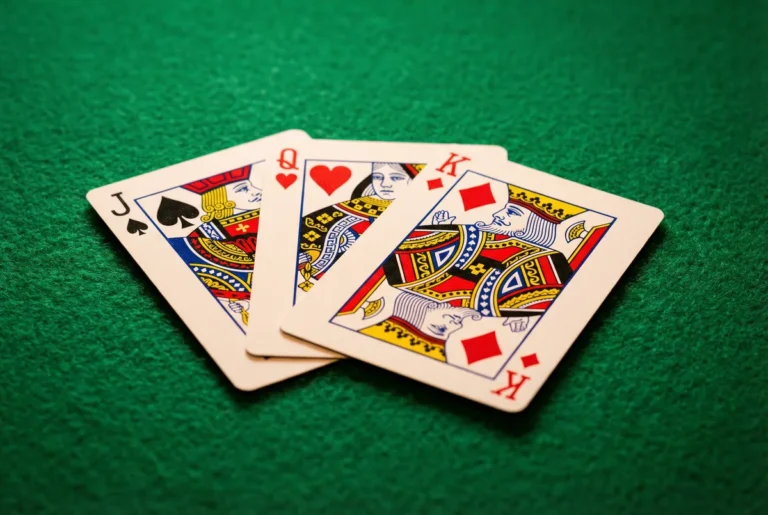
Jacks, queens, and kings each count as 10 in blackjack, making them the most frequent 10-value cards in the deck.…
How to Beat the Dealer in Blackjack Without Going Over 21
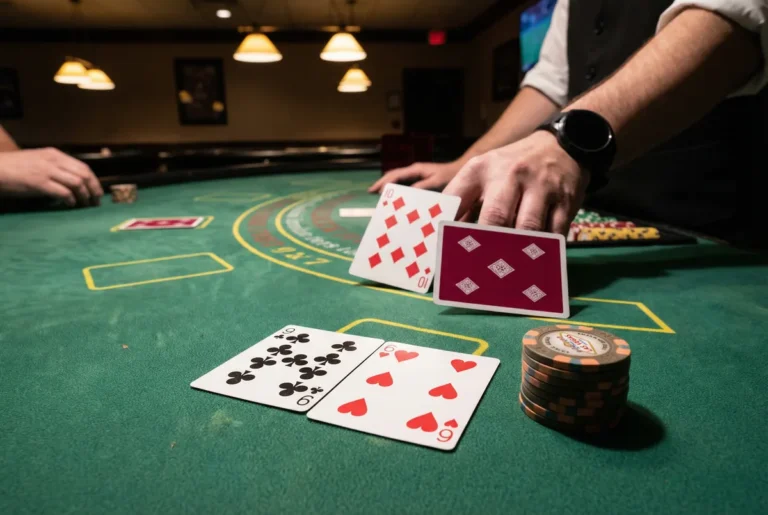
The dealer busts more than 28% of all hands in a standard 6-deck game. That number is the foundation of…