
What Is a Blackjack Natural and Why It Is the Most Powerful Hand
[bja_toc]
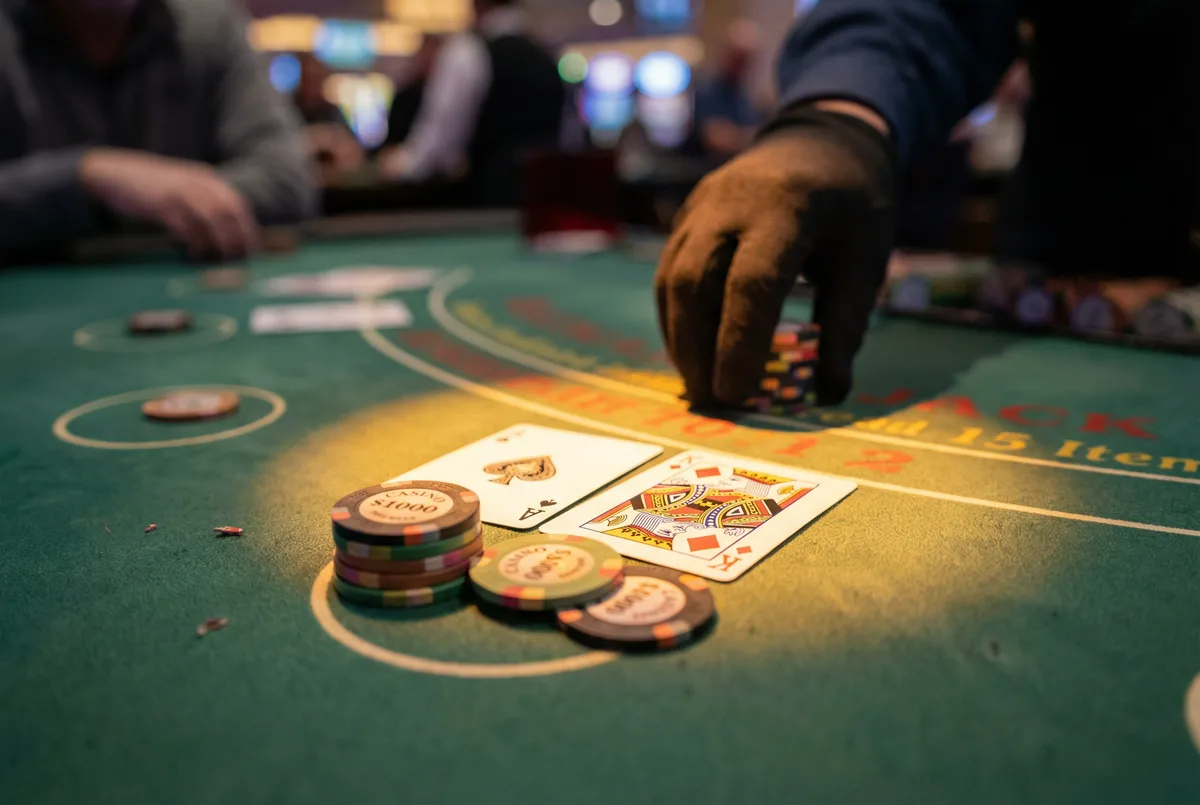
A natural in blackjack is a two-card hand consisting of an ace and any ten-value card — a 10, jack, queen, or king — dealt on the initial two cards of a round. It totals 21 by the highest possible path: the maximum point value achieved with the minimum number of cards, before a single additional card has been drawn. A natural beats every other hand the dealer holds except for another natural, which results in a push. When a player holds a natural, the standard payout in a properly structured game is 3 to 2 — a $100 bet returns $150 in winnings. The natural is the most powerful opening hand in the game, and the rules surrounding it — specifically the payout structure — are the most important thing to check before you sit at any table.
A Natural Is the Strongest Opening Hand in Blackjack
No other two-card combination in blackjack produces a guaranteed win against the dealer’s hand except for the case of a matching dealer natural. A non-natural 21 — a hand that reaches 21 through three or more cards — wins against dealer totals of 20 and below but does not receive the premium payout and does not beat a dealer natural. The natural’s superiority comes from two properties simultaneously: it reaches the perfect total immediately, and it is paid at better than even money. The premium payout is the financial expression of how rare and valuable the hand is.
In a standard six-deck game, the probability of being dealt a natural on any given hand is approximately 4.75% — roughly one in every 21 hands. At a pace of 80 hands per hour, a player can expect to receive a natural roughly four times per hour. Each of those four hands carries a premium payout at a 3:2 table. Across a full session of several hundred hands, those naturals represent a disproportionate share of total winnings — which is exactly why the payout structure attached to them is one of the most consequential rules in the game.
| Bet Size | 3:2 Payout | 6:5 Payout |
|---|---|---|
| $10 | ||
| $15.00 | ||
| $12.00 | ||
| $25 | ||
| $37.50 | ||
| $30.00 | ||
| $50 | ||
| $75.00 | ||
| $60.00 | ||
| $100 | ||
| $150.00 | ||
| $120.00 | ||
| $200 | ||
| $300.00 | ||
| $240.00 |
Why Does the 3:2 vs 6:5 Payout Gap Change Everything?
The difference between a 3:2 and a 6:5 payout on a natural may look small in isolation — $37.50 versus $30 on a $25 bet — but its cumulative effect across a session is substantial and measurable. At four naturals per hour on a $25 table, a 3:2 game pays $150 in premium winnings per hour from naturals alone. A 6:5 game pays $120 for the same hands. That $30 differential per hour translates directly into a 1.4 percentage point increase in house edge extracted from your most profitable hands. Over a 4-hour session, the 6:5 payout rule costs you approximately $120 in expected value compared to a 3:2 game at the same table and bet size.
The 6:5 rule was introduced on single-deck games in Las Vegas in the early 2000s as a mechanism to offset the player advantages of single-deck play. It spread to multi-deck games and other markets across the following decade, and today 6:5 tables are common enough in popular casino locations that players who do not know to look for the payout structure regularly sit down and play at a significant structural disadvantage without realising it. The payout ratio is printed on the felt or displayed on a placard at the table. Check it before you place any chips — after the first hand is not soon enough.
Some tables display “Blackjack pays 3:2” in large text on the felt. Others display “Blackjack pays 6:5” or, in the worst cases, display nothing prominently and bury the rule in fine print. A 3:2 game with otherwise average rules is almost always a better bet than a 6:5 game with otherwise favourable rules. The payout on naturals is a non-negotiable threshold — it is the single most impactful rule difference between blackjack tables, and the one players most frequently overlook.
Common Myth
“Single-deck games are always better for the player”
Players associate fewer decks with lower house edge and assume single-deck tables are the best available game
The Reality
Single-deck games almost always pay 6:5 on naturals in modern casinos — which makes them worse than a well-structured six-deck game paying 3:2
A single-deck 6:5 game carries a house edge of approximately 1.45%. A six-deck 3:2 game with standard rules carries approximately 0.44%. The extra decks cost less than the payout cut.
Why Is a Two-Card 21 Called a Natural and Not Just a Blackjack?
The term “natural” originates from the game’s earlier forms, where reaching 21 on the initial two cards was considered the most natural possible expression of the game’s objective — no drawing required, no bust risk, the perfect result achieved immediately. The word “blackjack” technically refers to the specific original hand combination — a black jack (jack of clubs or jack of spades) plus an ace — that earned a special bonus in early versions of the game. Over time, “blackjack” expanded to describe any natural and eventually the game itself. “Natural” remains the precise term for the two-card ace-plus-ten combination regardless of which suit or which ten-value card is involved.
A hand of 21 built from three or more cards is not a natural and does not qualify for the 3:2 premium payout. Drawing to 21 — a sequence of 5-6-10, or 7-7-7 in a game where that is possible — beats all dealer totals of 20 and below and pays 1:1 even money. It does not beat a dealer natural. If the dealer holds an ace-king and you hold a three-card 21, the dealer wins. This distinction matters in practical terms: a player who draws to 21 with three cards and then watches the dealer flip a natural has lost the hand. A player who receives a natural can only push against a matching dealer natural — they cannot lose to a dealer three-card 21.
Dealer Shows
Your Hand
You hold Ace-King (a natural) against a dealer Ace. The dealer offers insurance. What is the correct play?
When you hold a natural, insurance is offered as 'even money' — a guaranteed 1:1 payout instead of risking the 3:2 against a potential dealer natural. Basic strategy says decline it every time. Your natural pushes against a dealer natural — you never lose — so the insurance bet is protecting against a non-loss. The 3:2 payout on all other outcomes makes declining clearly correct.
How Do Dealer Naturals Work and What Happens to Your Bet?
When the dealer holds a natural, all player bets at the table lose immediately — including any additional amounts placed through doubling or splitting — except for players who also hold a natural, whose original bets push. In standard North American games, the dealer peeks at their hole card before any player acts whenever they show an ace or ten-value upcard. This peek mechanic means that if the dealer has a natural, it is revealed before you take any action, preventing you from doubling or splitting into a guaranteed loss.
In European and some other games, no-hole-card rules apply: the dealer receives only one face-up card at the start of the round and does not receive a second card until all players have acted. If you double or split and the dealer then completes a natural, you lose the additional wager. This is a meaningful strategic difference — in no-hole-card games, basic strategy adjustments are needed specifically to avoid aggressive doubling and splitting against ace and ten upcards where the dealer may still complete a natural.
The probability of a double natural — both the player and the dealer receiving a natural on the same hand — is approximately 0.23% in a six-deck game, or roughly once every 435 hands. At 80 hands per hour, this occurs about once every five and a half hours of play. The hand produces a push rather than a 3:2 win, which is the source of the even-money offer the casino makes in those moments. Understanding that a double natural push is genuinely rare prevents you from overweighting it in your decision-making about insurance.
The most costly single mistake a player makes involving a natural is accepting even money. Over hundreds of naturals, declining even money and taking the 3:2 whenever the dealer does not also have blackjack adds up to a measurable advantage. The double-natural push only costs you the 3:2 premium on 0.23% of hands. The other 4.5% of naturals are pure 3:2 wins if you decline the insurance offer. Never take even money.
Managing Naturals Correctly at a Live Table
Two habits separate informed players from uninformed ones when a natural appears. The first is always declining insurance and even money — regardless of what the dealer shows. The expected value of a natural, including the small proportion of double-natural pushes, is consistently higher than the guaranteed 1:1 even-money payout. The second habit is reading the payout structure before sitting. The 3:2 versus 6:5 decision happens before you place the first chip — it cannot be corrected after the session begins.
There is one additional natural scenario worth knowing: a natural after splitting aces. In most casinos, when you split aces you receive exactly one additional card per ace. If that card is a ten-value, the resulting hand counts as 21 — not as a natural — and pays even money rather than 3:2. This rule significantly reduces the value of splitting aces in absolute terms, though splitting aces remains correct basic strategy because the alternative of playing a soft 12 without splitting is worse. The reduced payout on post-split 21s is simply a cost built into the splitting decision, not a reason to avoid it.
For practising these decisions and others involving naturals under realistic conditions, the free blackjack simulator flags incorrect insurance decisions in real time and tracks your decision accuracy across hundreds of hands. When you are ready to play against a real dealer at a table that operates under the same payout rules a physical casino uses, a live dealer game with real money is the most direct bridge between simulator practice and a casino floor — confirm the payout structure is 3:2 before you sit down.
Frequently Asked Questions
No. A natural (two-card ace plus ten-value) outranks any hand built from three or more cards, including a three-card 21. A player three-card 21 loses to a dealer natural. Only another natural pushes against a dealer natural.
In most casinos, splitting aces gives you one additional card per ace. An ace plus a ten-value card after a split counts as 21 and pays even money — not 3:2. It does not qualify as a natural for payout purposes, though it still beats all dealer totals under 21.
Basic strategy says no. Declining even money and playing out the natural for the 3:2 payout has higher expected value in the long run. Even money is only mathematically justified in specific card counting scenarios where the true count is high enough to make insurance a positive-EV side bet.
Mathematical Risk Warning
The payout structure on naturals is the largest single rule factor in your expected return. Always confirm 3:2 before sitting. Never play a 6:5 game when a 3:2 game is available.
Blackjack Academy is an educational resource. All strategy recommendations are based on mathematical expectation. Always gamble responsibly and within your means.

Written by
Mark AnurakProfessional card counter since 2009 · 500,000+ hands logged · Former Macau advantage player. Studied under Thorp, Griffin & Wong methodology. Full bio →
Learn More
Continue your education with these related lessons.
Best Blackjack Practice Methods Before Your First Casino Trip
Five proven blackjack practice methods to prepare for your first casino trip, with pros and cons of each and the…
Is Playing Multi Hand Blackjack Actually Better for Your Profit?
Multi-hand blackjack looks like a shortcut to bigger wins but it exposes more money per round. Here is when it…
Why the Dealer Removes a Burn Card Before Starting the Round
The burn card looks like a ritual with no purpose. It has a precise security and procedural function that every…