

Step by Step Guide to Your First Hour Playing Real Money
The table minimum says $10. Six strangers are already seated. The dealer flicks cards across green felt before you have finished pulling out your wallet. Every first-time player faces this moment, and the difference between a confident start and an expensive scramble is preparation done before you walk through the casino door.
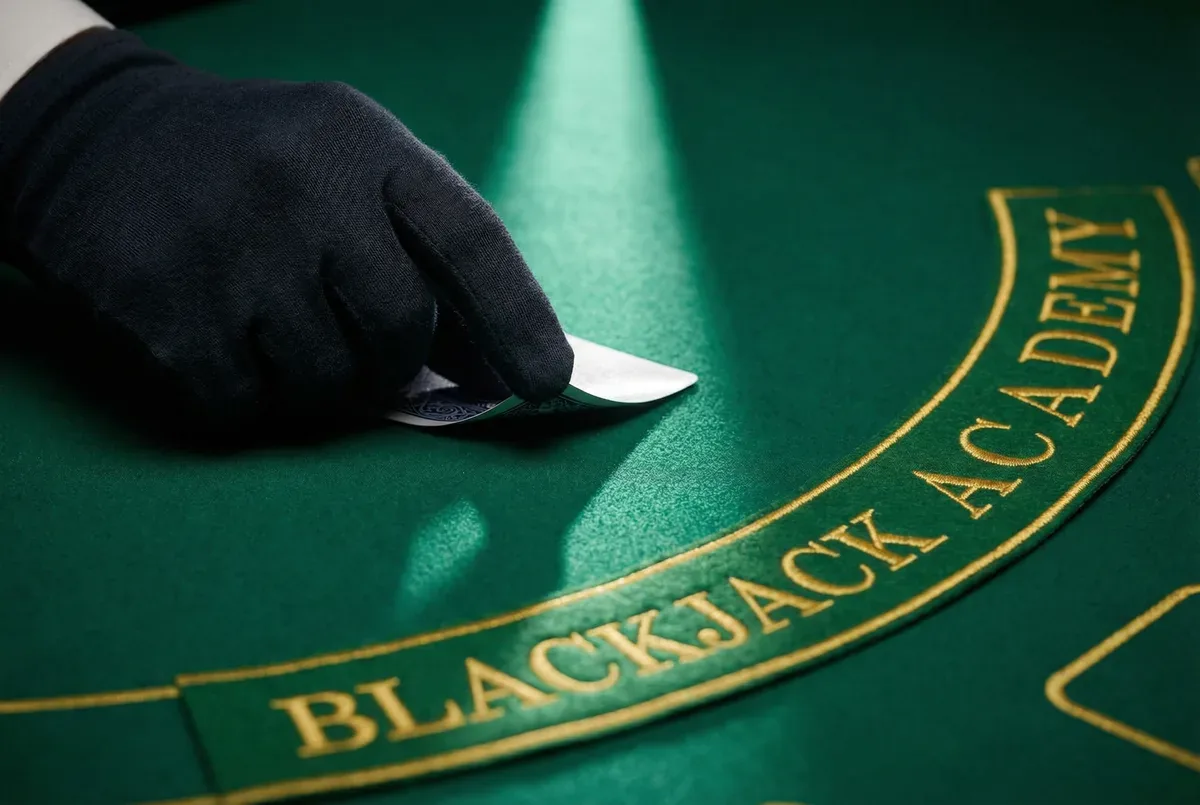
This guide walks through your first hour of real money blackjack from pre-session checklist to post-session review. Follow it in order and you will avoid the three most common mistakes beginners make in their first 30 minutes at a table.
What to Prepare Before Your First Session
Set a session budget before you enter the casino. A reasonable starting point for a $10 minimum table is 20 to 30 times the minimum bet, meaning $200 to $300. This gives enough hands to absorb a losing streak without going bust in the first 20 minutes.
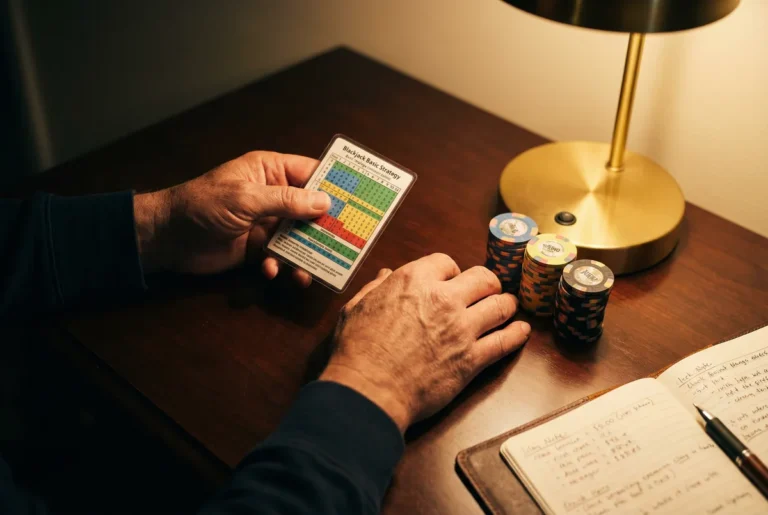
Print or download a blackjack basic strategy card for the specific rule set you expect to play. Most casinos in the United States allow strategy cards at the table. A six-deck S17 card and a six-deck H17 card are different. Using the wrong card costs edge. Confirm the rule set when you arrive.
Review hand signals before sitting. You will need to communicate without speaking: tap the felt to hit, wave your hand flat to stand, place a second chip to double, and point between your cards to split. Knowing these before your first hand prevents fumbling and keeps the game moving smoothly.
- Budget set (20-30x table minimum)
- Basic strategy card downloaded for correct rule set
- Hand signals memorized (hit, stand, double, split)
- Table verified3 to 2 payout, soft 17 rule confirmed
- Phone or card permitted at table confirmed
How to Buy Chips and Join a Table Without Looking Lost?
Wait for the current hand to complete before sitting at an occupied table. Sitting mid-hand is permitted at most casinos but disrupts the flow. Watch one or two hands from behind the table before taking a seat. This gives you time to confirm the payout, read the felt, and observe the pace.
Place your cash on the felt, not in the dealer’s hand. Dealers cannot accept anything handed directly to them. Lay your bills flat and say the denomination you want. The dealer will count the chips, push them toward you, and announce the amount to the pit boss. This is standard procedure, not suspicion.
Start with the table minimum. Put one unit in the betting circle. Do not vary your bet in the first 20 minutes. Focus on correct blackjack basic strategy decisions, not betting patterns. The first session is a learning session regardless of outcome.
Dealer Shows
Your Hand
You hold 6-5 for a total of 11. The dealer shows a 6. What is the correct play?
Dealer is likely to bust. Doubling maximizes value. With 11, any ten-value card gives you 21. This is one of the highest-EV doubles in basic strategy.
When to Hit, Stand, Double, or Split Your First Hands?
Basic strategy covers every two-card combination against every dealer upcard. For your first session, focus on the highest-frequency decisions. Always hit hard totals of 8 or less. Always stand on hard 17 and above. Double on 11 against any dealer card except an ace.
Always split aces and eights, regardless of the dealer upcard. Never split tens or fives. For all other pairs, the decision depends on the dealer upcard. Your strategy card provides the exact answer for every combination.
What Are the Most Common Beginner Mistakes at the Table?
The most expensive mistake is standing on 16 against a dealer 7, 8, 9, 10, or ace. Beginners fear busting and choose to stand, but blackjack basic strategy requires a hit in these situations. The dealer completes their hand regardless of your decision. Playing not to bust ignores the dealer’s probability of winning.
Splitting tens is the second most common error. A pair of tens is a 20, one of the strongest hands in blackjack. Splitting converts a near-certain win into two hands that each need a ten to match the original total. The table will often react visibly if you split tens. The math is clear: never split tens.
Taking insurance is the third mistake. Insurance pays 2:1 but the dealer only has a ten under the ace about 30% of the time. The expected value is negative. Decline it every time, including when you hold a blackjack and the dealer offers even money.
Common Myth
“You should always stand on 12 or higher to avoid busting”
Beginners protect their hand and fear the bust more than the dealer's winning hand
The Reality
Basic strategy requires hitting 12-16 against strong dealer upcards (7 through ace)
Standing 16 vs dealer 10 loses about 54% of the time. Hitting 16 vs dealer 10 loses about 53.5%. The difference is small, but hitting is correct.
How to Conduct a Post-Session Review After Your First Hour
Leave the table when you have exhausted your session budget or after a fixed time limit. Never extend a session to recover losses. The hands that come after your budget runs out are not subject to different mathematics. Extending chases variance, not edge.
After leaving, write down every decision you were uncertain about. Did you hit or stand in a specific situation without consulting your strategy card? Did you decline a double because the bet felt too large? These are the gaps to close before your next session.
Use a free simulation tool to replay those uncertain hands before your next casino visit. The live practice mode at follow this first-hour plan at a real-money live dealer table lets you drill those specific situations with real decision feedback, without putting real money at risk while you learn.
Frequently Asked Questions
Yes. Most casinos in the United States allow printed basic strategy cards at the table. Ask the dealer before your first hand if you are unsure. Using a card is not cheating. It does not change the house edge, but it prevents you from deviating from correct play during a session.
Bring 20 to 30 times the table minimum. For a $10 minimum table, that means $200 to $300. This gives enough hands to absorb normal variance without busting your session budget in the first 15 minutes. Set the amount in advance and do not add to it mid-session.
Four signals cover all standard decisions: tap the felt to hit, wave your hand flat over your cards to stand, place a matching chip beside your original bet to double, and point between your two cards to split. These signals are used because casino cameras must record every decision and verbal communication alone is not sufficient.
Use our free blackjack calculator to model the exact expected value for any rule combination or hand situation before you sit down.
Preparation is the First Layer of Real Money Blackjack
The steps in this guide reduce the errors that cost new players the most per session. Basic strategy, a fixed budget, and proper hand signals are free advantages available to every player. Real money blackjack always involves financial risk. Play within your means and never extend a losing session.
All casino blackjack carries a house edge. No beginner guide eliminates the risk of financial loss. Set a budget and stick to it.
Learn More
Continue your education with these related lessons.
Complete Roadmap to Becoming a Professional Blackjack Player
Becoming a professional blackjack player is a 4-stage progression that takes most people two to four years of deliberate practice.…

Why Blackjack Has the Best Odds of Any Game on the Casino Floor
Blackjack has a house edge of 0.28% to 0.5% with basic strategy. Slots average 5%. Roulette runs 2.7% to 5.26%.…

Is First Base or Third Base the Best Seat at a Blackjack Table
First base and third base have identical house edges. The myth that third base controls the dealer's fate has been…