
Master Blackjack Card Values Including Every Face Card and Ace Rule
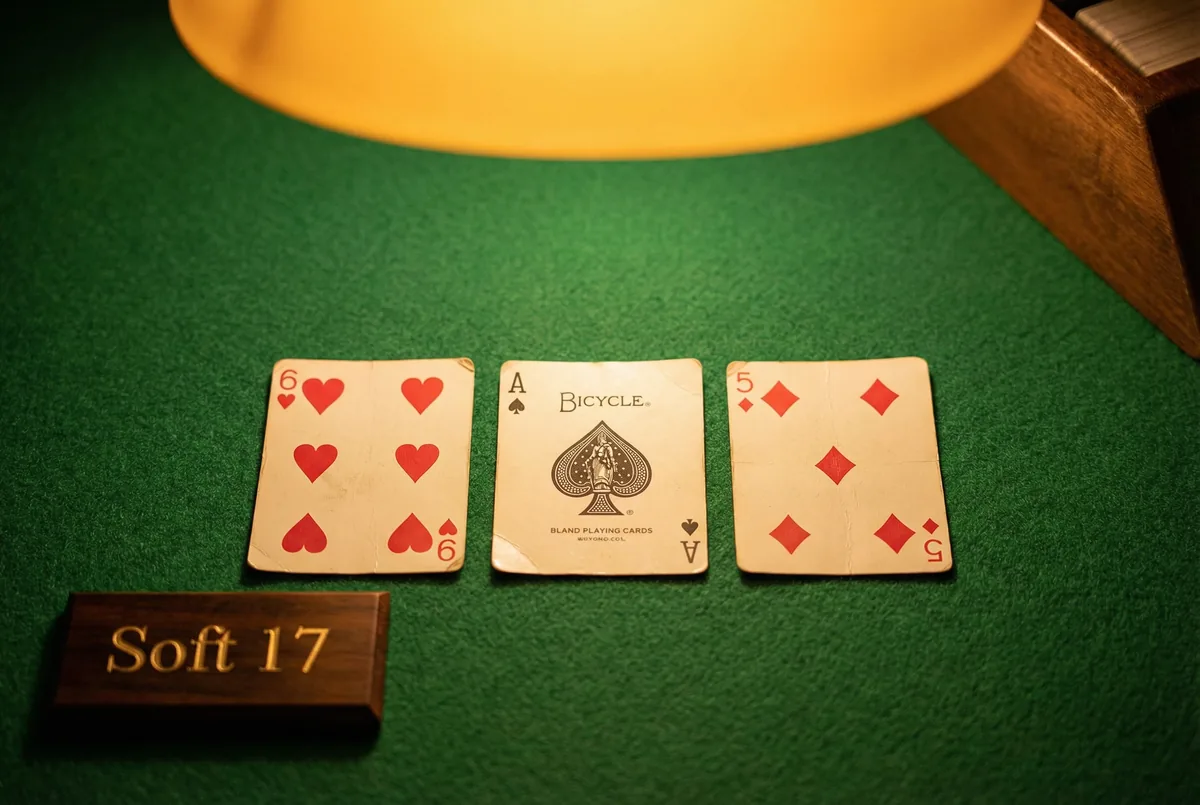
The first time I truly understood card values was not from a book. It was from watching the same Ace change my hand twice in one session. First hand: Ace-6, soft 17, I hit and drew a 5 for hard 12. Second hand: Ace-Jack, natural blackjack, $37.50 back on a $25 bet. One card, two completely different outcomes, both mathematically correct. 31 of every 52 cards in a standard deck are worth 10 or 11 points. That ratio drives every double, every split, and every standing decision you will ever make. This guide covers every card from 2 to Ace and connects those values to the decisions that separate a 0.5% blackjack house edge from a 2% one.
Common Myth
“Face cards are worth more than a plain 10.”
The Reality
Jack, Queen, King, and 10 are all worth exactly 10 points. No distinction exists between them in any blackjack calculation. In a 6-deck shoe, there are 96 plain 10s and 96 face cards: 192 total 10-value cards, all treated identically by every correct strategy matrix.
Numeric Card Values: 2 Through 9
Cards 2 through 9 are worth their face value. A 3 is 3 points. An 8 is 8 points. No suit matters and no exception applies in any standard blackjack game. In a 6-deck shoe containing 312 cards, there are 24 of each denomination, giving you 192 numeric cards total. That is 61.5% of the entire shoe passing through the dealing machine before an Ace or face card appears.
I have played thousands of hands built from these cards, and they create the decisions where most players go wrong. A 7 plus a 6 makes 13. A 4 plus an 8 makes 12. Hard totals of 12 through 16, the stiff zone where correct play requires reading the dealer upcard, are built almost entirely from combinations of numeric cards and 10-value cards. Knowing exactly what each card contributes removes any ambiguity from the calculation and lets you apply blackjack basic strategy by the numbers instead of guessing at the table.
- Cards 2–9192 cards total (61.5% of deck)
- 10-value cards (10, J, Q, K)96 cards (30.8% of deck)
- Aces24 cards (7.7% of deck)
- 312 total cards per 6-deck shoe
- Natural blackjackAce + any 10-value card on opening two cards
- Soft handcontains an Ace counted as 11
- Hard handno Ace, or Ace forced to count as 1
Why 10s, Face Cards, and Kings Are All Worth the Same Points?
The 10, Jack, Queen, and King all carry exactly 10 points each, no hierarchy exists between them in any blackjack calculation. No hierarchy exists inside this group. A Jack is not worth more than a plain 10. A King does not outrank a Queen in any blackjack context. In a 6-deck shoe, this group contains 96 cards representing 30.8% of the deck. Nearly one card in three is a 10-value card, and that density shapes every aggressive play in blackjack basic strategy.
Doubling on hard 11 against a dealer 6 puts extra money into a spot where the probability of drawing a 10-value card sits just under 31%, giving you a strong chance of reaching 21. The same density is why the dealer showing a 5 or 6 creates bust pressure: with a low upcard and a forced draw-to-17 rule, 10-value cards frequently push the dealer into bust territory above 40% of the time. The face-card hierarchy that casual players track at the table is irrelevant. The point value is 10. That is the only number that matters.
How the Ace Works in Blackjack?
The Ace is worth 11 points by default and automatically drops to 1 if counting it as 11 would push your total above 21. If counting it as 11 would push your total above 21, it automatically drops to 1. That flexibility is what makes the Ace the only card in the deck with two possible values. Draw an Ace to a total of 16 and instead of busting at 27, the Ace counts as 1 and you hold a 17. Draw a second Ace to any hand and the second Ace counts as 1 to keep the total under 22.
A natural blackjack is an Ace combined with any 10-value card on your opening two cards. At a 3:2 table, a $25 natural pays $37.50. At a 6:5 table, the same hand pays $30.00. That $7.50 difference adds 1.39% to the blackjack house edge. Naturals occur roughly once every 21 hands, so over 80 hands at $25, the 6:5 rule costs you an extra $10.71 compared to 3:2. Check the payout rule on the felt before placing a chip. The Ace makes a natural possible. The blackjack table rules determine whether sitting down is worth it.
Why the Soft vs Hard Hand Distinction Changes Every Single Decision?
A soft hand contains an Ace counted as 11, and a hard hand has no Ace or contains an Ace that has been forced to count as 1. A hard hand has no Ace, or contains an Ace that has been forced to count as 1. Soft 17 is Ace plus 6. Hard 17 is, for example, 10 plus 7. They show the same total but require completely different decisions. Basic strategy calls for hitting soft 17 in most standard configurations because improvement is possible without bust risk. Standing on soft 17 the same way you stand on hard 17 is one of the most expensive systematic errors a beginner can make.
The strategic advantage of soft hands is the absence of bust risk on the next card. Hit soft 18 against a dealer 9 and draw a 10-value card: the Ace drops to 1 and you hold hard 18, not 28. That downside protection lets you play soft totals more aggressively. Soft 13 through soft 18 each have dealer upcards where hitting is the correct play. Soft 19 and soft 20 stand in virtually every situation because the starting total is already strong. Understanding whether your hand is soft or hard is not a minor detail. It determines the correct play on a meaningful portion of every session you play.
Using Card Values in Real Decisions at the Table
Card values do not exist in isolation. Every decision you make references your hand total against the dealer upcard, and both sides of that comparison are built from card values. When the dealer shows a 4, 5, or 6, those low-value cards create elevated bust probability because the dealer must draw to 17 and a low upcard frequently pairs with a low hole card, requiring multiple draws. Standing on hard 12 through 16 against those upcards transfers the bust risk to the dealer at no cost to you.
You understand how every card maps to its value now, and why the Ace changes everything. I still do this to this day: every time I receive an Ace, I pause and classify my hand as soft or hard before I act. That one-second habit separates players who understand the game from those who just react. Apply this at a real table and practice it for 25 hands. You will feel the difference by hand 10. This is not a blackjack simulator. Every bet is real money, so choose your session amount before you start and stick to it.
Frequently Asked Questions
Cards 2 through 9 are worth their face value. All 10-value cards: 10, Jack, Queen, and King, are worth 10 points each. The Ace is worth 11 points by default and automatically drops to 1 if counting it as 11 would cause a bust. In a standard 6-deck shoe, 30.8% of the deck is worth 10 points.
No. A Jack, Queen, and King are each worth exactly 10 points, the same as a plain 10. No distinction exists between them in any blackjack calculation. Strategy charts treat all four interchangeably because their point value is identical in every possible situation.
A soft hand contains an Ace counted as 11. A hard hand has no Ace, or contains an Ace that has been forced to count as 1. Soft 17 (Ace plus 6) and hard 17 (for example, 10 plus 7) show the same total but require different strategy. Basic strategy calls for hitting soft 17 in most configurations and standing on hard 17.
Before you test these plays at a real table, run them through our free blackjack simulator practice unlimited hands at zero cost until every move becomes automatic.
Know Your Edge Before You Bet
The calculator shows the correct play for any hand total against any dealer upcard under your exact table rules.
Blackjack Academy is an educational resource. All strategy is based on mathematical expectation. Always play within your means.
Learn More
Continue your education with these related lessons.

Best Blackjack Books for Learning Professional Strategy
Four books define the canon of serious blackjack strategy. Beat the Dealer started it. Basic Blackjack refined it. Professional Blackjack…
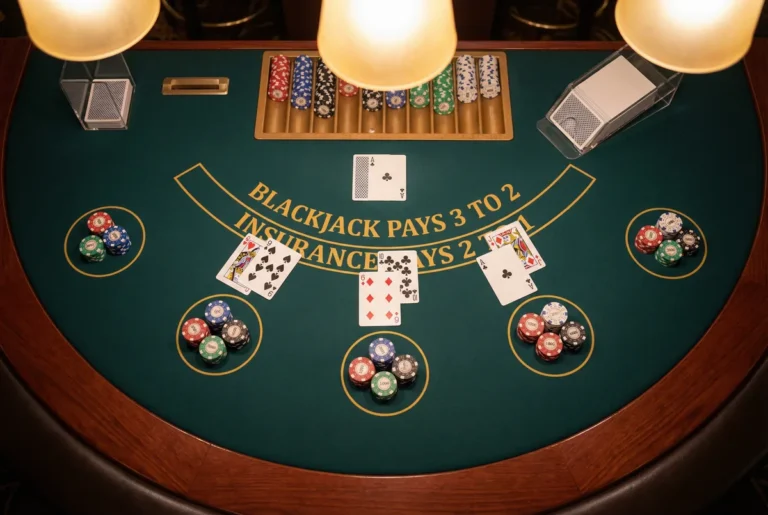
Master the Blackjack Table Layout and Every Betting Position Fast
A standard blackjack table has 5 to 7 betting positions arranged in a semicircle. Every position plays by identical rules,…
How to Build a Blackjack Practice Routine Using Free Online Tools
Build a structured blackjack practice routine using free online tools. Covers weekly study plans, focus areas by phase, progress tracking,…