
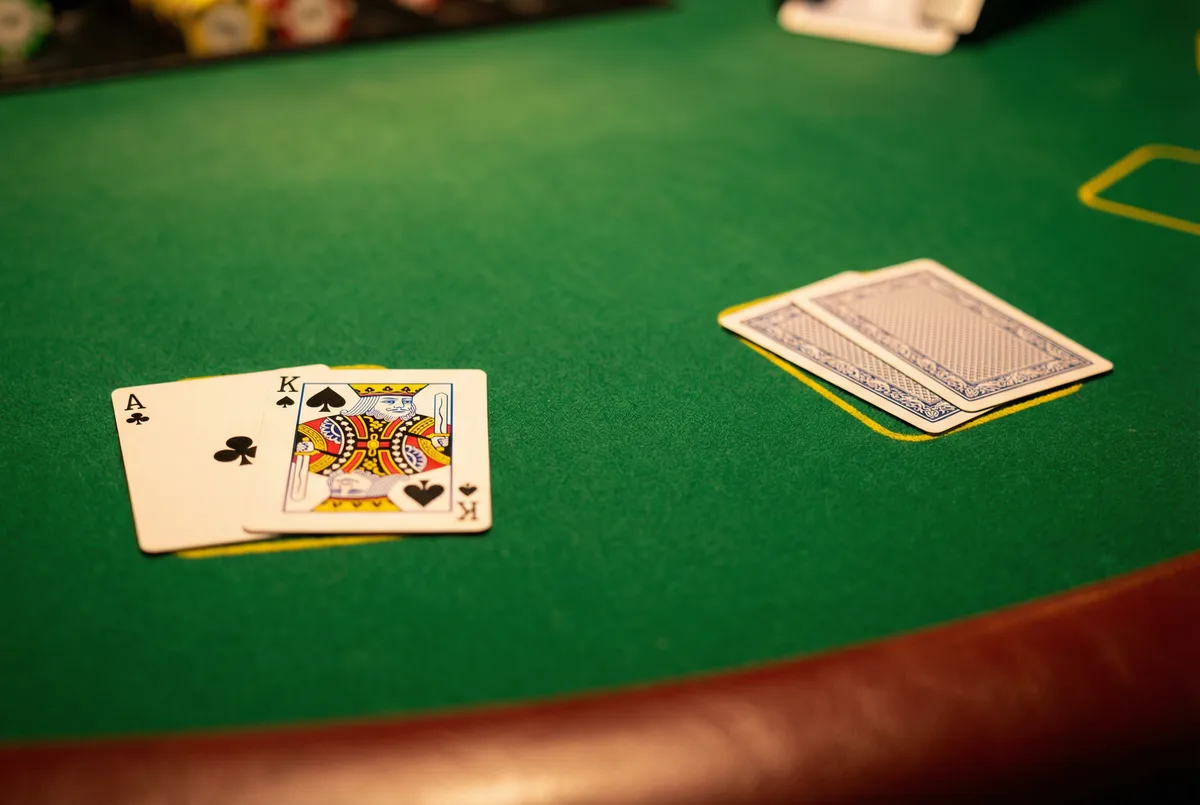
Key Differences Between British Pontoon and American Blackjack
British Pontoon is not a simplified version of blackjack. It is a distinct game with its own hand rankings, dealer rules, and terminology that requires a separate strategic approach. Playing American blackjack strategy at a Pontoon table introduces errors on nearly every session.
The two games share a common ancestor in the French game Vingt-et-Un, but they diverged through different rule sets enforced in British and American gambling establishments. Knowing which game you are sitting at and how the rules differ is not optional. It is the starting point for any session where blackjack house edge matters.
Main Terminology Differences Between Pontoon and Blackjack
The most immediate difference between Pontoon and American blackjack is the vocabulary. What blackjack calls a “blackjack” (an ace plus a 10-value card), Pontoon calls a “Pontoon.” What blackjack calls “hit,” Pontoon calls “twist.” What blackjack calls “stand,” Pontoon calls “stick.” These terms are not interchangeable at the table.
Pontoon also has a hand type with no American equivalent: the Five Card Trick. Any five cards totaling 21 or under beats all hands except a Pontoon. This creates a third winning category that does not exist in American blackjack and changes how you play certain drawing situations.
The hand ranking hierarchy in Pontoon is: Pontoon (highest), Five Card Trick, any total of 21, 20, 19, and so on. A Five Card Trick of 20 beats a two-card 21. This ranking system rewrites several drawing decisions that would be obvious stops in American blackjack.
British Pontoon
American Blackjack
- Pontoon (A + 10-value)
- Blackjack (A + 10-value)
How the Dealer Plays Differently in British Pontoon?
In American blackjack, the dealer shows one upcard before players act. In British Pontoon, both dealer cards are dealt face down. Players receive no information about the dealer’s hand before making decisions. This single difference removes the entire upcard-dependent component of blackjack basic strategy.
Without a visible dealer upcard, players cannot adjust their play based on dealer bust probability. The correct strategy for Pontoon is derived from a different framework entirely, one that accounts for the Five Card Trick incentive and the blind dealer hand.
The Pontoon dealer twists (hits) to 16 and sticks on 17, similar to American H17 rules. But because players lose all ties in Pontoon, unlike in American blackjack where a tie is a push, the blackjack house edge structure is meaningfully different.
A dealer’s advantage from hidden cards plus the loss-on-tie rule adds approximately 0.5% to the blackjack house edge compared to a standard American game.
Common Myth
“Pontoon and blackjack are the same game with different names”
Both games aim for 21, use similar card values, and appear in the same casinos. The surface similarity leads players to assume the rules transfer directly.
The Reality
Pontoon has a Five Card Trick ranking, hidden dealer cards, loss-on-tie rules, and different hand hierarchy that require a completely separate strategy.
Applying American basic strategy to Pontoon increases the effective house edge by approximately 0.3% to 0.5% per session, primarily from misplayed drawing decisions and failed Five Card Trick opportunities.
What Is the Five Card Trick?
The Five Card Trick is any five-card hand totaling 21 or under. It pays 2:1, the same as a Pontoon, and beats all other hands except a Pontoon. This creates a strategic incentive to draw additional cards in situations where an American blackjack player would stop.
In Pontoon, a player holding a four-card total of 16 should draw a fifth card, not stick. A five-card 16 beats any dealer hand except a Pontoon. In American blackjack, drawing to 16 risks a bust with no upside beyond a standard win. The Five Card Trick makes that draw worth taking.
The incentive compounds across the session. Players who do not understand the Five Card Trick stick too early on four-card hands, forfeiting the 2:1 payout opportunity repeatedly. Over 200 hands, missing Five Card Trick opportunities adds measurable cost to a session that a Pontoon-specific strategy prevents entirely.
In pontoon, both dealer cards are dealt face down, which eliminates the peek rule entirely. You cannot see any dealer card until all hands are complete. This changes strategy significantly, without a visible upcard, you're making decisions in the dark, which is why pontoon's house edge is higher than standard blackjack under basic strategy.
How Buying and Splitting Work Differently in Pontoon?
Doubling down is called buying in Pontoon. A player may buy on any two-card hand, doubling the bet for one additional card. Unlike American blackjack, where doubling strategy depends on the dealer’s upcard, Pontoon buying decisions are made without any dealer card information.
Splitting works similarly to American blackjack: matching pairs can be split into two separate hands, and the player plays each hand independently. The same Five Card Trick rules apply to split hands. A player can achieve a Five Card Trick on a split hand for the 2:1 payout.
One critical restriction: players must twist at least once before sticking. Sticking on a two-card hand is only permitted when the total is 15 or higher.
A player holding a two-card 14 must twist, with no option to stick. This rule eliminates the stand-on-anything defensive play that appears occasionally in American blackjack.
Choosing Pontoon or Blackjack and Playing It to Full Advantage
British Pontoon with optimal play carries a blackjack house edge of approximately 0.38%, which is competitive with a well-conditioned American 6-deck shoe game. The 2:1 payout on both Pontoon and Five Card Trick partially offsets the loss-on-tie rule and the disadvantage of hidden dealer cards.
American blackjack with optimal blackjack basic strategy on a 3:2, S17, DAS game runs at approximately 0.28% to 0.35% depending on the specific rules. The blackjack house edge difference between the two games with correct strategy applied is small and largely eliminated by using the right chart for each game.
The practical conclusion: neither game is inherently superior. The game available at the table you are sitting at is the relevant game. Knowing the correct strategy for that specific game, whether Pontoon or American blackjack, is what separates a mathematical floor from an inflated house advantage created by strategic errors.
Comparing how the two games feel in real sessions is faster at a live table than through study alone. The live blackjack options at choose pontoon or blackjack for real money in a live lobby include multiple variants where rules are displayed before the first hand. These are real-money tables. Check the variant rules before placing any bet.
Frequently Asked Questions
No. American blackjack strategy cards are built around the visible dealer upcard and do not account for the Five Card Trick, hidden dealer cards, or Pontoon's loss-on-tie rule. Using an American strategy card at a Pontoon table introduces systematic errors. You need a Pontoon-specific strategy chart.
Yes, though it is called buying in Pontoon. A player may buy (double down) on any two-card hand before drawing. The mechanics are similar to American blackjack doubling, but the strategy for when to buy differs because there is no visible dealer upcard to reference.
No. Australian Pontoon is a different game that is actually closer to Spanish 21 than to British Pontoon. It uses a Spanish 21 rule set marketed under the Pontoon name. The hand rankings, dealer rules, and strategy are distinct from British Pontoon. Always verify which variant is being dealt before you play.
Before you test these plays at a real table, run them through our free blackjack simulator practice unlimited hands at zero cost until every move becomes automatic.
Know the Game Before the First Bet
Pontoon and blackjack require separate strategy charts. Playing one game with the other's rules transfers house edge directly to the casino.
Blackjack Academy is an educational resource. All strategy content is based on mathematical expectation. Set a session budget before you play.
Learn More
Continue your education with these related lessons.
Best Times to Split Pairs in Blackjack to Double Your Profit
Splitting pairs in blackjack follows strict rules. Aces and 8s are always split. 10s and 5s are never split. Every…
Why Automated Shuffling Machines Secretly Destroy Your Card Counting Edge
A continuous shuffling machine feeds cards back into the shoe after every hand, eliminating any chance of tracking the count…
How to Build a Blackjack Practice Routine Using Free Online Tools
Build a structured blackjack practice routine using free online tools. Covers weekly study plans, focus areas by phase, progress tracking,…