
Is First Base or Third Base the Best Seat at a Blackjack Table
I have been blamed for the dealer’s cards more times than I can count. Every time, I was sitting third base. Every time, I was playing the correct strategy. And every time, the player blaming me was wrong. 0% is the difference in blackjack house edge between first base and third base at any blackjack table. No simulation, no mathematical proof, and no real-world result has ever shown that seat position changes expected value. The myth persists because humans see sequence and assume causality. This guide explains what seat position actually affects, what the third-base myth gets wrong, and what decisions genuinely influence your results at any position.

Casino Folklore
“The third base player controls the dealer's outcome.”
The Math
Third base has no effect on the dealer's average outcome over any meaningful sample of hands. In simulated play over 1 million hands, every seat position produces the same house edge when the same strategy is applied. The third-base player's decision changes the sequence of cards that follow, but that change is equally likely to benefit or hurt the dealer across the long run.
What Seat Position Actually Affects
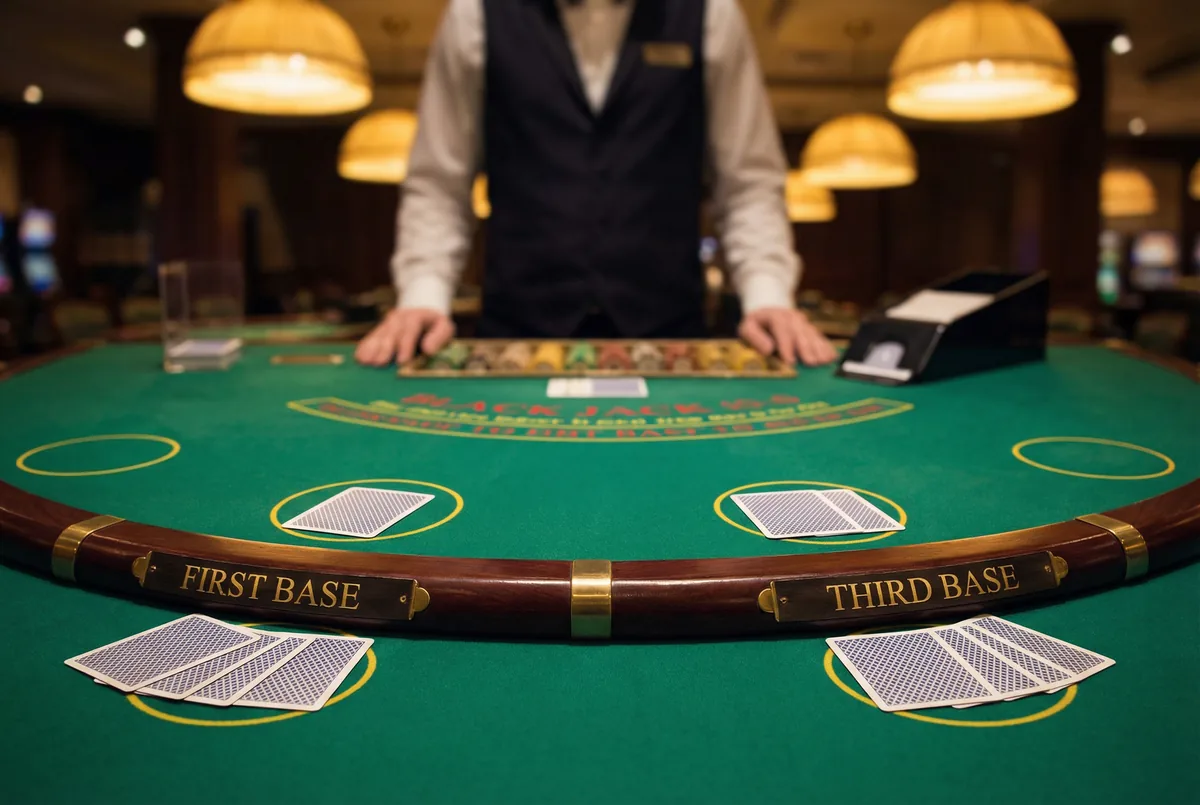
Seat position affects two things: the number of other players’ cards you see before acting, and the pace of your decision-making. At third base, you have seen every other player’s cards before you act. At first base, you act immediately after receiving your cards with no other player information visible. Neither of these observations changes the correct decision according to blackjack basic strategy. Basic strategy is calculated from your total and the dealer upcard, not from what other players hold.
For card counters, seat position matters in a different way. Third base, acting last, has the most time to observe cards before acting and maintains the running count through the most card reveal events per round. First base acts quickly with the least information from that round. For blackjack basic strategy players, neither of these differences changes expected value. For counters, third base provides marginally more decision-relevant information per hand.
First Base
Third Base
- First in the round
- Your 2 + dealer upcard
- 0.5%
- ~2%
- Marginally less
- None
- Last in the round
- All player cards + dealer upcard
- 0.5%
- ~2%
- Marginally more
- Falsely blamed for dealer draws
What Is the Third Base Responsibility Myth?
The third base responsibility myth claims that the player who acts last controls what card the dealer receives, but this logic is mathematically disproven across millions of simulated hands. They draw a 10 and bust. The dealer flips a 7 hole card and stands on 17, beating all remaining players. Other players blame the third-base player for taking the card the dealer would have received. This logic has two fatal flaws. First, there is no guarantee the dealer would have received that 10. The card order would have been different if the third-base player had stood. Second, the direction of the error, whether a hit or a stand, is equally likely to help or hurt the dealer over the long run.
The correct play at third base is always the correct play from blackjack basic strategy, regardless of what other players think, request, or imply. If a recreational player asks you not to hit a 14 against a dealer 6, they are asking you to make an incorrect play based on a disproved superstition. You have no obligation to comply. Making the incorrect play does not protect them. It costs you positive expected value while changing nothing about long-run outcomes for anyone else at the table.
What Are the Evidence on Seat Position and Outcomes?
Every published simulation of seat position effects reaches the same conclusion: no seat at a blackjack table produces a different expected value than any other seat when the same strategy is applied. The blackjack house edge is a property of the rules, not of the chair. Millions of simulated hands at first base, center, and third base return identical player win rates when played with correct blackjack basic strategy.
The mechanism behind this is straightforward. The dealer draws cards according to a fixed rule regardless of which seat took the prior card. If the third-base player takes a 10 that the dealer would have received, the dealer now receives whatever card was next in the shoe. That card is equally likely to be high or low. Over thousands of hands, the effect of any individual seat’s decision on the dealer’s drawn card averages to zero. The third-base player is not redirecting bad cards away from the dealer. They are drawing from a random sequence that has no memory of seat order.
I have played tens of thousands of hands from both ends of the table and from the center. My results track my strategy decisions and the blackjack table rules, not my seat. The third-base player who splits 10s does not hurt my odds. They hurt their own. Seat position simply does not enter the calculation.
What Is the Best Seat for Learning Blackjack?
If you are learning blackjack and want to maximize how quickly you improve, third base is the most educational seat at the table: you see every other player’s cards and the dealer’s upcard before you act, giving you the most visible information per hand to practice reading table state. You watch two to six other decisions unfold before yours. You observe multiple upcard-versus-hand scenarios each round. That visibility accelerates pattern recognition for a new player.
First base is the fastest seat. You act immediately, see no other player cards, and cycle through more hands per hour than any other position. If your goal is volume of decisions, first base gives you that. For a blackjack basic strategy player who is confident in their decisions and wants to maximize hands per hour, first base is practical. For someone who wants to slow down and observe the full table before deciding, third base creates that space naturally.
Center seats offer a middle ground: you see the players to your right act before you, without the full table visibility of third base. For pure expected value, all five or seven seats are mathematically identical. Pick the seat that matches your current learning goal, not the one the mythology around third base makes sound riskier.
What Genuinely Affects Your Results at Any Seat
Table rules affect your results at every seat. The 3:2 payout rule adds 1.39% to expected return compared to 6:5. The dealer standing on all 17s versus hitting soft 17 changes the blackjack house edge by 0.22%. Surrender availability saves expected value on specific hard 15 and 16 hands against strong dealer upcards. None of these rule differences has anything to do with where you sit. They are fixed at the table level and apply identically to every player position.
Sit anywhere. First base, third base, center. I have played thousands of hands from every position and my results track my decisions, not my seat. Whenever you are ready, find your table and take a seat. Play 30 hands using blackjack basic strategy and notice that your results have nothing to do with position. Ignore anyone who blames you for the dealer’s cards. The felt does not care about your chair. Only your preparation matters, so set your budget before you sit.
Frequently Asked Questions
Neither position is mathematically better than the other. Both have identical expected values when basic strategy is applied correctly. Over 1 million simulated hands, every seat position at a blackjack table produces the same house edge. The position you sit in does not change the correct decision for any hand.
Third base acts immediately before the dealer draws, so when the third-base player makes a decision that appears to help the dealer, causality is incorrectly attributed. The error in this thinking is that if the third-base player had played differently, the card sequence would also have been different. There is no way to know in advance whether hitting or standing helps or hurts the dealer. Over thousands of hands, these effects cancel out entirely.
No. Basic strategy is calculated from your hand total against the dealer upcard, not from what other players are holding or how they are playing. Other players' decisions have no long-run effect on your expected value. Playing correct basic strategy is the right decision regardless of what happens at other positions.
Before you test these plays at a real table, run them through our free blackjack simulator practice unlimited hands at zero cost until every move becomes automatic.
Know Your Edge Before You Bet
The calculator shows the correct play for any hand total against any dealer upcard under your exact table rules.
Blackjack Academy is an educational resource. All strategy is based on mathematical expectation. Always play within your means.
Learn More
Continue your education with these related lessons.
Proven Strategy for Single and Double Deck Handheld Blackjack Games
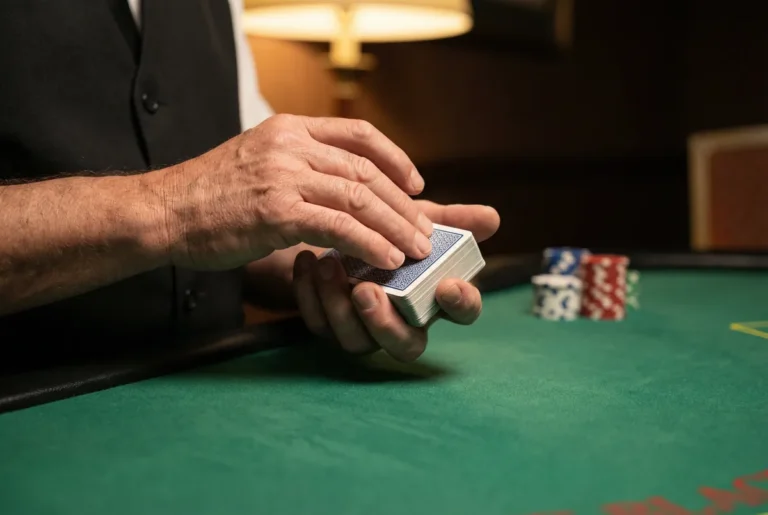
Single and double deck games play differently from shoe games. The lower deck count changes house edge, card distribution, and…
How to Tell When a New Blackjack Shoe is Starting
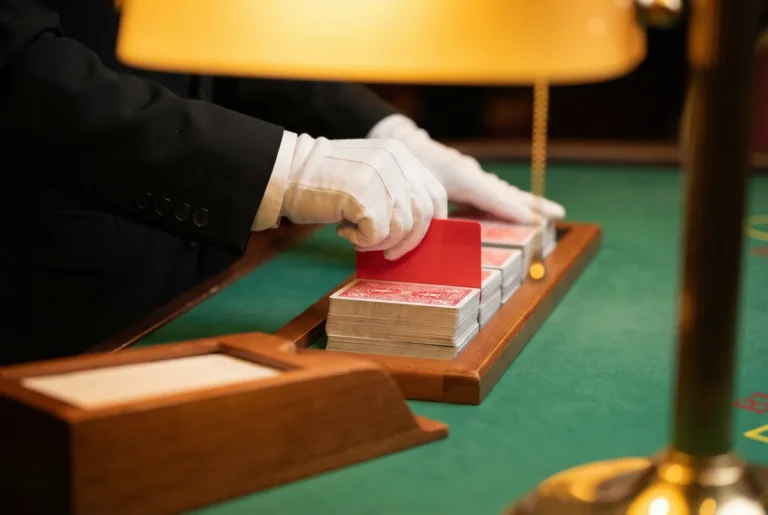
A new shoe resets everything: the count, the penetration, and your decision-making baseline. Learn the visual signals that tell you…
Why Casinos Use the Semicircular Table Design for Blackjack
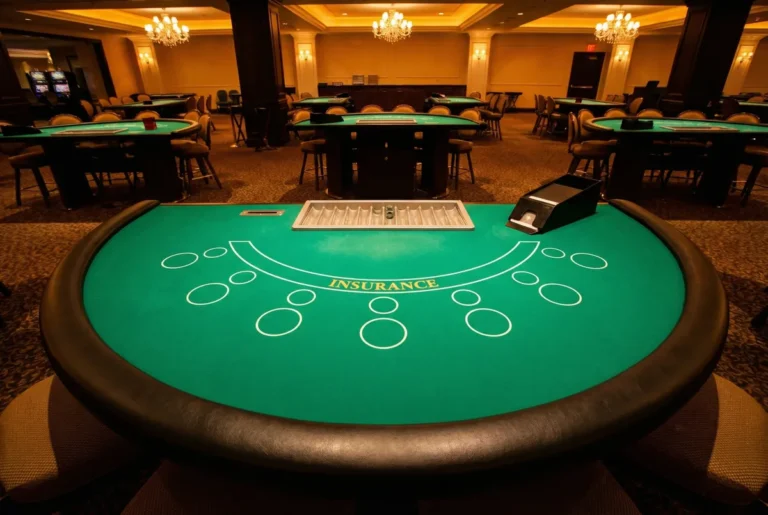
The semicircular blackjack table is not an aesthetic choice. Every element of its design, from the arc shape to the…