
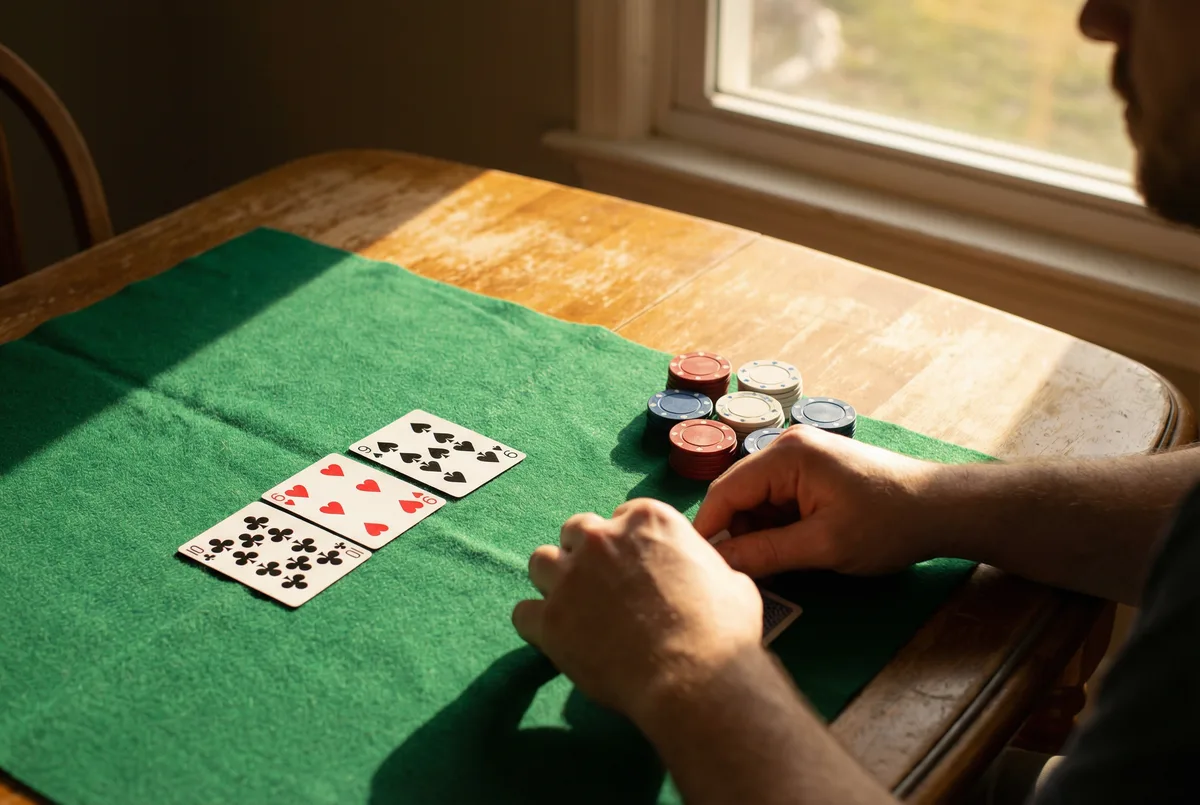
How to Practice Blackjack Before Going to a Casino
Practicing blackjack before your first casino session is not optional it is the difference between paying 0.5% blackjack house edge and paying 3-4% through uninformed decisions. The goal of home practice is to make blackjack basic strategy automatic, so your decisions at the table happen without hesitation. Most players reach this point after 500–1,000 deliberate practice hands spread across several sessions. The specific method matters: passive watching does not build the decision-making reflex that real-table play demands. Active drilling making the decision before seeing the answer is the only practice that transfers to live play.
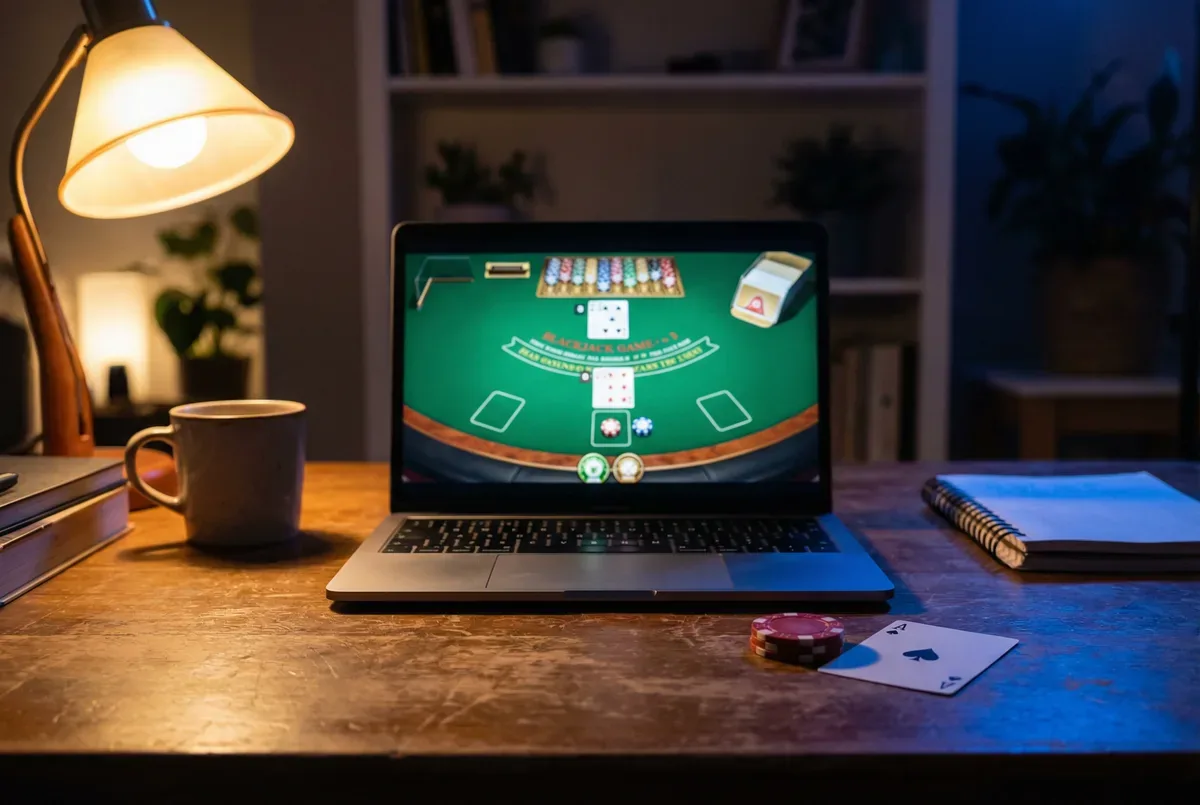
Casino-Ready Means 500 Practice Hands Before You Sit Down
Timeline
Stage 1
Learn the chart: Study basic strategy by section (hard totals first). Understand why each play is correct.
Stage 2
Self-quiz with cards: Deal hands from a real deck, decide, check the chart. No clock pressure yet.
Stage 3
Speed drills: Set a 5-second decision limit per hand. Build automatic recall for all 340 strategy cells.
Stage 4
Distraction practice: Run drills with TV on, music playing, or others talking simulate casino conditions.
Stage 5
Free app play: Use a free RNG trainer that flags errors in real time. Target 200 hands with zero errors.
Stage 6
Live practice: Play at blackjack-live for a small real-money session. Observe how real financial stakes change your focus.
What Is the Home Drill Methods Ranked by Transfer Effectiveness?
Not all practice methods are equally effective at preparing you for casino conditions. Passive study, reading a blackjack strategy chart, and builds intellectual understanding but does not build the automatic recall needed under live conditions. Active decision drilling, where you see the hand and make a call before checking the answer, is the minimum effective practice method. Speed drilling with a timer adds the time pressure that live tables impose.
A real deck of cards is more useful than most apps for the first 200 hands because the physical dealing process slows things down enough to think through each decision consciously. After blackjack basic strategy is solid, switch to a mobile trainer that tracks error rate and decision speed. Error rate below 2% over 100 consecutive hands (2 errors or fewer) is a reasonable readiness benchmark. Zero errors over 50 hands is a stricter but more reliable standard before playing with real money.
Method
Casino Transfer
- Low builds knowledge, not reflex
- Medium slow but builds decision habit
- High adds pressure, mirrors live pace
- High tracks errors, flags mistakes
- High full game conditions without stakes
- Highest real money, real decisions
Why Does the Strategy Chart Section to Learn in Order?
Basic strategy has three main sections: hard totals, soft totals, and pairs. Hard totals are the largest section and contain the most frequently occurring hands learn these first. The most critical subset is hard 12 through 16 against dealer upcards 2 through 10, since these stiff hands appear constantly and the decisions are not intuitive. Soft totals (any hand with an ace counted as 11) come second; they appear less frequently but include several doubling opportunities that beginners miss. Pairs are the smallest section and can be learned last.
Dealer Shows
Your Hand
You have a hard 16 against dealer 9 in your casino practice session. Hit or stand?
Dealer 9 is a strong upcard. Dealer completes to 19 or better over 75% of the time from a 9. Standing on 16 wins only when the dealer busts. Hitting 16 gives you a 46% chance of improving your hand while accepting bust risk. The EV of hitting is higher than standing here this is one of the hardest-to-accept calls in basic strategy, but the math is unambiguous.
How Does Common Practice Mistakes That Do Not Transfer to Live Play?
The most common practice mistake is drilling only the decisions you find interesting and skipping the ones that feel obvious. Hard 17 through 21 are always stand skipping these in drills means your hand never physically rehearses the stand motion and verbal signal. In a live casino, hesitation on “obvious” stands signals inexperience. Practice all 340 strategy cells, not just the difficult ones. A second common mistake is practicing without a time limit. Without the pressure of a 5–10 second decision window, your drills will not build the speed that real tables require. Set a timer.
Your First Real-Money Session After Home Practice
Before playing in a physical casino, run one real-money practice session at test your tells at a live real-money session tonight the stakes are real, which means the emotional response to a borderline decision is real too. Only play with funds from your entertainment budget that you can afford to lose. The purpose is to discover which decisions feel different under financial pressure versus during practice. Hard 16 against a 10 feels different when $25 is on the line. That gap between drill confidence and live confidence is exactly what this session reveals and it is better to close it at a live-dealer table than in your first physical casino visit.
Frequently Asked Questions
Most players reach casino-readiness after 500 to 1,000 deliberate practice hands using active drilling methods. The benchmark is 50 consecutive hands with zero basic strategy errors under a 5-second decision limit. Passive reading or watching does not count toward this total only hands where you made the decision before seeing the answer.
You need to internalize the chart, not memorize it as a grid. This means knowing the correct play for any hand combination automatically, without consciously recalling which row and column to check. Most casinos allow a printed strategy card at the table, which is useful as a backup but if you are consulting it on every hand, your play will be too slow and you have not yet practiced enough.
Free-play RNG blackjack builds decision accuracy but not the emotional management that real-money play requires. It is useful for building strategy recall. However, the transition to real money changes decision-making in ways that free play does not prepare you for. Use free play to reach near-zero error rate, then complete at least one small real-money session before your first casino visit.
Before you test these plays at a real table, run them through our free blackjack simulator practice unlimited hands at zero cost until every move becomes automatic.
Mathematical Risk Warning
Blackjack practice builds strategy accuracy but does not eliminate house edge. No amount of preparation changes the fact that blackjack has a built-in mathematical disadvantage for the player. Practice reduces the edge from 2-4% (uninformed play) to approximately 0.5% (perfect basic strategy), but a negative expected value remains. Only play with funds from your entertainment budget.
Blackjack Academy is an educational resource. All strategy is based on mathematical expectation. Always play within your means.
Learn More
Continue your education with these related lessons.
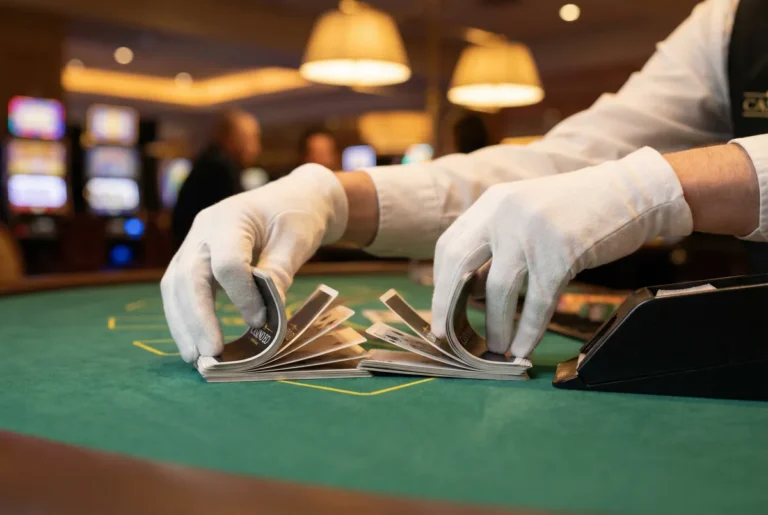
How Casino Shuffles Work and Their Effect on Blackjack Play
Hand shuffles, shuffle machines, cut card placement, and penetration every shuffle decision a casino makes has a direct effect on…
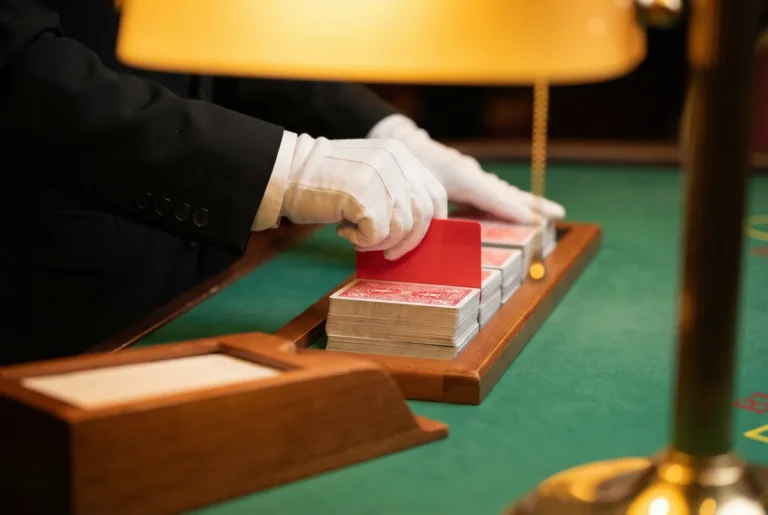
How to Tell When a New Blackjack Shoe is Starting
A new shoe resets everything: the count, the penetration, and your decision-making baseline. Learn the visual signals that tell you…
Master Blackjack Card Values Including Every Face Card and Ace Rule
31 of every 52 cards in a standard deck are worth 10 or 11 points. That ratio determines when to…