

How to Choose a Blackjack Table at a Casino
[bja_toc]
Choosing the right blackjack table before you sit down is one of the highest-leverage decisions you make all session. Two minutes of floor reconnaissance before placing a single chip will do more for your expected results than any betting strategy applied at a randomly selected table. Table minimums determine your bankroll exposure. Player count controls how many hands you receive per hour. The posted rules — payout ratio, soft-17 rule, doubling restrictions — can shift the house edge by over a full percentage point. Most players walk to the nearest open seat without checking any of these factors. The ones who do check them consistently play a fundamentally different game.
Why Table Selection Is the First Strategic Decision You Make
Table selection is pre-game strategy — decisions made before the cards are dealt that determine the mathematical environment your session will operate in. A player using perfect basic strategy at a 6:5 table faces a house edge of approximately 1.9%. The same player at a 3:2 table with standard rules faces approximately 0.44%. That 1.46 percentage point difference is entirely determined by which table they sat at, before a single hand was played. No amount of in-session decision-making recovers the structural disadvantage of starting at the wrong table.
The rules that matter most — and the ones to check before sitting — are: payout ratio on naturals (3:2 or 6:5), whether the dealer hits or stands on soft 17, the number of decks in the shoe, and whether late surrender and double-after-split are permitted. Each of these rules has a quantified effect on the house edge, and the combination of rules at any specific table determines the mathematical terms you are agreeing to the moment you buy in.
- Payoutlook for 'Blackjack pays 3 to 2' on the felt — never 6:5
- Soft 17prefer 'Dealer stands on all 17s' — H17 adds ~0.22% house edge
- Decks6-deck 3:2 beats single-deck 6:5 by over 1 percentage point
- Surrenderlate surrender available = remove its icon from H2#4 worst hands
- Double after splitDAS allowed expands your doubling opportunities
- Minimumat least 40 units of your session bankroll for meaningful play
How Do Minimum Bets and Player Count Affect Your Real Session?
Table minimums should be matched to your session bankroll at a ratio of at least 40 to 1. If you bring $400 to the floor, a $10 minimum table is appropriate — you have enough depth to survive the inevitable variance of blackjack without going broke before the session reaches any kind of statistical stability. A $25 table with a $400 buy-in means your session could end after a short losing run with no mathematical recovery time. Walking to a table with fewer than 20 buy-in units is not a strategy — it is a coin flip with a time limit.
Player count controls hands per hour, which directly affects the rate at which the house edge extracts from your stack. A full seven-player table deals approximately 40 to 60 hands per hour. A heads-up game against the dealer alone can exceed 200 hands per hour. More hands per hour means the house edge has more opportunities to work in less clock time. For recreational players, a moderately populated table — three to five players — is generally the better environment. You get enough time between decisions to execute basic strategy correctly, and the pace is sustainable over a multi-hour session.
Full Table (6-7 players)
Short Table (2-3 players)
- ~40–60
- ~100–150
What Should You Read on the Felt Before You Place Any Chips?
Every blackjack table displays its rules on a placard attached to the felt or on a sign at the edge of the table. The most important single line is the natural payout. “Blackjack pays 3 to 2” means a $25 natural returns $37.50. “Blackjack pays 6 to 5” means the same natural returns $30. That $7.50 gap on a single hand — at a frequency of roughly four naturals per hour at $25 per hand — costs approximately $30 per hour in expected value at a 6:5 table relative to a 3:2 table. Across a 4-hour session that is $120 in structural disadvantage before a single bad decision is factored in.
The second rule to check is the soft-17 rule. “Dealer stands on all 17s” (S17) is player-friendly. “Dealer hits soft 17” (H17) adds approximately 0.22 percentage points to the house edge, because a dealer who hits soft 17 occasionally improves a hand that would otherwise have stood as a made 17. Several basic strategy decisions change in H17 games — specifically around doubling soft hands against the ace — so knowing the rule before you sit also affects your in-session decisions.
The third check is the number of decks. Fewer decks reduce the house edge in isolation, but the correlation between single-deck games and 6:5 payouts in modern casinos makes deck count a secondary priority. A six-deck game paying 3:2 with S17 is structurally better than a single-deck game paying 6:5 with H17. Always start with the payout and work backward from there.
Common Myth
“Single-deck tables are always the best game in the casino”
Players learned that fewer decks reduce the house edge in textbooks and apply that rule without checking the payout structure
The Reality
Modern single-deck games almost universally pay 6:5 on naturals, which more than cancels out the advantage of fewer decks
A single-deck 6:5 game carries a house edge of approximately 1.45%. A six-deck 3:2 S17 game sits at approximately 0.44%. The deck count difference is irrelevant compared to the payout structure.
How Does Dealer Speed Change the Risk of Your Session?
Dealer speed is a factor most newcomers ignore entirely. A fast dealer at a lightly populated table can push through 150 or more decisions per hour. Unless you have committed basic strategy to near-automatic recall — under two seconds per decision — that pace will force errors. A stiff hand against a dealer 7 with players waiting and the dealer’s hand already extended takes a different psychological toll than the same hand at a moderately paced table. Watching a dealer for a few minutes before sitting reveals their rhythm, their shuffle frequency, and how clearly they acknowledge hand signals.
Shuffle frequency matters for card counters specifically but also affects all players in terms of shoe penetration — how deep into the shoe the dealer cuts before reshuffling. A shoe cut at 50% penetration (3 of 6 decks dealt) provides a very different statistical environment than 80% penetration (4.8 of 6 decks). Casinos with continuous shuffling machines (CSMs) reshuffle after every hand, which eliminates penetration entirely. CSM tables deal faster — often 20 to 30% more hands per hour — which accelerates your total expected loss from the house edge proportionally.
My standard floor walk takes exactly two minutes. I start at one end of the pit, read every placard — payout, soft-17 rule, minimum — and count players at each table. I find the best-rules 3:2 S17 game available with three to five players and a non-CSM shuffle, and I sit there. The two minutes costs nothing and filters out every structurally bad game on the floor before I spend a single dollar. This habit has saved more money than any betting adjustment I have ever made.
Scouting the Floor Before You Commit Your Bankroll
The ideal pre-session process is a systematic floor walk. Enter the casino and go directly to the pit without buying in. Read the placard on every blackjack table — payout, decks, soft-17 rule. Note the minimums. Count the players at each table. Identify every 3:2 game versus every 6:5 game. Within the 3:2 games, filter for S17. Within those, filter for the minimum that matches your session bankroll at 40-to-1. Among the remaining tables, choose one with three to five players and a non-CSM shuffle. Then buy in.
If the only tables available pay 6:5, do not sit. Either wait for a 3:2 table to open, find a different pit on the floor, or leave the casino. Playing 6:5 is a structural choice to accept a 1.4% additional house edge in exchange for the entertainment of playing. That is a decision you can make knowingly, but it should never be made accidentally.
For practising the pace of real-table decisions before applying table selection in a physical casino, the free blackjack simulator lets you build decision speed at zero cost. When you are ready for a real-money environment where table rules are displayed clearly and game conditions mirror a live casino, a live dealer session with real money on the line is the clearest preparation for sitting at a physical casino table — confirm the payout structure matches what you are looking for before starting any real-money session.
Frequently Asked Questions
Mathematically, seat position does not affect the house edge. All seats see identical expected value per hand. Third base (last to act before the dealer) gives you more information about the table's cards before deciding, but basic strategy players should not change their decisions based on other players' hands.
A table with three to five other players gives you enough time between hands to think through decisions without slowing the game to a crawl. Avoid heads-up tables until you can execute basic strategy automatically — the pace at a two-player table is relentless and leaves little room for deliberation.
Yes, and you should. Ask: How many decks? Does the dealer stand on all 17s? Can I double after a split? Is late surrender available? These are standard questions and any dealer will answer them without hesitation. Reading the placard yourself first is faster, but asking confirms any rule you are unsure about.
Mathematical Risk Warning
Every hand of blackjack carries real financial risk. Table minimums, hand speed, and rule variations all directly affect your expected loss rate. Understand the structural terms of any game before you buy in.
Blackjack Academy is an educational resource. All strategy recommendations are based on mathematical expectation. Always gamble responsibly and within your means.

Written by
Mark AnurakProfessional card counter since 2009 · 500,000+ hands logged · Former Macau advantage player. Studied under Thorp, Griffin & Wong methodology. Full bio →
Learn More
Continue your education with these related lessons.
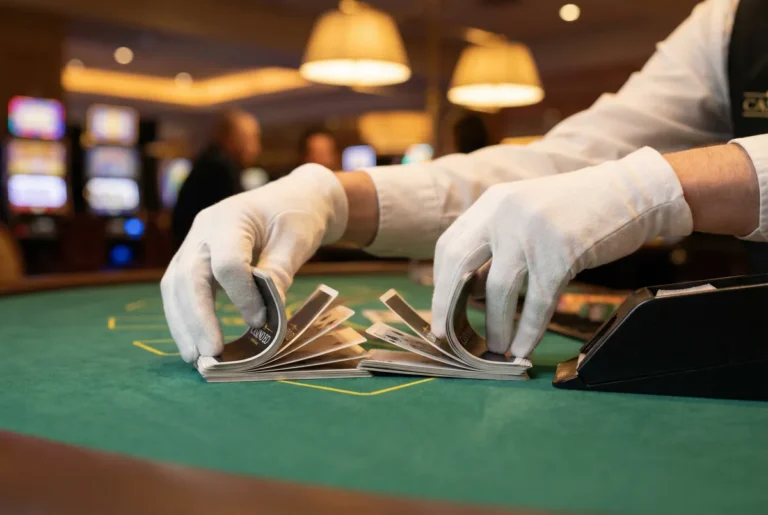
How Casino Shuffles Work and Their Effect on Blackjack Play
Hand shuffles, shuffle machines, cut card placement, and penetration every shuffle decision a casino makes has a direct effect on…
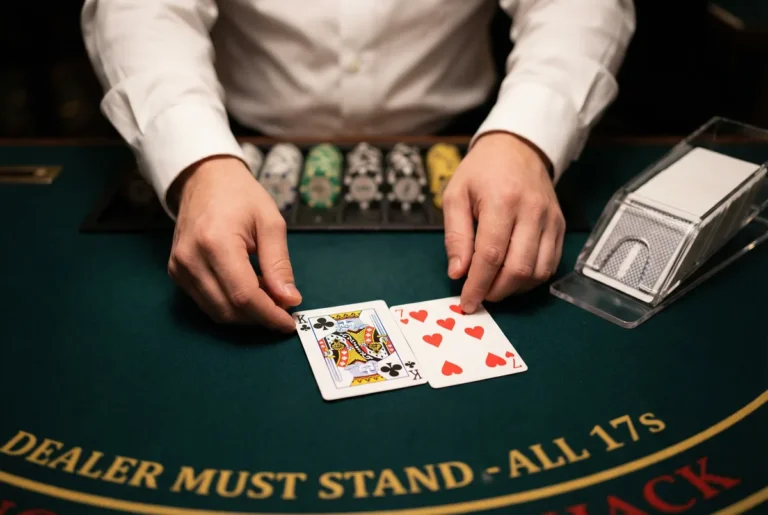
What the Dealer Must Do and How the House Manages the Game
The dealer has zero decision-making authority at a blackjack table. Every action is predetermined by fixed house rules. Understanding exactly…
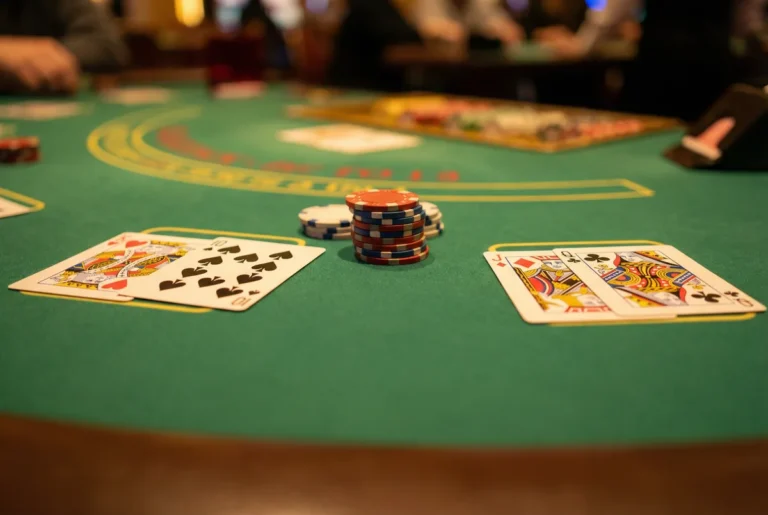
What Actually Happens During a Push or Tie in Casino Blackjack
A push occurs when you and the dealer finish with the same total. Your bet is returned, nobody wins, nobody…