
How to Build a Blackjack Practice Routine Using Free Online Tools
Most players learn blackjack the same way: they sit down at a casino table, lose a few hundred dollars, and vow to study before next time. They never do. The players who actually improve follow a structured practice routine with clear milestones and specific tools for each phase.

Free online tools now cover every layer of blackjack training, from initial chart study through full simulation under time pressure. The challenge is knowing how to sequence them. This guide gives you a concrete weekly routine and explains exactly what to practice in each phase.
A Structured Blackjack Practice Progression
Effective blackjack practice moves through three phases in sequence: chart study, isolated flashcard drilling, and full simulation. Jumping straight to simulation before you have studied the chart is like trying to solve algebra problems before learning to multiply. You will reinforce wrong answers.
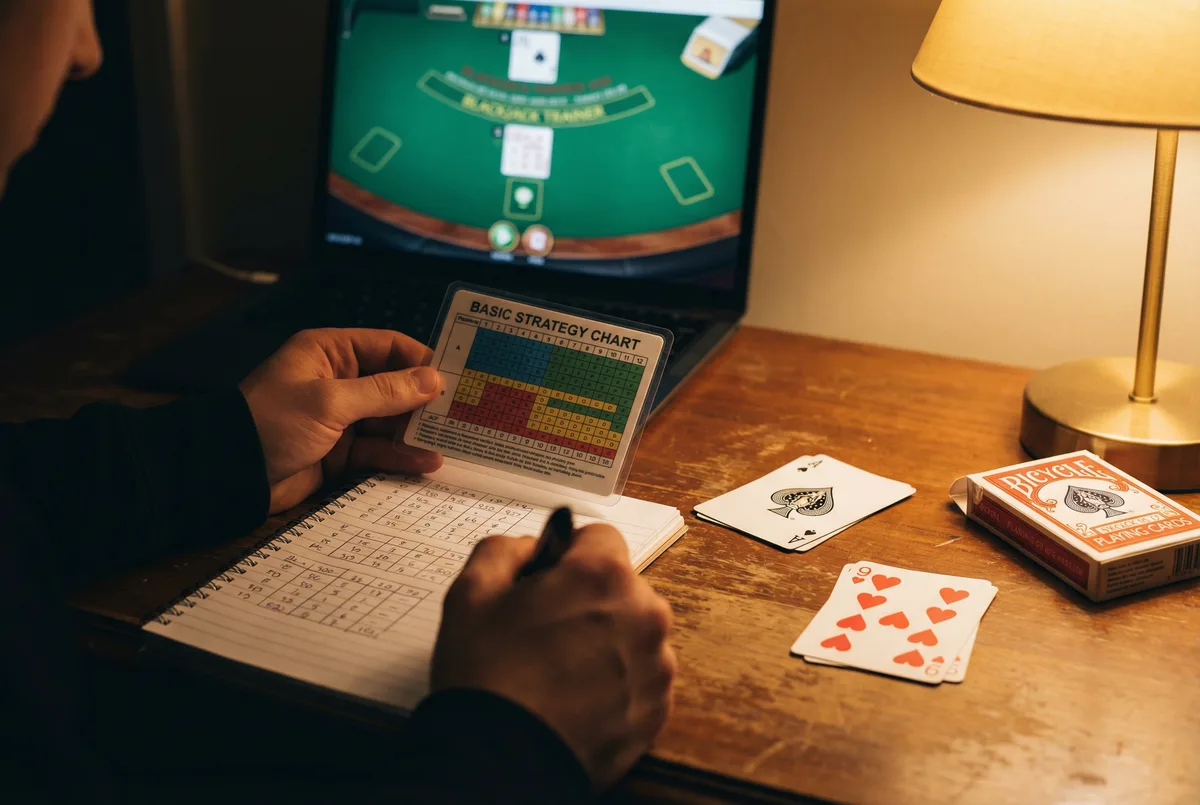
Phase one is chart study. Print or bookmark a blackjack basic blackjack strategy chart matched to your target game (6-deck, S17 is the standard Vegas shoe game). Spend 60 to 90 minutes reading the chart in sections. Do not try to memorize it all at once. Start with hard totals 8 through 17, then add soft totals, then pairs.
Phase two is flashcard drilling. Tools like Blackjack Apprenticeship or the free drill on this site present you with one hand and one dealer card. You must answer correctly before moving on. This phase builds the fast recall you need at a real table. It is also where most people discover their specific blind spots.
Phase three is full simulation. Only enter this phase after your flashcard accuracy exceeds 95 percent. a blackjack simulator puts decisions in sequence, adds chip management, and builds the rhythm of a real session without any financial stakes.
Timeline
Week 1
Chart study: hard totals only. Read the grid. Understand the logic for each zone.
Week 2
Flashcard drilling: hard totals. Target 98% accuracy before moving on.
Week 3
Add soft totals and pairs to flashcard drills. These are the most misplayed categories.
Week 4
Full simulation sessions. 200+ hands per session at relaxed pace with hints on.
Week 5
Speed simulation. Disable hints. Aim for under 2 errors per 100 hands.
Week 6+
Live dealer practice and real money readiness test.
How to Structure Your Weekly Practice Schedule?
Three sessions per week is the minimum effective dose. Each session should be 30 to 45 minutes of focused work, not passive play. Focused work means you are actively trying to retrieve the right answer before clicking, not clicking quickly and checking what happened.
Session one of each week should be a warm-up drill covering the category you are currently focused on. Session two should be a mixed drill that pulls from all previously learned categories. Session three should be a timed simulation session where you track your error count.
Sunday is useful as a review day. Run 50 flashcard questions covering every category you have learned so far. Note your error count. If any category shows more than one mistake, that becomes the focus for week one of the next cycle.
Dealer Shows
Your Hand
Dealer shows 2. You hold a pair of 9s. What is the correct play?
Basic strategy: split 9s against dealer 2 through 6 and 8 through 9. Stand against 7, 10, and Ace.
What Is the Focus Areas That Matter Most in Each Practice Phase?
Hard totals come first because they make up the majority of hands you will see. Hard totals 12 through 16 are the most critical zone because these are the hands where players most often hit when they should stand, or stand when they should hit, depending on the dealer upcard.
Soft totals are the second priority. Soft 18 is the most commonly misplayed hand in blackjack. Players routinely stand on soft 18 against dealer 9, 10, or ace instead of hitting. Drilling this category in isolation until it becomes automatic is worth one full week of focus.
Pairs are third. The split or no-split decision requires knowing the dealer upcard ranges for each pair value. Fours, fives, and tens are the most commonly misplayed pairs. Fives are never split. Tens are never split. Fours are split only against dealer 5 or 6.
Doubling down opportunities are the final category. Many players under-double, especially on 9, 10, and soft totals, because they are hesitant to put more money in. Drilling these situations until the double feels natural is directly tied to your expected return per session.
Advantages
- Self-paced: train at your own speed without casino pressure
- Free: no cost to practice 1,000+ hands
- Mistake tracking: identify exact weak spots by category
- Rule flexibility: practice against different dealer rule sets
Disadvantages
- No real money pressure: simulator calm differs from casino table
- No social dynamics: missing the pace and distraction of other players
- Requires self-discipline: easy to practice passively without focus
How to Track Progress and Know You Are Improving?
Track three numbers after every session: hands played, errors made, and error rate per 100 hands. A simple spreadsheet works. The goal is a declining error rate over four to six weeks. If your error rate is not declining, your sessions are not focused enough.
Category-level tracking is more useful than total error tracking. If you know that 80 percent of your errors come from soft totals, you can concentrate two-thirds of your next week on that category instead of spreading time evenly across all zones.
A useful milestone check: after four weeks of routine practice, close every reference chart and run 100 simulation hands with a timer. Count your errors. Three or fewer errors in 100 hands is the threshold for real money readiness at a low-stakes table.
When to Move From Free Practice to Real Money Play
The readiness benchmark is two errors or fewer per 100 hands in a blind simulation test (no hints, no chart, timed). This benchmark should hold across three separate sessions, not just one lucky run. One clean session can be variance. Three clean sessions is skill.
Before your first real session, do one final step: spend 30 minutes observing a live dealer game. The live blackjack table at move your practice routine to a live real-money table streams real dealer hands. This is a real money environment, so watch rather than bet on your first observation session. Understand the table pace before you commit chips.
Start at the lowest available stakes. Your first real session should be about confirming your training holds under pressure, not about volume. If you make more than five errors in your first session, treat it as diagnostic data. Return to simulation, isolate the categories where you erred, and drill them before your next session.
Frequently Asked Questions
Most players reach consistent automatic recall after four to six weeks of three sessions per week. The critical variable is session quality, not just quantity. Focused drilling with error tracking outperforms passive repetition at a ratio of roughly three to one.
Yes. Hard totals are the most frequent hands and the foundation of basic strategy. Reaching 98% accuracy on hard totals before adding soft totals or pairs prevents you from carrying incorrect patterns into the more complex categories. Sequence matters for retention.
A simulator with per-category error tracking is the most valuable single tool. It combines simulation, feedback, and progress measurement in one place. Flashcard apps are the best supplement for the early drilling phases before you enter full simulation mode.
Before you test these plays at a real table, run them through our free blackjack simulator practice unlimited hands at zero cost until every move becomes automatic.
Practice Reduces Errors, Not Risk
A structured practice routine will lower your mistake rate significantly, but blackjack is a negative expectation game for most players. Even with perfect basic strategy, the house edge remains. Set a firm session budget before any real money play and treat every casino session as entertainment with a defined cost ceiling.
Free practice tools prepare you to play correctly. They do not guarantee profitable casino sessions.
Learn More
Continue your education with these related lessons.
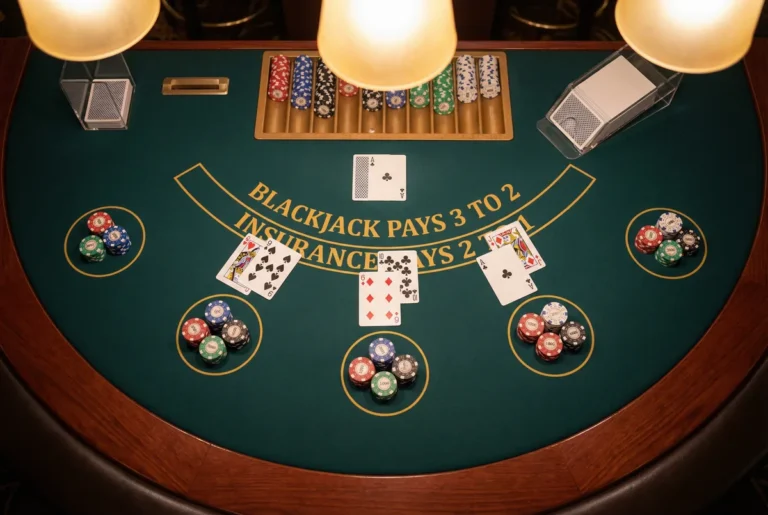
Master the Blackjack Table Layout and Every Betting Position Fast
A standard blackjack table has 5 to 7 betting positions arranged in a semicircle. Every position plays by identical rules,…
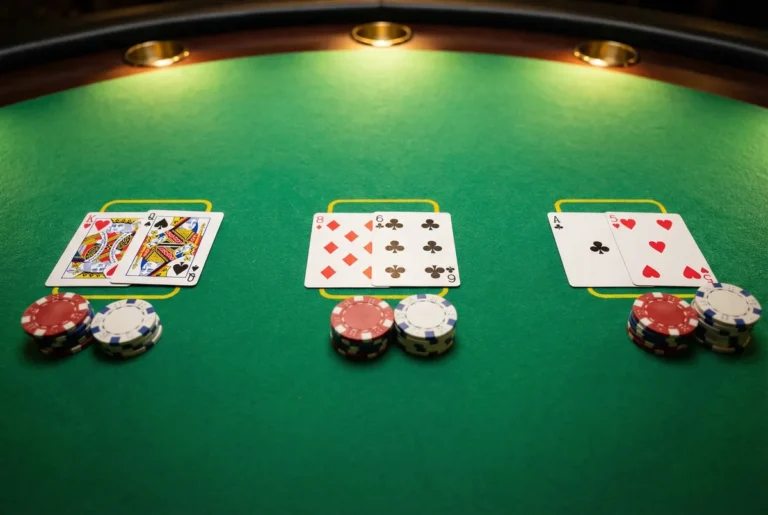
Why Free Blackjack Games Online Are the Best Strategy Training
Free blackjack games online remove the financial pressure that blocks learning. Discover what they teach, what they cannot, and the…
Proven Strategy for Single and Double Deck Handheld Blackjack Games
Single and double deck games play differently from shoe games. The lower deck count changes house edge, card distribution, and…