
Complete Blackjack Payout Chart for 3 to 2 and Even Money
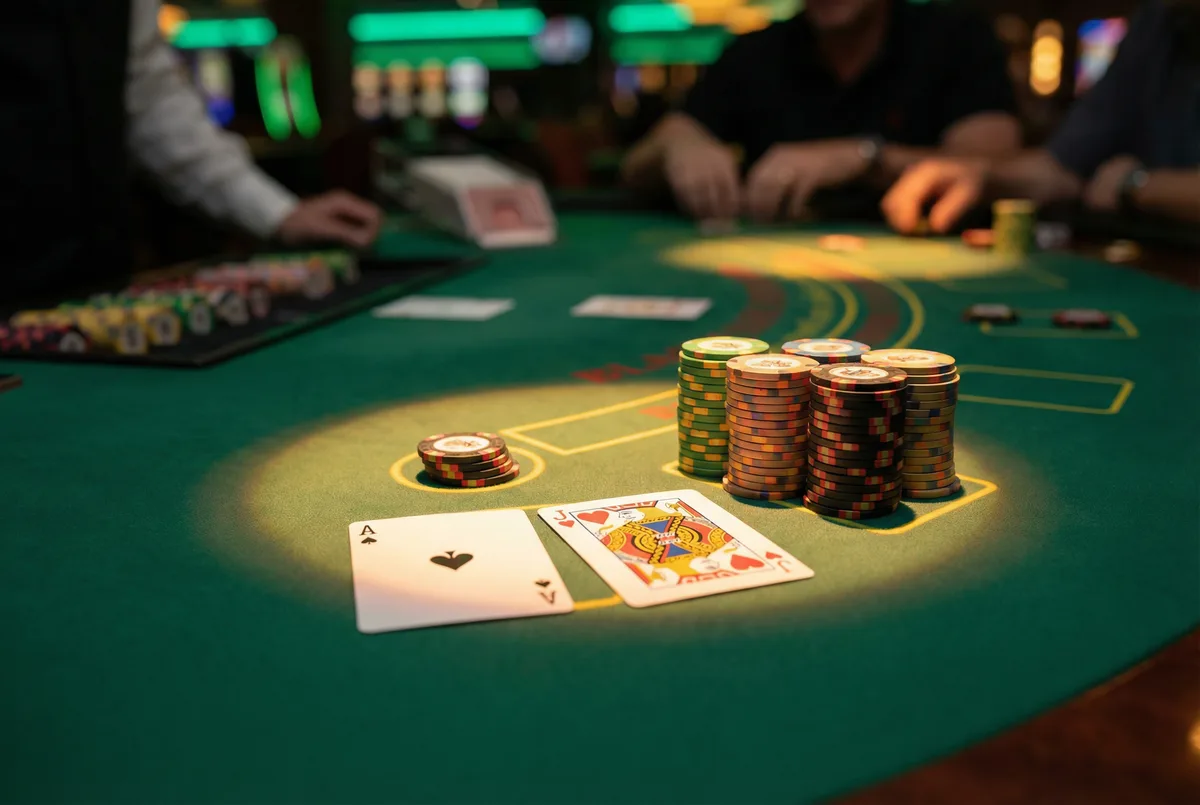
Two tables. Same felt, same minimum bet, same dealer cadence. One table paid $37.50 on a $25 natural blackjack. The other paid $30. The $7.50 difference appeared on a blackjack payout chart printed on the table rail, in clear view, and most players sitting down never looked at it.

The Blackjack Payout Chart: Why the Rate Matters More Than the Minimum Bet
The payout rate on a natural is the most important single number at any table you consider. It determines the blackjack house edge before any skill-based factor is applied. The difference between a 3:2 and a 6:5 payout adds over 0.75 percentage points to the blackjack house edge. No amount of blackjack basic strategy can recover that gap.
The blackjack payout rate on a natural is the most important single number on any table. It directly determines the blackjack house edge before any other rule is factored in. Understanding the full payout chart across 3:2, 6:5, and even money is the first piece of table selection you learn.
| Bet | 3:2 Payout | 6:5 Payout |
|---|---|---|
| $5 | ||
| $7.50 | ||
| $6.00 | ||
| $10 | ||
| $15.00 | ||
| $12.00 | ||
| $25 | ||
| $37.50 | ||
| $30.00 | ||
| $50 | ||
| $75.00 | ||
| $60.00 | ||
| $100 | ||
| $150.00 | ||
| $120.00 | ||
| $200 | ||
| $300.00 | ||
| $240.00 |
What Is the Real Meaning of Each Blackjack Payout Rate?
A 3:2 blackjack payout means that for every $2 wagered, a natural blackjack returns $3 in profit. A $10 bet wins $15. A $25 bet wins $37.50. This is the standard payout that has defined the game since blackjack moved into licensed American casinos.
A 6:5 payout means a $10 bet wins $12 instead of $15. A $25 bet wins $30 instead of $37.50. Over 200 hands, naturals appear roughly 9 times. The 6:5 table pays $27 less across those 9 naturals at a $10 flat bet. That gap widens proportionally with every increase in bet size.
Even money is a special case. It applies when a player holding a natural is offered even money (1:1) before the dealer checks for a matching blackjack. Taking even money is mathematically equivalent to insuring a blackjack. It is always a losing long-term decision and should be declined.
How Does the Natural Payout Rate Change the House Edge?
The natural payout rate is the single largest variable in the blackjack house edge calculation for any blackjack game. A 3:2 payout on a 6-deck H17 game produces a blackjack house edge of approximately 0.67%. Changing only the payout to 6:5 raises the blackjack house edge to approximately 1.45%. No other single rule change has that magnitude of effect.
A natural blackjack occurs roughly 4.75% of the time in a shoe game. In a 6:5 game, the shortfall per natural at $25 is $7.50. Across 4.75% of hands, that shortfall adds 1.39 percentage points to the blackjack house edge on its own.
No strategy adjustment recovers this loss. Basic strategy, blackjack card counting, and every other skill-based approach are applied on top of the base blackjack house edge. A 6:5 table increases the foundation you are working against.
3:2 Natural (6D H17)
house edge
6:5 Natural (6D H17)
house edge
3:2 Natural (2D S17)
house edge
Why Casinos Offer 6:5 Tables?
Casinos spread 6:5 games at lower minimum bets to attract players who do not know the payout difference. A $5 minimum 6:5 single-deck game looks like excellent value. A knowledgeable player recognizes it as one of the worst available games on the floor, with a blackjack house edge above 1.40%.
Identifying the payout rate takes five seconds. The felt is printed with the schedule near the center or along the rail, reading “Blackjack Pays 3 to 2” or “Blackjack Pays 6 to 5.” Some tables use fraction format: 3/2 or 6/5. Check before you sit. If the rate is not visible, ask the dealer.
Single-deck games at major casinos almost universally offer 6:5 today. This is the casino industry’s answer to card counters: eliminate the counting advantage by crippling the natural payout. A 3:2 single-deck game with S17 has a blackjack house edge under 0.20%. The same game at 6:5 runs over 1.40%. The single-deck label is not the advantage it once was.
Common Myth
“A single-deck blackjack game is always the best option at the casino.”
Single-deck games were historically the lowest house edge available because fewer decks favor the player. Players still seek them out by default.
The Reality
Modern single-deck games in most major casinos pay 6:5 on naturals, raising the house edge above 1.40%. A 6-deck 3:2 S17 game at 0.40% is a significantly better choice.
The payout rate on naturals contributes more to house edge than deck count in most modern casino configurations.
Applying the Payout Chart: Always Demand 3 to 2
The complete payout chart reduces to one practical rule: never play at a table that pays less than 3:2 on a natural blackjack. This applies regardless of the minimum bet, the number of decks, or any other rule printed on the placard. The payout rate is the filter. Everything else is secondary.
I walk the floor and read every table placard before I sit. It takes two minutes. I pass 6:5 tables entirely, regardless of how favorable the other rules look. A table can offer every player-friendly rule in the game and still be a losing proposition if naturals pay 6:5.
Practice reading payout rates before you play at a real table for the first time. A live session gives you the full experience of watching payout calculations in real time, which cements the numbers faster than any chart. Only bet what you have budgeted as a firm session limit.
Frequently Asked Questions
The standard payout for a natural blackjack is 3:2, meaning a $10 bet returns $15 in profit. This has been the traditional rate in most licensed casinos. The 3:2 rate is what all house edge calculations for standard basic strategy assume.
No. Taking even money is mathematically equivalent to buying insurance on a blackjack, which carries a house edge above 7%. Long-term, declining even money and accepting the small variance risk of a push is the correct play.
Yes. Online blackjack tables specify their natural payout in the game rules, usually accessible through an information or rules button. Always check before playing. The same 3:2 vs 6:5 rule applies: a 6:5 online table is a significantly worse game regardless of how the software presents it.
Before you test these plays at a real table, run them through our free blackjack simulator practice unlimited hands at zero cost until every move becomes automatic.
Know Your Payout Rate Before Every Session
Table selection starts before the first bet. Always verify the natural payout.
Blackjack Academy is an educational resource. All EV calculations are based on standard mathematical models. Set a session limit before you play.
Learn More
Continue your education with these related lessons.
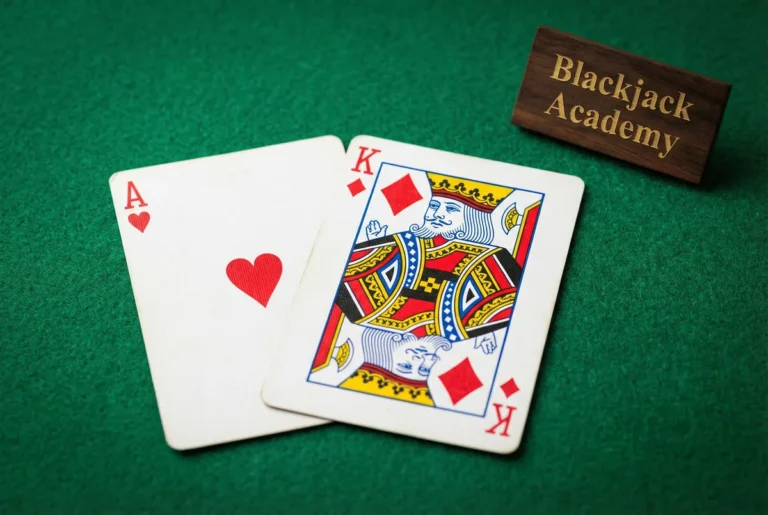
How a Natural Blackjack Works and the Power of the Ace
A natural blackjack hits roughly 4.8% of the time and pays 3:2 at a proper table. The Ace makes it…
Major Differences in Skill Between Blackjack and Poker
Most people assume poker requires more skill than blackjack. The reality is more complicated. Both games reward skill at the…
How to Practice Blackjack Before Going to a Casino
Free apps, kitchen table drills, and strategy card repetition can get you casino-ready. Here is a step-by-step practice plan with…