
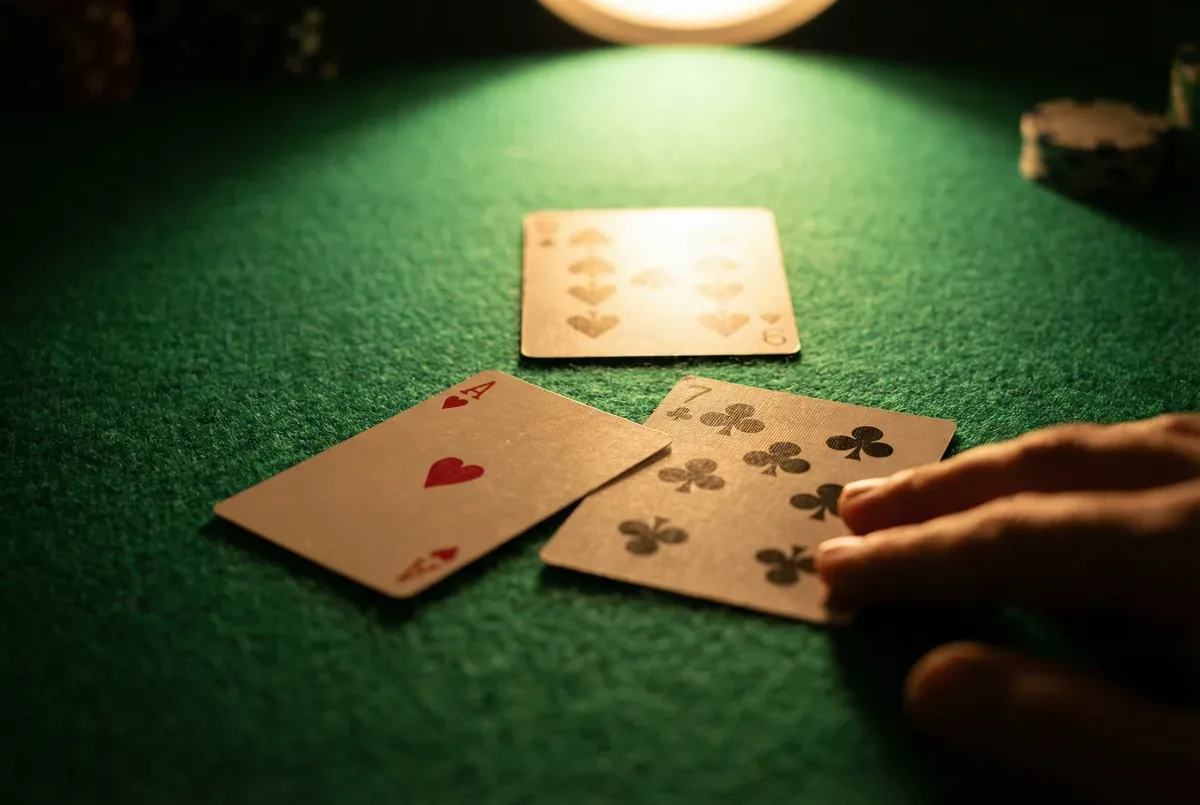
Why Hitting Soft 18 Against a 9 Wins More Money
Soft 18 an Ace and a 7 feels strong because 18 beats a lot of dealer totals. But the correct feeling about a hand depends on what the dealer is showing, not just your own total in isolation. Against a dealer 9, 10, or Ace, standing on soft 18 is a losing play in expected value terms. The dealer’s upcard in these cases indicates a high probability of a strong final total, and 18 will not beat those totals often enough to justify standing. Hitting gives the hand more chances to improve. The math is not ambiguous on this point.
Soft 18 Against a Dealer 9 Is a Losing Stand Here’s the Proof
Hit
Stand
- -0.073
- -0.098
- -0.100
- -0.092
- +0.112
- -0.183
- -0.540
- -0.100
- +0.096
- +0.114
How Do You Understand the Expected Value Gap Against a 9?
When the dealer shows a 9, they will reach a final total of 19 or higher a large percentage of the time. Dealer 9 frequently produces 19, which beats your soft 18 every time. Standing on soft 18 against a dealer 9 produces an expected value of approximately -0.183 per unit wagered. That means for every $10 wagered in that spot, you lose an expected $1.83 by standing. Hitting soft 18 against a dealer 9 produces an expected value of approximately -0.073 per unit. You still lose in the long run in this spot the dealer 9 is genuinely strong but you lose significantly less by hitting.
The critical psychological insight is that 18 feels like too good a total to risk with another card. This feeling is the trap. The question is never whether your hand is good in isolation it is whether your hand is good relative to what the dealer is likely to make. A dealer 9 will beat your 18 so frequently that protecting it makes no mathematical sense. Hitting gives you a chance to reach 19, 20, or 21 without losing anything because any Ace, 2, or 3 drawn to soft 18 produces 19, 20, or 21, and you simply cannot bust a soft hand on the first hit.
This is where the softness of the hand matters most. A soft 18 is composed of an Ace and a 7. If you draw a card valued at 2 or less, the Ace adjusts from 11 to 1, and you do not bust. You might draw a 3 and have soft 21. You might draw a 2 and have soft 20. You might draw a 7 and have hard 15, which then requires additional play but even that outcome is better than conceding to the dealer’s 9 with a standing 18.
Dealer Shows
Your Hand
You have soft 18 (Ace-7) against a dealer 9. What is the correct play?
Soft 18 should be hit against dealer 9, 10, and Ace. Against dealer 2 through 6, double (or hit if doubling is not allowed). Against dealer 7 or 8, stand.
What Is the Full Soft 18 Strategy Not Just the 9?
Soft 18 strategy varies by the full range of dealer upcards. Against dealer 2 through 6, the correct play is to double down the dealer is in a vulnerable position, you have a strong hand, and doubling maximizes the expected value of the favorable situation. Against dealer 7 and 8, standing is correct because 18 beats the dealer’s most likely completing totals of 17 and 18 respectively. Against dealer 9, 10, and Ace, hitting is correct for the reasons described above.
What Is Soft 18 in Multi-Deck vs Single-Deck?
Many players apply a single rule to soft 18 regardless of upcard: always stand. This is wrong in five of nine possible upcard scenarios. Against the low cards it fails to capture the doubling profit. Against the high cards it fails to apply the hitting improvement. The variance in correct play across different upcards makes soft 18 one of the most important hands to drill, because it does not have a single correct answer it has five distinct correct answers depending on what the dealer is showing.
The players who always stand on soft 18 are playing a hand they have not actually studied. Soft 18 has the most complex strategy profile of any common hand five different correct plays across nine upcard scenarios. Know all of them.
Practice Soft Hands Under Realistic Pressure
Soft hand decisions are where recreational and skilled players diverge most visibly. Getting comfortable hitting soft 18 against a strong dealer card requires repetition it genuinely feels wrong until the math is internalized. The apply this soft-hand play at a live table this week simulator at Blackjack Academy presents exactly these hands in a realistic context where you can practice the uncomfortable decisions without putting real money at risk while you build the right instincts.
Frequently Asked Questions
Not on the first hit. The Ace in soft 18 drops from 11 to 1 if the draw would cause a bust, converting the hand to a hard total. You can only bust if the subsequent hard total is hit again and the new draw exceeds 21.
Against dealer 7, the dealer's most common completing total is 17, which soft 18 beats. Against dealer 8, it is 18, a push. Against dealer 9, the most common completing total is 19, which beats soft 18. The dealer 9 shifts the probability distribution above the player's standing total.
If doubling on soft 18 vs. dealer 2–6 is not permitted, hit instead. Do not stand the expected value of standing against those low upcards is still lower than hitting in no-double scenarios.
Before you test these plays at a real table, run them through our free blackjack simulator practice unlimited hands at zero cost until every move becomes automatic.
18 Is Not Always Enough
Soft 18 is one of the most misplayed hands in blackjack. Learn the five distinct correct plays and apply them before real money is on the table.
Blackjack involves real financial risk. Strategy decisions reduce but cannot eliminate the house edge.
Learn More
Continue your education with these related lessons.
Evolution Gaming vs Pragmatic Play Which Live Blackjack Rules Are Better
Evolution Gaming and Pragmatic Play dominate live dealer blackjack, but their rules differ in ways that directly affect your house…

How to Stay Calm and Keep Your Money After a Back Off
Getting backed off is a defining moment for any advantage player. How you respond in the next sixty seconds determines…

The Real Legal Risks of Blackjack Team Communication in Casinos
Blackjack team play occupies a legally complex space. Card counting alone is not a crime, but team communication inside a…