
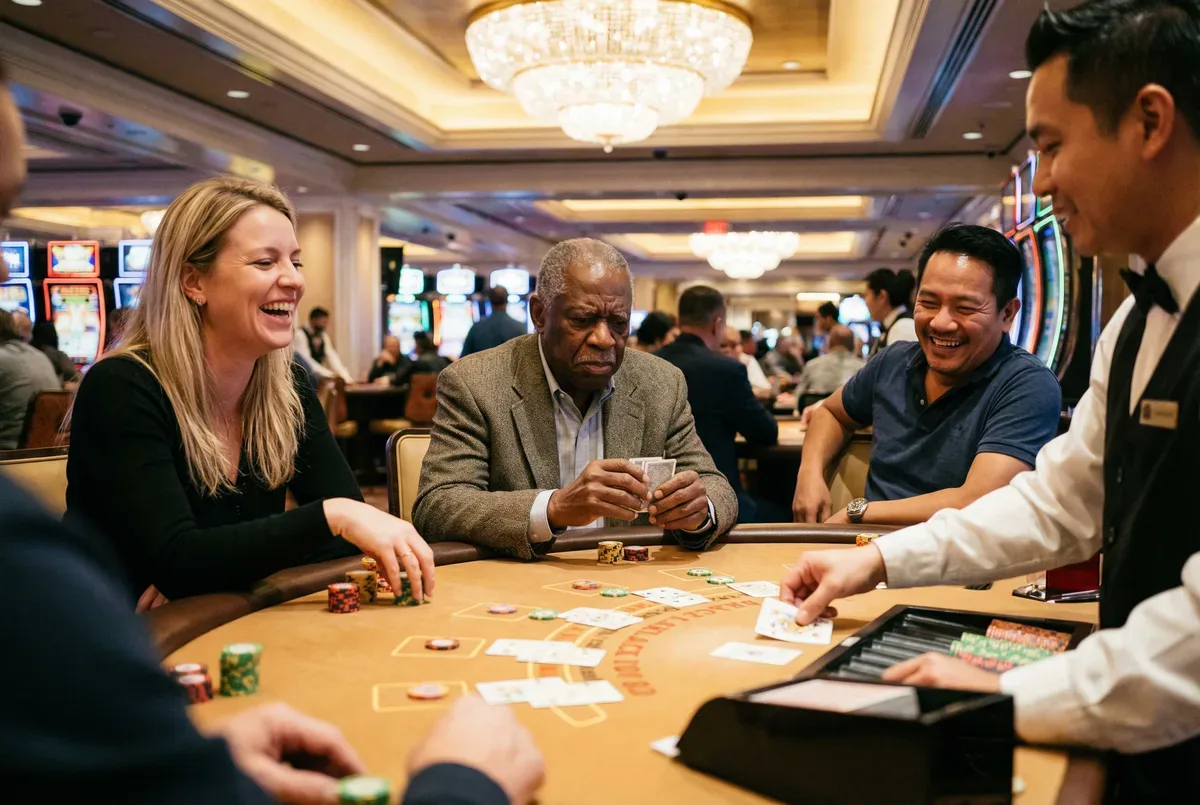
What Reading Other Players at the Table Reveals About Your True Edge
One of the most persistent beliefs in recreational blackjack is that other players’ decisions directly affect your outcomes. The third-base player who hits a 12 against a dealer 6 is blamed when the dealer makes 18 and beats the table. This belief is mathematically false. In a random shuffle, each card removed from the deck changes probabilities marginally and unpredictably just as likely to help as to hurt. Over any statistically significant sample, the play of other players at your table neither adds to nor subtracts from your expected value. Your EV is determined entirely by the rules of the game and the decisions you make on your own hand.

Other Players Do Not Change Your Expected Value
Common Myth
“The third-base player controls the table and causes everyone to lose”
When third base takes a card that would have busted the dealer, the sequence is visible and memorable confirmation bias makes this feel causal
The Reality
Third-base decisions have zero effect on the other players' expected value over any meaningful sample
Each card drawn by another player is equally likely to help or hurt you. The effect averages to zero across sessions.
What Other Players Actually Do Affect?
While other players cannot change your EV, they can change two things that matter to a professional: pace and card visibility. A crowded table with multiple players playing slowly reduces hands per hour from 80+ to as few as 40–50. For a card counter, fewer hands per hour means less time for the edge to express itself lower total EV per session even with the same hourly rate. For a basic-strategy player, slower hands per hour means less total money wagered and therefore less total expected loss. This is actually an argument for recreational players to prefer busy tables less hands per hour reduces net loss in absolute dollar terms.
Card visibility is relevant for counters. More players means more cards exposed before your turn, which sharpens count accuracy and reduces variance in your count estimates. A six-player table at 65% penetration will have more meaningful counting data per round than a heads-up game. Professionals often prefer moderate table density for exactly this reason enough card exposure to count accurately, fast enough to accumulate value.
At a full table, you will see 4–5 player hands before you act. That is free information each card counted raises or lowers your confidence in the current true count. A good counter treats other players' cards as data, not drama. The moment you feel anger at another player's decision, you have already stopped thinking like a professional.
Why Do the Psychology of Table Drama and Why It Cost Money?
Table drama is expensive. When players argue, blame each other, or become visibly agitated after poor plays by others, three things happen. First, the player themselves breaks concentration and risks making errors on their next hand. Second, the emotional atmosphere invites intervention from floor staff, increasing scrutiny of everyone at the table. Third, the psychological load of managing social conflict draws cognitive resources away from counting or strategy recall. Professional players develop an attitude of strict indifference to other players’ decisions. Not contempt indifference. The cards that any other player draws are as irrelevant to your EV as the color of the carpet.
Advantages
- Busy tables give counters more card data per round
- Slow pace reduces total hands wagered and total expected loss
- More players = lower heat on any single bettor's spread
Disadvantages
- Crowded tables reduce hands per hour and total EV per session
- Social drama disrupts concentration and counting
- Poor players at base positions invite more floor attention
How to Mentally Disengage Without Social Friction?
The practical skill of disengaging from table drama without creating friction is learnable. When another player makes an incorrect decision that results in a bad outcome for the table, the professional response is silence or a brief, neutral acknowledgment. No commentary, no visible reaction, no passive-aggressive signals to the dealer. The goal is to remain invisible as a skilled player while staying fully focused on your own decisions. A common professional technique is to focus entirely on the current count and upcoming decision the moment another player acts, treating their choice as simply the next card removal event which is exactly what it is. If you want to practice maintaining focus through distracting table conditions, bring this knowledge to a live table puts you in real multi-player live dealer games where other players make every kind of decision your money is on the line each time you break concentration.
Maintaining Focus Regardless of Other Players
Applying this knowledge in live play requires consistent execution.
Frequently Asked Questions
No. This is one of the most durable myths in blackjack. In a randomly shuffled deck, the card drawn by any player is equally likely to have helped or hurt the table. Over a meaningful sample, third-base play has zero effect on other players' expected value.
It depends on your goal. Counters benefit from more card exposure per round, which favors moderately full tables. Basic strategy players lose less total money at slow tables because fewer hands are played per hour. Avoid full tables only if the pace is so slow it becomes frustrating that frustration itself can cause errors.
Say nothing. A brief neutral acknowledgment at most. Engaging with other players' decisions costs you concentration, invites floor attention, and adds zero value to your results. Professional players treat other players' actions as pure card-removal events with no personal dimension.
Before you test these plays at a real table, run them through our free blackjack simulator practice unlimited hands at zero cost until every move becomes automatic.
Mathematical Risk Warning
Your expected value at the blackjack table is determined by your own decisions and the game rules not by other players. Allowing table dynamics to influence your bet sizing or strategy decisions introduces genuine EV loss that no positive superstition can recover.
Blackjack Academy is an educational resource. All strategy is based on mathematical expectation. Always play within your means.
Learn More
Continue your education with these related lessons.
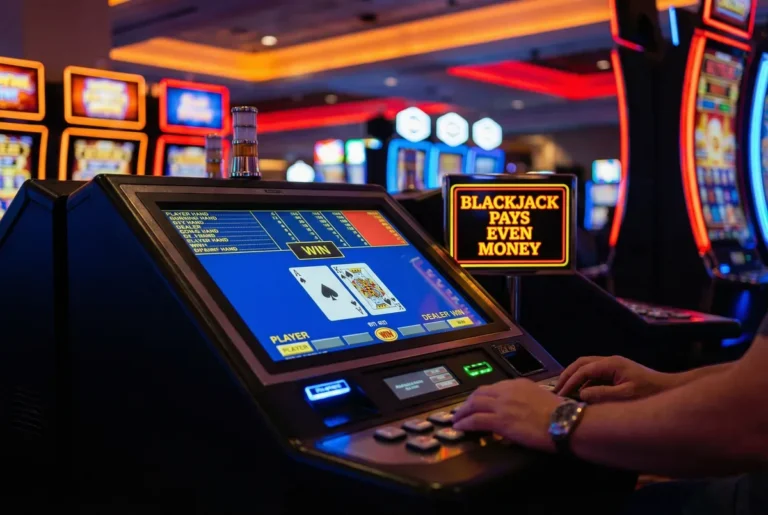
Why Video Blackjack with 1 to 1 Payouts is a Losing Game
Video blackjack machines that pay 1 to 1 on blackjack instead of 3 to 2 carry a dramatically higher house…
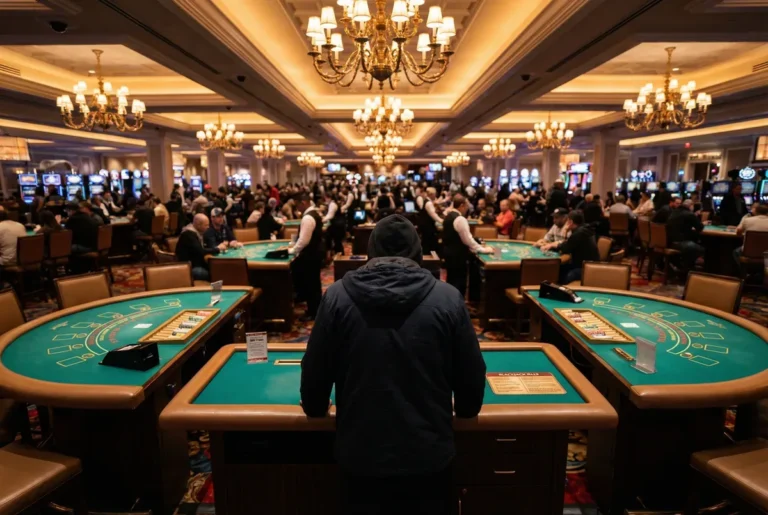
Master the Art of Table Selection for Maximum Advantage Play Edge
Table selection as a professional skill: S17 vs H17 value, deck penetration scouting, how to leave a table without drama,…
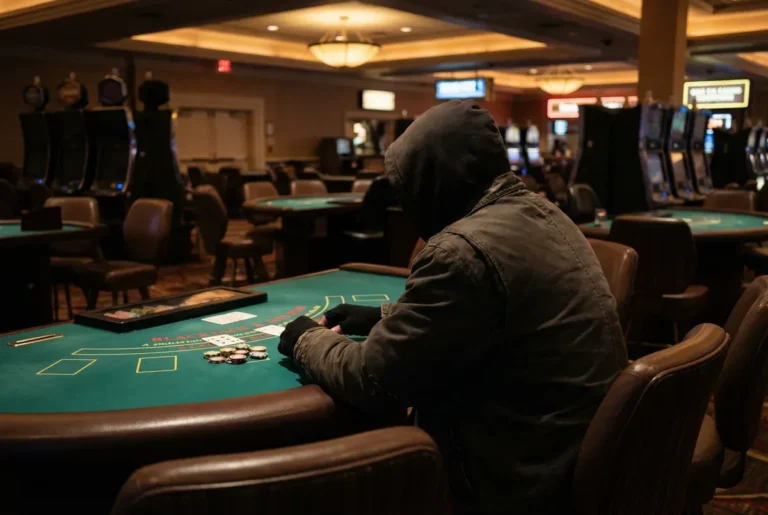
Surviving the Brutal Mental Grind of a Long Blackjack Losing Streak
Losing streaks in blackjack are mathematically inevitable. The difference between players who survive them and players who go broke is…