

The Illustrious 18 Card Counting Deviations That Matter Most to Profit
The Illustrious 18 are the 18 index plays deviations from blackjack basic strategy that produce the overwhelming majority of the expected value available from all possible count-based play adjustments. Stanford Wong’s research established that while there are theoretically hundreds of situations where the true count should alter your blackjack basic strategy decision, 18 of them account for roughly 80% of all the EV those deviations combined can generate. Memorising the remaining 200+ deviations adds negligible value. Mastering these 18 adds approximately +0.15% to a Hi-Lo counter’s base edge with insurance alone contributing +0.07% of that total.

- Insurancetake at TC +3 or higher (single most valuable deviation)
- 16 vs 10stand at TC 0 or higher (most frequent high-value deviation)
- 15 vs 10stand at TC +4 or higher
- 10 vs 10double at TC +4 or higher
- 12 vs 3stand at TC +2 or higher
- 12 vs 2stand at TC +3 or higher
- 11 vs Adouble at TC +1 or higher (6-deck) / -1 (single deck)
- 9 vs 2double at TC +1 or higher
- 10 vs Adouble at TC +4 or higher
- 13 vs 2stand at TC -1 or higher
Index Plays
Index plays are specific hand situations where the correct blackjack basic strategy action changes depending on the true count. Each deviation has an index number the true count threshold at which the play switches. If the true count is at or above that index, you deviate from blackjack basic strategy. If it falls below, you revert to the standard play. The term Illustrious 18 refers to the ranked list published by Don Schlesinger in Blackjack Attack, identifying the 18 deviations with the highest combined frequency and EV impact.
The reason these 18 outweigh all others is a combination of hand frequency and edge impact. Insurance, for example, appears on nearly every hand where the dealer shows an ace an extremely common situation. The EV of taking insurance at TC +3 versus declining it is substantial. Hard 16 vs dealer 10 is the most frequently seen stiff hand in blackjack, making its index deviation highly valuable simply because the situation arises so often. Rare hands with large theoretical deviations, such as 7-7 vs 10, and appear so infrequently that mastering them adds almost nothing in practice. The Illustrious 18 are the plays that show up at the table constantly and where getting the play right changes outcomes meaningfully.
Why Does the Top Illustriou 18 Deviations and Their True Count Thresholds?
Insurance is the single most valuable deviation: take insurance whenever the true count reaches +3 or above in a multi-deck game. At that threshold, the deck is sufficiently rich in tens that the insurance side bet carries a positive expected value the only circumstance where taking insurance is mathematically correct. This one deviation contributes more EV than the next several deviations combined, which is why no professional counter ever declines insurance at TC +3 regardless of what their hand is.
Hard 16 vs dealer 10 is the second most impactful deviation and the most commonly encountered one. Basic strategy says to hit. At true count 0 or above, you stand. The index for this play is 0, meaning a neutral deck is already sufficient to justify deviating. At positive counts, the deck is rich in tens the dealer is more likely to pull a 10 on their second card and bust, and your chance of improving by hitting drops. Hard 15 vs dealer 10 has a similar logic but a higher threshold: stand at TC +4 or above. Below that threshold, hit as blackjack basic strategy requires.
The doubling deviations 10 vs 10, 11 vs A, 9 vs 2, 10 vs A all involve situations where blackjack basic strategy is conservative and a high true count pushes the expected value of doubling above the expected value of hitting. Doubling 10 vs a dealer 10 is normally not optimal, but at TC +4 the deck is so rich in tens that your double is likely to land on a 20 while the dealer simultaneously faces an elevated bust risk. The same logic applies to 11 vs ace at TC +1 in a 6-deck game: at that count, doubling outperforms hitting because the ace-rich deck increases your probability of drawing a 10 to 21.
Dealer Shows
Your Hand
True count is +1. You have hard 16 (9-7). Dealer shows 10. What does the Illustrious 18 say?
Hard 16 vs dealer 10: the Illustrious 18 index is 0. Stand at TC 0 or higher basic strategy says hit, but at a neutral or positive count the deck is rich enough in tens that standing produces better expected value. The dealer faces an elevated probability of pulling a 10 to their second card and busting. Your own bust probability on a 16 when hitting into a ten-rich deck is high. TC +1 is above the index of 0, so you stand. This is the most frequently encountered Illustrious 18 deviation because hard 16 vs 10 is one of the most common difficult hands in blackjack.
How the Illustrious 18 Increases Counting Edge?
A Hi-Lo counter applying correct bet spread with perfect blackjack basic strategy and no index plays achieves roughly +0.5% to +1.0% overall edge (depending on rules and penetration). Adding all 18 Illustrious deviations raises that edge by approximately +0.15 percentage points. That increment may appear small but it is compounded across thousands of hands. At 100 hands per hour and a $25 average bet, the difference between playing index deviations and not playing them is approximately $3.75 per hour in additional expected profit which compounds to over $1,800 across a 500-hour playing career.
Insurance alone contributes +0.07% of that gain close to half the total value of all 18 deviations combined. This is why experienced counters treat insurance differently from casual players. A tourist refusing insurance to avoid complexity is surrendering the single highest-value deviation in the game. A counter who takes insurance at TC +3 and above without hesitation is systematically capturing profit that other players at the same table are leaving behind on every shoe.
EV gain from all 18 deviations
added to base counting edge
EV gain from insurance alone
largest single deviation
Most frequent deviation
appears most often per shoe
When NOT to Make Index Plays Avoiding Attention?
Index plays are visible. Standing on hard 16 against a dealer 10 when every other player at the table hits and then watching the dealer bust is not suspicious in isolation. But doing it repeatedly at precisely the moments when the count is positive creates a recognisable pattern for experienced floor staff. A player who stands 16 vs 10 consistently, takes insurance at statistically improbable moments, and doubles 10 vs 10 only occasionally is signalling count-based play deviations even if their bet spread is camouflaged.
The discipline here is knowing when to forego a deviation. In the presence of active scrutiny a pit boss watching your play, a newly arrived supervisor standing behind your chair the EV cost of reverting to straight blackjack basic strategy for a few hands is smaller than the cost of being backed off. A small sacrifice in theoretical edge preserves long-run access to the game. This is not a beginner’s consideration, but it becomes critical once a player operates with a 1-10 or 1-12 spread and produces statistical results that attract attention.
Drilling Illustrious 18 Decisions Alongside the Count
The Illustrious 18 must be executed while simultaneously maintaining an accurate count, calculating true count, and managing bet size. Under casino conditions, all three processes run in parallel with no margin for deliberation. Drilling the index plays in isolation at home is necessary but insufficient preparation. The critical skill is retrieving the correct deviation automatically even when you are three hands into a plus-4 count, two other players are acting, and a cocktail server has just arrived at the table.
If you want to test your index play execution under conditions that mirror a real shoe with live dealing speed, simultaneous count maintenance, and genuine decision pressure Blackjack Academy’s live dealer tables provide authentic conditions where you can stress-test your Illustrious 18 recall against an actual running shoe. Real money is at stake at live tables, which means errors carry real financial consequences only take that step once your index accuracy under timed solo drills consistently reaches the plays without hesitation.
Frequently Asked Questions
No. Insurance should be the first deviation you add it contributes roughly half the total EV of all 18 combined and the rule is simple: take insurance at true count +3 or above regardless of your hand. The second highest-priority is hard 16 vs dealer 10, with an index of 0. Those two alone account for the majority of the gain. Add the remaining deviations progressively once insurance and 16 vs 10 are fully automatic. Adding a deviation you only half-know creates more errors than it corrects.
Yes, play deviations are a recognisable signal. Standing hard 16 against a 10 when basic strategy says hit especially when it correlates with elevated bet sizes is a strong counter indicator. Experienced pit staff know these plays. The counter's response is to use them selectively, revert to basic strategy under scrutiny, and never make the deviation obvious through body language or hesitation. The EV cost of skipping one or two index plays under surveillance is far less than the cost of being barred.
In a 6-deck Hi-Lo game, take insurance at true count +3 or above. In a single-deck game, the index drops to approximately +1 because with fewer total cards, a smaller true count increment reflects a meaningfully ten-rich deck. The rule of thumb is that single-deck games justify insurance at a lower count threshold due to the sharper impact each individual card has on the remaining composition.
Before you test these plays at a real table, run them through our free blackjack simulator practice unlimited hands at zero cost until every move becomes automatic.
Use our free blackjack calculator to model the exact expected value for any rule combination or hand situation before you sit down.
Mathematical Risk Warning
Index plays and counting deviations improve expected value at the margin they do not eliminate the house edge or guarantee winning sessions. Even perfect execution of all 18 Illustrious deviations adds approximately +0.15% to your counting edge, which remains a fraction of a percent advantage across all hands. Gambling involves real financial risk. No strategy converts the casino floor into a reliable source of income.
This article is for educational purposes only. Gambling involves risk of financial loss. Play within your means and in accordance with local laws.
Learn More
Continue your education with these related lessons.
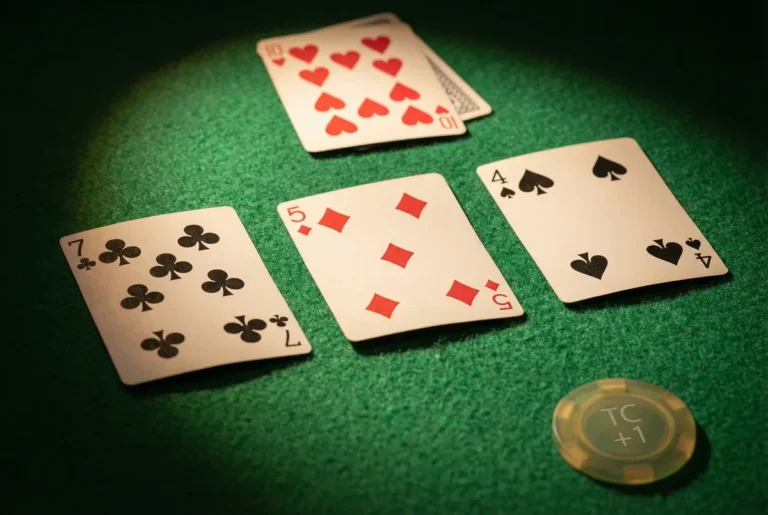
How Composition-Dependent Strategy Gives Card Counters a Real Edge
Basic strategy treats 12 as 12 regardless of how you got there. Composition-dependent strategy knows the difference between 10+2 and…
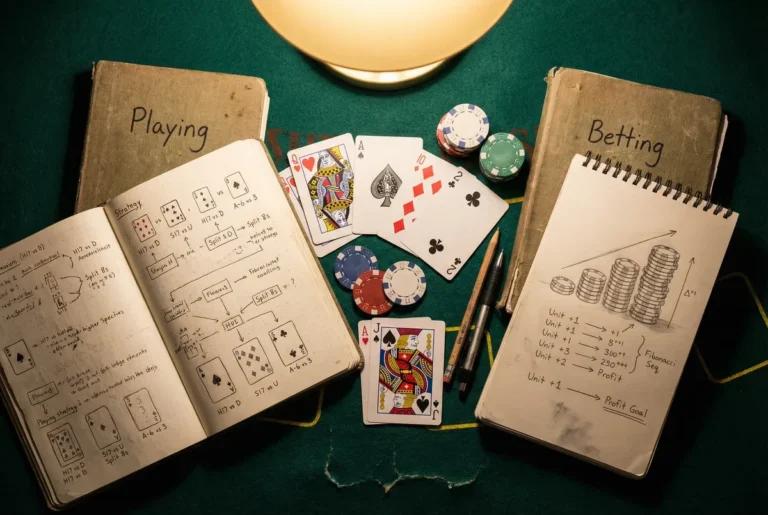
Playing Efficiency vs Betting Efficiency Which Card Counting Metric Wins
Playing efficiency and betting efficiency measure completely different things and confusing them leads counters to pick the wrong system. Here…

Complete Card Counting Comparison of Multi-Deck vs Single-Deck Games
Single-deck counting is fundamentally different from six-deck work. Learn how deck count changes every variable that matters TC impact, penetration,…