
The 5 Most Common Mistakes That Get Card Counters Caught Fast
Card counters are caught not because casinos are infallible, but because counters make the same identifiable mistakes repeatedly and modern surveillance is specifically trained to find them.
Why Card Counters Get Caught
The most dangerous misconception in advantage play is that detection requires a casino to know you specifically. It does not. Pattern-matching software flags behavioral signatures bet correlation, session length, index-play frequency without any prior suspicion. You do not have to be on a watchlist to be reviewed. You only have to produce a pattern the system recognizes.
Each of the seven mistakes below is a pattern the system recognizes. Understanding them is not academic it is operationally critical for anyone serious about playing with an edge.
- 1. Bet ramp too steep at low TC Detection RiskHIGH
- 2. Playing too long at one table Detection RiskHIGH
- 3. Celebrating or reacting to wins/losses Detection RiskMEDIUM
- 4. Returning to same table or shift Detection RiskHIGH
- 5. Large bet spread before TC climbs above +2 Detection RiskHIGH
- 6. Index plays executed too mechanically Detection RiskMEDIUM
- 7. Failing to adapt behavior when heat is present Detection RiskCRITICAL
What Is Mistakes One Through Four?
A bet ramp that is too steep at too low a true count is the single most common exposure vector for card counters and the most avoidable.
The error looks like this: a counter reaches TC +1 and immediately jumps from a $25 minimum to a $200 bet. TC +1 is a marginally positive count the edge is real but tiny, approximately 0.1 to 0.2 percent above baseline. Jumping bet size by 8x at TC +1 creates a mathematically detectable signal without generating meaningful EV. The correct discipline is to reserve large spreads for TC +2 and above, where the edge justifies the exposure.
Playing too long at a single table is the second major error. Surveillance correlation scores improve with sample size a 20-hand session generates weak data; a 200-hand session at the same table generates a statistically robust bet-to-count correlation. Counter longevity is counter vulnerability. The corrective behavior is simple: move tables every 45 to 60 minutes regardless of count.
Celebrating wins a fist pump, an audible reaction, visible excitement is a lower-tech detection trigger but an effective one. Floor staff are trained to watch emotional reactions to winning large bets, particularly when the win follows a count-correlated bet escalation. Emotional flatness is not just good cover; it is professionalism. The corrective behavior is to treat winning $400 exactly as you would treat winning $40 mild acknowledgment, nothing more.
Returning to the same table or the same shift rotation compounds every other mistake. If a pit boss noticed a bet escalation in the first session and did nothing, returning in the same shift tells the floor you did not notice the scrutiny. Smart counters rotate shifts, rotate pit areas within a property, and track which supervisors have seen them during large spreads.
Common Myth
“Casinos only surveil confirmed advantage players unknown counters can play freely.”
This assumption leads counters to believe they have a long grace period before detection begins.
The Reality
Pattern-matching software flags behavioral signatures not named individuals. Anyone producing a detectable bet-count correlation gets reviewed, regardless of whether surveillance has a file on them.
An unknown counter using a steep 1-to-12 spread at TC +1 can generate a flag within a single session at a modern property. Anonymity does not equal invisibility.
What Is Mistakes Five Through Seven?
Spreading to maximum bet before the true count reaches +2 is a variant of the steep-ramp problem, but it is distinct because it often comes from impatience rather than miscalibration.
A counter who jumps to maximum at TC +1.5 is betting against a marginal edge while producing a high-visibility signal. The EV at TC +1.5 in a 6-deck game with standard rules is roughly 0.3 percent real, but not worth the detection risk of deploying a large bet. Disciplined counters set a firm entry threshold for maximum bets (typically TC +2.5 or above in 6-deck, higher in 8-deck) and enforce it regardless of how long the count has stayed neutral.
Index plays executed mechanically are the sixth pattern. Standing on 16 against a dealer 10 at TC 0 looks like bad blackjack basic strategy which it is. Standing on 16 against a dealer 10 every single time the count reaches exactly TC +0 is a machine-like pattern that human players do not produce. If a counter makes the Illustrious 18 index deviations consistently and identically, surveillance can reverse-engineer the counting system being used. The corrective behavior is slight randomization of index-play timing and occasional intentional blackjack basic strategy adherence at borderline counts.
Failing to adapt to heat is the most consequential mistake of all. Heat a floor supervisor watching closely, a pit boss standing behind the dealer, a color-up request is information. It means the pattern has been noticed. The correct response is to immediately flatten bets to minimum or leave the table entirely. Continuing to spread bets after heat has appeared is not boldness; it is the fastest path to a formal backoff or ban.
The single most preventable mistake: spreading to a 1-to-10 bet ratio before the true count reaches +2. There is no meaningful edge at TC +1 that justifies the detection exposure. Set TC +2 as the absolute floor for any bet above 2x your minimum, and TC +3 as the floor for your maximum bet. This one rule eliminates most heat in a career.
What Corrective Behavior Looks Like in Practice?
Correcting each detection mistake requires a specific behavioral adjustment and the adjustments that feel most unnatural are usually the ones that matter most.
For bet ramp calibration, the correction is a strict internal rule: no bet above 3x minimum until TC reaches +2, no maximum bet until TC reaches +3 or above in 6-deck games. This feels like leaving money on the table during TC +1 counts. It is. The trade-off is a session profile that looks indistinguishable from a aggressive recreational player having a hot streak.
For session length, the correction is a hard timer: 45 minutes maximum at any one table, regardless of count. Leave during a positive count if the clock expires the expected value of staying does not outweigh the expected value of the next session at a fresh table where surveillance has no data on your bet patterns.
For mechanical index plays, the correction is deliberate variation. Make the play two out of three times. Occasionally decline a borderline deviation. The pattern you want to produce is a player who sometimes makes surprising decisions consistent with a gambler who has strong intuitions but is not running a mathematical system.
Building a Detection-Resistant Game
Detection resistance is not about a single behavior it is about the aggregate pattern you produce across dozens of sessions at multiple properties.
The counter who plays 60 minutes per table, spreads conservatively, makes index plays only when the deviation is large, and exits smoothly at the first sign of scrutiny generates a pattern that looks like a good recreational player having a variable session. That player can operate for years at the same properties.
Before testing any of this at a real table, practice this count in live conditions tonight provides live-dealer sessions where you can practice count-calibrated betting in a real shoe environment but bear in mind that live sessions involve real money, and mistakes in bet sizing will cost you before you build the discipline to avoid them.
Frequently Asked Questions
The most common cause is a bet ramp that is too steep at too low a true count specifically spreading to large bets at TC +1 or lower. This produces a statistically detectable correlation without generating meaningful edge, making it the worst risk-to-reward mistake a counter can make.
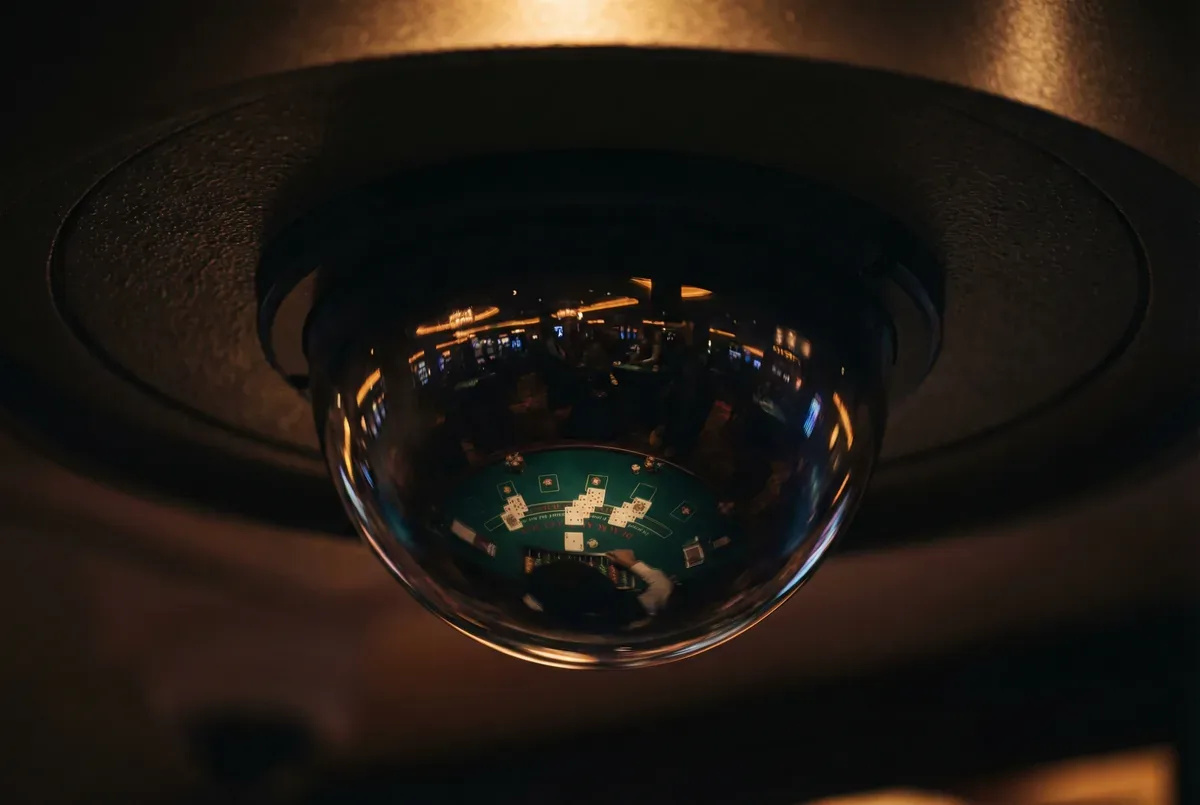
Modern surveillance at major properties uses pattern-matching software that correlates bet size with estimated true count across a session. The system does not need prior suspicion it flags anyone whose bet pattern correlates with count above a detection threshold.
Immediately flatten bets to minimum and consider leaving the table. Continuing to spread after heat appears is the fastest route to a formal backoff or ban. The correct response to any sustained pit attention is to reduce visibility not to push through it.
Before you test these plays at a real table, run them through our free blackjack simulator practice unlimited hands at zero cost until every move becomes automatic.
Mathematical Risk Warning
Advantage play requires real money exposure. Even the most disciplined counters face losing sessions. Never bet more than your bankroll can absorb, and treat every session as a potential loss.
Blackjack Academy is an educational resource. All strategy is based on mathematical expectation. Always play within your means.
Learn More
Continue your education with these related lessons.
How Composition-Dependent Strategy Gives Card Counters a Real Edge
Basic strategy treats 12 as 12 regardless of how you got there. Composition-dependent strategy knows the difference between 10+2 and…
The KO Count Is the Most Beginner-Friendly Unbalanced Counting System
The KO count eliminates true count conversion by using an unbalanced card assignment. Learn the card values, starting counts, betting…

How Long It Actually Takes to Learn Card Counting
Most guides promise you can count cards in a weekend. The real timeline is 150 to 250 cumulative hours across…