

How to Use Shuffle Tracking as an Advanced Counting Extension
Shuffle tracking is an advanced advantage play technique in which a player monitors the composition of specific sections of the discarded cards during a shoe, then tracks those sections through the shuffle to predict where concentrations of high or low cards will land in the newly shuffled deck. Where standard blackjack card counting treats the shuffled shoe as a fresh unknown entity, shuffle tracking treats the shuffle itself as a deterministic or at least partially predictable transformation that can be partially reversed with sufficient observation and pattern recognition.
What Shuffle Tracking Is and How It Extends Card Counting
The technique emerges directly from blackjack card counting. A counter who has been tracking the running count throughout a shoe knows, at the end of the shoe, which sections of the discard pile are rich in tens and aces and which are depleted. The discard tray is a physical record of composition by position. If the shuffle preserves some spatial relationship between original position and final position and most hand shuffles do, to varying degrees then an observer who has tracked the discard layout can form a probabilistic estimate of which sections of the new shoe will favor the player.
This is an extension of counting, not a replacement for it. A shuffle tracker who does not also count cards is missing the foundational information needed to identify favorable clumps in the discard pile. The two skills operate in sequence: counting builds the map of the current shoe, and shuffle tracking attempts to carry that map forward through the shuffle into the next shoe. The combined technique, when applied successfully, allows a player to bet heavily from the very first hand of a new shoe based on predicted composition rather than waiting for the count to develop.
Timeline
1962
Thorp publishes Beat the Dealer: Card counting established as viable advantage technique. Shuffle patterns not yet studied systematically.
1970s
Professional teams begin observing shuffle patterns: Early reports of counters noticing that favorable sections appeared to survive riffle shuffles at certain tables.
1981
Dalton and others document zone tracking methodology: First formal descriptions of monitoring discard sections and following them through known shuffle sequences.
Late 1980s
Arnold Snyder publishes shuffle analysis: 'Blackbelt in Blackjack' includes technical analysis of shuffle types and their predictability. Shuffle tracking enters mainstream AP discourse.
1990s
Casinos respond with more complex shuffle procedures: Double and triple riffle passes added specifically to destroy clump preservation. Some properties switch to 6-pass shuffles.
2000s
Continuous shuffle machines deployed at low-stakes tables: CSMs eliminate discards entirely. Shuffle tracking impossible at any table using a CSM.
2010s–present
Pitch shuffles remain vulnerable at hand-dealt tables: Some single-deck and double-deck pitch games retain simple enough shuffles that zone tracking remains viable for skilled practitioners.
What Is Zone Tracking vs Segment Tracking?
Zone tracking divides the discard tray into broad sections typically three to five zones and assigns each zone a net count based on the cards dealt while those sections were active during the shoe. Rather than tracking a precise running count by card, the zone tracker maintains a zone-level count that indicates whether a given section of discards is net positive, net neutral, or net negative. After the shoe, the tray holds a known composition map expressed in these zones.
Segment tracking is a finer-grained method in which the player tracks shorter, more precisely defined sections of the discard pile sometimes as small as a single deck’s worth of cards and follows each segment individually through the shuffle. Segment tracking requires more granular count maintenance during the shoe and a more detailed mental map of the shuffle sequence. It produces more precise predictions about favorable shoe sections but demands significantly higher cognitive load than zone tracking.
In practice, zone tracking is the entry point for most players exploring the technique and the only version realistically executable by solo practitioners in a live casino. Segment tracking is largely the domain of team play where one member can focus exclusively on shuffle observation while others handle count maintenance. Both methods depend critically on the shuffle being simple enough and consistent enough that the tracker can reliably predict where each section of the discard tray ends up after the dealer completes the procedure.
Standard Hi-Lo Counting
Shuffle Tracking Extension
- Count accuracy + bet spread
- Builds through shoe depth
- +0.5–1.0% blended average
- All shoe games with penetration
- Moderate: penetration and spread detectable
- Bet spread pattern, count correlation
- 200–500 hours of practice
- requires live shuffle observation sessions
- High at penetration tables
- Count accuracy + visual memory + shuffle pattern recognition
- Available from first hand of new shoe
- +1.0–2.0% on targeted sections when viable
- Hand-shuffle games only CSM and machine shuffle immune
- Low: very few modern shuffles are predictable enough
- Extreme requires fixed gaze on discard tray during shuffle
- 500–1,000+ hours
- Low to very low at most modern casinos
What Is the Skill Requirements?
Shuffle tracking demands two cognitive capabilities that blackjack card counting alone does not require: the ability to form and retain a spatial map of the discard tray during active play, and the ability to mentally simulate the shuffle procedure and project where each tray section arrives in the new stack. Both skills are trainable, but both require dedicated practice distinct from the count drills that build standard counting proficiency.
The discard tray map is built incrementally during the shoe. As cards are discarded, the tracker maintains awareness of which zone is currently accepting cards and whether the count within that zone is running positive or negative. This is a parallel track to the standard running count: the tracker is maintaining both a global running count for bet sizing decisions during the shoe and a zone-level composition record for shuffle prediction. The cognitive load is substantially higher than standard counting.
Shuffle pattern recognition requires studying a specific dealer’s procedure until it becomes predictable. Most dealers execute the same shuffle in the same sequence every time the number of riffle passes, the size of the riffle packets, whether strips are performed and how many, and the final cut position are all observable and often consistent. The tracker must log these patterns across multiple observed shuffles at a given table before the procedure becomes reliable enough to support prediction. A dealer who varies their shuffle sequence invalidates all prior pattern data.
Shuffle tracking is theoretically real but practically dead at most modern casinos. The conditions it requires a hand shuffle with three or fewer riffle passes performed by a consistent dealer at a table without RFID or surveillance attention describe a minority of games that existed more commonly in the 1980s than today. Before investing hundreds of hours into shuffle tracking drills, verify that any table you intend to play actually uses a shuffle simple enough to track. Most six-deck shoe games now use wash shuffles or four-pass riffles that destroy clump preservation entirely. The honest application of your practice time is additional index plays or speed counting drills, not shuffle tracking, unless you have already confirmed a specific viable target.
When Shuffle Tracking Is Still Viable: The Conditions Required?
Shuffle tracking retains practical viability in a narrow set of conditions: hand-dealt single-deck or double-deck pitch games at smaller casinos where the dealer performs a consistent two-pass riffle shuffle with a strip, and where surveillance resources are not intensively focused on the table. These conditions exist more commonly in regional card rooms and older Nevada properties than in major Strip or Atlantic City operations. The key diagnostic is shuffle simplicity if you cannot observe the same dealer performing the same procedure at least five times and predict which section of the new deck corresponds to which section of the discard, the shuffle is not trackable.
The EV premium over standard counting, when shuffle tracking is viable, is meaningful. A counter who can identify the first quarter of the shoe as likely rich in tens and aces can bet maximum from hand one, capturing value that a traditional counter would not see until the count climbed several hands into the shoe. Across a full session, this compression of the advantageous betting window into high-confidence early hands can add 0.5–1.0% to session EV on top of the standard counting edge but only if the zone prediction is accurate.
Building Toward Shuffle Tracking: The Right Progression
The correct path toward shuffle tracking starts with mastering your count system at expert level, then logging shuffle patterns at your intended target table across multiple observations before committing any money to the method. Attempting to apply zone tracking before the count is fully internalized produces unreliable discard maps you cannot build an accurate zone-level composition record while actively maintaining a running count if the count itself is still occupying working memory.
If you are building toward shuffle tracking, the right progression is to master your count system at expert level first, then begin observing shuffles at your target table without attempting to use the technique, logging shuffle patterns before committing any money to the method. The live tables at stress-test this count at a live dealer table tonight offer a useful environment for refining count accuracy at genuine dealing speed but understand that every session there involves real money, and shuffle tracking specifically requires live brick-and-mortar observation that no online platform can replicate.
Frequently Asked Questions
No. Online RNG blackjack shuffles randomly after every hand, making tracking impossible. Live dealer games use mechanical or automated shuffling devices rather than hand shuffles, which destroy the predictable spatial relationships that shuffle tracking depends on. The technique is applicable only to hand-shuffled games in physical casinos.
Card counting should always come first. Shuffle tracking is an extension that only adds value when layered on top of a solid, accurate counting foundation. A beginner who attempts shuffle tracking without mastering Hi-Lo counting first will generate unreliable zone maps that produce random predictions rather than genuine EV advantages. Build counting to expert level before exploring shuffle tracking.
Continuous shuffle machines (CSMs) are completely immune cards return to the shoe immediately and no discard tray exists. Machine-assisted shuffles used in most modern 6-deck shoe games destroy clump preservation through randomized cut sequences. Wash shuffles, used to introduce new cards, are also untrackable. Only simple, consistent hand shuffles with two or three riffle passes retain enough spatial structure to support tracking.
Before you test these plays at a real table, run them through our free blackjack simulator practice unlimited hands at zero cost until every move becomes automatic.
Mathematical Risk Warning
Shuffle tracking is an advanced technique that requires extensive study of specific casino conditions before any real-money application. All gambling carries inherent financial risk. Never risk money you cannot afford to lose, and always verify the c
Blackjack Academy is an educational resource. All strategy is based on mathematical expectation. Always play within your means.
Learn More
Continue your education with these related lessons.
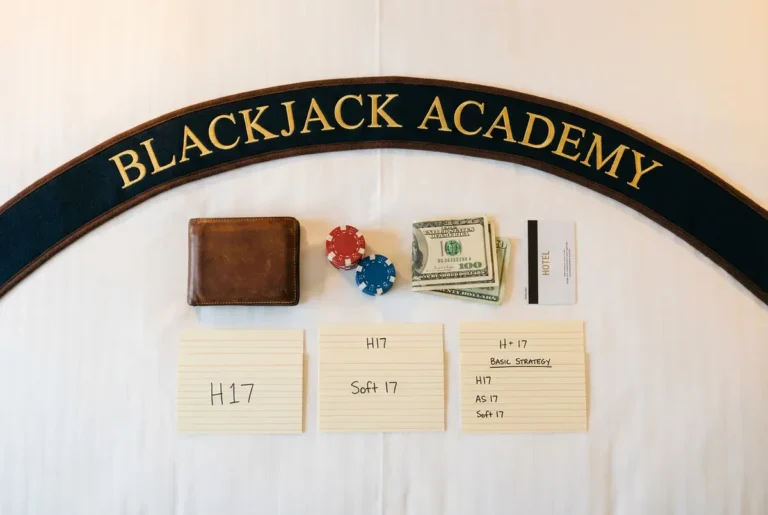
The Complete Card Counter’s Pre-Trip Checklist
A systematic pre-trip checklist for card counters covering game conditions research, speed and accuracy drills, bankroll verification, physical readiness, and…
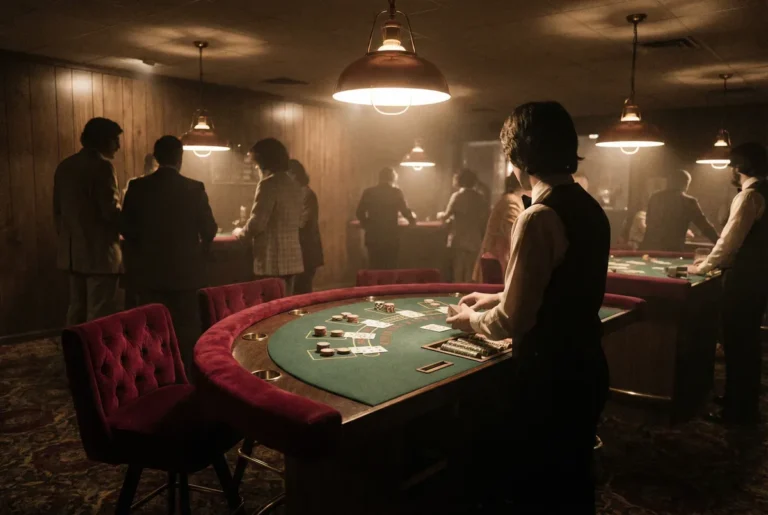
The Golden Age of Card Counting and the Legends Who Beat Las Vegas
The golden age of card counting ran from 1962 to the mid-1990s. Learn how Ed Thorp's book started it all,…
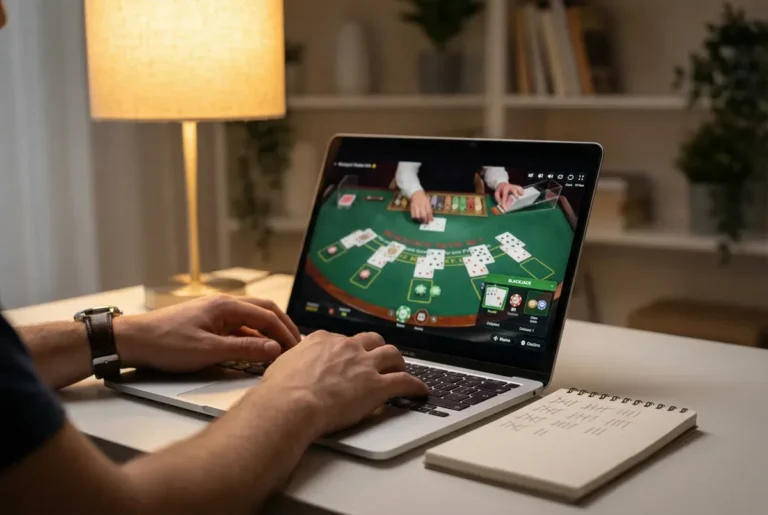
Card Counting for Online Blackjack That Actually Works
RNG blackjack reshuffles after every hand counting is impossible. Live dealer blackjack is different. Here is exactly what works, what…