
How to Maintain Counting Accuracy Even Under Heavy Casino Distractions
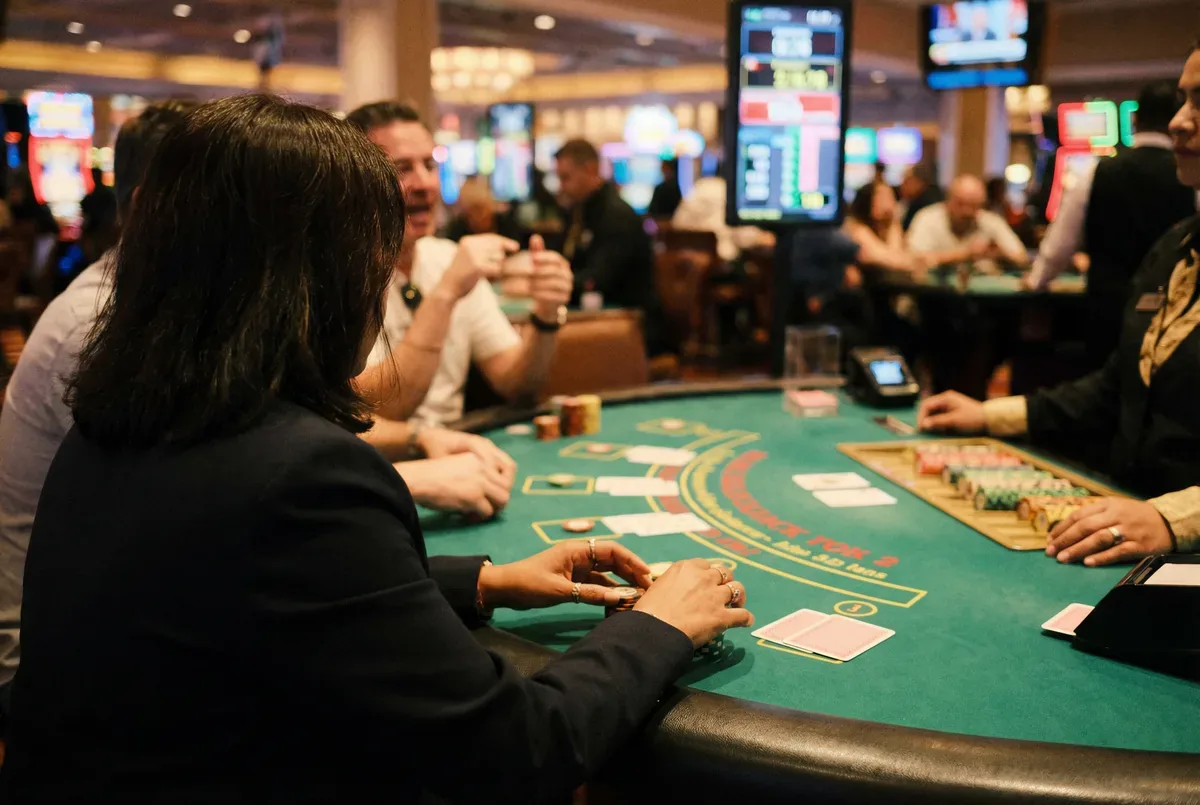
A card counter who achieves 99% accuracy counting a deck solo at home typically drops to 85%-90% accuracy during their first live casino session. The gap is almost never caused by forgetting the count values it is caused by cognitive load collapse. The casino environment routes multiple competing attention demands simultaneously: tracking multiple cards dealt to multiple players, calculating running count adjustments, deciding bet size and playing strategy, managing conversations with dealers and other players, responding to cocktail waitress interruptions, and monitoring the ambient environment for heat indicators. Each of these tasks individually is manageable. Simultaneously, they overwhelm a counting system that was only ever practiced in isolation. The solution is not to practice counting harder it is to practice counting under progressively increasing distraction loads, building the automatic processing that frees conscious attention for everything else.
Why Casino Distractions Break Count Accuracy
Measure your count accuracy, not just your counting speed. Get a deck of cards, set a phone playing a busy coffee shop ambience track, have someone talk to you occasionally, and count down the full deck. Check your final count. Do this 20 times and record accuracy. Most home counters discover their live accuracy is 10-15% lower than their quiet practice accuracy. That gap is the training target.
Why Is the Specific Distractions and Why Each Dangerous?
Cocktail waitress interruptions are among the most disruptive because they arrive at unpredictable intervals, require verbal response, and often occur precisely when cards are being dealt. The counter must simultaneously track the cards being dealt, formulate a drink order response, and maintain their current count without losing the thread. The error typically occurs when the counter pauses their count to respond and then resumes from an incorrect position misremembering whether they counted the cards just dealt before or after the interruption. The fix is to develop a mental anchor: count is always taken after all cards visible on the table have been tagged, regardless of interrupt. If unsure whether a set of cards was counted, retag all visible cards from a fresh scan of the table before resuming.
Loud players produce the most acute distraction because they demand social response at unpredictable moments. A player who wins a hand and erupts in celebration pulls every person at the table into a shared social moment a counter who remains stonily focused through this moment signals abnormal behavior. But joining the celebration risks breaking count continuity. Experienced counters develop a calibrated response: a brief authentic social reaction (a nod, a quick smile, a short comment) while holding the count mentally frozen. The count resumes the moment social attention is no longer required. This requires the count to be a held number, not an active calculation process the difference between thinking “running count is +4” as a static number versus actively recalculating it. The static hold is stable through brief social interruptions. Active calculation is not.
Advantages
- Casino ambience can mask counting behavior behind natural social activity
- Dealer chatter provides cover for not appearing intensely focused
- Multiple-hand tables give extra time to count all cards
- Experienced counters use interruptions as natural bet-change moments
Disadvantages
- Cocktail waitress timing hits peak dealing windows
- Loud players disrupt count continuity at critical shoe moments
- Dealer errors require recounting and create double-attention load
- Long social interactions force difficult count-hold under conversation
How Do You Build Automatic Count Processing?
Professional card counters develop count processing that operates like breathing largely automatic, running in the background without requiring conscious attention for every increment. Reaching this level requires deliberate progressive training. Stage one is silent solo counting: counting down a deck with no errors in under two minutes. Stage two adds background audio a TV playing conversation, a radio show, music with lyrics. Stage three adds active conversation: practice counting while someone asks you unrelated questions that you must answer coherently. Stage four adds simultaneous tasks: count cards while doing simple arithmetic problems aloud, or while playing another card game. Stage five is social simulation: count a full shoe dealt by another person while maintaining a social conversation about an unrelated topic. Each stage builds the automatic processing depth needed for the stage beyond it. Skipping stages produces counters who are accurate in silence but collapse under live conditions.
Dealer Shows
Your Hand
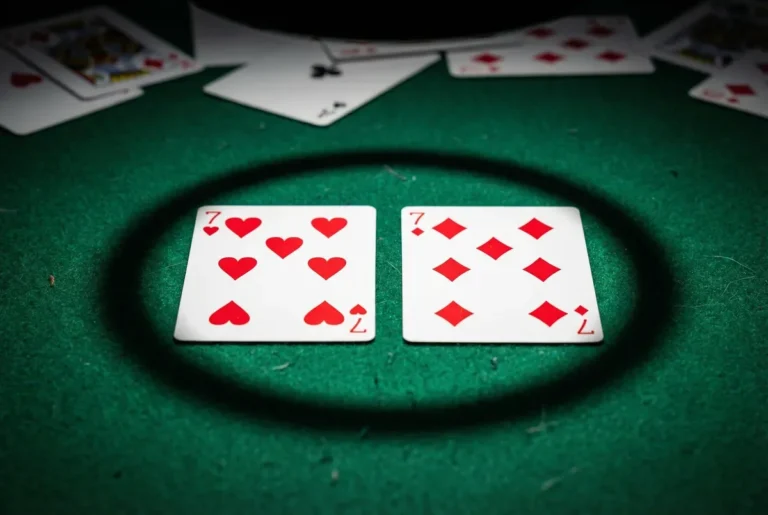
You're mid-count at +3. Dealer is about to deal. A loud player at third base starts arguing loudly with the dealer. Do you split the 7s against dealer 9?
Distraction tests whether you revert to emotional plays or maintain mechanical strategy execution. The count situation and the noise are separate inputs. Strategy decision is always computed independently.
How Do You Use It as Cover Rather Than Fighting It?
Dealer chatter is the one distraction that experienced counters actively cultivate rather than resist. A dealer who is talking is providing conversational cover: the counter who responds naturally appears engaged and social rather than robotically focused on the cards. The technique is to develop responses that are short, topically flexible, and can be delivered while counting a skill that comes from deliberate practice of simultaneous conversation-and-count. Questions that require only a yes or no, brief acknowledgments, and short comments about the game itself are the toolkit. Avoid extended conversations that require sustained attention these create the same cognitive load problem as any other distraction. A dealer who asks about your weekend gets a two-sentence response. A dealer who wants to discuss baseball for ten minutes during a deep shoe gets a polite redirect.
Testing Count Accuracy Under Real Casino Pressure
Live table conditions cannot be fully replicated through home practice the combination of real money, real strangers, and real time pressure creates a cognitive environment that drills alone cannot reproduce. run this count at a live table with real stakes tonight provides close proximity to real casino conditions with actual financial stakes on every hand, which means your count discipline gets tested immediately against consequences. Approach any first live session as a diagnostic tool rather than an income event, and never wager more than you can accept losing completely.
Frequently Asked Questions
Reset to zero and treat it as a fresh shoe from that point. Do not guess or estimate. A counter playing from an incorrect running count is making worse decisions than a basic strategy player they are making index plays based on false information. If you lose the count, flat bet at minimum until the next shuffle and start fresh. This is the correct protocol and every professional counter uses it.
Yes, but the effect varies by individual. Some counters find consistent background noise less distracting than random conversation because it becomes white noise. Others find throbbing casino floor music actively interferes with the verbal count they maintain internally. The solution is to practice with the specific type of audio environment you will face low-tempo background music versus high-energy club noise versus sports TV. Match your practice environment to your target venue.
Most serious students who practice with progressive distraction training reach reliable accuracy at a 5-7 card per second pace within three to six months of consistent daily practice. The threshold for reliable live-casino performance is approximately 98% accuracy under active conversation. Reaching that standard requires honest measurement not just feeling accurate, but regularly verifying with deck checks.
Before you test these plays at a real table, run them through our free blackjack simulator practice unlimited hands at zero cost until every move becomes automatic.
Mathematical Risk Warning
Count accuracy errors under distraction produce negative-EV index plays that eat into your theoretical edge. A counter with 90% accuracy in a live environment may be generating less EV than a basic strategy player at the same stakes. Never play for real money until distraction-condition accuracy is verified above 95%.
Blackjack Academy is an educational resource. All strategy is based on mathematical expectation. Always play within your means.
Learn More
Continue your education with these related lessons.
The Powerful Big Player Technique for Spreading Bets Without Heat
The Big Player technique lets card counters spread bets dramatically without triggering casino heat by entering tables only at positive…
How the Red Seven Count Compares to Hi-Lo for Beginners
Arnold Snyder's Red Seven count eliminates true count conversion by using an unbalanced design. Here is how it compares to…
Why Continuous Shuffling Machines Completely Destroy the Counter’s Edge
Continuous shuffling machines eliminate card counting advantage entirely. Learn exactly how CSMs work, why the running count resets constantly, and…