
How to Count Cards in a Crowded Casino Without Being Obvious
Casino surveillance identifies card counters primarily through bet-spread analysis the ratio between your minimum and maximum wagers not by observing how you hold your chips or whether your eyes move when cards are dealt.
The Real Detection Risk Is Your Bet Pattern, Not Your Behavior
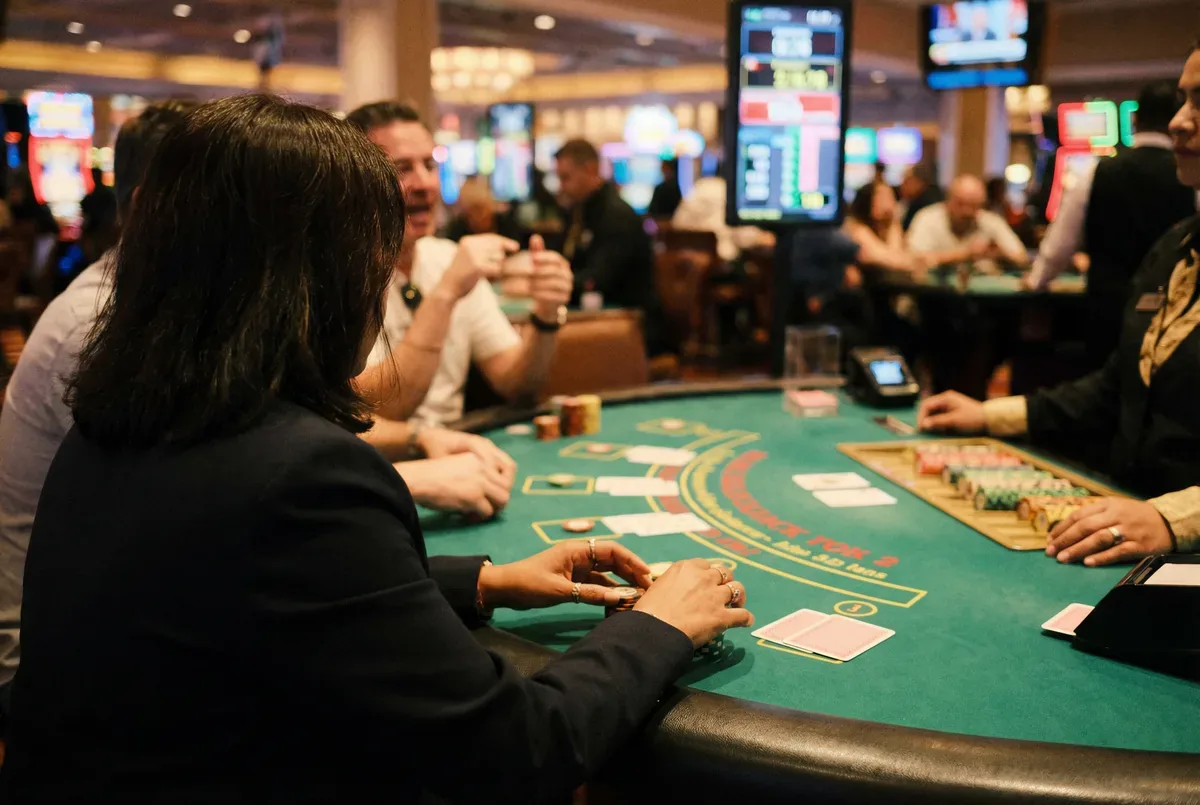
This distinction matters because most counter education focuses on cover behavior relaxed posture, small talk, ordered drinks when the actual threat comes from the statistical footprint of your bets across a session. A counter who bets $25 at a neutral count and $200 at a true count of +4 leaves a pattern that automated tracking software can flag in under 20 minutes. No amount of casual conversation changes what the chip tray and betting records show.
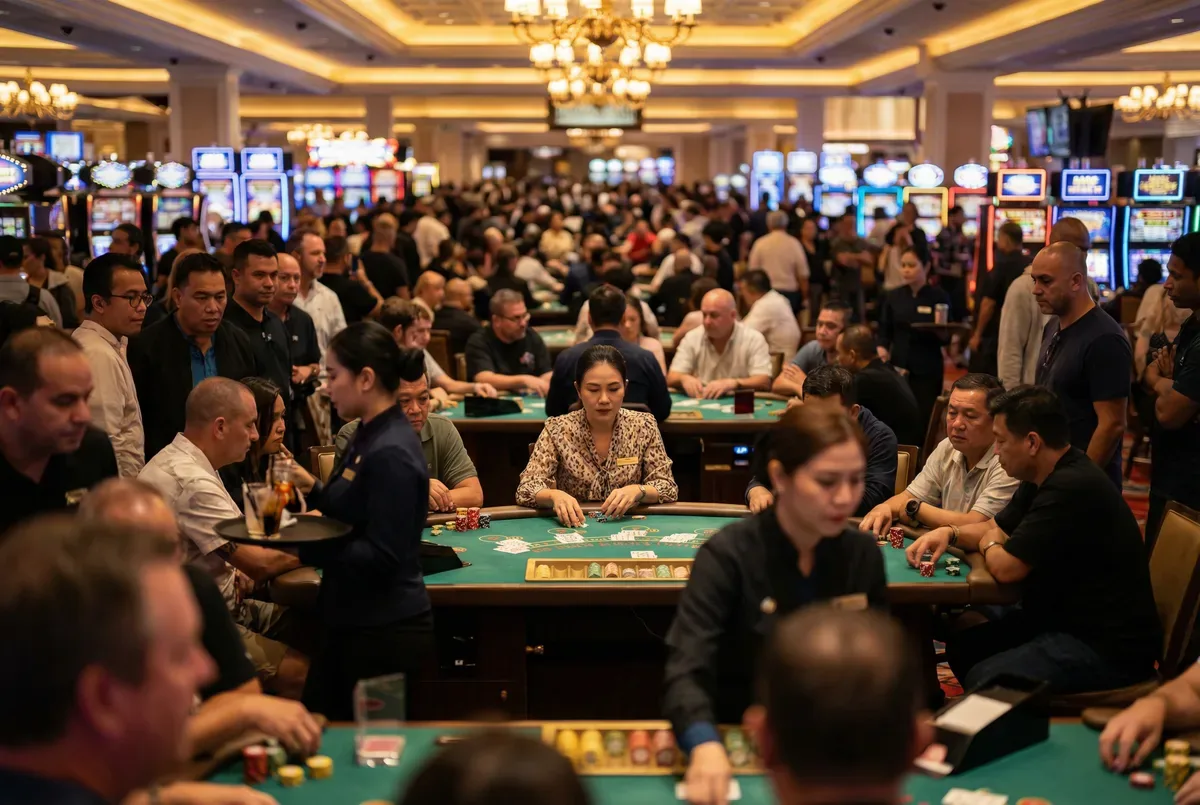
A crowded table genuinely helps with this problem. With five or six players at a full table, round speed drops significantly fewer hands per hour means fewer data points per hour, which slows the statistical signature that accumulates in surveillance records. This is one reason experienced counters actively seek out busy tables rather than the faster heads-up games that novices prefer.
Advantages
- Slower rounds reduce hourly data points for surveillance
- More players mean natural bet variation is harder to isolate
- Crowded atmosphere provides cover for looking around the table
- Pit boss attention is distributed across more players
Disadvantages
- Fewer hands per hour reduces expected hourly EV
- Deep penetration can be inconsistent at busy tables
- More players increase distraction and counting errors
- Harder to track multiple hands simultaneously at full tables
How to Use Table Conversation and Social Cover?
Cover at a blackjack table is about creating a narrative that fits a recreational player profile someone who comes for entertainment, bets emotionally, and makes occasional suboptimal plays without concern.
Practical cover behavior that does not compromise your count: engage with other players briefly after winning hands, not every hand. Order a drink early in the session and keep it on the table you do not need to drink it, but it signals leisure intent to pit staff. Comment on results with detachment, as a recreational player would. Vary your entry commentary slightly mentioning sports, the weather, or the hotel gives floor staff a mental category to file you under.
What to avoid: any behavior that signals concentration or system use. Counting chips between hands slowly, staring at the discard tray, or going silent precisely when the count is high all draw pattern recognition from experienced floor staff. The goal is not to be invisible it is to be unremarkable. Unremarkable players who happen to win occasionally are the least-scrutinized people in a casino.
Smartphone use as cover works in specific circumstances. Looking at your phone between hands, not during, and provides a reason for occasional distraction and reinforces the profile of a casual player. It is not a tactic to rely on heavily, but in a crowded environment where multiple players are doing the same thing, it creates no unusual signal.
Apply the 3-session rule without exception: never play more than three sessions at the same table during the same shift, and never repeat the same shift-table combination within 72 hours. Floor staff who work the same shift develop pattern recognition for regular faces, and familiarity accelerates scrutiny. Tourist-destination casinos are more forgiving; local casinos with regulars on staff are less so.
How Do You Understand the Difference Between Heat and Backoff?
Heat and backoff are two distinct stages of casino response, and treating them as the same event leads to costly overreactions.
Heat is surveillance interest without action. A pit boss standing closer to your table, a shoe change after a large win, or a floor manager logging your player card these are signals that you have entered a monitoring phase. Heat does not mean you will be backed off. It means your session is being evaluated. Many counters who receive heat and immediately leave cost themselves hours of profitable play over a career for no reason.
A backoff is a direct request from casino management to stop playing blackjack usually phrased as an invitation to play other games or a request to leave the pit. At the backoff stage, continuing to argue or demand explanations does nothing to improve your situation. The correct response is calm acknowledgment and departure. Casinos are private property and have the legal right to refuse service to any player for any reason except protected class discrimination. This right does not vary by state or country in any jurisdiction where casino gambling is legal.
Walk away before backoff if you observe three consecutive rounds of close pit observation following a bet increase, a shuffle-up immediately after you raise your bet significantly, or a floor manager calling your player card out to a supervisor. None of these guarantee a backoff, but each is a signal that your counting window at this table is closing.
Common Myth
“Pit bosses can identify card counters by watching how they think through their hand decisions.”
The popular image of surveillance staff watching a player's face for signs of mental calculation has been reinforced by films and television.
The Reality
Experienced floor staff identify counters through bet-pattern analysis and correlation with shoe composition not by reading facial expressions or decision timing. They are watching the tray, not your eyes.
Bet-spread data is the primary trigger for counter flagging. Changing how you look while thinking does nothing to alter the statistical footprint your bets create.
When to Leave the Table and How to Time Your Exit?
Knowing when to leave is a skill that separates long-term counters from players who burn through welcome mats at casino after casino.
The timing logic: your edge exists across thousands of hands, not across any single session. Leaving a table when the count drops sharply negative is mathematically correct you are not surrendering an edge, you are avoiding a situation where the blackjack house edge is running against you at maximum speed. Frame exits around natural session breaks: finishing your drink, catching a meal, checking your phone, or meeting a companion. Each of these is observable and fits the recreational player profile.
Avoid large bet reductions in the final two or three hands before you leave. A pattern of maximum-bet rounds followed by an abrupt session end is one of the cleaner behavioral signals that surveillance software correlates with count-dependent play. Reduce bets one step before your planned exit hand, not sharply at the end.
Practice Your Cover Under Live Dealer Speed Before Your Next Session
The only real test of whether your cover and count hold together is performing them simultaneously at casino pace and the best low-stakes environment to build that combination is the live dealer tables at apply the count with real money down tonight, where real dealers run real shoes with no pause for practice. Real money is involved, so set a hard session limit before you sit down and treat every hand as a full rehearsal for the casino floor.
Frequently Asked Questions
Card counting is not illegal anywhere in the world where casino blackjack is legal. Casinos have the right to ask you to stop playing or to leave their property, but no criminal law prohibits mental arithmetic at a blackjack table. The legal risk of counting is trespass if you return to a casino that has formally excluded you, not the act of counting itself.
A full table of seven players typically deals 50 to 70 hands per hour, compared to 200 or more at a heads-up game. This reduces hourly EV but also dramatically slows the accumulation of bet-pattern data that surveillance systems use to flag counters.
This is a personal decision with real trade-offs. A player card generates a trackable record of your session data, which can accelerate identification. However, refusing a card when asked can itself draw attention. Many counters use a card for short initial sessions and decline for extended high-count play.
Before you test these plays at a real table, run them through our free blackjack simulator practice unlimited hands at zero cost until every move becomes automatic.
Mathematical Risk Warning
Card counting in a live casino carries both financial and operational risk. Losing sessions are statistically inevitable, and no cover strategy guarantees continued access to any casino. Never bet money you cannot afford to lose.
Blackjack Academy is an educational resource. All strategy is based on mathematical expectation. Always play within your means.
Learn More
Continue your education with these related lessons.
The Complete Guide to Card Counting in Tournaments
Card counting in blackjack tournaments operates under a completely different objective function than cash game counting. Learn when the count…
Why 75 Percent Deck Penetration Is the True Minimum for Card Counters
Deck penetration is the single most important table variable for card counters. Learn what penetration percentage means, why 75% is…

How Ed Thorp Invented Card Counting and Wrote Beat the Dealer
Ed Thorp proved in 1962 that blackjack was mathematically beatable. His book Beat the Dealer changed the game forever and…