

How to Convert Running Count to True Count
A running count of +10 sounds impressive but how much deck remains when you read it makes all the difference. With five decks still in the shoe, a running count of +10 represents a modest composition shift spread across 260 remaining cards. The same +10 with only one deck left means that imbalance is concentrated in 52 cards. The player advantage in the second case is dramatically higher, even though the raw running count is identical.
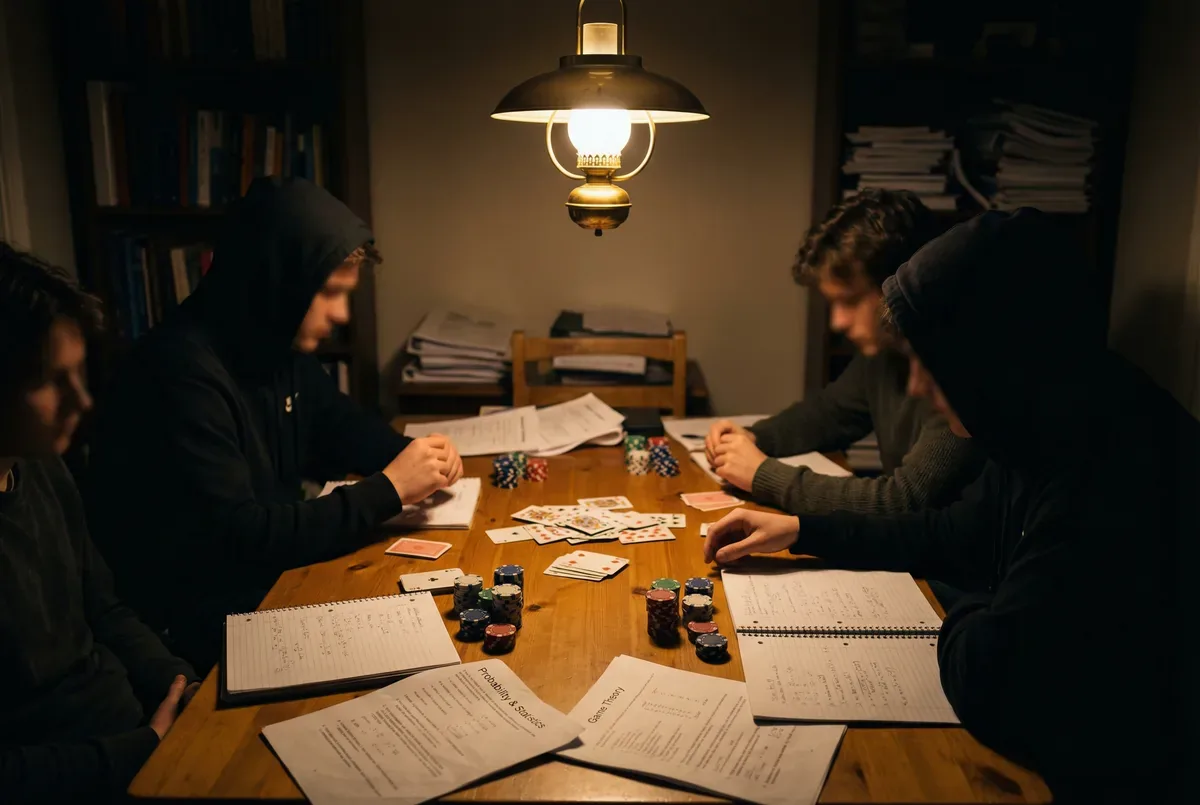
Why Running Count Alone Is Not Enough The Deck Depth Problem
This is the deck depth problem. The running count is an absolute number that grows or shrinks regardless of how many cards remain. Early in the shoe, even a high positive count carries limited edge because it is diluted by the large number of undealt cards. Late in the shoe, a smaller positive count can represent a strong player advantage because the imbalance is concentrated in fewer remaining cards.
A counter who bets solely on the running count ignoring deck depth will systematically bet too large early in shoes when conditions are weak, and may undersize bets late in shoes when conditions are genuinely strong. The result is reduced edge and a suboptimal bet spread. True count solves this by standardizing the running count per remaining deck, making every count reading comparable regardless of where you are in the shoe.
True Count = Running Count ÷ Decks Remaining. Example: Running count = +12, decks remaining = 3 → True Count = +4. Example: Running count = +12, decks remaining = 6 → True Count = +2. The same running count at different deck depths represents very different advantage levels. True Count normalizes the running count per deck making it comparable across all points in the shoe.
True Count Formula
What Are the True Count Formula and What It Represents?
The true count formula is: true count equals running count divided by decks remaining. If your running count is +9 and you estimate three decks remain, your true count is +3. If the running count is +9 and only 1.5 decks remain, the true count is +6. The division normalizes the raw count into a per-deck figure that reflects the actual density of the composition imbalance in the remaining shoe.
Each +1 increase in true count corresponds to approximately a +0.5% shift in player edge. At a true count of +1, the blackjack house edge from a typical 6-deck game with good rules is approximately zero break-even. At true count +2, the player is at roughly +0.5% edge. At true count +4, the edge is approximately +1.5%. These figures are approximate and vary with specific game rules, but the +0.5% per true count increment is a reliable working estimate for betting decisions.
The true count is the number that drives both bet sizing and strategy deviations. Index plays departures from blackjack basic strategy triggered by specific true count thresholds are calibrated against true count, not running count. The Illustrious 18, which are the 18 most valuable strategy deviations, each have a specific true count trigger. Without true count conversion, these deviations cannot be applied correctly.
How to Estimate Remaining Decks at the Table?
Deck estimation is a physical skill, not a calculation. The practical method is to watch both the discard tray and the remaining shoe simultaneously. In a standard 6-deck game, a full shoe holds approximately 312 cards. As hands are dealt, the discard tray fills and the remaining shoe shrinks. A counter estimates the remaining deck count by judging the size of the remaining shoe portion relative to a full deck’s thickness.
A standard deck of 52 casino-quality cards is approximately 1.5 centimeters thick. A 6-deck shoe at full depth is roughly 9 centimeters of cards. When the remaining shoe appears to be about 3 centimeters deep, you are looking at approximately two decks remaining. This visual estimation becomes accurate with practice most experienced counters can estimate remaining decks to within half a deck after a few months of regular play.
Precision is not required. True count estimation rounds to the nearest half-deck in most practical applications. A running count of +9 with 2.5 decks remaining produces a true count of approximately 3.6 which a counter rounds to +4 for betting purposes. The rounding error introduced by estimating remaining decks to the nearest half is small compared to the variance of the game, and attempting to estimate more precisely at the table is not worth the cognitive cost.
Running Count +8, 4 Decks Remaining
Running Count +8, 1 Deck Remaining
- +2
- approx +0.5%
- Not favorable
- 2-3× base
- ~208 cards
- +8
- approx +3.5%
- Favorable take it
- Maximum spread
- ~52 cards
How True Count Changes Your Bet and Strategy Decisions?
The true count serves as the direct input to two distinct decisions: bet size and strategy deviations. For bet sizing, most counting systems use a simple proportional rule increase the bet by one unit for each true count increment above the break-even point. In a game where the break-even true count is approximately +1, a true count of +3 suggests a bet of two additional units above the minimum. The exact spread depends on bankroll and risk tolerance, but true count is the consistent reference point.
For strategy deviations, true count thresholds govern specific departure points from blackjack basic strategy. The most frequently triggered deviation is the insurance bet: blackjack basic strategy says never take insurance, but at a true count of +3 or higher, insurance becomes a mathematically positive expectation bet and should be taken. The true count at which this crossover occurs is derived directly from the fraction of 10-value cards remaining which is what the true count approximates.
A second common deviation is standing on 16 against a dealer 10 at a true count of 0 or higher, rather than following blackjack basic strategy’s default hit. At positive true counts, the deck is rich in cards that would cause the dealer to bust, making it correct to stand rather than risk busting yourself. These threshold-based deviations add approximately 0.2–0.3% to a counter’s total edge when applied correctly a meaningful addition to the bet-spread advantage.
Estimating remaining decks takes 2-3 weeks of practice to do quickly at the table. The technique: look at the discard tray and the remaining shoe. A standard 6-deck shoe holds approximately 312 cards. If roughly half the shoe is in the discard tray, approximately 3 decks remain. Practice at home by counting out decks and estimating by size a deck of 52 cards is about 1.5 cm thick in standard casino cards. After three weeks, deck estimation becomes automatic.
Building True Count Estimation Into Your Practice Routine
True count practice is a separate skill layer built on top of running count accuracy. The sequence for adding it to your training is: first, achieve clean and fast running count accuracy through a full deck. Then add the deck estimation layer. A practical drill is to deal through a six-deck shoe, stopping after every two to three hands to estimate remaining decks, convert to true count, and name the correct bet size for that true count. Verify your deck estimate against an actual physical count of the remaining shoe periodically.
The most common practice error is performing the true count division as a careful mental calculation which takes too long at a table. The goal is to develop instantaneous approximation. A running count of +10 with two decks remaining is +5. A running count of +8 with four decks remaining is +2. These should become immediate pattern recognitions, not arithmetic. Flash-card style drilling of running count and remaining deck combinations until the true count answers are automatic is the most efficient training method.
When your true count conversion is consistent and fast enough in solo practice, a live-dealer session is the real test. At https://blackjackacademy.online/blackjack-live you play against a human dealer working from a genuine multi-deck shoe the cards are real, the pace is authentic, and the financial stakes are actual money. A live session there will expose any gap between your practice-room true count speed and your live-table execution faster than any home drill will, and with far less financial exposure than a trip to a physical casino.
The true count conversion only becomes automatic under pressure. The live dealer tables at Blackjack Academy run at casino pace against a real shoe real money, real decisions, real time. Drill your running-to-true conversion at a live table until the division happens before the next card lands.
Frequently Asked Questions
Running count is the raw cumulative total of all Hi-Lo tag values since the last shuffle. True count normalizes the running count by dividing it by the estimated number of decks remaining. True count accounts for deck depth and provides a consistent measure of player advantage regardless of where you are in the shoe.
In a standard 6-deck game with common rules, a true count of approximately +1 to +2 represents the break-even point where the player edge equals zero. At true count +2 and above, the player has a positive edge. The exact break-even true count varies with specific game rules more liberal rules lower the required true count, more restrictive rules raise it.
No. Estimating to the nearest half-deck is sufficient for practical true count conversion. The rounding error introduced by half-deck imprecision is small relative to the game's variance. Attempting to estimate remaining cards to greater precision at the table is cognitively costly and not justified by the marginal accuracy gain.
Before you test these plays at a real table, run them through our free blackjack simulator practice unlimited hands at zero cost until every move becomes automatic.
Use our free blackjack calculator to model the exact expected value for any rule combination or hand situation before you sit down.
True Count Mastery Takes Time Don't Rush It to the Casino
Applying true count incorrectly at a live table can erode your entire counting edge through misplaced bets. Practice until true count conversion is instant and automatic before playing with real money. No amount of theoretical knowledge replaces correct execution under live conditions.
Blackjack Academy provides educational content only. Card counting skill does not guarantee profitable outcomes. Gambling involves financial risk. Never play beyond your means.
Learn More
Continue your education with these related lessons.
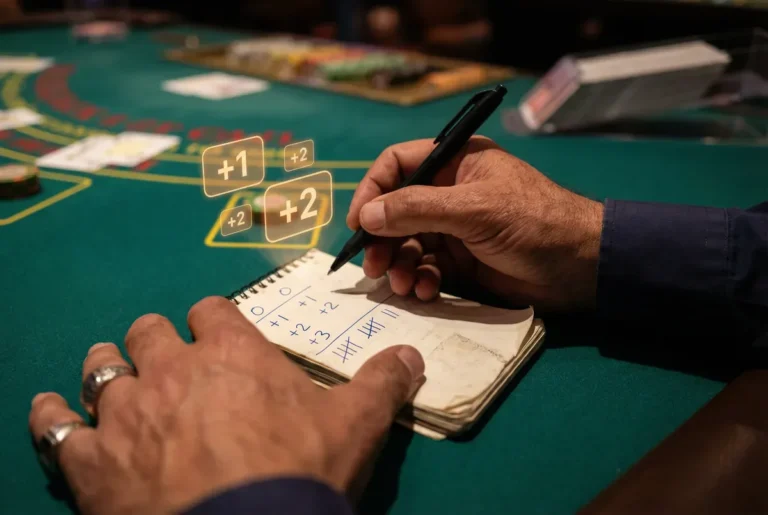
The KO Count Is the Most Beginner-Friendly Unbalanced Counting System
The KO count eliminates true count conversion by using an unbalanced card assignment. Learn the card values, starting counts, betting…
Why Counting Side Bets in Blackjack Is Almost Never Worth the Effort
Some blackjack side bets are vulnerable to card counting. Learn which side bets are countable, the exact count thresholds for…
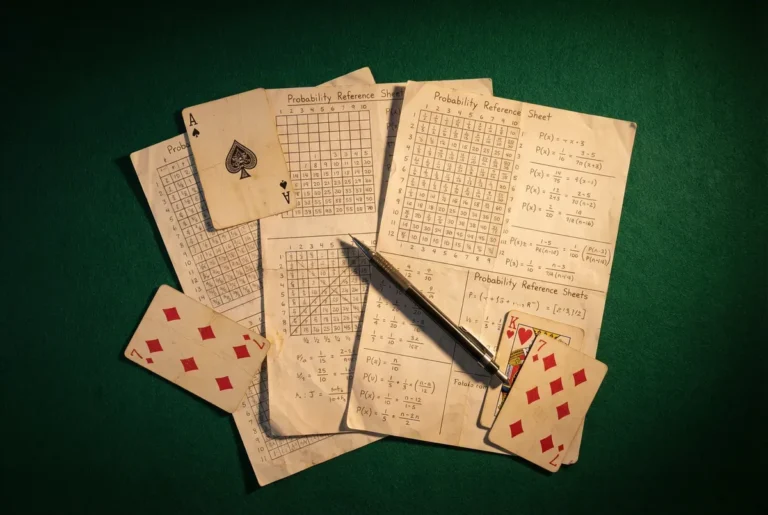
The Real Mathematics of Blackjack Every Serious Player Must Master
Understanding blackjack's probability tables transforms card counting from rule-following into genuine mathematical reasoning. Learn bust probabilities by hand total, dealer…