
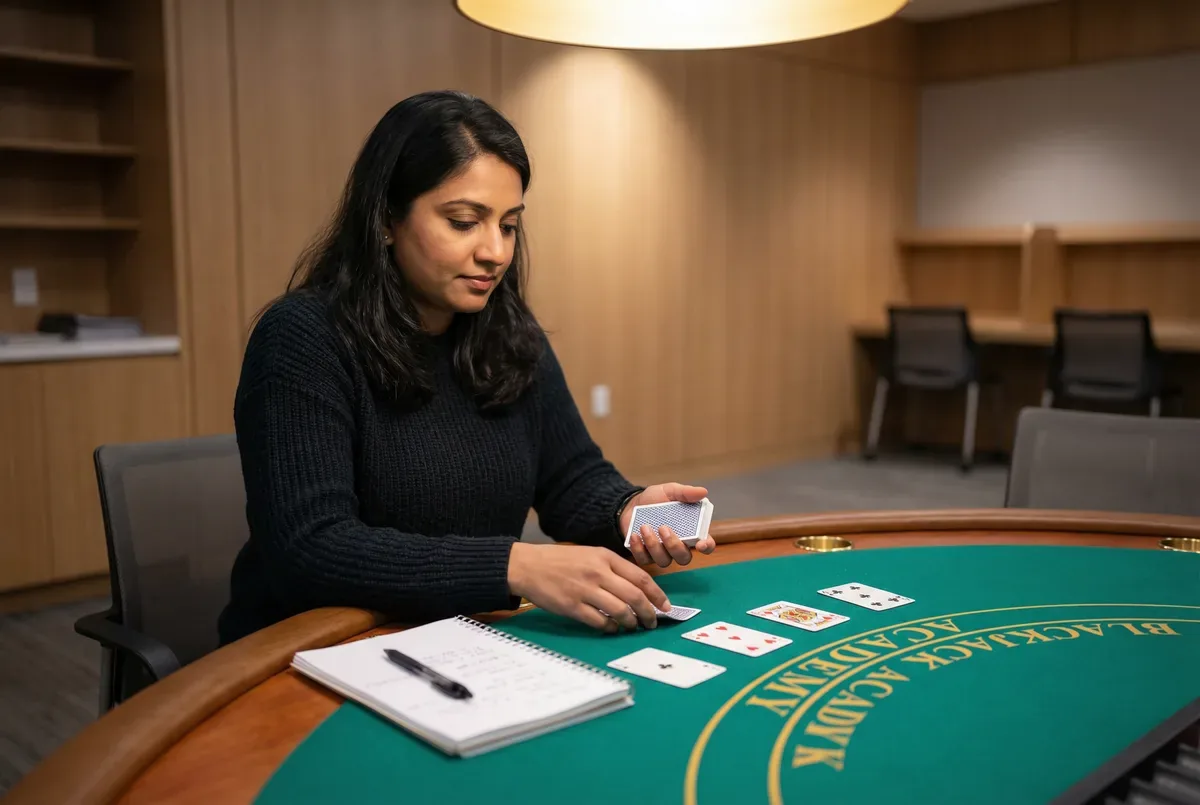
How Long It Actually Takes to Learn Card Counting
Card counting is learned in exactly four sequential stages, and each stage has a measurable exit criterion that determines when you are allowed to move forward. Stage one is single-card recognition you assign the correct Hi-Lo tag to any card the instant you see it, without conscious retrieval. Stage two is deck drill speed you run a full 52-card deck in under 25 seconds with zero errors. Stage three is true count conversion you divide running count by estimated decks remaining in under two seconds at any point in a live shoe. Stage four is casino conditions you execute all three prior skills simultaneously while holding a conversation and managing your bet spread.
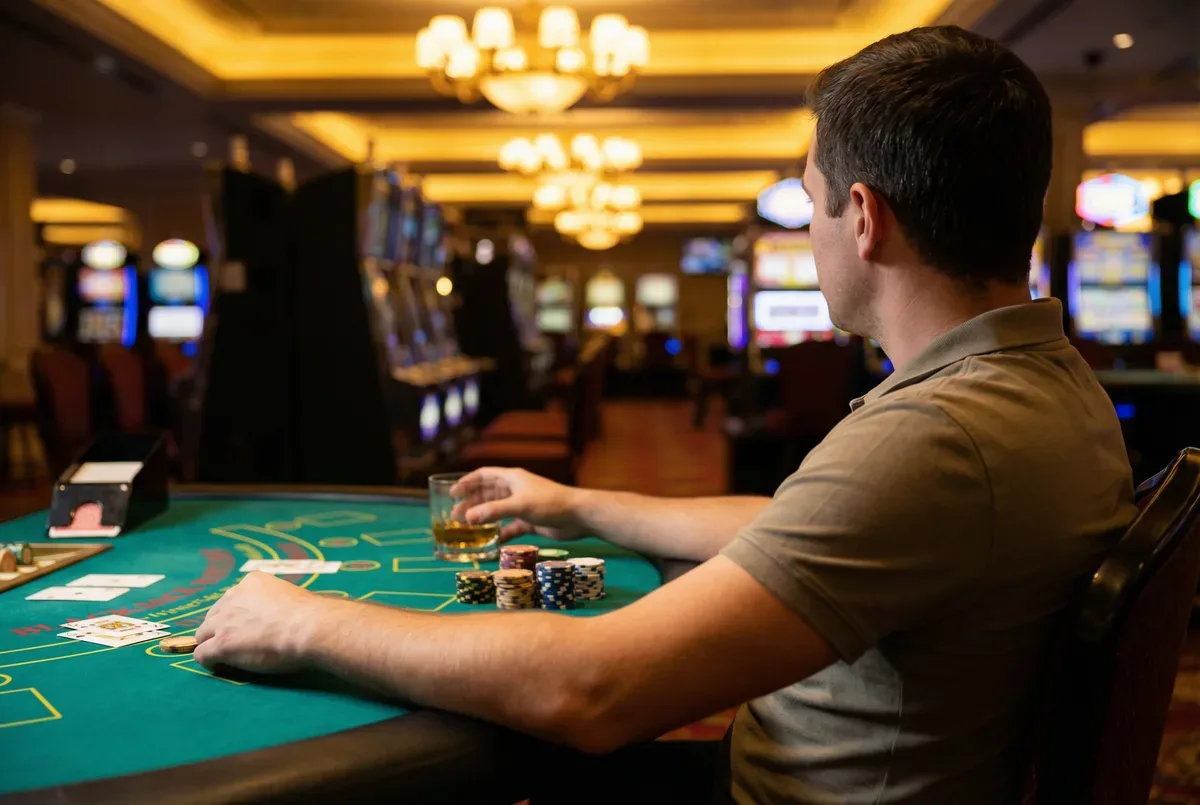
The Four Stages of Learning Card Counting
These stages cannot be skipped or reordered. A counter who attempts true count practice before single-card recognition is automatic will train inaccuracy into the conversion step. A counter who moves to casino conditions before deck speed is locked will lose the count every time dealer pace increases. Each stage builds on the last as a mandatory substrate. The false start that ruins more blackjack card counting attempts than any other is jumping to stage three while still conscious of individual card values the cognitive bottleneck becomes total.
The cumulative hour requirement from zero to casino-ready ranges from 150 to 250 hours of structured practice for most students. That is not calendar time that is focused drill time, measured in sessions. At 30 minutes per day, 150 hours takes ten months. At 60 minutes per day, it takes five months. At 90 minutes per day, the law of diminishing returns kicks in and fatigue degrades quality before the hours accumulate cleanly. The most efficient path to casino readiness is 45 to 60 minutes of deliberate practice, seven days per week, for five to six months.
Timeline
Stage 1 Single-Card Recognition
20–35 hours. One card per second, zero errors. Drill until Hi-Lo tags apply without thought, not just quickly.
Stage 2 Deck Drill Speed
30–50 hours. Full 52-card deck under 25 seconds. Two-card cancellation pairs introduced here cuts drill time in half.
Stage 3 True Count Conversion
40–70 hours. RC ÷ estimated decks remaining in under 2 seconds. Tray-depth estimation drilled alongside division.
Stage 4 Casino Conditions
60–95 hours. All three skills running simultaneously under distraction. TV on, conversations held, count maintained without flinching.
What Is the Speed Threshold?
The speed threshold for single-card drills is the most misunderstood benchmark in blackjack card counting training. If you are assigning Hi-Lo values at a rate of one card every four seconds or slower, you are not close to casino-ready you are still in the conscious retrieval phase, not the automatic phase. At four seconds per card, a 52-card deck takes over three minutes to count. A live blackjack dealer resolves a six-player hand in under 30 seconds. The math does not work at that speed even before you add running count maintenance, true count conversion, or strategy decisions.
The target is one card per second, sustained across a full deck, with the running count accurate at completion. This equates to a 52-second deck count. Achieving that target means you can keep pace with a slow dealer on a busy table enough cognitive headroom for the count to survive play. The aspirational target is a 25-second deck, which provides substantial headroom for distractions and errors. Most students reach the 52-second target within 20 hours of drilling. The 25-second target takes another 15 to 30 hours depending on starting aptitude.
The accuracy versus speed tradeoff is not a tradeoff in the way most learners assume. Speed at the cost of accuracy is worthless a fast wrong count produces worse outcomes than a slow correct count because you make betting and index play decisions based on that count. The correct training sequence is accuracy first at any speed, then acceleration. Do not time yourself during the first five hours of single-card drilling. Accuracy is the only measurement that matters until the value assignments are reliable. Once you can complete a deck with zero errors at any pace, then introduce the timer and begin accelerating.
Slow threshold (not ready)
208 sec per deck
Minimum casino pace
52 sec per deck
Competent counter target
25 sec per deck
Why Does the Accuracy Versu Speed Tradeoff?
Accuracy and speed are not in tension the way beginning counters imagine they are in sequence. You develop accuracy first, to a standard of zero errors across five consecutive full-deck drills. Then you develop speed while holding that accuracy standard. If speed training introduces errors, you slow back down and rebuild accuracy before accelerating again. The mistake is treating speed and accuracy as dials that can both be partially set counters who drill at medium speed with occasional errors are reinforcing those errors into muscle memory, not practicing through them.
The psychological experience of early speed training is uncomfortable because it feels like going backward. When you first attempt to count faster than your comfortable pace, errors appear. This is normal and expected the discomfort is the signal that automaticity is being built. Push slightly past the pace where accuracy holds, correct errors immediately when they occur, and return to the deck. The adaptation happens in the hours after practice during sleep consolidation, not during the drill itself. Students who push through the uncomfortable phase consistently for two weeks typically find that their accurate pace has increased by 30 to 40 percent without the drill feeling harder.
An important calibration point: the drill speed target is the speed at which you can count a deck reliably, not the speed at which you can count a deck quickly if you push hard and tolerate some errors. The benchmark is a conservative measure of your floor, not your ceiling. If your fastest reliable speed is 40 seconds, your casino pace budget is 40 seconds, not 25. Never plan a casino session around a speed you only achieve on good runs.
How to Benchmark Readiness Before a Casino Trip?
Readiness for a first casino session is measurable through a six-item checklist, and every item is pass-fail not approximately pass, not usually pass, but consistently and reliably pass. The six items are: count a single deck in under 25 seconds with zero errors across three consecutive trials; convert running count to true count in under two seconds when given a random deck depth; recite all Illustrious 18 index plays correctly without pause; maintain a running count through three simultaneous hands without losing accuracy; count a full six-deck shoe while holding a spoken conversation; and complete 200 consecutive hands of simulated play with zero blackjack basic strategy errors and the count accurate at the end of each hand.
The cost of failing this checklist and going live anyway is concrete. At a $10 minimum table with a $100 maximum spread, a counter whose true count conversion is unreliable will bet incorrectly on a significant proportion of hands, converting what should be a positive-expectation session into a losing session not from bad luck but from bad execution. A single session of 200 hands at $10 to $100 spread with 30% of bet decisions wrong can cost 20 to 40 units more than a correctly executed session. At $10 units, that is $200 to $400 in unnecessary losses. Two additional weeks of practice costs nothing compared to that.
The common false start in blackjack card counting is the player who passes stages one and two cleanly, then decides they are ready for the casino before completing stage three. Running count without true count is nearly useless for betting decisions in a multi-deck game. The running count tells you nothing about how rich the remaining shoe is without knowing how many decks remain in it. Betting based on running count alone in a six-deck shoe will produce incorrect bet sizing on the majority of positive-count hands and is worse than flat betting from an EV standpoint. Stage three completion is non-negotiable before stage four begins.
The readiness question is not 'can I count a deck?' it is 'can I count a deck while doing something else?' Sit at a table by yourself at home, deal three hands including splits and doubles, run true count conversion after every decision, and hold a spoken conversation the entire time. If the count breaks, that is your answer. Practice that specific simulation until it holds cleanly across ten consecutive shoes before booking the casino trip. The 'can I count in isolation?' question was settled in Stage 2. Stage 4 is the only test that matters now.
When You Are Ready to Play With Real Money
When every item on the six-point readiness checklist is consistently clear, a first live session is appropriate at the lowest table minimum available ideally $5 to $10. The objective of that first session is not profit; it is verification that the count survives casino conditions you have never directly experienced. Budget 30 to 50 hands with a 40-unit session bankroll. If the count slips even once during those hands, note what caused it, leave when the session ends, and address that specific weakness before the next session. The first live session is a diagnostic, not a debut.
A bridge option between late-stage home practice and a first casino floor session is a live-dealer online session with a human dealer working from a real shoe. A real shoe matters for count practice because the card distribution behaves like a physical deck, not a random number generator. Before you sit at a casino table where real money is at risk every single hand and a mistake costs you immediately, a live-dealer session lets you test your count under real-card pace without the full social pressure of a physical pit. If you want to pressure-test your readiness before committing to a casino trip, you can practice against a live dealer with real cards right now at test your count at a real money table tonight but go in clear-eyed that every chip placed is real money on the line, and an imprecise count will cost you exactly as much there as it would on any casino floor.
Frequently Asked Questions
Most students accumulate 150 to 250 hours of structured practice before their count is reliable under live casino conditions. This is not calendar time but actual drill time. At 45 minutes per day, 150 hours takes approximately seven months. The total hour requirement does not compress dramatically even with intensive practice the floor reflects genuine cognitive adaptation time, not just repetition volume.
Single-card recognition drills flipping through a shuffled deck one card at a time and assigning the Hi-Lo tag to each card instantly are the foundational skill everything else depends on. This drill should be done until each card assignment is fully automatic, meaning it requires no conscious thought. Until that automaticity is in place, every other skill (running count maintenance, true count conversion, index plays) will be bottlenecked by slow card recognition.
The most common cause is confusing 'I can count a deck alone at home' with 'I am ready to count in a casino.' Home drills happen in silence with full attention. A casino table adds dealer conversation, other player decisions, ambient noise, and real money on every hand. Counters who have not specifically practiced under distraction conditions lose their running count within the first few hands and spend the rest of the session playing without the count advantage they trained for. Always add distraction simulation before the first live session.
Before you test these plays at a real table, run them through our free blackjack simulator practice unlimited hands at zero cost until every move becomes automatic.
Mathematical Risk Warning
Card counting requires substantial practice time and carries financial risk. Playing before reaching the readiness benchmarks described here will cost more than the sessions are worth. Even a proficient counter faces regular losing sessions from vari
Blackjack Academy is an educational resource. All strategy is based on mathematical expectation. Always play within your means.
Learn More
Continue your education with these related lessons.
How to Handle the Insurance Side Bet as a Card Counter
Insurance looks like a safety net but it's a losing side bet unless you're counting cards. Learn the TC+3 threshold…
How to Choose the Right Blackjack Table as a Card Counter
Table selection determines a card counter's long-run profitability before a single hand is dealt. This guide covers the full checklist…
Complete Reference for All 18 Illustrious Card Counting Deviations
The Illustrious 18 deviations are the highest-value index plays in blackjack. This complete reference lists all 18 with TC thresholds,…