

How Casino Floor Managers Identify and Respond to Card Counters
A casino floor manager’s primary job at the blackjack pit is protecting table game revenue and detecting card counters is a significant component of that responsibility, supported by surveillance tools that have grown substantially more sophisticated since the 1990s.
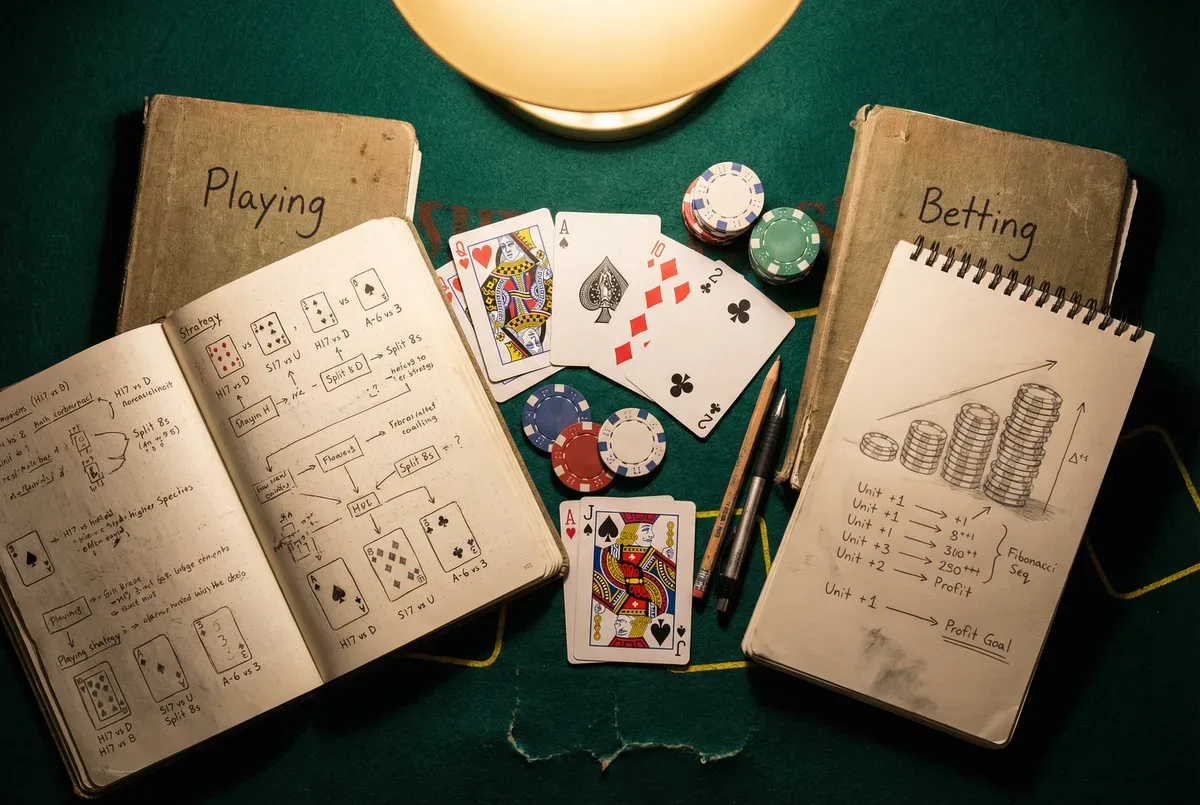
The Floor Manager’s Role and Detection Toolkit
The modern floor manager operates with three layers of detection capability. The first is direct observation: watching bet patterns, body language, and player behavior at the table. The second is surveillance support: overhead cameras monitored by a dedicated team that can zoom in on specific tables in response to a floor alert. The third is software: proprietary systems like Tangam Intelligence and third-party advantage player detection tools that analyze bet pattern data in real time and flag statistical anomalies consistent with counting behavior.
What floor managers are not is omniscient. Detection rates vary widely by property size, staffing quality, and software implementation. A well-executed cover strategy appropriate acting, bet variation discipline, correct cover plays at key moments significantly extends the time before a counter triggers scrutiny. Understanding the detection process helps counters understand which behaviors create risk and which do not.
Timeline
Floor Observation
Dealer or floor manager notices bet spread or unusual win rate. Initial watch begins with no action taken.
Floor Alert to Pit Boss
Floor manager notifies pit boss of suspicious activity. Pit boss begins direct observation and pulls player rating card.
Surveillance Request
Pit boss calls surveillance center to pull camera feed on specific table. Overhead camera begins recording detailed session footage.
Software Flag Review
Surveillance analysts run bet pattern data through detection software. Win rate, bet spread correlation with shoe depth, and index play deviations are analyzed.
Response Decision
Management decides: no action (insufficient evidence), flat-bet restriction (telling player to keep same bet size), backoff (asking player not to play blackjack), or trespass (formal exclusion from property).
What Triggers a Closer Look: Seven Bet Pattern Signals?
Bet spread correlation with shoe depth is the single most reliable counter detection signal when a player’s large bets consistently arrive late in the shoe and small bets appear early, the pattern matches counting behavior more precisely than any single large wager alone.
Floor managers are trained to observe several specific behaviors. Abrupt jumps from minimum bet to maximum bet in a single hand particularly at a point late in the shoe are the clearest signal. Consistent large bets immediately after a shuffle reset to a small bet suggests the player is tracking composition from the shoe start. Sitting out hands at a full table without leaving suggests Wonging: the player is counting from behind and entering only when the count is positive. These patterns are all detectable without specialized software, by any attentive floor manager who has received basic counter-detection training.
Index play deviations are harder to catch from floor observation but visible in retrospect through surveillance review. A player who consistently takes insurance at specific moments, stands on 16 against a 10 in situations a blackjack basic strategy player would hit, or doubles in unusual spots is displaying decision behavior that deviates from normal recreational play. No single deviation is conclusive. A pattern of deviations across a session, combined with bet spread correlation, is what moves management from watchful to active.
- ”1.
How Do Modern Software and How It Change the Game?
Modern casino surveillance software has shifted card counter detection from a skill-dependent manual process to a data-driven automated flagging system that does not require an experienced floor manager to notice the right pattern at the right moment.
Systems like Tangam Intelligence process RFID chip data from tables (in casinos equipped with chip-tracking technology) or manual bet entry by dealers to build a bet history for each rated player. The software computes the correlation between bet size and position in the shoe, calculates win rates against statistical expectations, and flags sessions where the combination of metrics exceeds a threshold consistent with advantage play. The system works across multiple visits: a player whose bet data accumulates across six sessions over several months can be flagged on visit seven without any single session being conclusive.
The implication for counters is significant: playing the same property repeatedly under the same identity builds a data record that can eventually trigger detection even with disciplined cover play. Properties that use RFID chip tracking have the most complete data. Properties that rely on manual entry have gaps that limit software accuracy. Understanding which properties use which systems is part of the research process serious advantage players perform before choosing where to play.
Common Myth
“Casinos can legally detain suspected card counters in a back room until they confess.”
Films like 21 and popular counter memoirs describe intense back-room confrontations implying casinos have interrogation authority. Most people believe security has quasi-law-enforcement powers on private property.
The Reality
Casinos have no legal right to detain a player suspected only of card counting. Counting is not illegal. A casino can ask you to leave, restrict your play, or trespass you from the property but physically detaining you without your consent constitutes unlawful imprisonment in virtually every US jurisdiction. Security can hold you only if there is reasonable belief a crime has been committed.
In practice, the vast majority of counter encounters end with a polite backoff: a pit boss asks the player to play another game or to no longer play blackjack. Physical confrontation is rare and legally risky for the casino.
Why Do the Escalation Chain and What Actually Happen at Each Stage?
The escalation chain from floor observation to formal trespass follows a predictable sequence, and most counter encounters never reach the later stages because casinos prefer the least confrontational resolution that protects their revenue.
The first response at most properties is a flat-bet restriction: the pit boss approaches the table and informs the player that they are welcome to continue playing but must keep their bets at the same amount for the remainder of the shoe. This eliminates the bet spread that makes counting profitable without requiring the property to make any formal accusation. Many counters accept this gracefully, play one or two more hands, and leave voluntarily. The casino has neutralized the threat without conflict.
A backoff is more direct: the pit boss or manager asks the player not to play blackjack but offers other games. This is the most common outcome for a counter identified with reasonable confidence. It is not an accusation of illegal behavior. The casino is exercising its right to refuse service on any game it chooses, for any non-discriminatory reason. A backoff at one property does not automatically result in shared information with other properties, though some casino groups do share information within their networks.
Trespass a formal exclusion from the property is reserved for players the casino is highly confident are advantage players and who they do not want at any game. It requires management sign-off and creates a legal record. Returning to a property after a trespass notice constitutes criminal trespass in most jurisdictions, which is why serious counters treat any trespass notice as a permanent ban that carries real legal consequences.
Playing Through the Floor Manager’s Gaze
The most durable counters are not those with the fastest count they are those who understand the detection process well enough to operate below its threshold for the longest time.
Practical rules: vary bet sizing with non-count reasons where possible (asking for a new shoe, taking a bathroom break before a large bet), avoid playing the same pit for consecutive sessions, calibrate your bet spread to what your bankroll requires rather than what your ego wants, and recognize heat before it reaches a backoff leave voluntarily when scrutiny increases rather than waiting to be asked. The casino has more information about you than you have about it.
Counters who want to apply these concepts under live-money conditions can find live-dealer games at practice this count in live conditions immediately but understand that real financial risk accompanies every session and that no amount of cover play fully protects the edge from the house’s detection tools. Every dollar wagered is genuinely at risk.
Frequently Asked Questions
No. Card counting is not illegal in any US jurisdiction. It is a mental skill that uses no devices or assistance. Casinos cannot have you arrested for counting. They can, however, refuse service, restrict your bets, ask you to leave, or formally trespass you from the property all of which are legal exercises of private property rights.
A backoff is a casino's request that you stop playing blackjack, typically without formal documentation. You may be offered other games. A trespass is a formal legal notice to leave the property and not return. Returning after a trespass constitutes criminal trespass. A backoff does not legally prevent you from returning, though the property retains the right to refuse service on future visits.
Some do, particularly within the same corporate group or through third-party networks like Griffin Investigations (now defunct) or modern equivalents. Independent properties generally do not share information automatically. Players who receive a trespass at one major casino group may find that information exists at affiliated properties. It is not a universal database, but the risk of cross-property recognition is real at highly connected casino networks.
Before you test these plays at a real table, run them through our free blackjack simulator practice unlimited hands at zero cost until every move becomes automatic.
Mathematical Risk Warning
Casino blackjack involves real financial and legal considerations. Card counting is legal but casinos may restrict or exclude advantage players. All real-money play carries risk of loss.
Blackjack Academy is an educational resource. All strategy is based on mathematical expectation. Always play within your means.
Learn More
Continue your education with these related lessons.

The Hi-Lo System Is the Most Powerful and Widely Used Card Count
The Hi-Lo system assigns +1, 0, or -1 to every card in the deck. With a 0.97 betting correlation, it…

How Counting Affects the House Edge Mathematically
Card counting shifts the house edge by approximately +0.5% per true count point. Learn the math behind counting advantage, what…

How the Red Seven Count Compares to Hi-Lo for Beginners
Arnold Snyder's Red Seven count eliminates true count conversion by using an unbalanced design. Here is how it compares to…