
Why You Should Only Play at Stand on Soft 17 Tables
Two blackjack tables sit side by side on the casino floor. The minimum bets are identical. The number of decks is the same. The only difference is four words printed on the felt: Dealer Stands on All 17s versus Dealer Hits Soft 17. That single rule costs you 0.22% of every dollar you wager at the wrong table.
Over 400 hands at a $25 minimum, that gap costs approximately $22 in expected value before variance touches the calculation. Serious players treat S17 versus H17 as a non-negotiable filter when choosing where to sit.
Soft 17 Explained
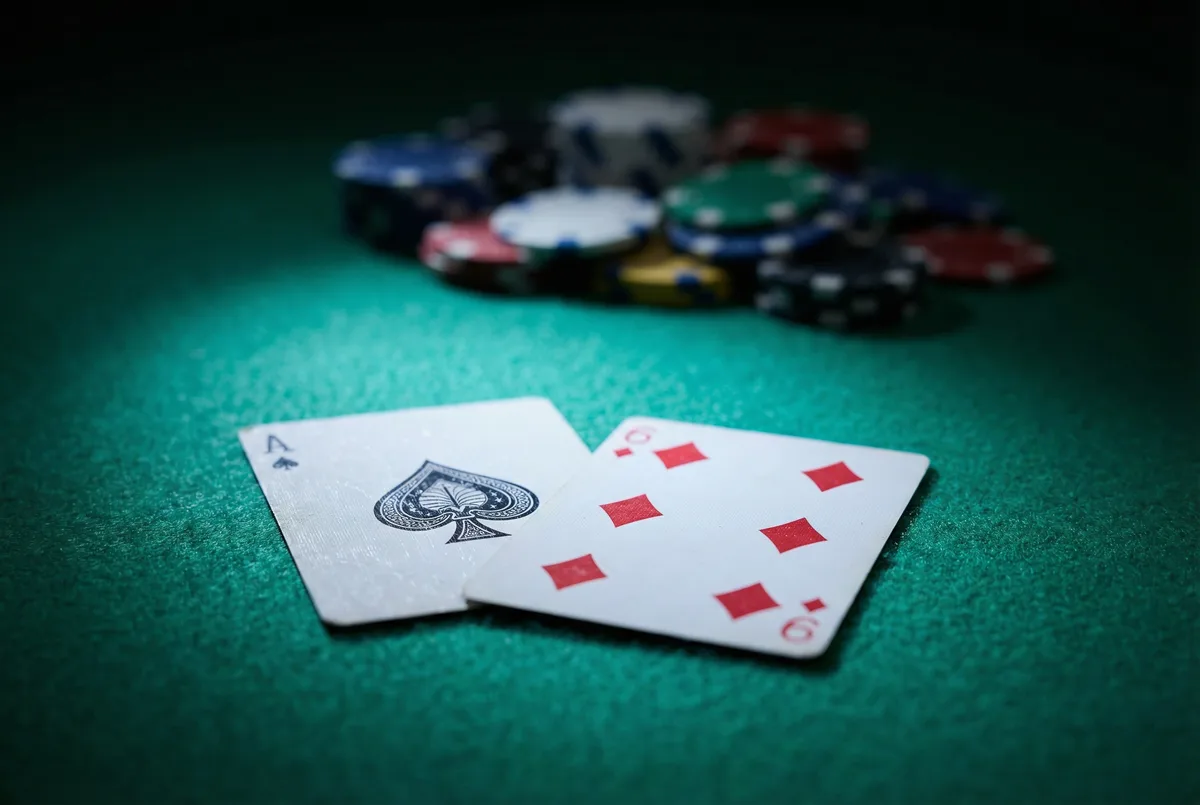
A soft 17 is any dealer hand totalling 17 that contains an Ace counted as 11. The classic example is Ace plus 6. It is called soft because the Ace can revert to 1 if the dealer draws a card that would cause a bust, meaning the hand cannot go over 21 on a single draw.
Casinos invented the H17 rule specifically to extract additional revenue. When the dealer hits soft 17, they can improve to 18, 19, 20, or 21 without any bust risk on that first draw. The rule gives the house a second bite at a hand that should lock in at 17.
House Edge Increase (H17 vs S17)
%
How Does H17 Actually Increases the House Edge?
When the dealer holds Ace plus 6, drawing any card from Ace through 4 produces an improved hand of 18 through 21 with zero bust risk. Drawing a 5 creates soft 12, which the dealer hits again. Drawing 6 through 8 creates soft 13 through 15, and each of those also requires additional draws.
Across the full distribution of draws, the dealer improves beyond 17 on approximately 40% of soft 17 hands. The improvement rate is high enough that the casino extracts a net gain of 0.22% per hand played over millions of rounds.
S17 (Dealer Stands)
H17 (Dealer Hits)
- Locked at 17
- Can reach 18-21
How Do Basic Strategy Decisions Change Under H17?
Most of your blackjack basic blackjack strategy chart stays the same between H17 and S17. However, three categories of decisions shift because the dealer’s Ace is effectively weaker under H17. The dealer is forced to draw again, which creates additional bust paths that change the expected value of certain player actions.
- Soft 18 (A,7) vs Dealer AceDouble Down in H17 (Stand in S17)
- Hard 11 vs Dealer AceDouble Down in H17 multi-deck (Hit in S17)
- Surrender 15 vs Dealer AceSurrender in H17 (Hit in S17)
- Soft doubles vs Dealer AceMore aggressive doubling correct under H17
Dealer Shows
Your Hand
The dealer shows an Ace. The table is H17 (dealer hits soft 17). You have soft 18. What does basic strategy say to do, and why does the table rule matter?
This is the direct cost of sitting at an H17 table. Your optimal play changes, your edge changes, and the house extracts an extra 0.22% from every hand. Choosing the right table before you sit down is a free edge adjustment.
Whether Walking Away From an H17 Table Actually Worth It?
Yes, without question. If the only open seat is at an H17 table and an S17 game is 20 feet away with one available spot, the walk takes 10 seconds and saves you 0.22% on every hand you play. Seat comfort is not a factor that appears in expected value calculations.
Some players rationalize staying at an H17 table because they are winning or because the dealer seems cold. Neither observation changes the mathematics. The rule is structural. It applies to every hand regardless of recent results or streaks.
How to Find S17 Tables in a Real Casino
The rule is always printed on the felt, usually near the dealer’s chip rack. Look for the phrase Dealer Stands on All 17s. If it reads Dealer Hits Soft 17, the table costs you 0.22% more. Never sit before confirming which rule applies.
Vegas Strip casinos historically defaulted to S17 on six-deck shoe games at higher limits. Downtown Las Vegas and locals casinos more commonly use H17 at lower minimums. Single-deck games are often S17 but frequently carry 6:5 blackjack payouts, which more than erase the S17 benefit.
Before committing real money to a live session, the practice tables at Blackjack Academy Live let you apply your H17 and S17 strategy and see every decision graded against the correct chart. Real-money tables carry genuine financial risk, so set a firm session budget before you start and stick to it.
Frequently Asked Questions
S17 stands for Stand on Soft 17. It means the dealer must stand on any hand totalling 17 that includes an Ace counted as 11, such as Ace plus 6. This is the player-friendly rule because it prevents the dealer from improving a soft 17 hand.
H17 adds approximately 0.22% to the house edge compared to S17. That gap is consistent across all deck counts. On a 400-hand session at a $25 table, H17 costs roughly $22 in expected value compared to an equivalent S17 game.
Yes, in a small number of situations. The most important adjustment is doubling Soft 18 versus a dealer Ace, which is correct under H17 but not under S17. Surrendering 15 versus an Ace also becomes correct under H17. Use a strategy chart matched to the exact rules of your table.
Before you test these plays at a real table, run them through our free blackjack simulator practice unlimited hands at zero cost until every move becomes automatic.
Do Not Pay the H17 Tax
Every session at an H17 table costs you 0.22% more than it should. Learn to read table conditions, apply the correct strategy chart, and protect your expected value before you place a single chip.
Blackjack Academy is an educational resource. All strategy is based on mathematical expectation. Gambling involves real financial risk. Never wager more than you can afford to lose.
Learn More
Continue your education with these related lessons.
The Complete Guide to Pair Splitting Strategy
Pair splitting decisions separate disciplined players from the rest of the table. Master the always-split rules, the never-split traps, and…
Why Standing on a Pair of 9s is Better Than Splitting
A pair of 9s is an 18 strong enough to win most hands. But three specific dealer upcards should change…
Why Deck Penetration Is the Hidden Factor That Changes Basic Strategy
Deck penetration determines how much of the shoe is dealt before a reshuffle. Learn how it affects basic strategy accuracy,…