
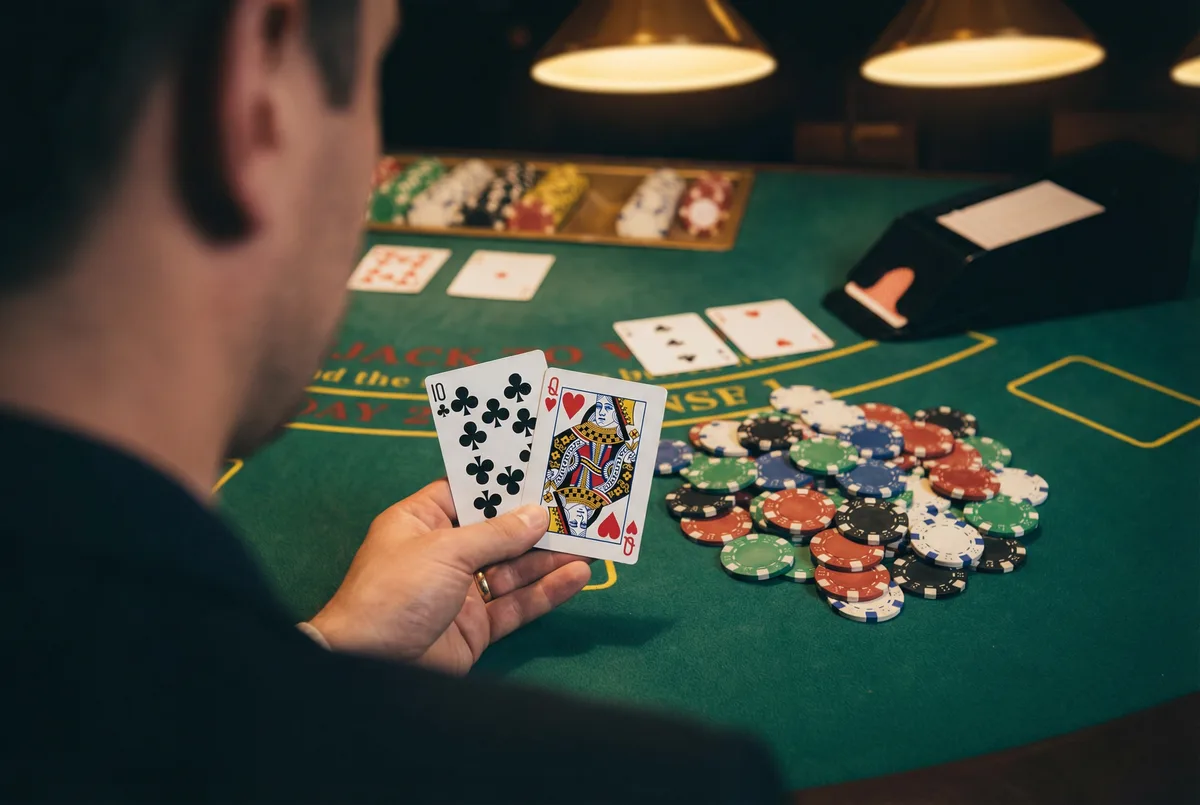
Why Professional Players Never Split 10s or Face Cards
Holding a pair of tens at the blackjack table is one of the strongest positions a player can reach. A hard 20 wins roughly 85% of the time against any dealer upcard.
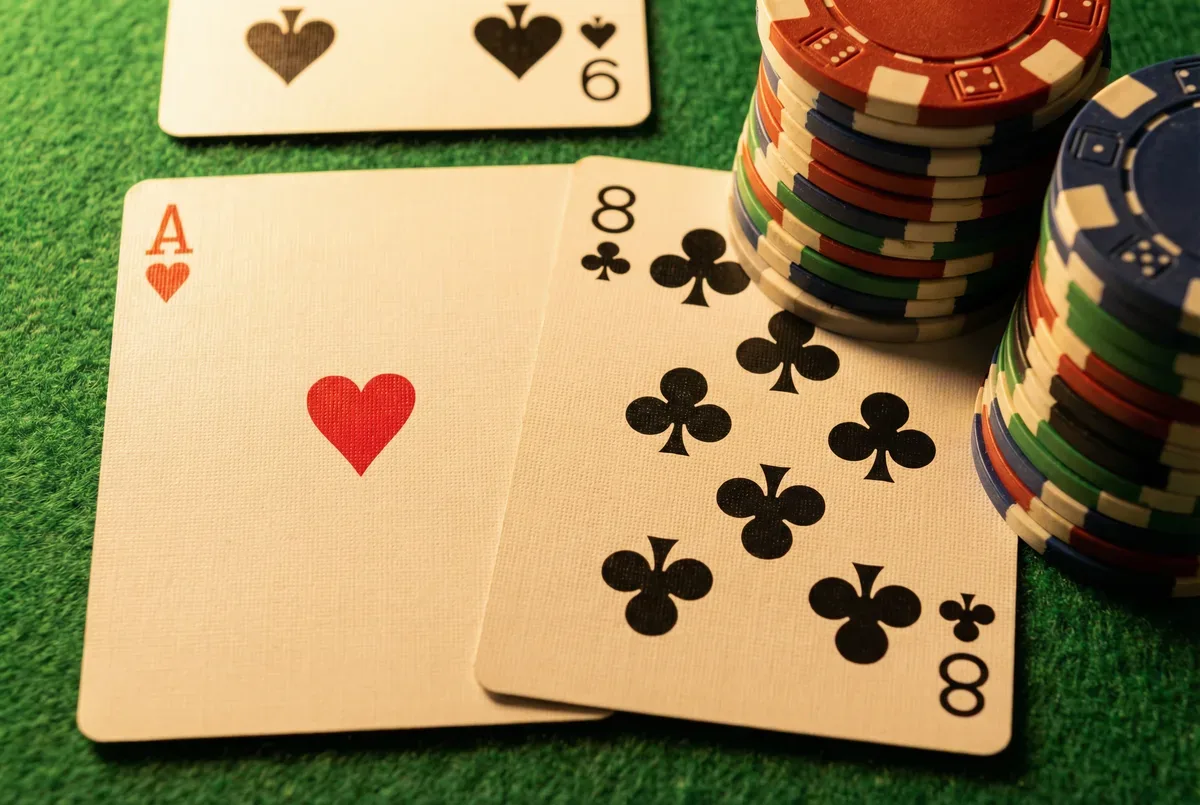
Yet casinos count on a reliable subset of players to look at that powerful total and decide to split it, converting one near-certain winner into two hands each starting at 10. The expected value math is stark, the mistake is expensive, and professionals treat it as a rule without exceptions in the vast majority of situations.
This guide walks through the numbers clearly, addresses why the dealer’s 5 or 6 tempts players into a greedy split, explains what card counters actually do in extreme count situations, and shows why this ranks as the second most costly blackjack basic strategy error after taking insurance.
Hard 20 Actually Win Rate
A hard 20 is the second-best starting total in blackjack, behind only a natural 21. Computer-simulated deal-by-deal analysis across millions of hands places the win rate for a hard 20 at approximately 85%, with the remaining 15% split between dealer 21s and ties. No split hand starting at 10 approaches that figure.
Each individual hand starting at 10 wins roughly 56% of the time after all subsequent cards land. That is still a positive-expectation hand on its own terms, but the comparison is what matters. When you split, you trade an 85% win rate for two hands averaging 56%. Over a session of meaningful volume, the difference compounds into real money lost.
Hard 20 win rate
%
Each split-10 hand win rate
%
EV loss per split vs stand
% of bet
The intuition behind the numbers is straightforward. When you stand on 20, the dealer must draw to 21 without busting, which is a rare event.
When you split and start each hand at 10, you still need a high card to reach a strong total, and the dealer’s bust probability has not changed. You simply gave up a massive advantage for no gain.
Why Players Want to Split Against a Dealer 5 or 6?
The temptation is rooted in a correct observation applied at the wrong moment. A dealer showing 5 or 6 is genuinely vulnerable. The dealer’s bust probability when showing a 6 is approximately 42%, and showing a 5 it sits near 40%. Players recognize that vulnerability and want to extract maximum value from it by putting more money on the table.
The problem is that standing on 20 already captures that dealer bust equity entirely. Your 20 beats every non-bust dealer total. Splitting creates two hands that need to develop, introduces the possibility that one or both hands end below 20, and increases variance without increasing expected return. Greed, not logic, is what drives the split.
Common Myth
“Splitting 10s against a dealer 6 is aggressive, profitable play”
The dealer is highly likely to bust, so players want two bets active to maximise the payoff
The Reality
Standing on 20 already captures 100% of the bust equity. Splitting reduces your win probability per dollar wagered
EV with 2 split hands vs dealer 6 is lower than EV standing on 20 vs dealer 6 across all simulations
Dealer bust probability affects both outcomes equally. If the dealer busts, your standing 20 wins one bet.
If you split and the dealer busts, you win both bets, which sounds better on the surface. But when the dealer does not bust and reaches 17 through 20, your split hands starting at 10 are more likely to land on inferior totals than your guaranteed 20 was. The math nets out heavily in favor of standing.
What Are the Exact EV Cost of Splitting 10s?
Expected value measures how much of your bet you expect to keep or lose on average over many repetitions.
Standing on a pair of 10s against a dealer 6 in a standard 6-deck game carries an EV of approximately +0.67, meaning you expect to net 67 cents for every dollar wagered.
Splitting that same hand produces an EV of roughly +0.48 per hand, but because two bets are now in action, the comparison is not direct without normalising for stake.
When measured against the original one-bet wager, splitting 10s against a dealer 6 still loses EV compared to standing. Against dealer upcards of 7 through ace, the split is even more costly.
Against a dealer 10, splitting 10s converts a modest winning position into a near break-even or losing proposition. The only argument for splitting exists at the far end of the blackjack card counting spectrum.
Stand on 20
Split 10s
- ~85%
- +0.67
- Low
- Yes
- N/A
- ~56% per hand
- +0.48 per hand
- Meaningful
- No
- Very high counts only
The cost accumulates quickly at realistic betting levels. A player making this error ten times in a session at a $25 table hands back roughly $45 to $60 in expected value compared to blackjack basic strategy.
Over a year of regular play, that figure reaches into the thousands. This is why professionals call it the second most expensive mistake in the game.
What Are the Card Counters Ever Split 10s?
Card counters do have index plays that call for splitting 10s in specific count conditions, but these situations are rare and the deviation is a liability in practice. The Hi-Lo index for splitting 10s against a dealer 5 is approximately +4 or higher true count.
Against a dealer 6 the index sits around +5. These are extreme counts that occur infrequently in a normal shoe game.
Beyond the rarity, there is a surveillance problem. Splitting 10s is one of the most recognisable signals that a player is not acting on instinct or superstition.
Casino supervisors are trained to notice it. A counter who splits 10s at a high count broadcasts their strategy in a way that doubling on unusual totals or varying bet spread does not. Most professional teams explicitly prohibit it for that reason.
Even when the count justifies splitting 10s on pure EV, most professional teams ban the play entirely. A 0.3% EV edge is not worth drawing floor attention. Index plays exist in theory. Staying under the radar is what keeps you in the game.
For recreational and intermediate players, none of that counting context applies. Without a verified high true count, splitting 10s is never the correct play.
The index numbers assume precise counting and game conditions most players cannot consistently verify. Default to standing on 20 in every hand unless you are running a verified count system and have confirmed an extreme positive count.
How to Apply This at the Table
The decision is simple to execute once the math is internalised. When you see a pair of tens or any two ten-value cards, regardless of the dealer upcard, the action is stand. There are no exceptions for recreational players.
The dealer showing a 5 or 6 does not change that. Other players at the table suggesting a split does not change that. Your gut feeling does not change that.
If you want to put strategy to the test before sitting at a live felt, most serious players work through a blackjack simulator first. Before committing these decisions to memory, test them where the stakes are real.
prove why keeping 10s together matters at a live table put real money behind every pair decision. Set a session limit before you sit, and treat the first few hands as tuition, not a windfall.
Alongside the no-split-10s rule, confirm your overall pair-splitting chart is solid. Always split aces and eights. Never split fours, fives, or tens. Everything else has conditional rules based on dealer upcard. Getting these right collectively can reduce the blackjack house edge to under 0.5% in favourable game conditions. Splitting 10s alone undoes a substantial portion of that work.
Frequently Asked Questions
For basic strategy players, no. Splitting a pair of 10s or any two ten-value cards is always incorrect without a verified high card count. The EV loss compared to standing is significant across all dealer upcards. Card counters have index numbers that theoretically justify the split at true counts of +4 or higher, but most professional teams avoid the play because it attracts casino attention.
Casinos allow all splitting options because the rules are standardised. Players splitting 10s is actually profitable for the house, not disadvantageous to it. The casino does not need to restrict a play that increases its edge. For the same reason, casinos rarely intervene when recreational players make this error as it costs the player, not the house.
No. A dealer showing 5 or 6 does have a bust probability near 40 to 42 percent, but your standing 20 already captures all of that bust equity on one bet. Splitting introduces the risk of developing weaker hands and does not improve your expected return. The temptation to put more money out against a weak dealer card is understandable but mathematically incorrect.
Before you test these plays at a real table, run them through our free blackjack simulator practice unlimited hands at zero cost until every move becomes automatic.
Strategy Only Controls What You Can Control
Correct pair-splitting decisions lower the house edge significantly, but blackjack remains a game with inherent variance. No strategy eliminates losing sessions. Play only with money you are prepared to lose and set hard session limits before sitting down.
Blackjack involves real financial risk. Past session results do not predict future outcomes. Always gamble responsibly and within your means.
Learn More
Continue your education with these related lessons.

How to Build a Complete Pre-Game Checklist
A pre-game checklist converts your strategy knowledge from something you know into something you actually execute under pressure. This guide…
Why You Must Hit Hard 12 Against a Dealer 2 or 3
Hard 12 against a dealer 2 or 3 is the most misplayed hand in blackjack. Most players stand, but the…
How to Memorize Basic Strategy Faster
The fastest methods for memorizing blackjack basic strategy chunking by hand category, color-coded chart technique, realistic time estimates, and practice…