
Why Hard vs Soft Hands in Blackjack Changes Every Single Decision
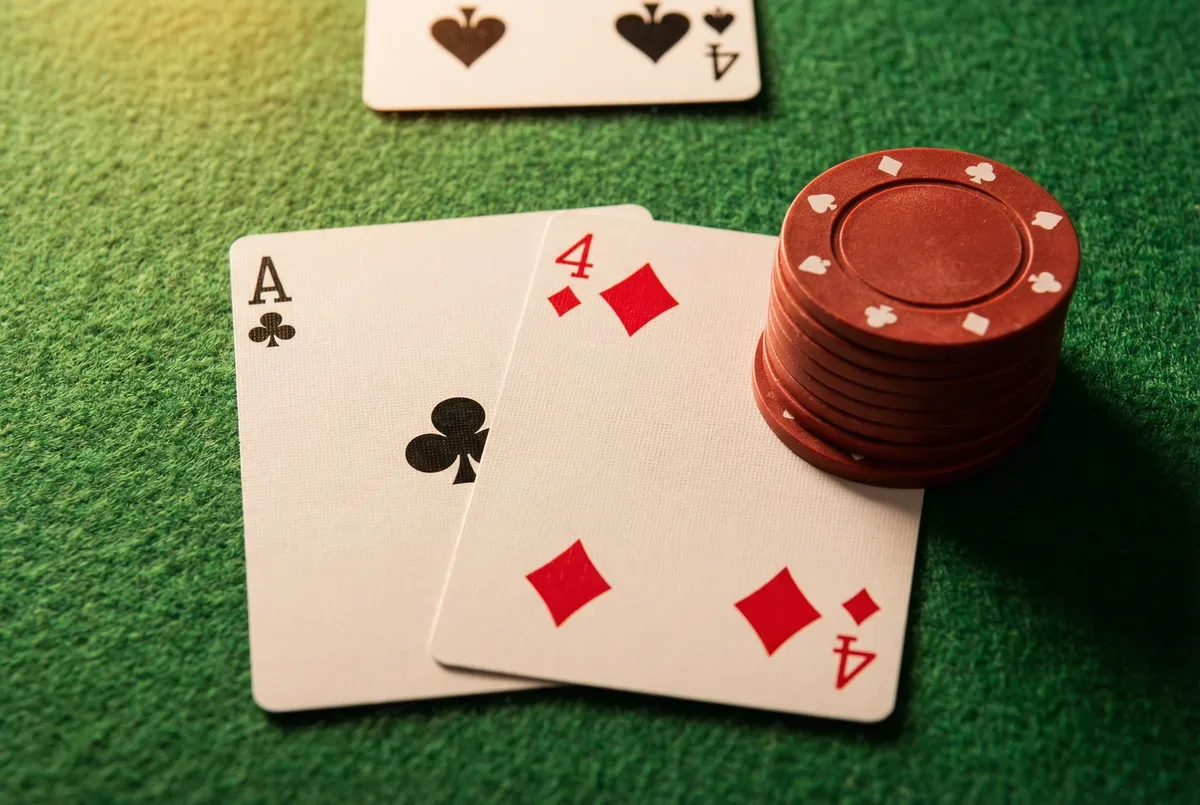
Every card in the deck has a fixed value except one: the ace. An ace counts as either 1 or 11, whichever produces the better result for the hand holding it. This dual value creates two fundamentally different categories of blackjack hand. A soft hand contains an ace being used as 11 the hand has flexibility, it cannot bust on a single additional card, and it requires a different set of strategy decisions than a hand without that flexibility. A hard hand either has no ace, or contains an ace that has been forced to count as 1 because counting it as 11 would exceed 21. Understanding this distinction is not optional background knowledge it is the minimum required to read a blackjack strategy chart correctly and execute every decision in the game.
The Ace Is the Only Card That Changes What Your Hand Is
Hard Hand
Soft Hand
- Contains ace counting as 11
- Can bust on a single high card draw
Why a Soft Hand Cannot Bust on One Draw?
The no-bust property of soft hands flows directly from the ace’s dual value. Take soft 18 (ace + 7). The total is 18 with the ace counted as 11. If you draw a king, the running total would be 28 but because the ace can revert to 1, the hand becomes 1 + 7 + 10 = 18. No, that’s the same the ace absorbs the impact of the high card. Take soft 17 (A-6) and draw a 9: you’d have 17 + 9 = 26 if the ace stayed at 11, but the ace drops to 1, giving you 1 + 6 + 9 = 16 a hard 16. You did not bust; the hand transformed into a hard total. This transformation is the key mechanism: drawing a card that would cause a bust on a hard hand instead converts the soft hand into a hard hand, using the lower ace value. Only after that conversion can you bust, and only on a subsequent draw.
This is why aggressive play on soft hands hitting soft 17, doubling soft 18 vs dealer 6 is not reckless. The worst case is a hard total, not a bust. The safety net is structural, not situational.
A soft hand can never bust on a single draw. That structural fact justifies every aggressive doubling and hitting decision in the soft-hand strategy chart.
Core Principle
When a Soft Hand Becomes Hard?
A soft hand becomes hard when the only way to avoid busting is to count the ace as 1. This happens as soon as additional cards push the total above 21 with the ace at 11. At that point, the ace value is permanently locked at 1 for the rest of the hand. Once the conversion occurs, the hand is hard and must be played by hard-hand strategy rules. The most important practical implication: if you hit soft 17 (A-6) and receive a 7, you now have a hard 14 (1+6+7), not a soft anything. You then continue to make decisions based on hard 14 strategy hit against dealer 7 through Ace, stand against dealer 2 through 6. The ace did its job of preventing a bust on the first draw; now you play the resulting hard total straight.
Dealer Shows
Your Hand
Soft 17 (A-6) vs dealer 5. After hitting, you draw a 9. Now what?
The soft hand became a hard hand after the draw. Dealer 5 has a 41.7% bust probability, making hard 16 a stand by the stiff-hand rule (stand vs dealer 2-6). The original soft context is irrelevant now you play pure hard-hand strategy on the new total.
What Are the Common Beginner Confusion Around Soft Hands?
The most frequent errors beginners make involving hard and soft hands fall into three categories. First: treating soft 18 as a locked stand in all situations, missing the correct doubles against dealer 3–6 and the required hits against dealer 9, 10, and Ace. Second: not recognizing when a soft hand has converted to hard, and continuing to apply soft-hand logic to what is now a hard total. Third: confusing a soft 17 formed mid-hand (ace + 6 after drawing to a multi-card total) with a fresh soft 17 starting hand in most casinos, the dealer must hit soft 17 but the player makes an active decision either way. All three errors have measurable EV costs that accumulate across sessions.
Face Live Soft Hand Decisions Without Hesitation
The theory of soft hands makes complete sense on paper. Applying it correctly under live conditions, recognizing a soft-to-hard conversion mid-hand and switching strategy immediately, takes repetition. If you want to build that reflex under real dealer conditions, apply this soft-hand play at a live table tonight will expose you to every scenario though those tables use real money, so enter only when your soft-hand chart is fully automatic.
Frequently Asked Questions
Yes. A hand remains soft as long as one ace is still counting as 11 without causing a bust. For example: A-3-4 = soft 18 (still soft, three cards). The soft designation depends on the ace's current counting value, not on how many cards the hand contains.
The dealer has no choices they follow fixed rules. In H17 games (Hit on Soft 17), the dealer must hit any soft 17, treating it as an incomplete hand exactly as strategy dictates players should. In S17 games (Stand on Soft 17), the dealer stands. H17 very slightly favors the house. Always check which rule applies at your table.
It is both and the pair interpretation takes precedence because splitting aces is always the correct play. You should never treat A-A as soft 12 and play a hitting decision. Split aces in all situations.
Before you test these plays at a real table, run them through our free blackjack simulator practice unlimited hands at zero cost until every move becomes automatic.
Mathematical Risk Warning
Understanding hard and soft hand mechanics improves decision accuracy but does not eliminate the house edge entirely. Even perfect strategy maintains a small negative expectation per hand in casino conditions.
Blackjack Academy is an educational resource. All strategy is based on mathematical expectation. Always play within your means.
Learn More
Continue your education with these related lessons.
Why You Should Never Hit a 20 in Any Blackjack Game
Hard 20 wins 77% of the time and produces positive EV against every dealer upcard. Hitting hard 20 busts on…
When to Never Take Insurance and When It Is Actually the Right Call
Insurance pays 2:1 but the dealer needs a 10-value hole card more than 33.3% of the time for it to…
Why Consistency in Strategy Is the Key to Winning
Consistency in blackjack strategy means zero deviations, every hand, every session. One gut-play decision costs a fixed EV regardless of…