
Why Hard 12 Is the Dangerous Exception to Every Stiff Hand Rule
- Why Hard 12 Behaves Differently From Hard 13 Through 16
- What Is the Correct Play for Hard 12 Against Every Dealer Upcard?
- What Are Hard 12 Against Dealer 2 and 3 The Most Frequently Misplayed Cells?
- How Multi-Card Hard 12 Compositions Affect the Decision?
- Making the Hard 12 Hit Automatic Before Real Money
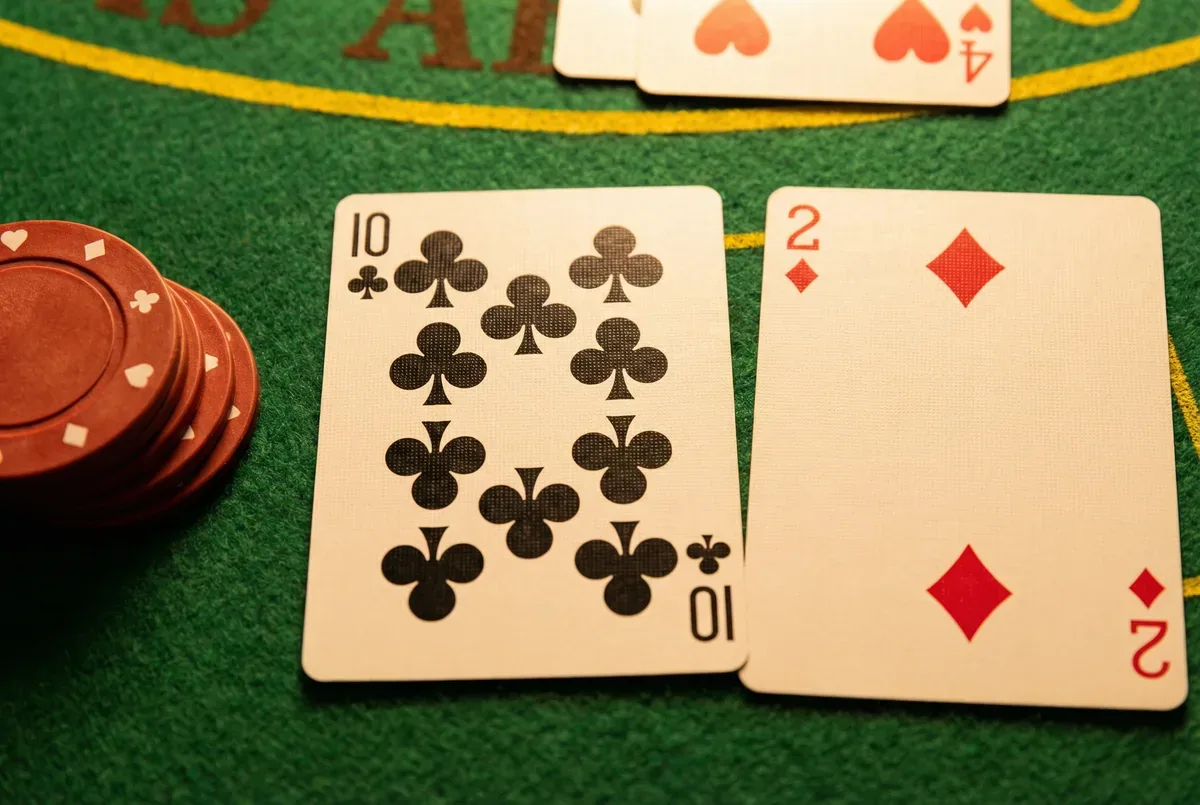
Hard 12 is a stiff hand but it does not play like one. The standard stiff hand rule tells you to stand against a dealer showing 2 through 6 and take the bust as yours only if forced. Hard 12 is the single exception: it stands only against dealer 4, 5, and 6. Against dealer 2 and 3, blackjack basic strategy says hit.
Why Hard 12 Behaves Differently From Hard 13 Through 16
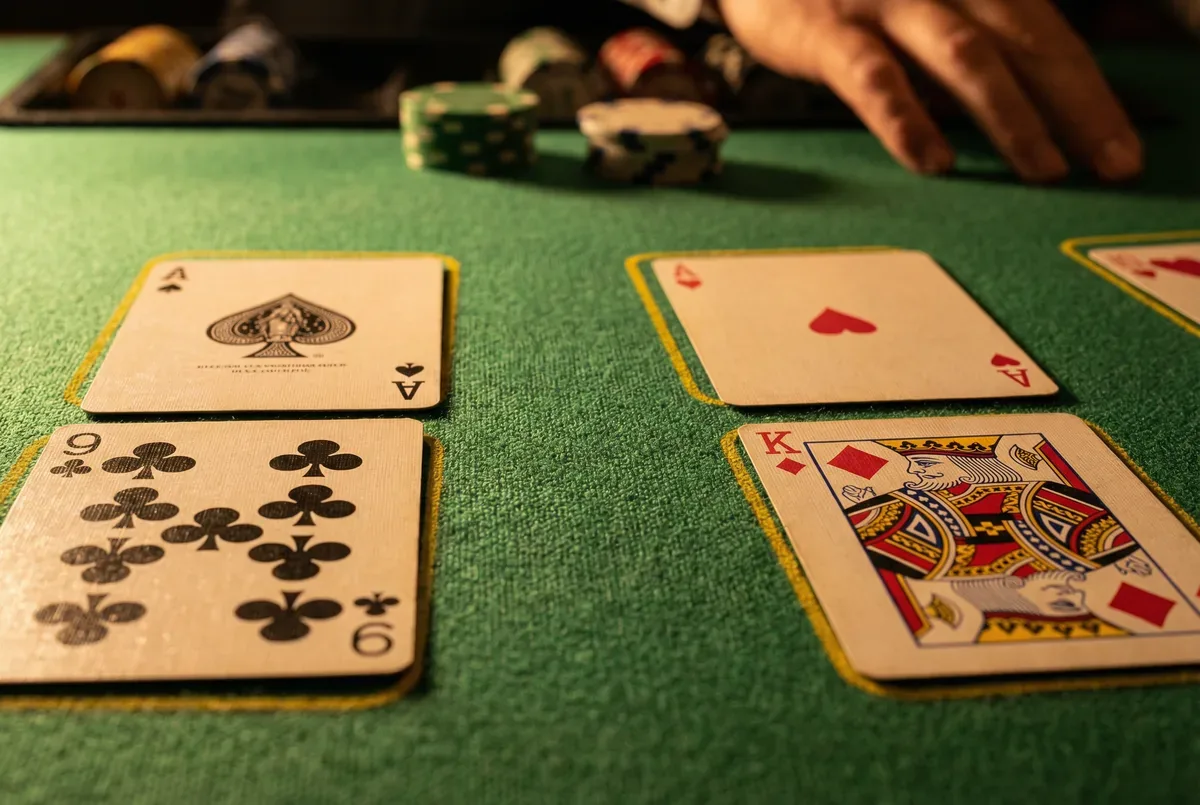
The reason comes down to bust probability. Hard 13 through 16 bust on any 10-value card, a 9, an 8, or a 7 depending on the total. Hard 12 busts only on a 10-value draw, which represents approximately 31% of the remaining deck. That lower bust probability changes the math enough that hitting hard 12 becomes correct in more situations than hitting any other stiff hand.
Most players never learn this distinction. They memorize a simplified rule stand on stiffs vs weak upcards and apply it uniformly to every hand from 12 to 16. Against dealer 4, 5, and 6 that approach works for hard 12. Against dealer 2 and 3 it costs money every time it is used.
- Dealer 2 → HIT
- Dealer 3 → HIT
- Dealer 4 → STAND
- Dealer 5 → STAND
- Dealer 6 → STAND
- Dealer 7 → HIT
- Dealer 8 → HIT
- Dealer 9 → HIT
- Dealer 10 → HIT
- Dealer Ace → HIT
What Is the Correct Play for Hard 12 Against Every Dealer Upcard?
The correct blackjack basic strategy for hard 12 in a standard multi-deck game is: stand against dealer 4, 5, and 6. Hit against everything else dealer 2, 3, 7, 8, 9, 10, and Ace. Three upcards trigger a stand. Ten upcards trigger a hit. That ratio is unique to hard 12; no other stiff hand hits this frequently against the range of dealer upcards.
Against dealer 7 through Ace the decision is straightforward. The dealer is likely to complete a strong hand anything from 17 to 21 and standing on 12 means losing without any chance to improve. Hitting gives hard 12 a realistic path to 17 through 21, especially since drawing a 2 through 9 improves the hand without busting it.
Against dealer 4, 5, and 6, the dealer’s own bust probability climbs high enough, into the 40% to 42% range, and that standing on 12 becomes mathematically correct. You are betting that the dealer will destroy their own hand before you need to improve yours. That logic holds at dealer 4 through 6. It does not hold at dealer 2 and 3.
What Are Hard 12 Against Dealer 2 and 3 The Most Frequently Misplayed Cells?
Dealer 2 and dealer 3 are the most misplayed hard 12 situations in recreational blackjack. Players see a dealer showing a low card, assume they are in favorable stiff hand territory, and stand. The chart says hit both times.
Dealer 2 carries a bust rate of approximately 35%. Dealer 3 carries a bust rate of approximately 37%. Both numbers sound favorable and they are, compared to dealer 7 through Ace. But they are not favorable enough to justify standing on a 12. When you stand on hard 12 vs dealer 2, your expected value is approximately -0.29 per dollar wagered. When you hit, it improves to approximately -0.25. Against dealer 3, standing produces around -0.23 EV, hitting produces around -0.21. The edge is narrow but it is real and it compounds across every occurrence.
Dealer Shows
Your Hand
Dealer shows 3. You have hard 12 (7-5). Hit or stand?
Hard 12 against dealer 3: hit. This is the most counterintuitive hard 12 decision. Standing hard 12 is correct only against dealer 4, 5, and 6 where the dealer's bust rate exceeds the value of the dealer busting vs the player drawing into a stronger total. Against dealer 3 (bust rate 37%), standing produces EV of approximately -0.23. Hitting produces EV of approximately -0.21 a small but real improvement. Players who stand all stiff hands against any dealer under 7 are making an error specifically on this hand.
The error persists because the intuition feels logical. You are taught that dealer 2 through 6 is favorable territory for the player. That is true in general. But the stiff hand framework applies differently to hard 12 than it does to hard 13 through 16 because of the bust asymmetry. Memorizing dealer 4-5-6 as the stand zone for hard 12 not dealer 2 through 6 is one of the most important corrections to apply to blackjack basic strategy.
How Multi-Card Hard 12 Compositions Affect the Decision?
In multi-deck blackjack, composition does not change the hard 12 decision. A 7-5, a 10-2, an 8-4, a 9-3, a 4-4-4, or any other combination totaling 12 plays identically: stand vs dealer 4-6, hit vs everything else. The multi-deck shoe dilutes the card-counting effects of specific card removals enough that composition-dependent exceptions do not apply.
The one situation worth noting is a 10-2 specifically in single-deck play. In some single-deck blackjack basic blackjack strategy charts, 10-2 vs dealer 4 is listed as a hit, departing from the standard stand. The reasoning involves the fact that a 10 and a 2 have already been removed from a 52-card deck, which meaningfully shifts the probability of busting on a 10-value draw. Most contemporary single-deck charts still recommend standing, but the 10-2 vs dealer 4 cell is legitimately close and you may encounter both calls depending on the source.
Outside of that single-deck edge case, every hard 12 regardless of how many cards compose it follows the same decision grid. Three-card or four-card hard 12 hands do not unlock a stand in situations where the two-card version hits. The total is what governs the decision, not the path that produced it.
Common Myth
“Hard 12 is a stiff hand you should always stand against weak dealer upcards”
Players treat all stiff hands (12-16) identically against weak upcards. Hard 12 is different: it only busts on a 10-value draw (about 31% probability), making it safer to hit than hard 13-16.
The Reality
Hard 12 stands only against dealer 4, 5, and 6. Against dealer 2 and 3, basic strategy is HIT the dealer's bust rate is insufficient to justify standing on a total that frequently improves on one draw.
Hard 12 vs dealer 2: hit EV -0.25 vs stand EV -0.29. Hit saves 0.04 per dollar every occurrence.
Making the Hard 12 Hit Automatic Before Real Money
The hard 12 exception is one of those chart cells that needs to be drilled until the correct response is immediate. In a live casino, there is no time to reason through bust probabilities at the table. When dealer 2 appears, the hand should trigger an automatic hit without deliberation.
Isolation drilling works better than full-chart review for cells like this. Run sessions where the only hands dealt are hard 12 against each possible upcard, forcing the decision repeatedly until the stand zone, 4, 5, 6 only, and is encoded without effort. Verify the hit decisions against 2 and 3 specifically, since those are where the override of the general stiff hand instinct is required.
If you want to stress-test hard 12 decisions under real table conditions before committing real money, live dealer blackjack with a low minimum is a practical environment for it. The pace, the dealer interaction, and the small financial stakes together create the conditions where chart memory either holds or breaks down. Playing a live dealer game at test this hard-total decision at a live table with a minimal buy-in lets you confirm that the hard 12 hit vs dealer 2 and 3 is locked in before you sit at a table where the stakes are higher keep in mind that real money is on the line even at the lowest limits.
Frequently Asked Questions
No. Basic strategy says hit hard 12 vs dealer 2. The dealer's bust rate at 35% is not high enough to make standing on 12 correct. Standing produces EV of approximately -0.29; hitting improves that to approximately -0.25. The stiff hand stand rule applies to hard 12 only against dealer 4, 5, and 6.
The stand zone for hard 12 is dealer 4, 5, and 6 only. Against all other upcards including dealer 2, 3, and 7 through Ace the correct play is hit. This is different from hard 13 through 16, which stand against a wider range of dealer upcards.
In multi-deck blackjack, no. Both 10-2 and 7-5 follow the same decision: stand vs dealer 4-6, hit vs everything else. The only meaningful exception is 10-2 vs dealer 4 in some single-deck charts, where the removal of those specific cards shifts the math slightly though most single-deck charts still recommend standing on that hand.
Before you test these plays at a real table, run them through our free blackjack simulator practice unlimited hands at zero cost until every move becomes automatic.
Use our free blackjack calculator to model the exact expected value for any rule combination or hand situation before you sit down.
Hard 12 strategy is worth learning but every session carries real risk
Basic strategy reduces the house edge but does not eliminate it. Blackjack is a game of incomplete information and variance. Even correct hard 12 decisions lose money in the short run. Never play with money you cannot afford to lose, and set firm session limits before you sit down.
Gambling involves financial risk. Past results do not predict future outcomes. Play within your means.
Learn More
Continue your education with these related lessons.

Why the 6 is the Worst Dealer Upcard According to Math
The dealer busts 42% of the time when showing a 6 the single highest bust probability of any upcard. Knowing…
How Much the No Double After Split Rule Costs You
Playing without Double After Split costs 0.14% of your expected edge but the real damage comes from not adjusting your…
The Bust Probability of Every Dealer Upcard
Dealer bust percentages for every upcard 2 through Ace exact numbers, what drives them, and how they determine every stand/hit/double…