
When to Never Take Insurance and When It Is Actually the Right Call
- Insurance in Blackjack Explained
- Why Insurance Has Negative Expected Value in Every Standard Game?
- How Does Even Money When Insurance Is Offered Automatically on Blackjack?
- When Card Counters Take Insurance (and Why Basic Strategy Players Don't)?
- Refusing Insurance Correctly Before Any Real Session Begins
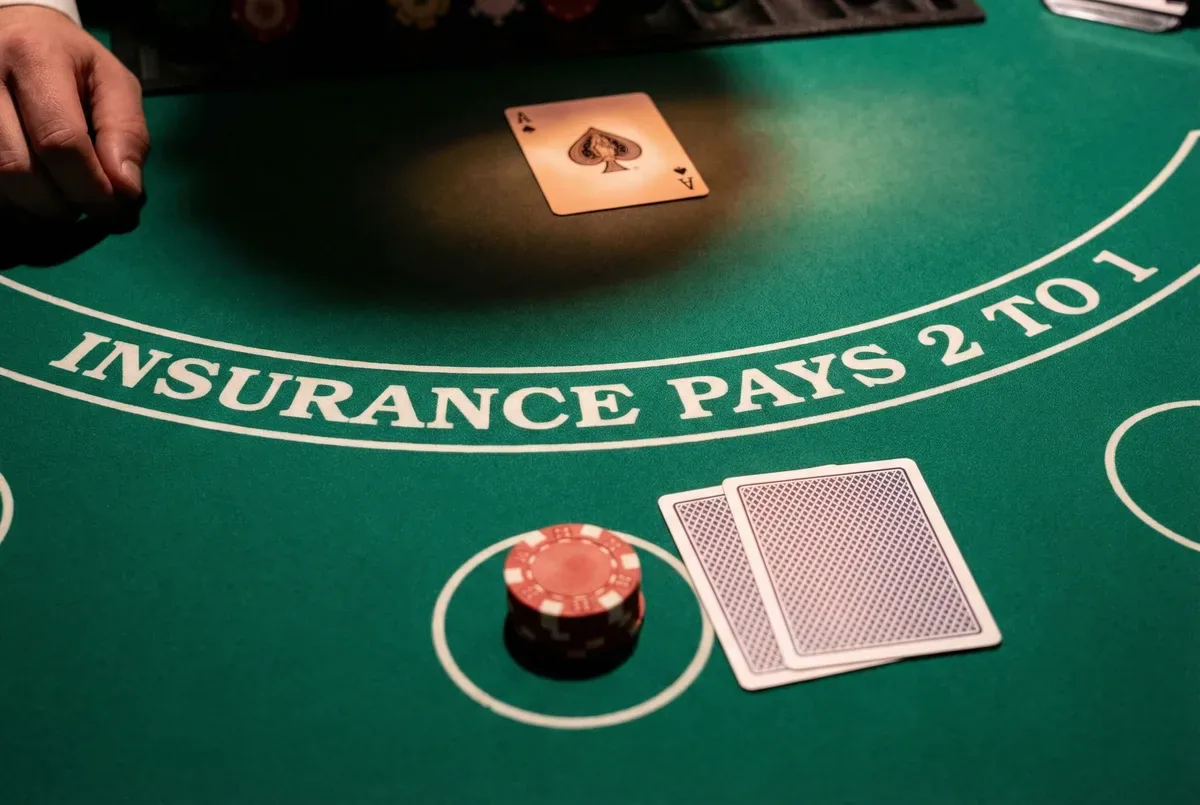
The dealer flips an ace. “Insurance?” The question is posed to every player at the table, and in that moment, it feels like a legitimate safety net pay half your bet now to protect against losing the whole thing to a dealer blackjack. That instinct is exactly what the casino is counting on.
Insurance is a side bet. It has its own blackjack house edge 7.3% in an eight-deck game which is fourteen times larger than the 0.5% edge you face playing with correct blackjack basic strategy. Taking it does not protect your main bet. It adds a second losing wager to the hand.
The math is precise and settled. Knowing it removes the hesitation before you ever sit down at a table.
Insurance in Blackjack Explained
Insurance is offered every time the dealer’s upcard is an ace. Before the dealer checks the hole card, players may place an additional wager of up to half their original bet in a designated area on the felt. If the hole card is a 10-value card a ten, jack, queen, or king insurance pays 2:1. If the hole card is anything else, the insurance bet is collected immediately and the main hand continues.
The two bets are fully independent. If the dealer has blackjack, you collect your insurance payout and lose your main bet the net result is roughly break-even on that hand. If the dealer does not have blackjack, you lose the insurance bet and the main hand resolves normally. Winning insurance does not make your main hand win. Losing insurance does not make your main hand lose.
“Even money” is a variant of insurance marketed directly at players holding a natural blackjack. When the dealer shows an ace and you have a natural, taking even money guarantees an immediate 1:1 payout rather than risking a push if the dealer also has blackjack. Mechanically, even money is identical to placing an insurance bet when you hold a natural. The EV analysis is the same: decline.
Common Myth
“Insurance protects you when the dealer might have blackjack”
Insurance feels like protection you are paid 2:1 if the dealer has blackjack, covering your main bet loss. But insurance costs half a bet and only wins when the dealer has a 10-value hole card.
The Reality
Insurance has a fixed negative EV of -0.073 per dollar (8 deck), regardless of your hand. The dealer has a 10-value hole card approximately 30.8% of the time. Insurance breaks even only if the dealer had blackjack 33.3%+ of the time.
Insurance EV: -7.3 cents per dollar. On a $25 insurance bet, expected loss = $1.83 every time it is placed.
Why Insurance Has Negative Expected Value in Every Standard Game?
Insurance breaks even when the dealer’s hole card is a 10-value card exactly one-third of the time that is the mathematical requirement for a 2:1 payout to be a fair price. In an eight-deck shoe (416 cards), 128 cards are 10-value. After removing the dealer’s visible ace, 415 cards remain, of which 128 are tens. That probability is 128/415, or approximately 30.8%.
You need 33.3% to break even. You get 30.8%. The gap of roughly 2.5 percentage points is the source of the blackjack house edge. On a ten-dollar insurance bet: you win twenty dollars 30.8% of the time, and lose ten dollars 69.2% of the time. Expected value is (0.308 × 20) minus (0.692 × 10), which equals 6.16 minus 6.92, which equals negative 0.76. A loss of 76 cents per ten-dollar bet, or approximately 7.3% blackjack house edge.
That edge does not shift based on what cards you hold. Whether you have a pair of aces or a 15, the calculation involves only the remaining deck composition. Your hand total has no bearing on the probability of the dealer’s hole card. Insurance is always independently evaluated against those 415 remaining cards.
Single-deck games produce a slightly higher proportion of 10-value cards (16/51 after removing the ace, or about 31.4%), which narrows the edge modestly. But it remains negative at standard payouts. No standard casino game pays insurance at better than 2:1, so the blackjack house edge exists across all deck counts in all standard formats.
How Does Even Money When Insurance Is Offered Automatically on Blackjack?
Even money is the version of insurance that appears most psychologically compelling. You have a natural blackjack the best hand in the game and the dealer is showing an ace. The dealer offers to settle the hand now at 1:1. No waiting. No risk of a push. Guaranteed profit.
The guaranteed profit is exactly the problem. Accepting 1:1 is always worse than the expected value of declining. When you refuse even money, roughly 69.2% of the time the dealer does not have blackjack and you collect your 3:2 payout. Roughly 30.8% of the time the dealer has blackjack and the hand pushes. The expected value of refusing is (0.692 × 1.5) + (0.308 × 0), which equals approximately 1.038 per dollar wagered.
Taking even money pays exactly 1.0 per dollar, every time. The EV cost of accepting even money is approximately 0.038 per dollar small in magnitude but consistent and permanent across every occurrence. Variance is not a valid justification. The push that occasionally results from declining is the correct price of the better long-run outcome.
Dealer Shows
Your Hand
True count is +3. Dealer shows Ace and offers insurance. You hold hard 14. Should you take insurance?
Insurance EV = positive when TC ≥ +3. At TC +2 or below: always decline insurance, regardless of your hand. At TC +3: insurance breaks even. At TC +4 or higher: insurance is a profitable bet. Your hand total is irrelevant only the count matters.
When Card Counters Take Insurance (and Why Basic Strategy Players Don’t)?
Card counters track the ratio of high cards to low cards remaining in the shoe. When the true count in a Hi-Lo system reaches approximately +3 or higher, the proportion of 10-value cards left in the shoe has risen enough that the insurance bet crosses into positive expected value territory. At a true count of +3, the probability of the dealer having a 10-value hole card is closer to 33.3% or above the break-even threshold making insurance a profitable bet in that specific moment.
This is called the insurance index play, and it is one of the first index numbers taught in card-counting systems precisely because the dealer shows an ace on roughly one in every thirteen hands. It appears often, and the EV shift when the count is right is meaningful. Experienced counters take insurance at high true counts and decline it at neutral or negative counts.
For players not counting cards, this information is not actionable. You do not know whether the remaining shoe is 10-rich or 10-lean. You are operating on the average composition, which produces the 30.8% probability and the 7.3% blackjack house edge. The insurance decision for a blackjack basic strategy player is not count-dependent there is no count to reference. The correct rule is unconditional: decline every time.
Basic Strategy Player
Card Counter
- Never
- Count-dependent
Refusing Insurance Correctly Before Any Real Session Begins
The most important preparation for handling the insurance prompt is deciding in advance. Players who arrive at the table without a fixed policy tend to waver under the pressure of the moment the dealer’s ace is face up, other players are placing insurance bets, and the social pressure of the decision feels real. A pre-committed rule removes all of that friction instantly.
The rule is: shake your head or wave your hand. No words needed, no hesitation. The dealer moves on. That single habit, applied consistently across a hundred sessions, eliminates the 7.3% bleed from a bet that would otherwise appear dozens of times per hour at a busy table.
If you want to see the insurance prompt in its real casino context before committing real funds, the live dealer tables at decline the insurance bet in real-money live play present the full sequence ace upcard, insurance offer, dealer peek, hand resolution exactly as it plays out in a physical casino. These tables use real money; the 7.3% blackjack house edge on the insurance bet applies from the first hand you play.
Refusing insurance is not a complicated decision. The math is not ambiguous. The only players who should say yes are verified card counters at verified high counts. For every other player, at every other count, the answer is no and that answer never changes.
Frequently Asked Questions
No. Your hand total has no effect on the insurance calculation. Insurance is a side bet on the dealer's hole card exclusively. The probability that the hole card is a 10-value card depends only on the remaining deck composition, not on what you were dealt. Decline insurance regardless of whether you have a strong hand, a weak hand, or a natural blackjack.
Even money removes variance you lock in a guaranteed profit and eliminate the possibility of a push. Humans tend to prefer certainty over a probabilistically better outcome with occasional bad results. Casinos understand this and market even money as a risk-management tool. Mathematically, the guaranteed 1:1 return is worth less than the expected value of declining, which averages approximately 1.038 per dollar wagered over time.
In the Hi-Lo counting system, insurance becomes a positive EV bet at a true count of approximately +3 or higher. At that count, the proportion of 10-value cards remaining in the shoe has risen enough that the dealer's hole card is a 10 more than one-third of the time crossing the break-even threshold for the 2:1 insurance payout. Below +3, insurance remains a losing bet for card counters as well.
Before you test these plays at a real table, run them through our free blackjack simulator practice unlimited hands at zero cost until every move becomes automatic.
Use our free blackjack calculator to model the exact expected value for any rule combination or hand situation before you sit down.
Insurance Is a 7.3% House Edge Bet You Place Voluntarily
Every time you take insurance or even money, you add a losing side bet to the hand. Basic strategy players decline unconditionally. The discipline is simple and the long-run cost of ignoring it is not small.
All casino games carry a house edge. No strategy eliminates risk or guarantees profit. Blackjack involves real financial risk. Only wager amounts you are fully prepared to lose.
Learn More
Continue your education with these related lessons.
Why Hard vs Soft Hands in Blackjack Changes Every Single Decision
Hard vs. soft hand definitions: why a soft hand can't bust on one draw, how the ace changes value, when…
Free Printable Blackjack Strategy Chart for Every Possible Hand
A blackjack strategy chart maps every possible player hand against every dealer upcard and tells you the mathematically correct play.…
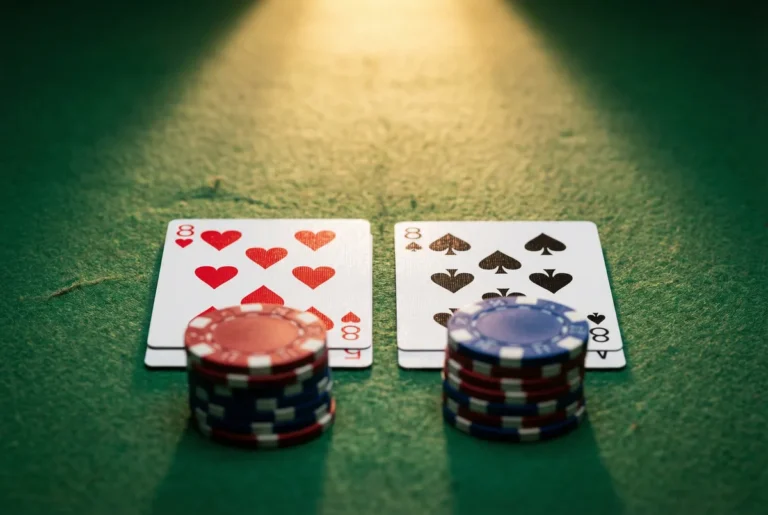
Why You Always Split Aces and 8s in Every Version of Blackjack
Splitting aces and 8s is the one pair-splitting rule that never changes. Here is the mathematical case for both unconditional…