

The Real Math Behind Splitting Pairs and Why It Boosts Your Edge
Pair splitting decisions carry more expected-value variance than any other action category in blackjack. The difference between correctly splitting Aces versus playing soft 12, or correctly keeping 5-5 as a doubling hand versus splitting into two weak 5-starting hands, can each produce EV swings of 0.60 or more per original bet. No other single decision type generates that range of consequence. Understanding the EV analysis for every pair is not academic it is the foundation of correct play on a category of hands that appears regularly and punishes errors heavily. The ten possible pairs divide cleanly into three groups: always split, never split, and conditionally split based on dealer upcard and blackjack table rules.
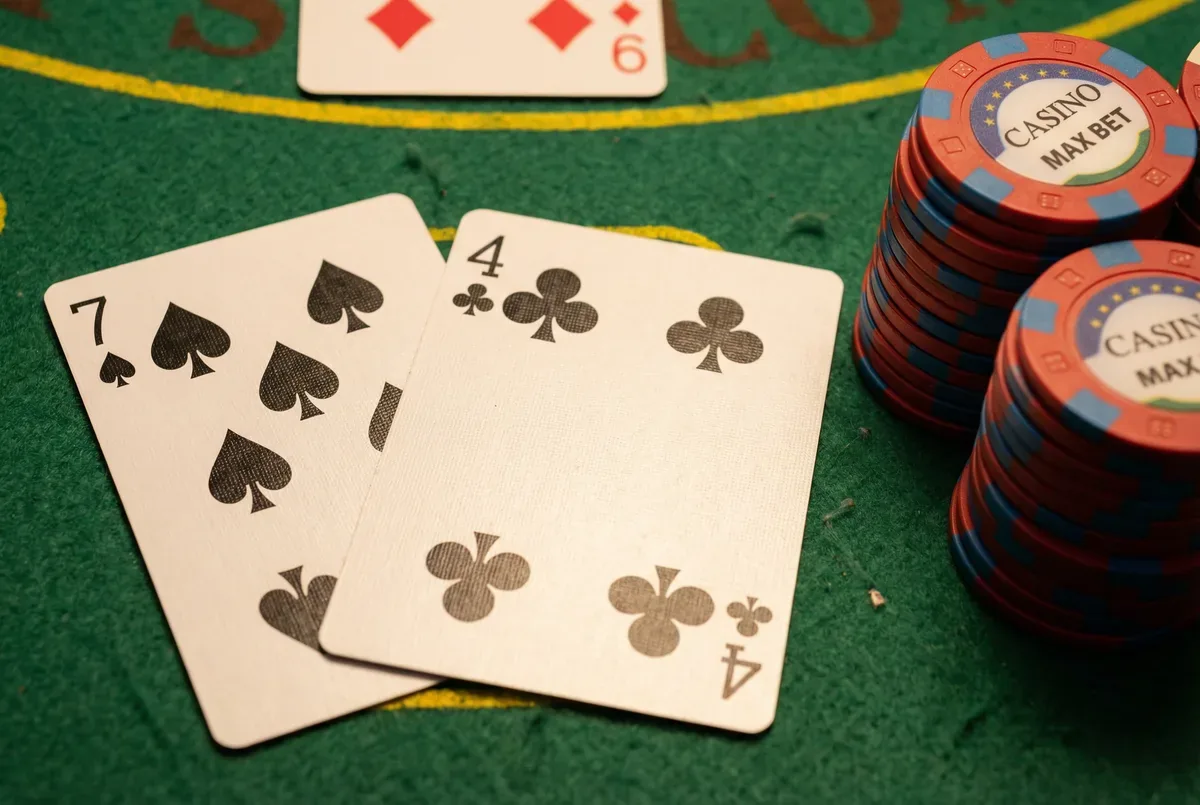
Why Pair Splitting Has the Widest EV Spread in the Game
Advantages
- Correct splits maximize EV on starting pairs
- Always splitting Aces gains ~0.60 EV vs. not splitting
- Splitting 8s vs Ace still loses less than playing hard 16
- Conditional splits (2s, 3s, 6s) protect against weak dealers
Disadvantages
- Incorrect splits (5s, 10s) destroy strong starting positions
- Splitting 4s without DAS available is a losing deviation
- Splitting 10s is one of the most costly mistakes in basic strategy
- Misapplying conditional rules costs EV on dozens of hands per session
What Is Always-Split Pairs?
Aces always split, against every dealer upcard, under every rule set. The EV of splitting Aces averages approximately +0.40 to +0.50 per original bet across all dealer upcards. Not splitting Aces leaves you with soft 12, a hand that requires multiple hits and produces average EV close to 0.00 or slightly negative. The EV gain from splitting Aces versus playing soft 12 is approximately 0.40 to 0.60 per bet the single largest EV benefit available from a single decision in the game. The only catch is that most casinos restrict re-splitting Aces and allow only one additional card per Ace after splitting. Even under these restrictions, splitting Aces is always correct.
Eights always split. The logic is damage control: hard 16 is the worst hand in blackjack, with EV ranging from -0.47 to -0.58 depending on dealer upcard and action taken. Splitting 8-8 converts one terrible hand into two hands each starting at 8, where drawing a 10-value card produces 18 a competitive total. Against dealer 2 through 7, splitting 8s produces near-breakeven or modestly positive EV. Against dealer 8 through Ace, splitting 8s is still negative but less negative than playing hard 16. Against a dealer 10, the EV of splitting 8s is approximately -0.38 to -0.40, compared to -0.54 for hitting hard 16. The rule is absolute because even in the worst matchup, the split loses less than any alternative.
The only nuance to 8-8 splitting is the H17 games with late surrender available: in that specific rule set, surrendering 8-8 versus dealer Ace is the preferred action because split EV falls to near -0.50 and the surrender exactly matches that loss while ending the hand. Outside of that specific condition, split 8s unconditionally.
Dealer Shows
Your Hand
Pair of 8s vs dealer Ace, S17 game, no surrender available. What is the correct action?
When late surrender is unavailable in an S17 game, split 8-8 against every dealer upcard including Ace. Hard 16 against an Ace hit produces around -0.58 EV. Splitting produces approximately -0.50. That 0.08 EV gain per hand is real and consistent. The absolute 8s split rule applies in all rule sets where surrender is not available. The only exception is H17 with surrender available, where surrendering produces the same -0.50 but ends with one hand rather than two.
What Is Never-Split Pairs?
Tens (including face cards) never split. Hard 20 is the strongest non-natural hand in the game, with an average EV of approximately +0.65 to +0.70 across all dealer upcards. Splitting 10s creates two hands each starting at 10 which require a 10-value card to reach 20, producing the same result as the unsplit hand on only a fraction of outcomes. The EV of splitting 10s against a dealer 5 (the most tempting scenario) is approximately +0.40, compared to +0.70 for standing on 20. You are throwing away 0.30 EV per bet. The intuition that a weak dealer upcard “makes splitting 10s worth it” is incorrect and expensive. Never split 10s under any circumstances in standard blackjack basic strategy.
Fives never split. A pair of 5s is hard 10, one of the strongest doubling hands in the game. Against dealer 2 through 9, doubling hard 10 produces EV ranging from approximately +0.25 to +0.55. Splitting 5s converts a powerful position into two hands each starting at 5 weak starts that require multiple favorable draws to compete. The EV of splitting 5s versus doubling hard 10 is a gap of approximately 0.40 to 0.60 per bet. Treat 5-5 as hard 10 and double when the dealer shows 2 through 9. Hit when the dealer shows 10 or Ace. Never split.
Correct Action EV
Incorrect Action EV
- +0.54
- -0.39
- +0.70
- +0.48
- A-A: Play soft 12
- 8-8: Hit hard 16 vs 10
- 10-10: Split vs dealer 6
- 5-5: Split vs dealer 6
What Is Conditional Pairs?
Six pairs fall in the conditional category: 2-2, 3-3, 4-4, 6-6, 7-7, and 9-9. Each has a range of dealer upcards where splitting is correct and a range where it is not, and some are additionally dependent on whether doubling after splitting (DAS) is permitted.
Twos and threes split against dealer 2 through 7 in standard 6-deck games with DAS. Without DAS, split against dealer 4 through 7 only. The restricted range without DAS reflects that the value of splitting 2s and 3s partly comes from the ability to double the resulting hands when favorable draws occur. Sixes split against dealer 2 through 6. Against dealer 7 and above, the dealer is too likely to complete a strong total for the weak 6-starting hands to compete. Sevens split against dealer 2 through 7 the matching point where a split 7 drawing a 10 reaches 17, tying a dealer who completed exactly 17.
Fours are the most rules-dependent conditional pair. In DAS games, split 4-4 against dealer 5 and 6 only. Without DAS, never split 4s play hard 8 and hit. The DAS condition matters enormously here because the value of splitting 4s is primarily derived from the probability of drawing a 7 to make 11 and then doubling. Strip that doubling option and the split loses value. Nines split against dealer 2 through 6 and 8 through 9 the famous double exception being dealer 7. Against dealer 7, your pair of 9s totaling 18 is likely to beat a dealer completing 17. Standing keeps the winner. Splitting risks turning one winning hand into two that might not reach 18.
Applying the Correct Split Decision at a Live Table Every Time
Doubling after splitting (DAS) is a rule that allows you to double on the hands created by a split. It is valuable because it enables you to capitalize on strong two-card totals formed after the split. DAS is available at most 6-deck games but not all. Its presence expands the correct splitting range for 2-2, 3-3, and 4-4. Its absence contracts those ranges fewer dealer upcards justify the split when you cannot double on favorable follow-up draws. When evaluating a table, confirm DAS availability alongside deck count and soft 17 rules.
Re-splitting allows you to split again if you draw a matching card to a split hand. Most casinos allow re-splitting up to three or four hands for most pairs, with Aces often restricted to one card per split hand. Re-splitting has modest EV value approximately 0.02 to 0.04% on the overall blackjack house edge because the scenario of drawing a matching card after a split is relatively infrequent. Tables that restrict re-splitting penalize you slightly but do not change the primary splitting rules. Practice these conditional decisions in live conditions at apply this split at a live real-money table but note that real money is on every split, and splitting pairs doubles your exposure on the hand, so every pair decision should be deliberate and rule-matched before you commit.
Frequently Asked Questions
Hard 16 against a dealer Ace hit produces an EV of approximately -0.58. Splitting 8s against a dealer Ace produces approximately -0.50. The split loses less, which is the only criterion that matters when both actions are negative. The rule is absolute in S17 games without surrender available. In H17 games with late surrender, surrendering 8-8 vs Ace is the preferred action.
Hard 20 against a dealer 5 or 6 produces an EV of approximately +0.70 to +0.75. Splitting 10s in the same matchup produces approximately +0.40 EV. You throw away roughly 0.30 EV per bet real money over many hands. The strong dealer bust probability that makes splitting 10s feel tempting is the exact same reason standing on 20 is so profitable. The hand is already won at a high rate; splitting destroys that advantage.
Yes. DAS expands the correct splitting range for 2-2, 3-3, and 4-4. With DAS, split 2-2 and 3-3 against dealer 2 through 7. Without DAS, split them against dealer 4 through 7 only. For 4-4, split against dealer 5-6 with DAS only without DAS, never split 4s. Always confirm whether DAS is available before applying the conditional split rules.
Before you test these plays at a real table, run them through our free blackjack simulator practice unlimited hands at zero cost until every move becomes automatic.
Mathematical Risk Warning
Correct pair splitting improves EV but does not eliminate the house edge. Splitting pairs doubles your money at risk on the hand two losing split hands costs twice what a single lost hand would. Every split decision should be deliberate and matched to verified table rules.
Blackjack Academy is an educational resource. All strategy is based on mathematical expectation. Always play within your means.
Learn More
Continue your education with these related lessons.

Why the 6 to 5 Payout is the Biggest Trap in Modern Casinos
A 6:5 payout on a natural blackjack adds 1.39% to the house edge turning a beatable game into one of…
Complete Post-Split Strategy Guide for Playing Blackjack After Splitting
Post-split strategy explained: playing each split hand independently, why split aces get one card only, re-splitting rules, and doubling after…
Why Hard 12 Is the Dangerous Exception to Every Stiff Hand Rule
Hard 12 breaks the stiff hand rule. Here is exactly when to hit, when to stand, and why dealer 2…