
Table Rules Checklist for Finding the Best Blackjack Games
Most casino floors offer several blackjack variants simultaneously, and the difference between them is not décor it is math. A table with a 6:5 natural payout, a dealer that hits soft 17, and no surrender option can carry a blackjack house edge above 2 percent. The table directly next to it, offering 3:2 payouts and a stand-on-soft-17 rule, might run at 0.35 percent with blackjack basic strategy. Knowing which rules to check and in what order before placing a single chip is the single most valuable skill a recreational blackjack player can develop. This checklist covers every rule variation that materially affects expectation, with exact edge figures for each.
- ✓ PayoutBlackjack must pay 3 to 2 never 6 to 5 or even money
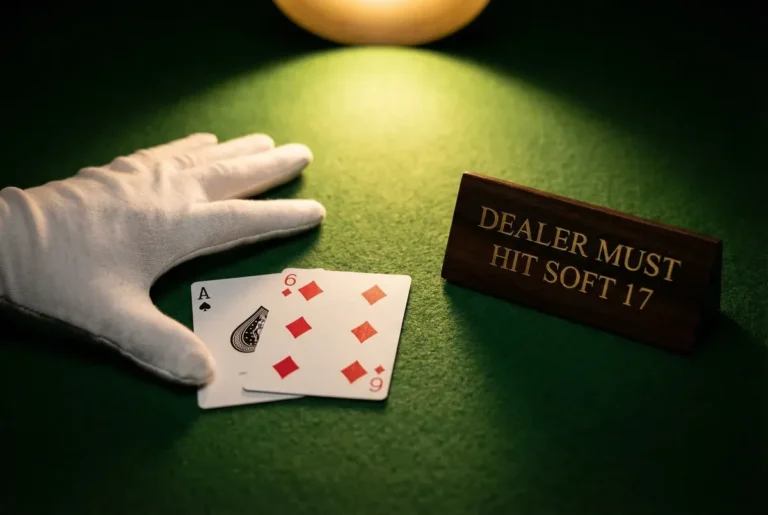
- ✓ Soft 17Dealer must stand on all 17s (S17), not hit soft 17 (H17)
- ✓ Deck countPrefer 1- or 2-deck; avoid 8-deck unless other rules compensate
- ✓ DASDouble after split must be allowed walk if it is not
- ✓ Late surrenderAvailable on hard 15 and 16 a strong player edge
- ✓ Resplit acesConfirm you can resplit aces to up to 4 hands
- ✓ ENHCAvoid European no-hole-card tables unless you know the strategy adjustment
- ✓ Peek ruleDealer must check for blackjack on 10 and Ace before play proceeds
- ✓ Doubling restrictionFull doubling on any two cards not restricted to 10 or 11 only
- ✓ Side betsIgnore all side bets; they carry 3–10% house edge
What Table Rules Have the Biggest Impact on House Edge
The payout ratio on a natural blackjack is the single most important rule on any table a 6:5 payout adds exactly 1.39 percent to the blackjack house edge in a 6-deck game compared to the standard 3:2 game. No combination of favorable secondary rules can recover that deficit. A 6:5 table with every other rule playing in the player’s favor will still lose to a 3:2 table with middling secondary rules.
After the payout ratio, the dealer’s soft 17 rule is the next most impactful factor. A dealer who hits soft 17 (H17) instead of standing gains approximately 0.20 percent over the player across the session. Deck count matters too but is often overstated a single-deck game with ideal rules plays at around 0.17 percent blackjack house edge, while a 6-deck shoe under the same rules runs near 0.50 percent. That 0.33 percent difference is real but secondary to payout ratio and soft 17 combined.
The remaining rules DAS, surrender, resplit aces, ENHC, doubling restrictions each contribute smaller but additive amounts to edge. Double after split is worth approximately 0.14 percent. Late surrender saves around 0.08 percent; early surrender, which is extremely rare in modern casinos, is worth 0.62 percent. Resplit aces adds roughly 0.06 percent. The no-hole-card European rule costs the player about 0.11 percent if they do not adjust strategy. These figures are cumulative a table missing several of these player-friendly rules compounds the edge against you with every hand.
How to Read a Blackjack Table Before Sitting Down?
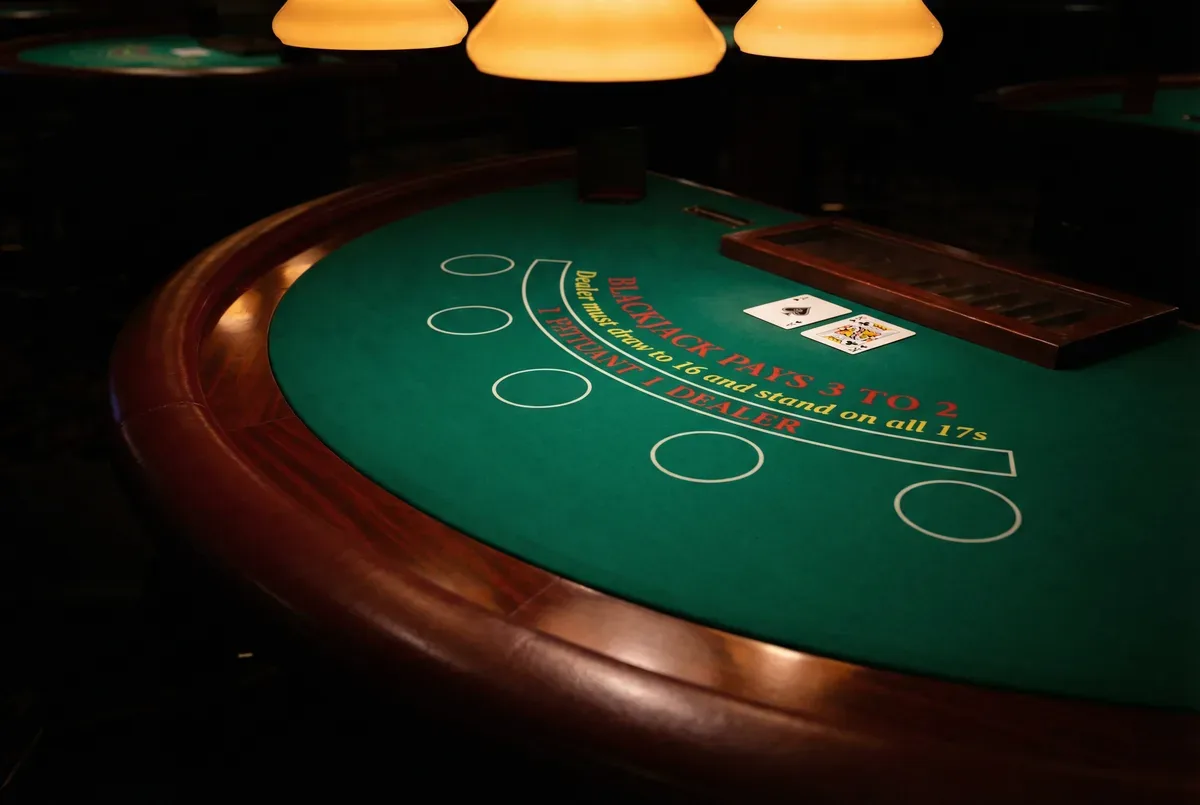
Every piece of information you need to evaluate a blackjack table is printed somewhere on the layout or posted on a rules card at the table you do not need to ask the dealer for any of it. Start with the payout text near the betting circle. It will read either “Blackjack pays 3 to 2” or “Blackjack pays 6 to 5.” If it says anything other than 3 to 2, move to the next table without further evaluation.
Next look for the soft 17 rule, typically printed as “Dealer must stand on all 17s” or “Dealer hits soft 17” somewhere on the felt. Confirm the number of decks by looking at the shoe a clear plastic shoe with visible cards makes deck count easy to estimate. If you cannot determine the rules from the felt alone, a brief glance at the printed rules card placed at the table edge will contain everything else: DAS availability, surrender policy, splitting restrictions, and doubling limits. Casinos are legally required to post these. Read them.
| Payout on Natural | 3 to 2 | -0.00% (baseline) |
|---|---|---|
| Payout on Natural | 6 to 5 | |
| Dealer Soft 17 | Stand on all 17s (S17) | |
| Dealer Soft 17 | Hit soft 17 (H17) | |
| Deck Count | Single deck (1D) | |
| Deck Count | 6-deck shoe | |
| Double After Split | Allowed (DAS) | |
| Double After Split | Not allowed (No DAS) | |
| Late Surrender | Available | |
| Early Surrender | Available | |
| Resplit Aces (RSA) | Allowed | |
| No Hole Card (ENHC) | European rule |
How Does Rule Variations Should You Refuse to Play?
Three rules are absolute disqualifiers regardless of what other conditions the table offers. A 6:5 payout is a non-negotiable walk-away no secondary rules compensate for a 1.39 percent structural drain. Any table that pays even money on naturals is worse still. An H17 rule combined with a 6:5 payout stacks to roughly 1.59 percent before accounting for any other rule deficiencies, making it one of the worst bets on a casino floor.
Beyond the payout ratio, heavy doubling restrictions are a serious red flag. Some tables restrict doubling to hard 10 and 11 only the Reno Rule which costs the player approximately 0.28 percent versus full doubling on any two cards. Pairing a Reno Rule table with no DAS and no surrender means you are walking into a game where multiple player advantages have been stripped simultaneously. The cumulative edge on such a table can approach 1 percent even with a 3:2 payout and S17 rule which is far worse than any publicly available blackjack game needs to be.
How to Compare Two Tables Using the Same Checklist?
When two tables both offer 3:2 payouts and S17, the comparison moves to the additive layer of secondary rules. Start with DAS if one table allows it and the other does not, the DAS table has a 0.14 percent lower blackjack house edge, all else equal. Then check surrender availability. A table with late surrender on both hard 15 and 16 returns approximately 0.08 percent. If Table A has DAS and surrender while Table B has neither, Table A carries a 0.22 percent lower edge a meaningful difference across a full session.
Deck count is the tiebreaker when all other rules match. A 2-deck game with identical secondary rules plays roughly 0.19 percent lower blackjack house edge than a 6-deck game. A single-deck game under ideal conditions (3:2, S17, DAS, no Reno restriction) is the best game on most casino floors. The problem is that casinos almost never offer single-deck games with all those rules intact the most common combination is single deck with a 6:5 payout, which neutralizes the deck-count advantage entirely and then some.
Advantages
- Lower house edge under ideal rules (as low as 0.17%)
- Fewer decks means more naturals relative to cards in play
- Card composition shifts more quickly responsive game
- Hand-dealt format forces slower pace, reducing hands per hour
- Historical gold standard format used in classic blackjack
Disadvantages
- Almost never offered with 3 to 2 payout in modern casinos
- Single-deck with 6 to 5 payout is worse than a 6-deck 3 to 2 game
- Limited seating creates pressure and rushed decision-making
- Casinos compensate with penetration cuts that neutralize count advantage
- Rule restrictions (no DAS, Reno rule) frequently accompany single-deck offers
Using the Checklist Before Every Live Session
Before you commit real money at a live table, take two minutes with this checklist at the table layout every rule you need is in front of you. I walk the floor before sitting, reading payout ratios and soft 17 notices from a standing position, and I have walked away from tables that looked appealing until the felt revealed a 6:5 payout or an H17 dealer rule. If you want to drill the checklist and test how these rules play out hand-by-hand before risking actual chips, open a live session at Blackjack Academy’s practice table where you can compare rule sets in real time but understand that real money tables carry real-money variance, and every session should start with a firm loss limit you will not exceed.
Frequently Asked Questions
The payout ratio on a natural blackjack is the single most important rule. A 6 to 5 payout adds 1.39 percent to the house edge compared to a standard 3 to 2 game. No combination of other favorable rules can recover that deficit. Always check the felt near the betting circle for the payout text before evaluating anything else.
A dealer who hits soft 17 (H17) instead of standing adds approximately 0.20 percent to the house edge over a comparable S17 game. Combined with a 6 to 5 payout, the total additional edge against the player reaches roughly 1.59 percent. In an S17 game with 3 to 2 payouts and full doubling rules, H17 is the primary remaining variable to eliminate.
Not automatically. A single-deck game with a 3 to 2 payout, S17, and full doubling rules plays at approximately 0.17 percent house edge well below a 6-deck game at 0.50 percent. But most modern single-deck games offer 6 to 5 payouts, which adds 1.39 percent and makes them significantly worse than a 6-deck 3 to 2 game. Always check the payout ratio before the deck count.
Before you test these plays at a real table, run them through our free blackjack simulator practice unlimited hands at zero cost until every move becomes automatic.
Calculate Your Exact Edge Before You Sit Down
Enter your table's specific rules payout ratio, deck count, S17 or H17, DAS, surrender and see the precise house edge you are playing against.
Blackjack Academy is an educational resource. All strategy figures are based on mathematical expectation. Always play within your means and set a session loss limit before you begin.
Learn More
Continue your education with these related lessons.
How to Mentally Track Your Session’s Expected Value
Learn how to calculate and mentally track your session's expected value before you sit down. Convert house edge into real…
Understanding the True Cost of 6 to 5 Blackjack
The 6:5 blackjack payout looks close to 3:2 until you run the numbers. A single rule change adds 1.39% to…
Best Times to Double Down on Hard 10 Against 2 Through 9
Hard 10 is one of the strongest doubling hands in blackjack. Against dealer upcards 2 through 9, the math always…