
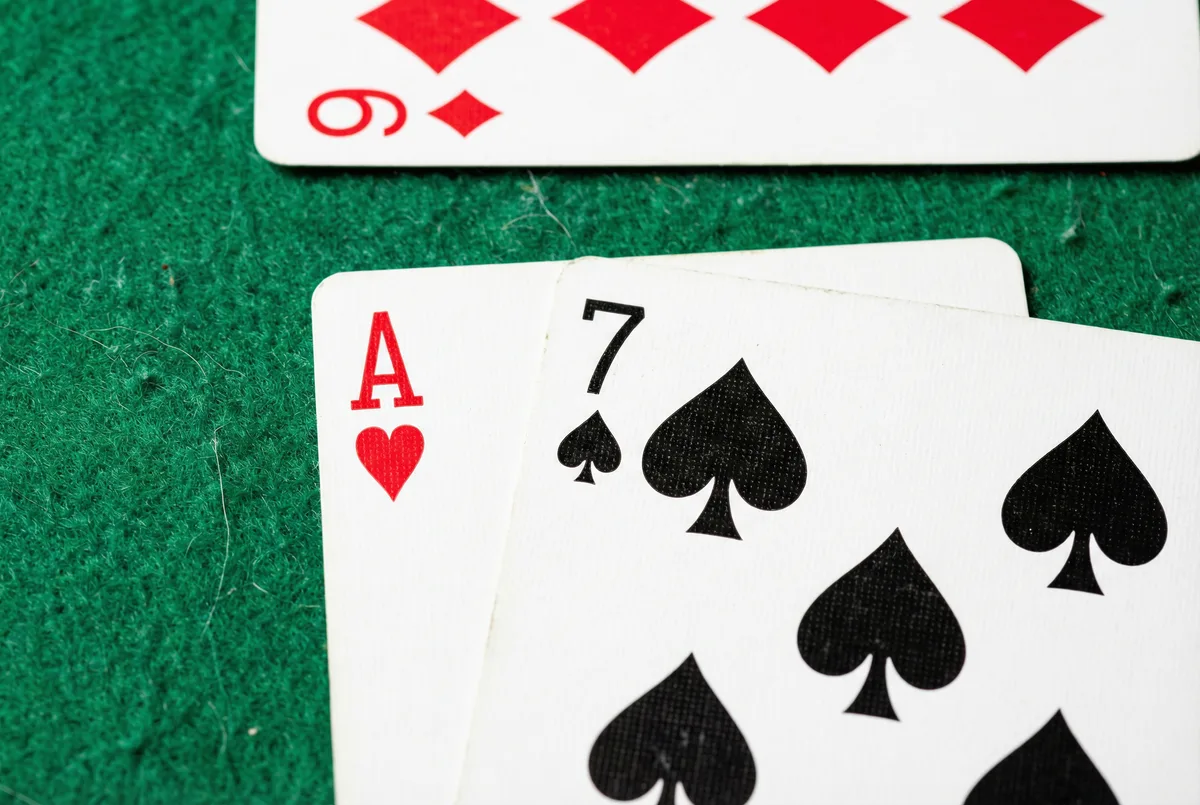
Soft 18 Strategy for Hitting Against a 9 or 10 Upcard
Standing on 18 feels safe. Most players do it without thinking because 18 beats a lot of totals. But against a dealer 9, 10, or Ace, your Ace-7 is not a winning hand. It is a net loser when you stand.
The dealer makes 19 or better often enough that your 18 finishes second far too frequently. Soft 18 is the most misplayed hand in blackjack, and the fix is simple once you see the math. Hitting cannot bust you on one card. That single fact changes everything about how this hand should be played.
Why 18 Not Always a Good Hand Matters
EV Standing Soft 18 vs Dealer 9
per bet
EV Hitting Soft 18 vs Dealer 9
per bet
EV Difference
per bet
Eighteen only beats dealer totals of 17 and below. Against a dealer 9, the dealer reaches 19 or better roughly 54% of the time. Your 18 is already behind more than half the time before you act. Standing locks in that loss rate. The number on your cards feels strong, but expected value does not care how the hand looks.
Against a dealer 10, the math is even harsher. The dealer completes a hand of 20 or 21 at a high enough rate that your 18 is a consistent loser.
Standing accepts that outcome. Hitting gives you a chance to reach 19, 20, or 21. The Ace in your hand makes hitting safe, which removes the only reason to stay put.
Why Can Soft 18 Never Bust on One Card?
Common Myth
“Hitting soft 18 is risky because you might bust”
Players treat 18 like a hard total and fear drawing a high card.
The Reality
Soft 18 cannot bust on a single hit. The Ace drops from 11 to 1 if needed.
Drawing any card from 2 to 9 lands you on 19 to 21. Drawing a 10 converts Ace-7-10 to hard 18. You cannot go over 21 on the first hit.
When you hold Ace-7 and draw a 3, the Ace stays at 11 and your total becomes 21. Draw a 2 and you reach 20.
Draw a 9 and you land on 19, still ahead of the dealer’s probable total. Every card from 2 through 9 improves or ties your current total of 18. That is nine of the thirteen card ranks all landing you in a better spot.
Draw a 10-value card and the Ace drops to 1. Ace plus 7 plus 10 equals hard 18. Your total does not change. You are exactly where you started, now with three cards. Worst case, you stay at 18. Best case, you jump to 19, 20, or 21. That asymmetry is why hitting is correct.
What Is the Complete Soft 18 Strategy by Dealer Upcard?
Dealer Upcard
Correct Action
- Stand (H17) / Double (S17)
- Double down
- Double down
- Double down
- Double down
- Stand
- Stand
- Hit
- Hit
- Hit
Against a dealer 2 through 6, soft 18 is an offensive hand. The dealer is weak and likely to bust.
In games that allow doubling on soft hands (most do), doubling soft 18 against a 3, 4, 5, or 6 puts maximum money on the table at the right moment. Against a dealer 2, the correct play depends on the blackjack table rules: double in S17 games, stand in H17 games.
How Do Rule Variations Affect Soft 18 Decisions?
Soft 18 is the most misplayed hand at the table precisely because 18 sounds strong. Players anchor to the number rather than read the dealer. Vs a 9 or 10, the dealer makes 19 or 20 at a rate that makes your 18 a losing hand on average. Hitting gives you a chance to improve. Standing guarantees you lose to anything the dealer makes above 18, which is more than half the time.
In H17 games, the dealer reaches stronger totals more often when showing a low upcard. That reduces the profitability of doubling soft 18 against a dealer 2. The difference is small in absolute terms, but it is a real strategy divergence. Always check whether the table placard shows H17 or S17 before you sit down.
The hit-versus-stand decisions for soft 18 against dealer 9, 10, and Ace do not change with rule variations. Those are consistent across all standard blackjack games. Once the dealer shows 9 or higher, hit your Ace-7 regardless of whether the table uses H17 or S17. That part of the strategy is fixed.
How to Lock In Soft 18 Decisions Permanently
The fastest way to internalize soft 18 strategy is to reduce it to one sentence: stand against 7 and 8, hit against 9, 10, and Ace, double against 3 through 6. That covers the full chart in 17 words.
The dealer 2 case is the only one that requires a rule check. Every other situation has a single correct answer you can memorize right now.
Expect pushback from other players at the table when you hit your 18 against a dealer 10. Most recreational players treat standing as the only reasonable option. They are wrong, and the math proves it.
The expected value gap between hitting and standing soft 18 against a dealer 9 is approximately eight cents per dollar wagered.
Over hundreds of hands that becomes a meaningful sum. If you want to see that edge in a real game environment, try live dealer blackjack where real money is on the line and you will feel the difference between playing by feel and playing by math.
Frequently Asked Questions
Yes. The expected value of hitting soft 18 against a dealer 9 is approximately -0.10 per bet compared to -0.18 when standing. Hitting is the correct basic strategy play in all standard game variations. The Ace prevents busting on the first card drawn.
The hit-or-stand decisions for soft 18 are the same across deck counts. Against dealer 9, 10, or Ace you always hit. Against dealer 7 or 8 you always stand. The doubling rules for soft 18 against weak upcards may shift slightly depending on deck count, but the core hit vs stand logic is unchanged.
Drawing a 10-value card on Ace-7 converts the hand to hard 18. The Ace drops from 11 to 1, giving you 1 plus 7 plus 10 equals 18. Your total stays the same. You cannot bust on the first hit of a soft hand, which is exactly why hitting is safe in this situation.
Before you test these plays at a real table, run them through our free blackjack simulator practice unlimited hands at zero cost until every move becomes automatic.
Mathematical Risk Warning
Blackjack strategy reduces but does not eliminate the house edge. Even correct play results in losses over short sessions. Never wager more than you can afford to lose, and treat every session budget as money already spent.
Blackjack Academy is an educational resource. All strategy content is based on mathematical expectation from computer-simulated analysis. Gambling involves real financial risk.
Learn More
Continue your education with these related lessons.
How Variance Affects Short-Term Blackjack Results
Variance explains why you can lose 10 sessions in a row playing perfect basic strategy or win for a month…

How Late Surrender Saves Your Bankroll on 15s and 16s
Late surrender on hard 15s and 16s against strong dealer upcards is one of the most underused plays in blackjack.…

Complete Late Surrender Guide for Blackjack Hands You Should Never Play
Late surrender is one of the most underused rules in blackjack. Know exactly which hands to surrender hard 16 vs…