
The Soft 17 Rule: How One Dealer Decision Costs You 0.22%
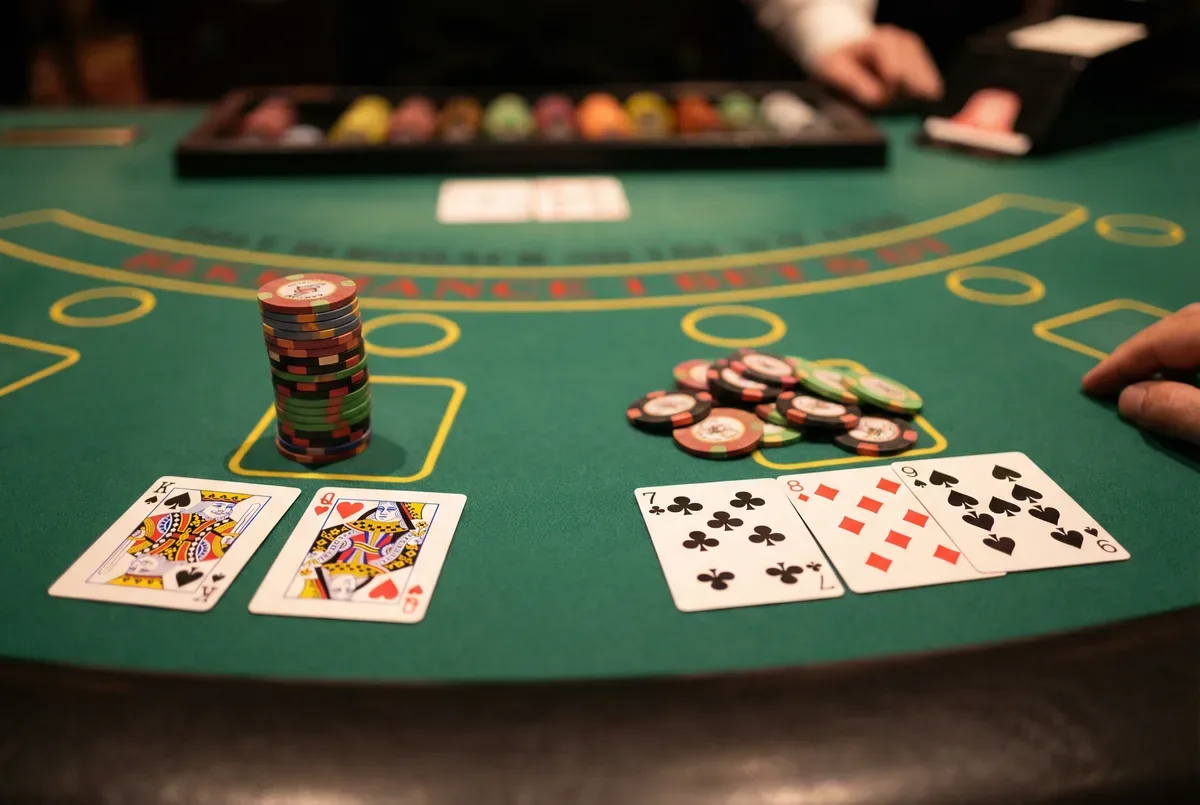
A soft 17 is any dealer hand totalling 17 that contains an Ace counted as 11. The most common example: Ace + 6. Because the Ace can also count as 1, this hand cannot bust on a single draw, which is exactly what makes the rule so consequential.
Soft 17 Explained
Every blackjack table posts one of two rules at the felt:
- S17, Dealer stands on all 17s (including soft 17)
- H17, Dealer hits soft 17
That single distinction shifts the mathematical equilibrium of the entire game. At an H17 table, the casino extracts an additional 0.22% from every dollar wagered. On a $25 minimum table with 80 hands per hour, that’s roughly $4.40 per hour disappearing from your stack before variance even enters the conversation.
Always find the table rules before you sit down. S17 is printed right on the felt. If it says 'Dealer Hits Soft 17', the casino is taking an extra 0.22% from you. That's not a trivial number over a session.
What Is the Mathematics Behind the 0.22% Swing?
The dealer’s soft 17 is a uniquely powerful hand, it can improve to 18–21 on any hit without risk of busting. When the dealer stands on soft 17, that hand locks in a competitive total. When the dealer hits, they gain access to better hands roughly 40% of the time:
- Drawing Ace → 18 (improves)
- Drawing 2 → 19 (improves)
- Drawing 3 → 20 (improves)
- Drawing 4 → 21 (improves)
- Drawing 5 → 12 soft (then hits again)
- Drawing 6–8 → 13–15 soft (must continue hitting)
The dealer busts more on H17 (the chain hitting creates bust paths), but improves more often too. The net effect across millions of hands: the casino wins more money than they lose from the extra hits. The blackjack house edge calculation gives this a value of precisely +0.22% in the casino’s favour.
| Rule Variant | Edge Change | Effect |
|---|---|---|
| S17 (Dealer Stands) | Baseline | |
| H17 (Dealer Hits) | +0.22% | |
| H17 + 6 | 5 BJ | |
| S17 + 3 | 2 BJ |
How Does Basic Strategy Change Under H17?
The rule change isn’t just a passive tax, it actively modifies optimal blackjack basic strategy. Under H17, the dealer is stronger, and several plays that were borderline under S17 now tip in a different direction.
The most important adjustments concern doubling against the dealer’s Ace. Under S17 blackjack basic strategy, doubling A,7 vs dealer Ace is marginal at best. Under H17, the EV calculation shifts enough to make it the correct play in some shoe compositions.
- A,7 vs Dealer AceDouble Down (H17) / Stand (S17)
- A,8 vs Dealer 6Double Down (H17) / Stand (S17)
- Hard 11 vs Dealer AceDouble Down (H17, multi-deck) / Hit (S17)
- A,6 vs Dealer 2Double Down (H17) / Hit (S17)
Dealer Shows
Your Hand
The table hits soft 17 (H17). You hold soft 18. Dealer shows Ace. What is the correct play?
Soft 18 is not a standing hand against an Ace in H17 games. The dealer's chance of improving from soft 17 is exactly why this rule costs players 0.2% of edge.
How Do You Find the Right Table?
Casual players rarely check blackjack table rules before sitting. Professional players treat this as non-negotiable. The rule hierarchy for table selection (best to worst):
Table Selection Priority
S17 + 3
2 Blackjack:Ideal conditions. Maximum player edge on basic strategy.: S17 + 6:5 Blackjack:S17 saves 0.22% but 6:5 BJ costs 1.39%. Still bad, avoid.|H17 + 3:2 Blackjack:Acceptable at higher counts. The standard Vegas Strip game today.|H17 + 6:5 Blackjack:House edge near 2%. Never play this game intentionally.|Continuous Shuffle Machine:No penetration, no counting. Walk away.
Common Myth
“The Soft 17 rule doesn't really matter, it's just 0.22%.”
Players dismiss small percentages without calculating session volume. Over 500 hands at $25, 0.22% is $27.50, real money.
The Reality
0.22% compounds across every hand you play. At 80 hands/hour over a 6-hour session, it's a measurable cost that skilled players eliminate by choosing S17 tables.
$27.50 / 500 hands at $25
Why Casinos Prefer H17
The shift from S17 to H17 across American casinos accelerated in the 2000s, driven by two factors: the rise of 6:5 blackjack and increasing player sophistication. H17 generates more revenue per table without being visible enough to drive away recreational players.
In Las Vegas today, the majority of Strip casinos run H17 on their $10–$25 tables. S17 games still exist, but they’re increasingly reserved for higher-stakes tables or single-deck games (which carry their own disadvantages). Knowing where to find S17 is a core edge for the serious player.
H17 vs S17: Player Perspective
- S17 reduces house edge by 0.22%
- Dealer's Ace is genuinely weaker
- Standard basic strategy applies without H17 adjustments
- Easier to find in higher-limit rooms
Evaluating which table conditions to seek out
- S17 tables increasingly rare at low stakes
- Must sometimes accept worse conditions (6:5) to get S17
- Low-limit S17 games often have worse penetration
- Card counters may prefer H17 with good penetration
For advantage players, the H17 vs S17 calculus gets more nuanced. At high positive true counts, H17 tables can actually become preferable, not because H17 is better, but because H17 games often come with better penetration and fewer counter-countermeasures than the premium S17 games that pit bosses watch more carefully.
Index plays under H17 also differ slightly. The most notable adjustment: the insurance threshold (the true count at which insurance becomes +EV) remains the same, but some double/stand indices shift by half a count unit. Professional counters maintain separate H17 and S17 strategy matrices for this reason. Before you sit at your next session, put the theory to work try a few hundred hands at blackjack-live.com where real-money stakes make the H17 cost tangible.
Minimum Session Bankroll, H17 Game
SAFEFrequently Asked Questions
A soft 17 is a hand totalling 17 that contains an Ace counted as 11. The most common example is Ace + 6. It's called 'soft' because the Ace can revert to 1, meaning the hand cannot bust on a single draw.
H17 (dealer hits soft 17) increases the house edge by approximately 0.22% compared to S17. This may sound small but compounds significantly over a session of 300-500 hands.
Yes. A small number of plays change under H17, most notably involving soft totals against the dealer's Ace. The most impactful H17 adjustment is doubling soft 18 (A,7) against the dealer's Ace in certain deck configurations.
Before you test these plays at a real table, run them through our free blackjack simulator practice unlimited hands at zero cost until every move becomes automatic.
Test Your H17 Knowledge
Run real hand simulations and see how H17 adjustments affect your EV over thousands of hands. Our calculator uses full basic strategy matrices for both H17 and S17.
Blackjack Academy is an educational resource. All strategy is based on mathematical expectation. Always play within your means.
Learn More
Continue your education with these related lessons.
Why the 6 is the Worst Dealer Upcard According to Math
The dealer busts 42% of the time when showing a 6 the single highest bust probability of any upcard. Knowing…
Basic Strategy for Spanish 21
Spanish 21 removes all four 10-pip cards per deck, changing dozens of strategy decisions. Here are the exact deviations from…
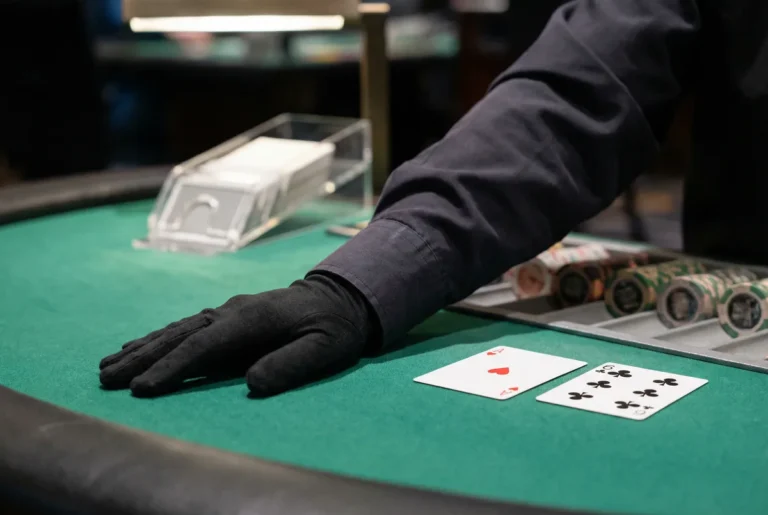
How the Dealer Hits Soft 17 Rule Increases the House Edge
The dealer hits soft 17 rule adds exactly 0.22 percent to the house edge. This guide breaks down the mechanics…