
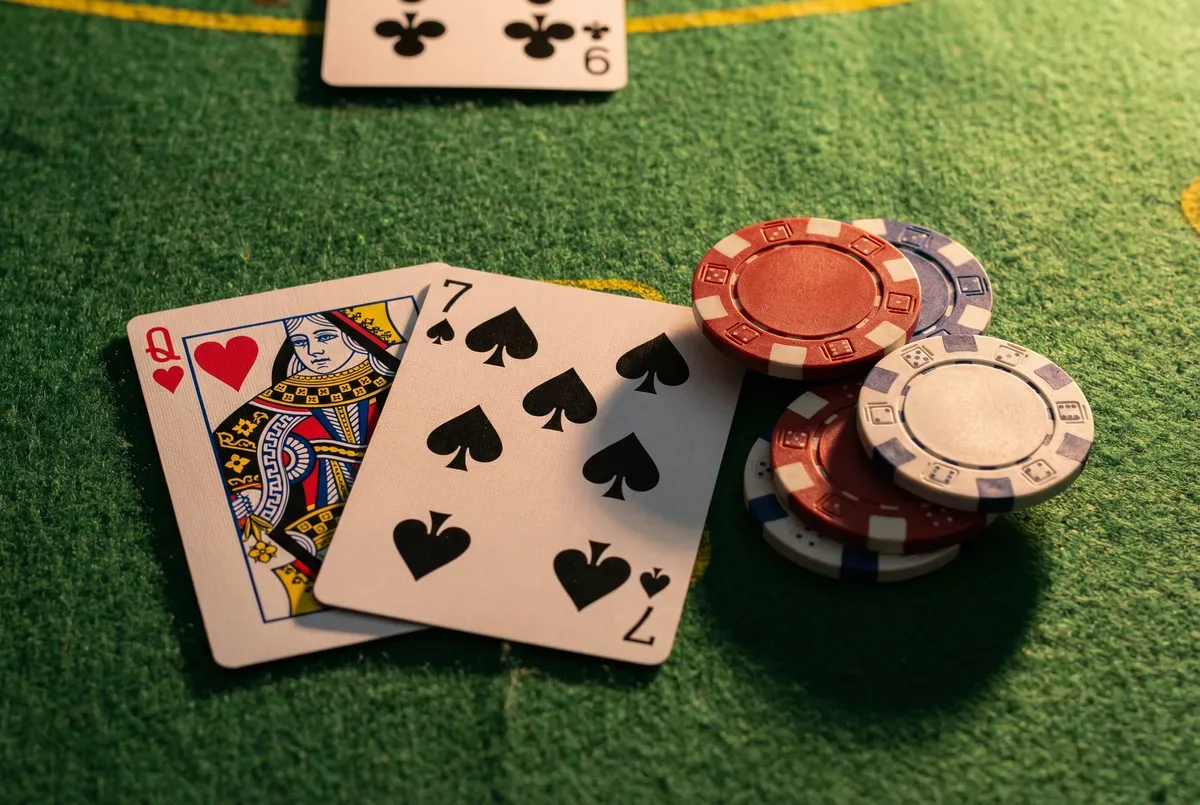
Protecting Your Winning Probability by Standing on Hard 17
- Why Standing on Hard 17 the Highest-EV Decision Among Stiff Hands Matters
- What Probabilities Govern Hard 17 Against Every Dealer Upcard?
- Whether There Any Situations Where Hitting Hard 17 Is Ever Correct?
- How Surrender Applies to Hard 17 Against a Dealer Ace?
- How to Make the Hard 17 Stand Automatic at a Live Table
Hard 17 is the standing threshold in blackjack for a precise mathematical reason: hitting hard 17 busts approximately 69 percent of the time, and the 31 percent of surviving hits that reach 18 through 21 do not produce enough EV improvement over standing to justify the bust frequency. At hard 16, hitting was better than standing by 6 cents per dollar. At hard 17, standing is better than hitting by a larger margin against every dealer upcard including the dealer 10, which motivated so many incorrect hits at hard 16. Hard 17 is not a borderline decision. It is a clear standing threshold, and the only question it raises is what to do when the dealer shows an Ace.
Golden Rule
The Hard 17 Rule
Stand on hard 17 against every dealer upcard. Always. The bust rate on hitting hard 17 is 69% the distribution of dealer-made hands does not improve enough on a successful hit to compensate. The single exception context: hard 17 against dealer Ace where surrender is available is worth evaluating.
Why Standing on Hard 17 the Highest-EV Decision Among Stiff Hands Matters
A stiff hand is any hard total between 12 and 16 totals where hitting risks bust but standing risks the dealer completing a higher total. Hard 17 is not technically a stiff hand because standing on 17 wins against dealer totals of 16 or less, not just against dealer busts. The dealer busts approximately 28 percent of the time overall; a player standing on 17 wins all of those outcomes, plus wins outright when the dealer makes a total of 16 or less after drawing. This creates a meaningfully higher expected value than any stiff-hand stand because 17 can push against dealer 17 and lose only to dealer 18 through 21, not to every dealer completed hand.
Among all standing decisions available to a player, hard 17 against weak dealer upcards (2 through 6) is among the most clearly correct the player holds 17 against a dealer who busts 35 to 42 percent of the time. The EV of standing hard 17 against dealer 6 is approximately -0.15 per dollar, meaning the player loses 15 cents per dollar wagered on average. Hitting hard 17 against dealer 6 has a significantly worse EV because the 69 percent bust rate overwhelms the additional hands that might reach 18 through 21. Even against the weakest dealer upcard, hitting hard 17 is the wrong play.
What Probabilities Govern Hard 17 Against Every Dealer Upcard?
The dealer’s completion rate rises with upcard strength: dealer 2 completes a hand of 17-21 approximately 65 percent of the time; dealer 10 completes 77 percent; dealer Ace completes 83 percent (with peek for blackjack). A player standing on 17 wins against any dealer bust, pushes against dealer 17, and loses to dealer 18 through 21. Against dealer Ace, the standing hard 17 EV is approximately -0.45 per dollar a significant negative, which is why hard 17 against Ace is the only hard 17 situation where surrender deserves evaluation.
Hard 17 Bust Rate (if hitting)
%
Dealer Bust Rate vs Hard 17 Stand
% average
Hard 17 Stand EV vs Dealer 6
per $1
Whether There Any Situations Where Hitting Hard 17 Is Ever Correct?
No. In standard multi-deck and single-deck blackjack, there is no dealer upcard against which hitting hard 17 produces better EV than standing. The 69 percent bust rate is simply too high. Even against dealer Ace where the standing EV of -0.45 is the most negative hard-17 stand available hitting produces an EV of approximately -0.52, substantially worse than standing. The only decision point that changes at dealer Ace is whether to surrender instead of standing: surrendering hard 17 against dealer Ace saves approximately 0.045 EV per dollar over standing where the table offers late surrender. Hitting does not enter the correct decision tree for hard 17 under any standard rule set.
The confusion between hard 17 and soft 17 drives many incorrect decisions. Soft 17 (Ace-6) is a hitting and sometimes a doubling hand the Ace can count as 1 if the new card creates a bust, so the downside risk is eliminated. Hard 17 has no such protection. A hit on hard 17 that draws a 5 produces 22 a bust. A hit that draws a 4 produces 21 a win. But the 69 percent frequency of the bust outcome makes the action a losing trade against every upcard. Soft 17 and hard 17 are different decisions, and confusing them costs EV on every occurrence of soft 17 where hitting was the correct choice.
Dealer Shows
Your Hand
Dealer shows Ace. You have hard 17 (9-8). Stand or surrender?
Hard 17 against dealer Ace: stand in most multi-deck games. Surrender is available at some tables and saves ~0.045 EV per dollar over standing. But in standard conditions where surrender is not available, stand is correct hitting hard 17 produces approximately -0.52 EV per dollar versus standing at -0.45. The dealer has a strong upcard, but hitting a 69% bust hand against it makes results worse, not better. Never hit hard 17.
How Surrender Applies to Hard 17 Against a Dealer Ace?
Hard 17 against dealer Ace is the one hard-17 situation where blackjack table rules create a meaningful decision branch. Where late surrender is available: surrender hard 17 against Ace. The EV of surrender is always -0.50 per dollar (half the bet lost). The EV of standing hard 17 against Ace is approximately -0.45. This means standing is marginally better than surrendering against Ace, by about 5 cents per dollar, and making the standard play to stand. However, some chart versions surrender hard 17 against Ace; verify which chart your rule set uses. In early surrender games (rare), surrendering hard 17 against Ace is clearly correct and the EV improvement is larger.
For all other dealer upcards (2 through 10), hard 17 surrender is never correct the standing EV is better than -0.50 against dealer 2 through 9, and approximately equal to or slightly better than -0.50 against dealer 10. Surrender is reserved for hard totals where standing is significantly worse than -0.50: hard 15 against dealer 10 (stand EV ~-0.54), hard 16 against dealer 9 through Ace. Hard 17 against dealer 2 through 10 does not clear the surrender threshold. Stand.
How to Make the Hard 17 Stand Automatic at a Live Table
Hard 17 should be the simplest automatic decision in your chart the answer is stand against every upcard, with a narrow exception for surrender against Ace at some tables. The practical execution sequence takes two seconds: see hard 17, confirm it is not soft 17 (check for Ace), check for surrender availability against Ace if relevant, stand. No further analysis required. Open the live lobby now and pick a table with visible rule indicators confirm whether surrender is offered before placing the first chip, then let hard 17 resolve itself automatically for the rest of the session with real money at stake. Set your session limit before you start.
Frequently Asked Questions
No. Hitting hard 17 busts 69% of the time. Standing hard 17 wins against all dealer busts (~28% average) and against dealer totals of 16 or less. The EV of hitting is worse than standing against every dealer upcard, including Ace. Against dealer Ace, surrender (where available) is worth evaluating, but hitting is never correct on hard 17.
Against dealer Ace, standing hard 17 has EV of approximately -0.45 per dollar; hitting produces approximately -0.52. Against dealer 6, standing hard 17 produces approximately -0.15; hitting is significantly worse. Across all upcards, the standing EV advantage over hitting ranges from approximately 7 cents per dollar (vs Ace) to larger margins against weaker upcards.
In most multi-deck late surrender games, no standing hard 17 against Ace has EV of approximately -0.45, marginally better than surrender at -0.50. Some chart variants do list surrender hard 17 vs Ace; always verify your specific rule set. In early surrender games, surrendering hard 17 against Ace is correct. Against all other dealer upcards, hard 17 is never a surrender candidate.
Before you test these plays at a real table, run them through our free blackjack simulator practice unlimited hands at zero cost until every move becomes automatic.
Use our free blackjack calculator to model the exact expected value for any rule combination or hand situation before you sit down.
Verify Your Table's Surrender Rules Before Every Session
Hard 17 strategy has one rule-dependent branch: surrender vs Ace. The live lobby shows every table rule before you sit. One minute of rules evaluation locks in the correct hard-17 decision for the entire session.
Blackjack Academy is an educational resource. All strategy is based on mathematical expectation. Always play within your means.
Learn More
Continue your education with these related lessons.
Why You Should Never Hit a 20 in Any Blackjack Game
Hard 20 wins 77% of the time and produces positive EV against every dealer upcard. Hitting hard 20 busts on…

The Real Numbers Reveal Why Fibonacci Betting Loses to Basic Strategy
The Fibonacci betting system changes how much you bet not what the house edge is. Over 100,000 simulated hands, it…
The Complete Guide to Pair Splitting Strategy
Pair splitting decisions separate disciplined players from the rest of the table. Master the always-split rules, the never-split traps, and…