

Making the Mathematically Correct Move Every Single Hand
The mathematically correct move in blackjack exists for every hand combination every player total against every dealer upcard. It was computed by running millions of simulations, calculating the expected value of every possible action, and selecting the one that loses least or wins most over time. The result is a blackjack strategy chart. The chart is not a suggestion. It is not a guide for typical situations. It applies identically to every combination it covers, every session, every dealer, every table. The only decision left to the player is whether to apply it and the cost of not applying it is quantified, predictable, and entirely avoidable.

One chart. Every hand. No exceptions. The mathematically correct play is not about what feels right in the moment it is the action that maximizes expected return across an infinite number of identical hands. You are not playing one hand. You are executing a policy.
The Core Principle
Expected Value: What It Means for Every Blackjack Decision
Expected value (EV) is the average outcome per dollar wagered on a specific decision across infinite repetitions. A hard 11 double against dealer 6 has a positive EV you expect to win more than your bet on average. A hard 16 stand against dealer 10 has a negative EV you expect to lose. The chart always selects the action with the highest EV: least negative when all options lose, most positive when multiple options can win. When you deviate from the chart, you are substituting a lower-EV action for the highest-EV action. The cost of that substitution is the EV gap between the two choices.
EV does not guarantee outcomes on any single hand that is variance. EV guarantees the direction of results over time. A player making all positive-EV decisions still loses sessions. A player making all negative-EV decisions still wins sessions. The difference emerges over hundreds of hands: the player following the chart converges toward the theoretical blackjack house edge. The player deviating converges toward a higher blackjack house edge. Both experience variance. Only one is operating at maximum efficiency.
How Basic Strategy Was Computed and Why It Is Definitive?
Basic strategy was first computed by Roger Baldwin, Wilbert Cantey, Herbert Maisel, and James McDermott in 1956, using hand calculation across millions of hand combinations. Ed Thorp refined it computationally in 1962 and published it in Beat the Dealer. Modern blackjack basic strategy is verified by computer simulation across billions of hands for every deck count and rule set combination. The chart is not an approximation it is the mathematically proven optimal action for each player total versus each dealer upcard under specified rules. No amount of player experience, pattern recognition, or table reading produces decisions that improve on the chart.
The chart varies slightly by deck count and rule set single-deck strategy differs from 6-deck on a specific set of double and split decisions. Within a given rule set, the chart is definitive. The most important single distinction: always check which chart matches your current game before your session. Using a 6-deck chart at a single-deck table leaves approximately 0.1 to 0.15 percent EV unclaimed on the hands where the charts diverge.
Dealer Shows
Your Hand
Dealer shows 6. You have soft 18 (Ace, 7). Double, stand, or hit?
Soft 18 against dealer 6: double down. The dealer busts approximately 42% of the time showing a 6. Doubling soft 18 against dealer 4, 5, and 6 is correct the Ace absorbs any overdraw and the dealer's weakness makes the extra wager EV-positive. Standing soft 18 here is a common error; it feels safe but leaves significant EV on the table. This is one of the most frequently underplayed doubles in recreational blackjack.
Why Chart Discipline Break Down at a Live Table?
Chart discipline breaks down at a live table for two reasons: emotional state and social pressure. Emotional state a losing streak, a streak of bust hands, a session where every double came up short creates a strong reflex to adjust strategy. The adjustment feels like adaptation. It is not. The chart is not responsive to previous outcomes because the deck has no memory. A hard 11 double against dealer 6 has identical EV on hand 1 and hand 80, regardless of what happened on hands 1 through 79. Adjusting the chart based on session history is the most common form of strategic error.
Social pressure operates differently: other players at the table who comment on splits, doubles, or hitting decisions. The player who splits 8s against a dealer 10 and both hands lose will hear from other players. The player who doubles 11 against a dealer 10 and draws a 2 will hear from other players. Neither outcome changes the EV of either decision. Chart discipline means executing the correct play regardless of table reaction not because of ego, but because the EV gap between chart and deviation compounds across every session where pressure overrides math.
Golden Rule
The One Rule That Eliminates All Deviation
Before every decision, state the action internally: “Double soft 18 versus 6.” “Hit hard 16 versus 10.” The internal verbalization engages chart recall and interrupts the emotional reflex. Apply this on every hand where deviation temptation is highest hard 16, 8-8 splits, soft 18 doubles. It adds zero time to the game. It eliminates the single most common source of strategy error.
How to Measure Whether You Are Actually Executing Correctly?
Self-measurement separates players who believe they execute correctly from players who actually do. After a free-play session, count deviation events any decision where you paused, changed your mind, or felt uncertain. A player with zero deviations across 100 hands is executing at chart level. A player with five deviations is not. The target is zero. Not near-zero zero. Any deviation above zero represents a known hand type where chart recall is not automatic and practice is needed. The measurement is not a judgment of the session it is a diagnostic of which cells in the chart are not yet automatic.
The most useful measurement interval is 200 consecutive free-play hands. Over 200 hands, all major hand categories appear hard 16 against dealer 7 through Ace appears 10 to 14 times, soft doubles appear 8 to 12 times, pair splits appear 4 to 8 times. A player who deviates once per 200 hands has identified one specific weak hand. A player who deviates five times per 200 hands has five. The repair is targeted: isolate each weak hand type, run 50 repetitions on that hand alone, retest. Repeat until the deviation count reaches zero.
How to Build the Automatic Chart Recall That Makes Every Hand Correct
Automatic chart execution is a skill built through deliberate repetition on the hardest hands, not through reviewing the full chart. The full chart has approximately 270 cells. Fewer than 20 of them require consistent practice to make automatic the hands where EV is highest, deviation frequency is highest, or emotional pressure is strongest. Hard 16 against dealer 7 through Ace. Soft 18 doubles against dealer 4, 5, and 6. Hard 11 doubles against dealer 9 and 10. 8-8 and 9-9 splits against strong dealer upcards. These hands, practiced until the response is instantaneous, account for the majority of deviation risk in a live session. Open a live table right now with real money on the line pick a $5 minimum game, commit to zero deviations for 30 hands, and watch how the hard-16 reflex competes with the chart you know is correct. Set your session limit before clicking in. Let the chart answer every question.
Frequently Asked Questions
Yes, for each specific hand combination under a given rule set. Basic strategy selects the action with the highest expected value for every player total against every dealer upcard. It does not guarantee winning any individual hand variance determines that. Over hundreds of hands, executing basic strategy without deviation converges toward the minimum possible house edge for your rule set.
Internal verbalization interrupts deviation reflexes. Before each decision, state the play internally "hit hard 16 versus 10" before executing. This activates chart recall and overrides the emotional signal. Practice the 15-20 highest-pressure hands in free play until the response is automatic. Deviations at a live table almost always occur on the same handful of hand types identify and eliminate those specifically.
Yes, by deck count and by rule set. Single-deck strategy differs from 6-deck on specific double and split decisions. H17 games require minor adjustments. Always confirm your table's deck count and dealer rule before using a chart using a 6-deck chart at a single-deck table costs approximately 0.1-0.15% EV on the divergent hands. Use the chart that matches the actual game.
Before you test these plays at a real table, run them through our free blackjack simulator practice unlimited hands at zero cost until every move becomes automatic.
Use our free blackjack calculator to model the exact expected value for any rule combination or hand situation before you sit down.
Test Your Chart Execution in Real Hands
The live lobby shows table rules before you sit. Pick the game, run the rules check, commit to zero deviations. The chart handles every decision your only job is executing it.
Blackjack Academy is an educational resource. All strategy is based on mathematical expectation. Always play within your means.
Learn More
Continue your education with these related lessons.
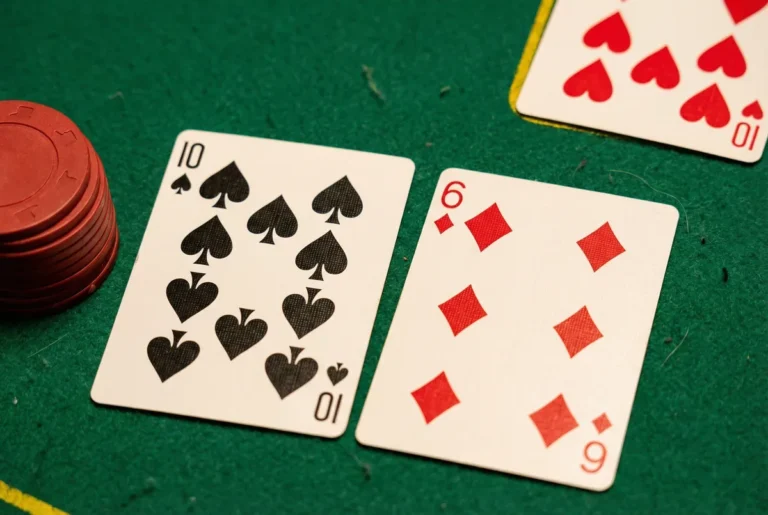
Why Hitting 16 Against a 10 Is Better Than Standing
Hard 16 against a dealer 10 is the most contested decision in basic strategy. Hitting feels like certain doom. The…
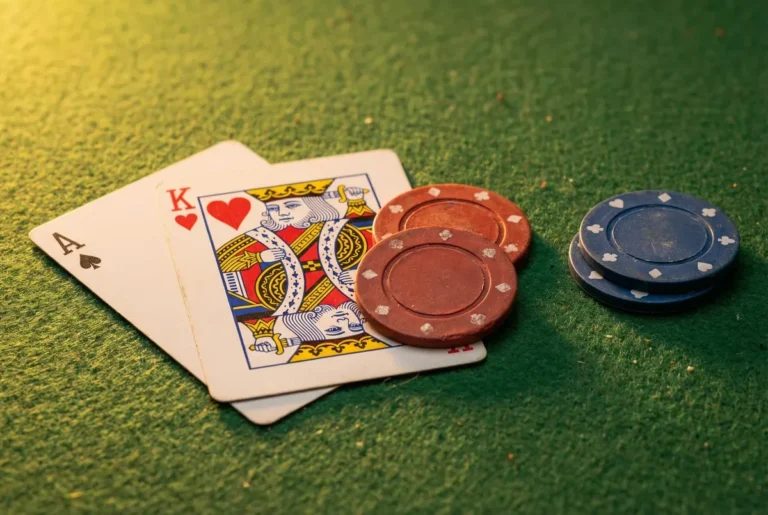
How Rule Liberalization Lowers the Casino’s Mathematical Edge
Every blackjack rule the casino adds or removes has a precise mathematical cost. Learn which rule liberalizations give the most…
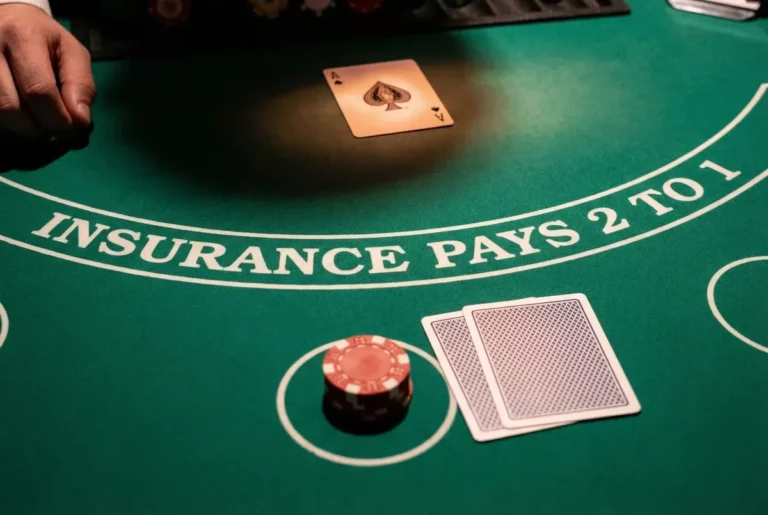
When to Never Take Insurance and When It Is Actually the Right Call
Insurance pays 2:1 but the dealer needs a 10-value hole card more than 33.3% of the time for it to…