

How to Find Casinos That Allow Resplitting Aces
Most players have never resplit aces at a casino table. The rule barely exists at most properties and that absence is not an oversight. Resplitting aces (RSA) reduces blackjack house edge by 0.06 percent in a 6-deck game. Casinos suppress it intentionally, the same way they move 3:2 tables to high-limit sections and scatter 6:5 games across tourist corridors. When one of your split aces receives another ace, RSA lets you split again instead of playing the hand as a hard 12. The players who know to ask about RSA before sitting, and know what it is worth in combination with other rules, are playing a different game than everyone else at the table.
- 6-Deck Standard (most casinos)RSA prohibited
- 6-Deck Premium or high-limitRSA sometimes offered
- Single-Deck 32 (rare): RSA most common
- Online live dealerCheck rules panel before first bet
- European BlackjackNo RSA one card per split ace only
Resplitting Aces Explained
Resplitting aces is the option to split a third time and sometimes a fourth when one of your already-split aces receives another ace as its first card. Standard blackjack rules allow you to split a pair of aces once, receiving exactly one additional card on each resulting hand. RSA extends that sequence: Ace-Ace splits to two hands, and if the first card on either hand is another ace, you split again. Some casino rules allow up to four total hands from successive ace-splits.
Casinos restrict RSA for the same reason they enforce the one-card-only rule on split aces both rules reduce player advantage. Without RSA, receiving a third ace on a split hand forces you to play Ace-Ace as a hard 12, a genuinely weak position. With RSA, that situation becomes a third high-value starting hand. The frequency is low you need three aces in sequence, which happens rarely but the cumulative edge reduction is real and measurable.
Dealer Shows
Your Hand
Dealer shows 6. You have a pair of aces. What do you do?
Always split aces against every dealer upcard without exception. Two hands each starting at 11 is the most powerful position in the game. Against dealer 6 which busts 42% of the time you are putting two strong hands against the dealer's weakest card. If RSA is in play and a split ace receives another ace, split again.
How Much the RSA Rule Reduces the House Edge: By the Numbers?
The RSA rule is worth approximately 0.06 percent in blackjack house edge reduction in a 6-deck game. That figure accumulates slowly because the rule is actionable only when a split ace receives another ace an event that occurs rarely relative to most other strategy decisions. A pair of aces appears roughly once every 220 hands. Of those, only a fraction produce a second ace on the split, making RSA directly applicable perhaps once in every few hundred hands at a busy table.
Comparing RSA to other rule variations puts it in proportion. DAS (Double After Split) is worth 0.14 percent more than twice RSA. The difference between dealer hitting soft 17 and standing on all 17s is 0.22 percent. The 3:2 versus 6:5 natural payout gap is 1.39 percent. RSA is the smallest individual rule improvement on this list, but it is additive. Two games otherwise identical where one has RSA and one does not: always choose RSA. Just never sacrifice DAS, deck count, or payout structure to get it.
Ask the pit boss or dealer directly before sitting down: “Does this game allow resplitting aces?” Most floor staff will confirm immediately. High-limit rooms and premium sections are your best targets they attract experienced players who read rules, so the casino differentiates with better conditions. Single-deck games that pay 3:2 are increasingly rare but tend to carry the most favorable splitting rules, including RSA. Online, look for Evolution Gaming or Pragmatic Play live dealer variants their rules panels are complete before the first bet is placed. Some operators list RSA explicitly; others omit it, meaning the rule is absent.
What Are the Other Splitting Rules to Evaluate at the Same Table?
At any table where you ask about RSA, three additional splitting rules determine the full value of your pairs strategy. First: does Double After Split apply? DAS allows doubling a hand created by splitting, which significantly increases the value of splits against weak dealer upcards. Without DAS, many split decisions that are correct with DAS become incorrect particularly pairs of 2s, 3s, and 4s against dealer 4 through 6. Second: how many times can non-ace pairs be resplit? Standard games allow four total hands from resplitting. Some games cap this at two or three, each restriction costing approximately 0.02 percent.
Third: is the one-card-only restriction on aces strict? In European games this is universal. Some older U.S. single-deck games permit additional draws after ace-splitting worth approximately 0.19 percent when allowed. Evaluate all four rules together: RSA, DAS, non-ace resplit count, and ace-draw restrictions. A game offering RSA and DAS versus a game with neither looks like a minor distinction on the surface. The combined edge difference is 0.20 percent more than any single rule on this list except the payout ratio and deck count.
Where to Find RSA Tables in Live Casinos and Online Lobbies?
At live casinos, RSA is typically not posted on the table felt. The felt lists minimum bet, natural payout, and sometimes insurance terms splitting rules usually require the rules card or a direct question. Ask before sitting: most dealers know their table’s rules. Pit bosses always do. Higher-limit sections of major casino floors $50 minimums and above are the environments most likely to offer RSA alongside DAS and S17 dealer rules. The economics make sense: the casino earns more per hand at higher limits and can afford favorable rule combinations to attract regulars who know the difference.
Online, the rules panel is the only reliable source. Open the game information section before placing any chip not after. Major live dealer platforms list their full splitting and doubling rules in the information tab. Filter by live dealer variants from providers known for complete rule disclosure. Note each game’s RSA status and build a short personal reference so you are not repeating the same research every session. Some operators carry both RSA and non-RSA variants of nominally identical table configurations the only way to tell them apart is the rules panel.
How to Put RSA Rules Into Practice at a Real Table
The best way to build the habit of reading splitting rules before every session is to do it under real conditions. Open the live lobby, pull up the first game you would normally play, and read the full rules panel before you deposit a single chip. Note whether RSA, DAS, and the resplit limit are listed. Real money is on every hand from the first deal, so set your session budget before you click in and know exactly what rules you are playing under before the first ace appears.
Frequently Asked Questions
Resplitting aces (RSA) means you can split again when one of your already-split aces receives another ace as its first card. Standard rules allow splitting aces once with one card per hand. RSA extends this to a second and sometimes third split. The rule reduces house edge by approximately 0.06% in a 6-deck game.
RSA reduces house edge by approximately 0.06% in a standard 6-deck game. It is smaller than DAS (0.14%), the H17 vs S17 rule (0.22%), or the 3:2 vs 6:5 payout difference (1.39%). RSA is worth taking when two tables are otherwise identical, but never sacrifice payout ratio, DAS, or deck count to get it.
At a live casino, ask the dealer or pit boss directly before sitting: "Does this table allow resplitting aces?" Most floor staff will know immediately. Online, open the game rules panel before placing any bet major live dealer platforms from providers like Evolution Gaming list their full splitting rules there. High-limit rooms at live casinos are most likely to include RSA as part of a favorable rule set.
Before you test these plays at a real table, run them through our free blackjack simulator practice unlimited hands at zero cost until every move becomes automatic.
Model Every Splitting Rule Combination Before You Sit
The calculator shows exact expected value for ace splits, DAS, and RSA combinations across any deck count and rule set.
Blackjack Academy is an educational resource. All strategy is based on mathematical expectation. Always play within your means.
Learn More
Continue your education with these related lessons.
Doubling Soft 13 Through 18 Against a Dealer 5 or 6
Most players double hard 10 and 11 without hesitation but miss the six soft doubles against a dealer 5 or…
Understanding the True Cost of 6 to 5 Blackjack
The 6:5 blackjack payout looks close to 3:2 until you run the numbers. A single rule change adds 1.39% to…
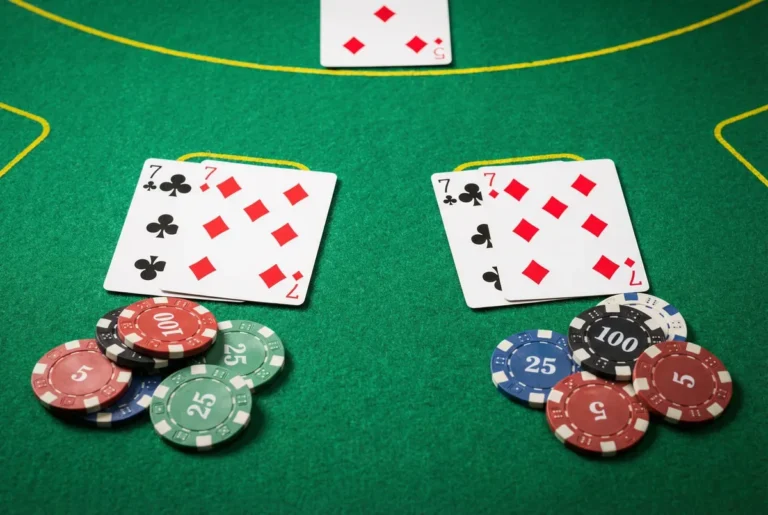
Attacking the Dealer by Splitting 7s Against a 2 Through 7
Splitting 7s against dealer 2 through 7 converts a losing hard 14 into two independent hands starting at 7. The…