
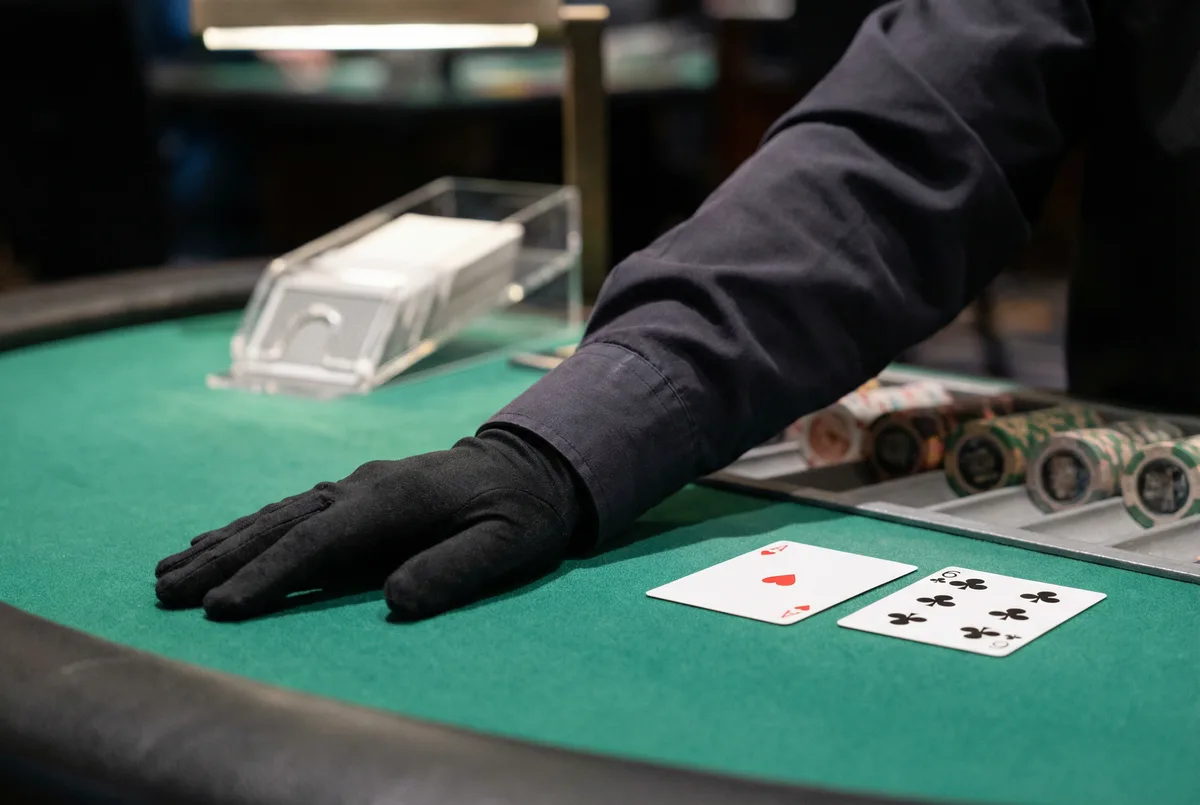
How the Dealer Hits Soft 17 Rule Increases the House Edge
Two blackjack tables sit side by side on the same casino floor. They look identical. Same felt, same shoe, same chip denominations.
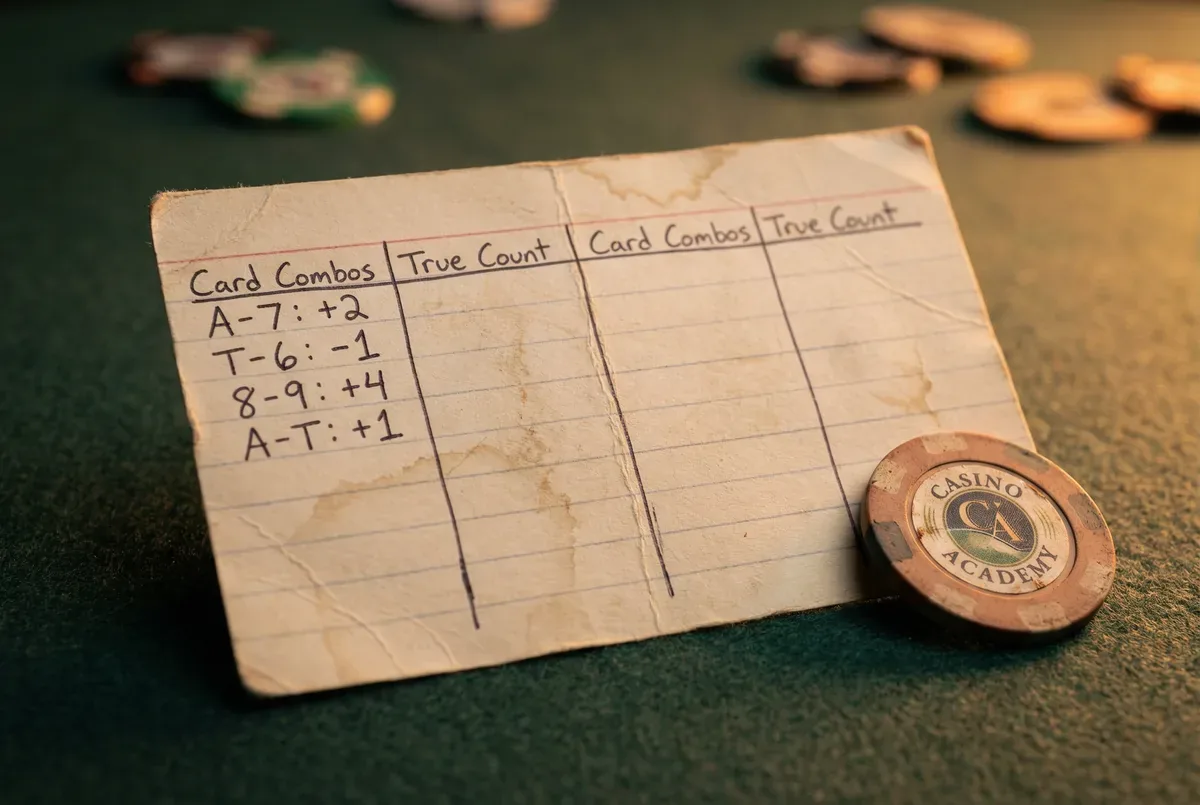
One table reads “Dealer must hit soft 17.” The other reads “Dealer stands on all 17s.” That single line of text represents a measurable, quantifiable difference in expected loss.
The H17 rule adds exactly 0.22 percent to the blackjack house edge and changes the correct blackjack basic strategy play on several specific hands. This guide explains why, and what to do about it.
Soft 17 Rule Explained
- H17 house edge increase+0.22%
- S17 base house edge (6-deck)~0.44%
- H17 house edge (6-deck)~0.66%
- Cost per 100 hands at $25~$5.50 more under H17
- Hands where strategy changes4 key decisions
A soft 17 is any hand totaling 17 that contains an Ace counted as 11. The most common example is Ace-6. Other examples include Ace-3-3, Ace-2-4, and Ace-4-2. The Ace makes the hand “soft” because it can be revalued to 1 without busting if the next card pushes the total over 21.
Under the S17 rule, the dealer reaches soft 17 and stops. Under H17, the dealer must draw another card.
Because the Ace provides a safety net, the dealer cannot bust on the first hit of soft 17. The worst outcome on that hit is converting to a hard total, then drawing again if needed. This mechanical advantage is precisely why H17 benefits the house.
Why Hitting Soft 17 Actually Increases the House Edge?
When the dealer stands on soft 17, that hand ends at 17. Any player holding 18 through 21 wins.
Under H17, the dealer gets another card. The possible outcomes of hitting soft 17 include drawing to 18, 19, 20, or 21, all of which beat a player holding 18 or 19. The dealer can also draw to a hard total and hit again, but the improved-hand outcomes outweigh the bust risk across the full probability distribution.
Specifically, when the dealer hits soft 17, the dealer improves to 18 through 21 on roughly 44 percent of draws and converts to a hard 17 or busts on the rest.
The net effect is that the dealer ends with a better final total more often than a player holding 18 would prefer. That shift in dealer final-hand distribution is the mechanical source of the 0.22 percent edge increase.
How Does Strategy Decisions That Change Under the H17 Rule?
S17 Correct Play
H17 Correct Play
- STAND
- DOUBLE (or hit)
The most impactful change is soft 18 against a dealer Ace. Under S17, standing on soft 18 is correct because the dealer is locked at 17 fairly often.
Under H17, the dealer is far more likely to reach 18, 19, or 20, which beats your 18. Doubling soft 18 against an Ace in H17 is the mathematically correct response: you extract more money from a borderline positive situation before the dealer gets another chance to improve.
What Is the Real Money Cost of the H17 Rule?
Extra edge from H17
%
Those numbers seem small in isolation. But most recreational players do not play one session.
They play 10, 20, or 50 sessions per year. At 80 hands per hour and $25 per hand, the H17 table costs roughly $352 more per year than the S17 table for a player who sits down for four hours per visit over 10 visits. That is a concrete, avoidable cost tied to a single rule printed on the felt.
The 0.22 percent figure also matters more than deck count for most casual players. The difference between a six-deck and an eight-deck shoe, holding all other rules constant, is roughly 0.02 percent. The H17 rule alone adds eleven times that amount. Players who spend energy searching for single-deck games while ignoring the H17 rule are optimizing the wrong variable.
How to Find S17 Tables and Adjust Your Strategy
The rule is always printed on the felt. The inscription reads either “Dealer must hit soft 17” or “Dealer stands on all 17s.” Read it before you sit.
In Las Vegas, Strip casinos predominantly use H17. Downtown Las Vegas and select off-Strip properties still offer S17 games, particularly at single and double-deck tables. If you travel specifically to play blackjack, the rule is worth factoring into your table selection alongside payout structure and surrender availability.
When you do find yourself at an H17 table, the strategy adjustments are small but important. Use an H17-specific strategy card.
The core changes are doubling soft 18 against an Ace, doubling hard 11 against an Ace, and confirming surrender availability on 15 versus an Ace.
Running the wrong chart at an H17 table means absorbing an additional penalty on top of the 0.22 percent rule cost.
If you want to pressure-test your H17 adjustments before committing real money at a live table, the live dealer room offers real game conditions where those real-money stakes apply, so enter with a defined session budget you can afford to lose entirely.
Frequently Asked Questions
The H17 rule adds exactly 0.22 percent to the house edge compared to a table where the dealer stands on all 17s. On a standard six-deck game with S17, the house edge with perfect basic strategy is approximately 0.44 percent. With H17, that rises to approximately 0.66 percent.
Yes, in a handful of specific spots. The most important changes are doubling soft 18 (Ace-7) against a dealer Ace instead of standing, and doubling hard 11 against a dealer Ace instead of hitting. You should use a strategy card specifically calibrated for H17 rules to capture these adjustments correctly.
For most players, yes. The difference between a six-deck and eight-deck shoe is roughly 0.02 percent, holding other rules constant. The H17 rule alone adds 0.22 percent, which is eleven times larger. Choosing an S17 table over an H17 table is a more impactful decision than chasing a game with fewer decks.
Before you test these plays at a real table, run them through our free blackjack simulator practice unlimited hands at zero cost until every move becomes automatic.
Know Your Table Rules Before You Bet
The H17 rule is printed on the felt. Read it, use the right strategy chart, and know your exact expected cost before your first hand.
Blackjack Academy is an educational resource. All strategy content is based on mathematical expectation. Gambling involves real financial risk. Always set a session budget before play and never wager more than you can afford to lose.
Learn More
Continue your education with these related lessons.
The Bust Probability of Every Dealer Upcard
Dealer bust percentages for every upcard 2 through Ace exact numbers, what drives them, and how they determine every stand/hit/double…
How Basic Strategy Reduces Your Long Term Losses
Basic strategy reduces the house edge from 2-4% (typical recreational player) to 0.4-0.5% (optimal). The gap is worth approximately $30-70…
Why Professional Players Never Split 10s or Face Cards
A hard 20 wins roughly 85% of hands. Splitting that into two 10-value starts costs you hundreds in expected value.…