

Hitting 12 Through 16 Against a Dealer 7 Through Ace
Stiff hands against a strong dealer upcard represent the most uncomfortable decisions in blackjack. Your hand totals 12, 13, 14, 15, or 16. The dealer shows a 7, 8, 9, 10, or Ace. Every instinct tells you to stand and hope for a dealer bust.
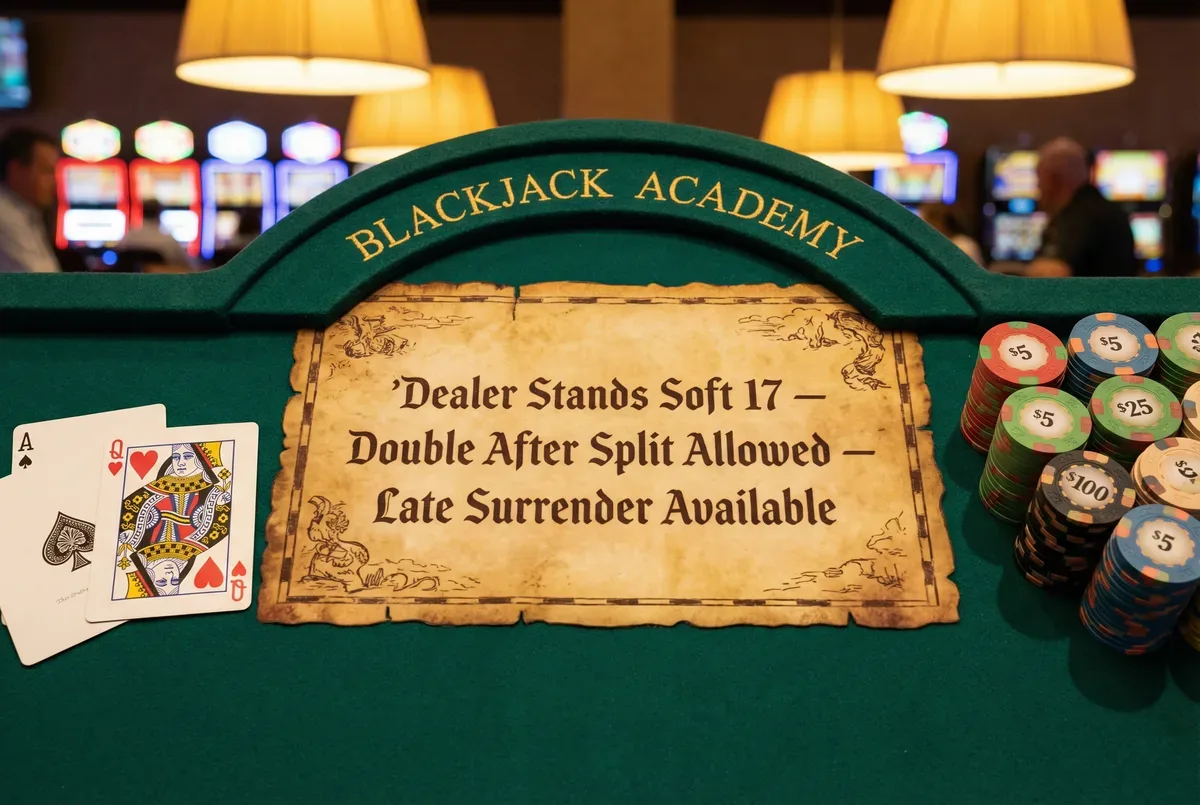
That instinct is wrong. Against strong upcards, dealers complete their hand far more often than they bust. Basic strategy demands you hit, accept the risk of busting, and take the mathematically superior path. This guide explains why, card by card.
Why Dealer Bust Rates Change Everything
- Dealer 2Busts 35% of the time
- Dealer 7Busts 26% of the time
- Dealer 8Busts 24% of the time
- Dealer 9Busts 23% of the time
- Dealer 10Busts 23% of the time
- Dealer AceBusts 17% of the time
Against low upcards (2 through 6), dealers bust between 35% and 42% of the time. That is why you stand on stiff hands in those spots. You are waiting for the dealer to self-destruct.
Against a 7 through Ace, that logic collapses. The dealer completes a hand 74% to 83% of the time. Standing and waiting simply loses more often than hitting.
The shift from a dealer 6 to a dealer 7 is the single biggest pivot point on the blackjack strategy chart. One pip higher on that upcard moves the dealer from bust-prone to dangerous. Your stiff hand strategy must flip with it. Recognizing this boundary is the first discipline every intermediate player needs to internalize.
What Hands Must Hit Against Strong Upcards?
Your Hand
Correct Play vs 7-Ace
- Hit vs all (7 through Ace)
- Hard 13
Hard 12 through 15 are straightforward against strong upcards. You hit every time, no exceptions. These hands are weak enough that improving them is worth the bust risk. A 12 needs only a 2 through 9 to survive. A 15 needs only a 2 through 6 for a decent total. The math favors drawing a card decisively.
What Is Hard 16 vs Dealer 10?
Common Myth
“You should stand on 16 vs a dealer 10 to avoid busting”
Busting with 16 feels like your fault. Standing feels passive and safe. Players assume the dealer might bust.
The Reality
Hitting hard 16 vs dealer 10 produces slightly better EV than standing.
Standing on 16 vs 10 loses roughly 54 cents per dollar. Hitting loses roughly 53 cents. The edge is thin but real. Surrender loses only 50 cents, making it the best option when available.
Hard 16 against a dealer 10 is the one situation where the EV difference between hitting and standing narrows to almost nothing. Both plays lose more than half the time. Hitting is marginally better by about one cent per dollar wagered. That margin compounds over thousands of hands into real money.
Surrender is the strongest play here if the casino offers it. Late surrender on hard 16 vs a dealer 10 or Ace recovers half your bet against a hand you will lose most of the time anyway. Always check blackjack table rules before sitting down. If surrender is off the table, hit.
How Hand Composition Affects the 16 vs 10 Decision?
Most blackjack basic blackjack strategy charts treat hard 16 as a single decision. Composition-dependent strategy adds one nuance. A two-card 16 (such as 10-6 or 9-7) hits against a dealer 10.
A three-card 16 containing a small card (such as 10-3-3 or 7-6-3) may shift toward standing. The reason is card removal. Small cards already in your hand are less likely to bust you, changing the deck composition slightly in your favor.
This is a single-deck refinement. In a six-deck shoe, composition-dependent plays on 16 provide negligible benefit. Learn the basic rule first: hit hard 16 vs dealer 10. If you play single-deck games regularly, the three-card exception is worth adding to your repertoire. Do not overcomplicate multi-deck decisions with it.
Executing Stiff-Hand Hits Without Hesitation
The psychological barrier to hitting stiff hands is real. Busting feels immediate and visible. The dealer completing their hand after you stand feels like bad luck rather than a bad decision. Neither feeling is mathematically meaningful. What matters is expected value across repeated decisions, not the result of a single hand.
Shifting your mental model helps. Think of hitting 15 vs a dealer 9 not as risking your bet on this hand but as making the correct play in a recurring situation. You will bust often.
That is built into the math. The gains come from the hands where you draw a 3, 4, or 5 and reach 18, 19, or 20.
Those wins offset the busts and produce better returns than standing passively. If you want to practice these decisions against real-time pressure, try the live blackjack tables where real money is at stake and every stiff-hand call costs or earns immediately.
Frequently Asked Questions
No. Hard 16 against a dealer 7 is a clear hit under basic strategy. The dealer completes their hand roughly 74% of the time showing a 7. Standing gives the dealer a free win most of the time. Hit every time here without exception.
Hit hard 15 against a dealer Ace. The Ace gives dealers their strongest starting position and the lowest bust rate at 17%. Standing on 15 here produces worse expected value than drawing. If late surrender is available, surrendering 15 vs Ace is even better than hitting.
Not in any practical way. The three-card 16 vs dealer 10 exception produces a meaningful gain only in single-deck games where card removal significantly shifts deck composition. In a six-deck shoe, always follow the standard basic strategy rule: hit hard 16 vs dealer 10.
Before you test these plays at a real table, run them through our free blackjack simulator practice unlimited hands at zero cost until every move becomes automatic.
Mathematical Risk Warning
Blackjack basic strategy reduces the house edge but does not eliminate it. All casino games carry a built-in mathematical advantage for the house. Even perfect strategy results in long-term losses over sufficient sample sizes. Never wager money you cannot afford to lose.
This site provides educational content only. Gambling involves financial risk. Play responsibly.
Learn More
Continue your education with these related lessons.

Winning More Money with 3 to 2 Payouts vs Even Money
Taking even money when you have a natural and the dealer shows an Ace feels safe but it costs you…
Soft 19 Strategy for Doubling Down Against a Dealer 6
Soft 19 (Ace-8) against a dealer 6 is a doubling hand in single-deck play and a marginal case in multi-deck.…
Why Hard vs Soft Hands in Blackjack Changes Every Single Decision
Hard vs. soft hand definitions: why a soft hand can't bust on one draw, how the ace changes value, when…