
Best Times to Double Down on Hard 10 Against 2 Through 9
Hard 10 is the second-strongest doubling hand in blackjack, and most players leave significant expected value on the table by hesitating. Against dealer upcards 2 through 9, doubling is the mathematically correct move every time. The 30.8% chance of landing a 10-value card and reaching 21 makes this one of the clearest decisions in the entire blackjack strategy chart.
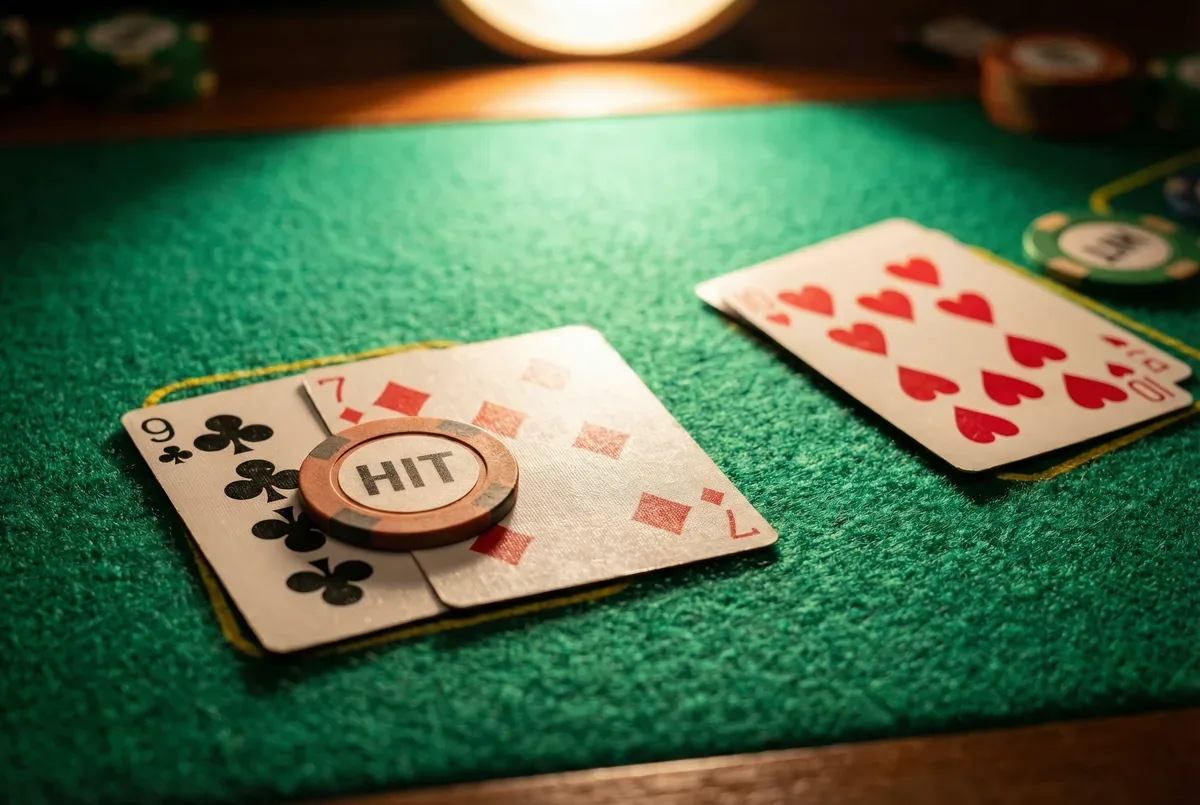
Players who hit instead of doubling in these spots are choosing a lower-return path without knowing it. Understanding the numbers behind hard 10 removes the hesitation and turns a routine hand into a reliable source of positive expected value.
Why Hard 10 Is Such a Strong Hand to Double
Hard 10 arrives most often as combinations like 6+4 or 7+3. The defining characteristic is that it cannot bust on a single card. The highest card in the deck adds 10 to 10, producing exactly 20. That is not a bust. The one-card constraint carries zero bust risk on hard 10.
Thirty percent of the deck is 10-value. That means your single draw has roughly a one-in-three chance of reaching 20, and a further chance of landing a 9 for 19 or an 8 for 18. All of these are strong standing totals. The probability distribution strongly favors a competitive final hand.
If an ace arrives on a hard 10, the result is a soft 21, which counts as 21. That is the best possible non-blackjack hand. So the worst-case card (the ace) on hard 10 actually produces an exceptional outcome. This is one critical difference between hard 10 and hard 11.
- 10-value cards in a standard deck30.8%
- Probability of reaching 20 on the double30.8%
- Ace on hard 10 producesSoft 21 (21 total)
- Hard 10 vs dealer 5 EV (double)+0.55
- Hard 10 vs dealer 5 EV (hit)+0.33
- Hard 10 vs dealer 9 EV (double)+0.18
- Hard 10 vs dealer 9 EV (hit)+0.16
- Dealer bust rate with upcard 542%
What Is the Correct Basic Strategy for Hard 10?
In a standard six-deck shoe game, double hard 10 against dealer upcards 2 through 9. That is the complete rule for this hand in the most common casino format. Against dealer 10 or ace, the correct play is to hit, not double.
The dealer 10 and ace exceptions exist because those upcards are too strong to justify doubling. When a dealer shows a 10, there is a 30.8% probability of an immediate 20 in the hole. When the dealer shows an ace, the implied threat of blackjack and the dealer’s high probability of reaching a strong total both cut into the doubling edge.
Against upcards 2 and 3, some players feel uneasy because those look like weak dealer cards that the dealer might easily survive. The numbers disagree. Dealer bust rates for 2 and 3 are 35% and 37% respectively. Combined with your strong shot at 20, doubling hard 10 vs 2 or 3 still carries a meaningful positive expected value.
Dealer Shows
Your Hand
You hold hard 10 (6 and 4) against a dealer 7. What is the correct play?
Double without hesitation. The 7 is weaker than it looks. Combined with your 30.8% chance of reaching 20 and no bust risk on the draw, the double produces materially more expected value than hitting. Commit the second bet.
Why You Hit Hard 10 Against a Dealer 10 or Ace?
The doubling advantage depends on the gap between your likely final total and the dealer’s expected total. Against a dealer 10 or ace, that gap collapses. The dealer is statistically likely to reach a strong total, and the one card you receive must do more heavy lifting than it reliably can.
Against a dealer 10, expected value on the double drops to near zero or negative in many shoe configurations. You still hit because the hand has positive value, but putting a second bet out when the dealer holds that much implied strength does not increase your return. It reduces it by committing more money to an unfavorable distribution.
How Do You Apply This Knowledge at the Real Table?
Against a dealer ace, the insurance threat compounds the issue. The dealer’s probability of reaching 21 or a standing total of 17 through 21 is high. Hard 10 vs ace is a hand where you hit once and take the result. There is no doubling benefit to capture under these conditions.
Common Myth
“You should never double hard 10 against a dealer 2 or 3 because those are tricky cards the dealer survives.”
Players see low dealer upcards like 2 and 3 as deceptively difficult. They know the dealer must draw multiple times and fear the dealer will eventually reach 17 through 21 without busting.
The Reality
Dealer bust rates for upcard 2 is 35% and for upcard 3 is 37%. Combined with your 30.8% chance of reaching 20, doubling hard 10 vs 2 or 3 still produces positive expected value well above hitting.
Doubling hard 10 vs dealer 3: approximately +0.37 per unit. Hitting: approximately +0.23 per unit. The double wins significantly more over time. Low dealer upcards are player-favorable, not traps.
Executing Hard 10 Doubles at a Live Table
Hard 11 doubles against dealer upcards 2 through 10, and in many rule sets against the ace as well. Hard 10 only doubles against 2 through 9. The difference comes from the ace interaction. When you hold hard 11 and receive an ace, the result is a soft 12, which plays forward from there.
When you hold hard 10 and receive an ace, the result is a soft 21, which is 21. That sounds better, and it is in isolation. But the fundamental difference is that hard 11 starts one point higher. Against a dealer 10, that one extra point translates into enough additional expected value to make doubling correct on hard 11 but not on hard 10.
The practical takeaway is simple. Double hard 11 against 2 through 10. Double hard 10 against 2 through 9. Against dealer 10 or ace with hard 10, hit. This distinction is worth memorizing because both hands appear frequently and the correct move changes based on that single upcard threshold.
Practicing these decisions under pressure matters more than studying them at the kitchen table. If you want to lock in the hard 10 double reflex with real money consequences, play a live dealer session where your bet is on the line and treat every hard 10 vs 2 through 9 as a no-hesitation double. Real money amplifies the learning, but always set a firm session limit before you sit down.
Frequently Asked Questions
Double hard 10 against dealer upcards 2 through 9 in a standard six-deck shoe game. Against a dealer 10 or ace, hit instead. The dealer's strength with those two upcards reduces the doubling edge below the threshold where a second bet pays off. The rule is consistent across S17 and H17 shoe games for upcards 2 through 9.
An ace on a hard 10 produces a soft 21, which counts as 21. It is the best possible non-blackjack result you can achieve on the double. This is one reason hard 10 is such a reliable doubling hand: even the card that would hurt most other hands delivers an excellent outcome here.
Hard 11 starts one point higher, which shifts the expected value calculation enough to make doubling correct against a dealer 10. Hard 10 against a dealer 10 produces a near-zero or slightly negative doubling EV in a six-deck shoe, making hitting the correct play. The one-point difference between the two hands changes the strategy at that specific upcard threshold.
Before you test these plays at a real table, run them through our free blackjack simulator practice unlimited hands at zero cost until every move becomes automatic.
Double Hard 10 Against 2 Through 9 Every Time
Verify every correct doubling situation with the Blackjack Calculator before your next session.
Blackjack Academy is an educational resource. All strategy figures are based on mathematical expectation and assume correct basic strategy play. Always set a session limit before wagering real money.
Learn More
Continue your education with these related lessons.
Why You Always Improve an Ace 6 by Hitting Soft 17
Soft 17 (Ace-6) is the one hand where staying put always leaves money on the table. Hitting or doubling produces…
Why Basic Strategy Is Not Intuitive
The three counter-intuitive moves that beginners resist hitting 12 vs dealer 3, doubling A-8 vs 6, splitting 8s vs 10…
How to Handle Soft Hands Correctly in Every Situation
Soft hands are the most misplayed category in blackjack. From soft 13 to soft 21, learn exactly when to hit,…