
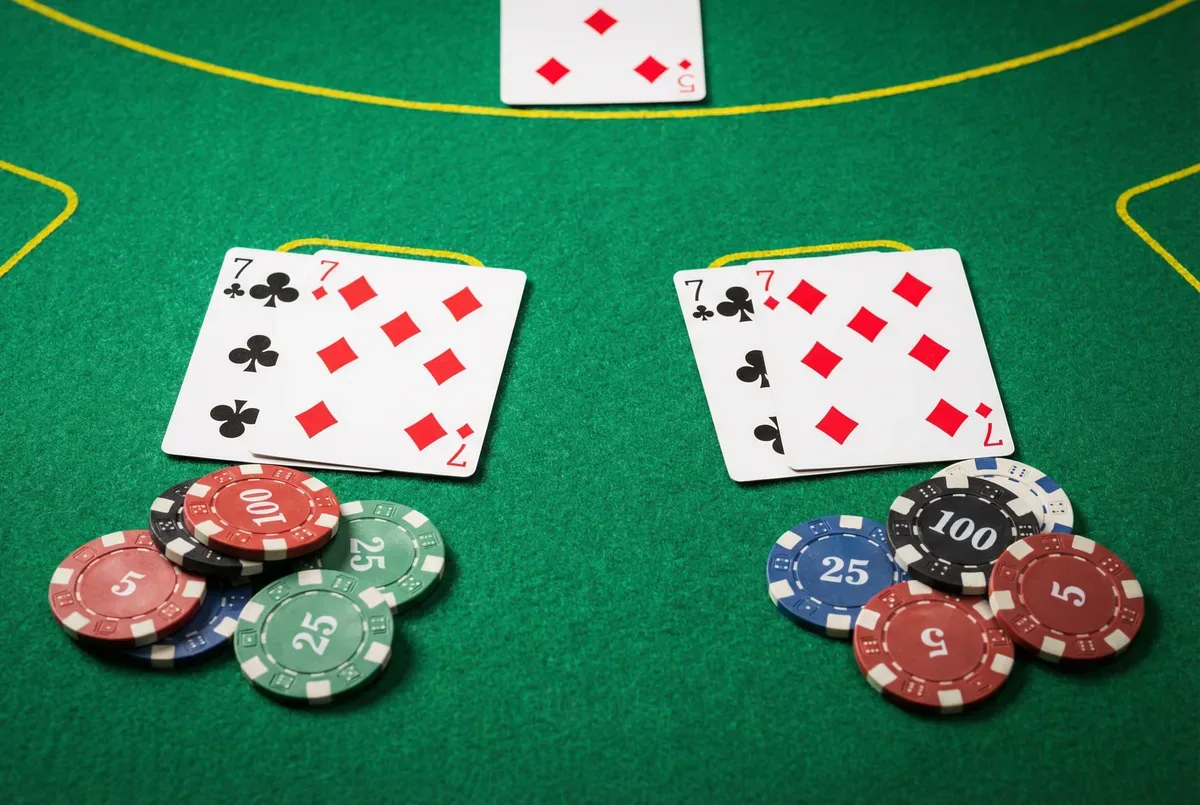
Attacking the Dealer by Splitting 7s Against a 2 Through 7
A pair of 7s is hard 14 one of the least desirable hard totals in blackjack basic strategy. Standing on 14 loses to every dealer completed hand of 15 or above. Hitting 14 busts on every card above 7. Neither option is good. The split changes the equation: two independent hands starting at 7, each with the possibility of drawing a 10 for 17, a face card for strong totals, or doubling eligible totals of 9, 10, or 11. Against a dealer 2 through 7 where dealer bust probability ranges from 35 to 42 percent two hands starting at 7 collect the dealer’s weakness twice. Splitting is the mathematically correct play, and the EV improvement over playing hard 14 is real across every eligible upcard.
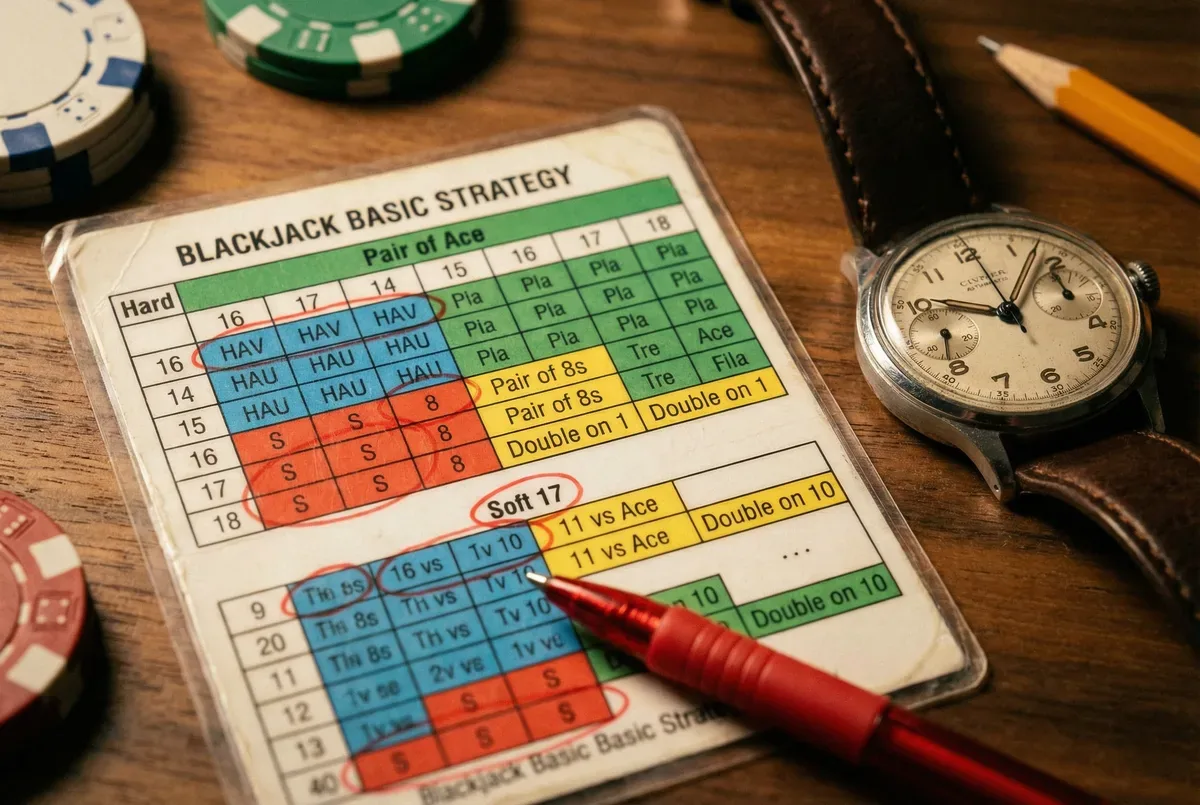
| Dealer Upcard | Correct Action | EV (Split) | EV (Best Alternative) |
|---|---|---|---|
| Dealer 2 | Split | ||
| Dealer 3 | Split | ||
| Dealer 4 | Split | ||
| Dealer 5 | Split | ||
| Dealer 6 | Split | ||
| Dealer 7 | Split | ||
| Dealer 8 | Hit | ||
| Dealer 9 | Hit | ||
| Dealer 10 | Hit | ||
| Dealer A | Hit |
Why Splitting 7s Against Dealer 2 Through 7 Beats Hard 14
Hard 14 has no good outcomes when standing the dealer must bust for the player to win, and dealer bust rates against upcards 2 through 7 range from 35 to 42 percent. Hitting hard 14 is worse: bust probability on hitting 14 is 56 percent. The player is trapped between two negative EV options. Splitting converts both into new starting hands of 7, each with access to the full probability distribution of subsequent draws. A 7 followed by a 10 produces hard 17 already better than the original 14. A 7 followed by a 4 produces 11 a potential double. A 7 followed by a 7 produces another pair a potential re-split. The starting value of 7 is significantly more flexible than the fixed value of hard 14.
The dealer’s upcard defines the splitting threshold. Against dealer 2 through 7, dealer bust probability is high enough that two independent 7-starting hands collect the bust equity twice. Against dealer 8 through Ace, the dealer’s completion rate rises above the point where splitting 7s produces better EV than hitting hard 14. The line is not arbitrary: it falls precisely at dealer 7, where the split EV is -0.06 versus hitting at -0.21. Against dealer 8, the split EV drops to -0.40 versus hitting at -0.34 the first upcard where hitting is the correct play.
What Is the EV Numbers for Splitting 7-7 Across Each Dealer Upcard?
The EV of splitting 7-7 ranges from -0.01 against dealer 6 (closest to break-even of any 7-7 split situation) to -0.19 against dealer 2. Against dealer 7, split EV is -0.06 a hand where both player hands starting at 7 frequently push with the dealer’s likely completed 17. Against dealer 8, splitting drops to -0.40 because dealer 8 completes to 18, 19, or 20 frequently, and two hands starting at 7 often complete to 17 or less losing. The practical pattern: the weaker the dealer upcard, the more the split beats hitting hard 14, and the more the split is worth executing.
Dealer Shows
Your Hand
Dealer shows 5. You have a pair of 7s (hard 14). Split or hit?
Split 7-7 against dealer 5. The dealer busts approximately 42% of the time splitting converts one losing hard 14 into two independent hands that collect that bust equity twice. Each hand starting at 7 can reach 17-21, can produce a double-eligible total, or can catch a strong card. The EV of splitting (-0.04) substantially outperforms hitting (-0.21). Against dealer 2 through 7, always split the 7s.
When to Hit 7-7 Instead of Splitting?
Hit 7-7 against dealer 8 through Ace. Against dealer 8, the dealer completes a hand of 18 to 21 approximately 74 percent of the time. Two hands starting at 7 against a strong dealer produce two potential losses rather than one the split amplifies the loss rather than the gain. Against dealer 9 through Ace, the split EV is substantially worse than hitting, and hitting hard 14 against these upcards is simply the least bad option available. Never split 7s into a strong dealer upcard and expect to recover equity. The split is only correct when the dealer is more likely to fail than succeed.
The surrender option applies to 7-7 against dealer 8 through Ace where available. Hard 14 against dealer 10 produces a hit EV of approximately -0.54 worse than surrender’s -0.50. Surrendering hard 14 against dealer 10 is therefore the best available play where late surrender is offered. Against dealer 8 and 9, hitting produces better EV than surrendering. Confirm table surrender availability before your first hand to apply the correct decision on 7-7 against strong upcards.
How the 7-7 Decision Changes in Single-Deck and Rule Variations?
In single-deck, the 7-7 split range is the same against dealer 2 through 7 split but the EV values are slightly more favorable because the deck composition effect amplifies the benefit. No-DAS rule sets reduce the split’s attractiveness slightly because doubling after split is not available, removing the potential for a doubled 11 from a 7 + 4 draw. In practice, 7-7 split decisions in no-DAS games remain correct against dealer 2 through 7 because the primary benefit comes from hitting, not doubling. The split range does not change in no-DAS configurations.
Re-splitting 7s splitting a third 7 if one of the split hands draws another 7 is available at most tables that allow resplitting. Re-split 7s against dealer 2 through 7 if the table allows it. The EV benefit is marginal but positive: a third 7 against a weak dealer is still better than hard 14. Confirm the table’s resplit rule during pre-session evaluation check the felt or ask the dealer before the first hand.
How to Execute 7-7 Splits Correctly at a Live Table
The 7-7 split executes cleanly with a two-step mental check: dealer 2 through 7 split; dealer 8 through Ace hit, and evaluate surrender against 10. No further analysis needed during play. The only preparation required is confirming surrender availability before the session. Open the live lobby before placing any chips, verify the dealer rule and surrender availability in the game info panel, then commit to executing 7-7 splits automatically against every eligible dealer upcard with real money in play. Set your session budget first.
- Split rangeDealer 2 through 7
- Hit rangeDealer 8 through Ace
- SurrenderHard 14 vs dealer 10 (where available)
- Re-splitAvailable at most tables resplit 7s vs dealer 2-7
- No-DAS impactMinimal split range unchanged
- Single-deckSame range, slightly higher EV values
Frequently Asked Questions
Split 7-7 against dealer 2 through 7. The dealer bust probability is high enough (35-42%) that two hands starting at 7 produce better EV than playing hard 14. Hit 7-7 against dealer 8 through Ace the dealer's stronger completion rate makes splitting two losing hands worse than hitting one. Against dealer 10, surrender hard 14 where available.
Yes. Split 7-7 against dealer 7. The EV of splitting (-0.06) substantially outperforms hitting hard 14 (-0.21). Against dealer 7, both player hands starting at 7 frequently reach hard 17 which pushes against the dealer's likely 17. The split is correct despite the dealer 7 being a moderately strong upcard.
The split range stays the same split against dealer 2 through 7. No-DAS removes the ability to double after split, which reduces split EV slightly because the 7 + 4 = 11 double opportunity is lost. But the primary benefit of the split (two independent hands against a bust-prone dealer) is unaffected. The correct action does not change in no-DAS configurations.
Before you test these plays at a real table, run them through our free blackjack simulator practice unlimited hands at zero cost until every move becomes automatic.
Use our free blackjack calculator to model the exact expected value for any rule combination or hand situation before you sit down.
Verify Surrender Rules Before Your First 7-7 Hand
Hard 14 versus dealer 10 should be surrendered where available the live lobby shows every table rule before you sit. Check once, apply correctly all session.
Blackjack Academy is an educational resource. All strategy is based on mathematical expectation. Always play within your means.
Learn More
Continue your education with these related lessons.
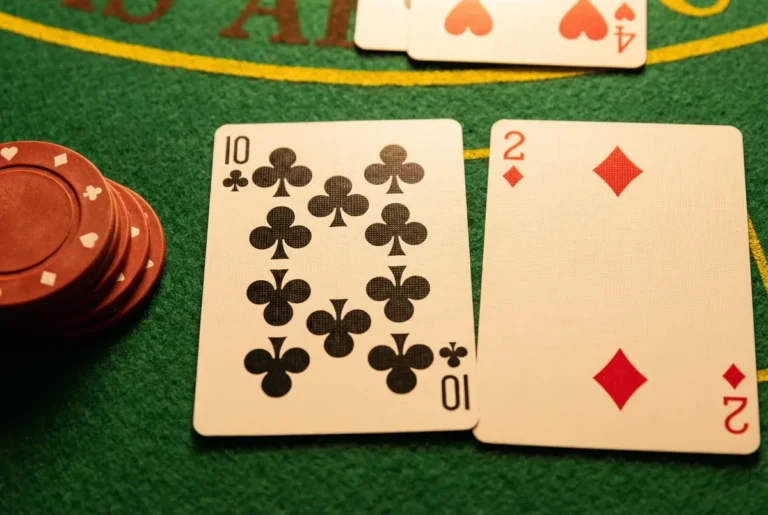
Why Hard 12 Is the Dangerous Exception to Every Stiff Hand Rule
Hard 12 breaks the stiff hand rule. Here is exactly when to hit, when to stand, and why dealer 2…

Table Rules Checklist for Finding the Best Blackjack Games
Not every blackjack table is equal. A six-point rules checklist payout ratio, dealer soft 17, deck count, DAS, surrender, and…
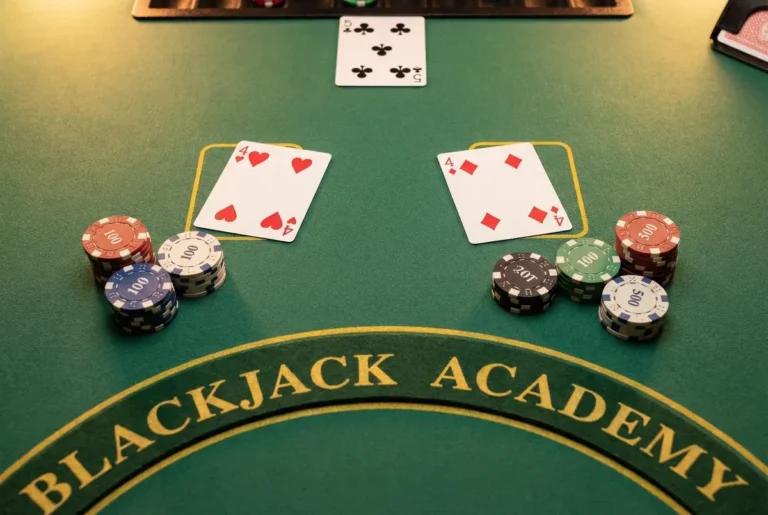
How Much the No Double After Split Rule Costs You
Playing without Double After Split costs 0.14% of your expected edge but the real damage comes from not adjusting your…