
The Hidden Truth Behind the Dealer Hole Card and Face Down Protocols
I remember the first time I played blackjack outside the United States. It was a table in London, and I split my Aces against a dealer showing a 10. The dealer took my extra bet, dealt one card to each Ace, then flipped over a natural blackjack. I lost both wagers. In America, the dealer would have checked the hole card before I ever had the chance to split. That one rule difference, peek versus no-peek, cost me $50 in about four seconds. The hole card protocol defines how much risk you take on every double and split decision, and most players never ask which version their table uses.
What the Hole Card Is
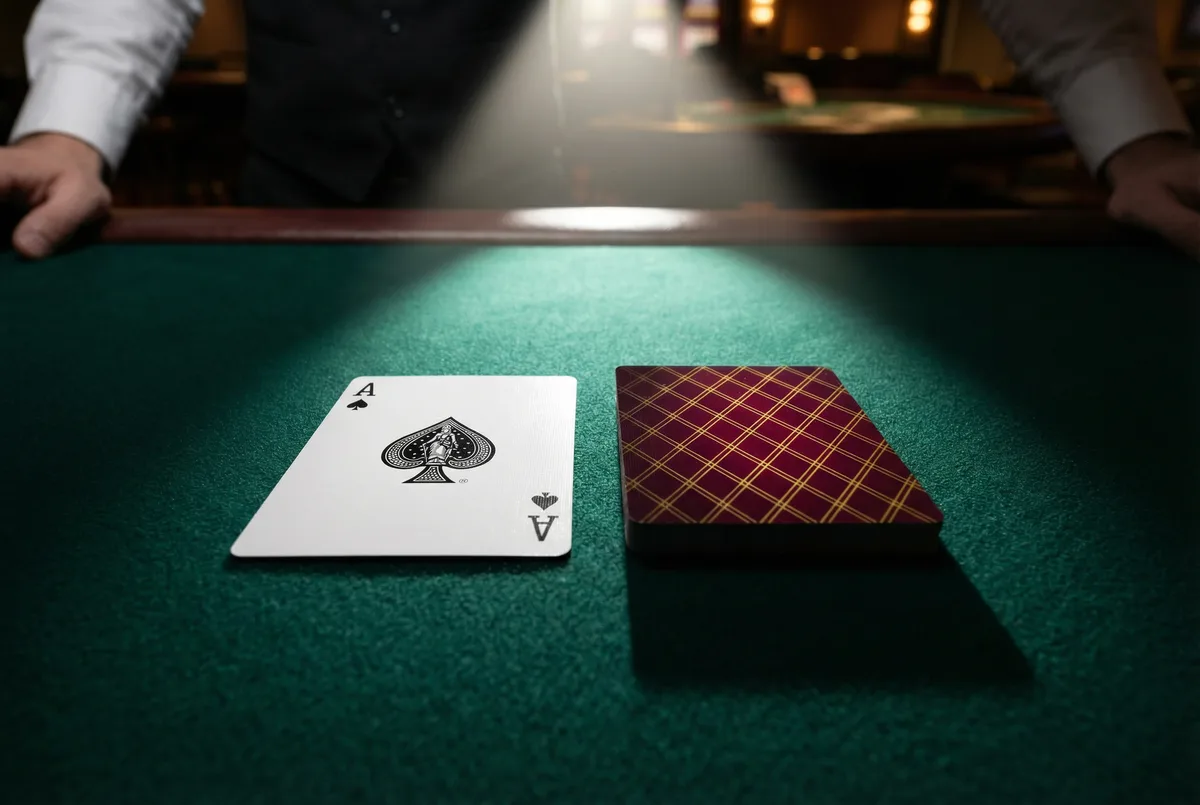
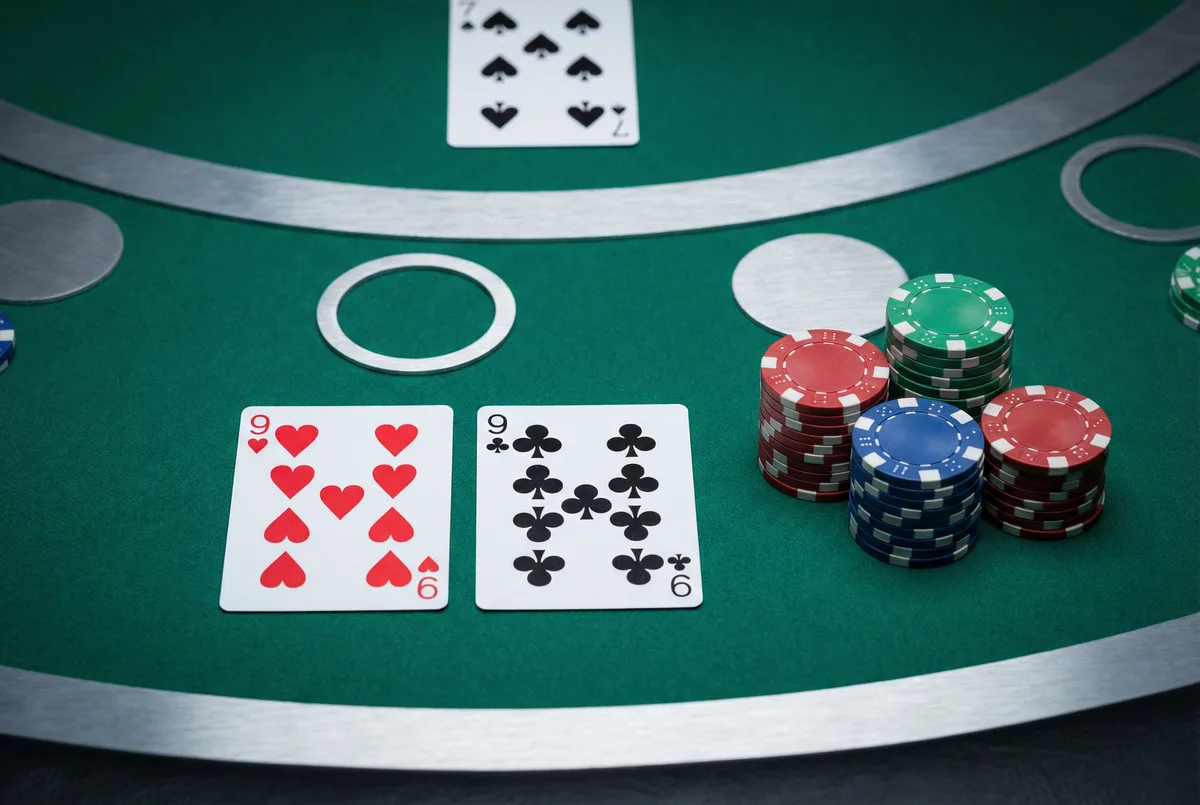
The hole card is the dealer’s second card, dealt face down. In a standard American blackjack game, the dealer receives two cards: one face up (the upcard) and one face down (the hole card). The upcard is visible to all players. The hole card remains hidden until the dealer’s turn to play, after all players have acted on their hands.
The hole card exists to create information asymmetry. You see 100% of your own hand but only 50% of the dealer’s starting hand. This partial information is what makes blackjack basic strategy a probability exercise rather than a simple comparison. Every standing decision on a stiff hand, every aggressive double on 11, every split of Aces is calibrated against the range of possible hole cards behind the dealer’s upcard.
Hole Card Combinations
For any given upcard
Peek Rule Applies When
Dealer checks for natural
No-Peek Extra Cost
Added house edge vs peek
The dealing protocol for the hole card varies by region and by casino. In American-style blackjack, the dealer physically places the second card face down, then uses a small mirror device or electronic sensor built into the table to check for a natural when the upcard is an Ace or 10-value card. This check happens before players act. In European-style blackjack, the dealer may not receive a second card at all until after players finish their hands. Both methods affect your optimal strategy.
I always confirm the hole card protocol before I sit down. In North America, you can assume peek rules at virtually every table. Outside North America, especially in Europe, Asia, and Australia, no-peek is common. The difference is not academic. It directly changes whether you should double or split against a dealer Ace or 10.
What Is the American Peek Rules Protect You From Losing Extra Chips to a Natural?
Under American peek rules, the dealer checks the hole card for a natural blackjack whenever the upcard is an Ace or 10-value card, if the dealer has a natural, the round ends immediately before players can double down or split. If the dealer has a natural, the round ends immediately. All player bets lose (except players who also have a natural, which pushes). The critical protection is that you never get to double down or split before a dealer natural is revealed. Your additional money stays safe.
When the upcard is an Ace, the dealer first offers insurance to all players. Insurance is a side bet paying 2:1 that the hole card is a 10-value card. After insurance decisions are made, the dealer checks the hole card. If it is a 10-value card, the natural is revealed and insurance bets win. If not, play continues normally. I decline insurance every time because the expected value is negative for a blackjack basic strategy player.
Common Myth
“The dealer always knows their hole card and uses it to make decisions.”
The Reality
The dealer checks the hole card only when the upcard is an Ace or 10. Outside of that check, the dealer does not look at the hole card until all players have finished. The dealer follows fixed rules (hit to 16, stand on 17) regardless of what the hole card is.
The peek rule saves you money in a specific, calculable way. Without it, every double down and split against a dealer Ace or 10 would risk losing the additional wager to an unrevealed natural. Over thousands of hands, that extra exposure adds approximately 0.11% to the blackjack house edge. At a $25 table over 500 hands, that is roughly $13.75 in additional expected losses. The peek rule is a player-friendly feature that most American players take for granted.
Some tables use a physical peek mirror: a small reflective device built into the table surface near the dealer’s position. The dealer slides the hole card over the mirror at a shallow angle, reading the card without lifting it high enough for players to see. Other tables use an electronic sensor that reads a barcode or RFID chip embedded in the card. The electronic version is faster, more secure, and eliminates any possibility of the dealer accidentally flashing the hole card.
What Is the European No-Peek Rules Cost You?
Under European no-peek rules, the dealer does not check for a natural before players act, which means players who doubled or split against a dealer Ace or 10 lose those additional chips if the dealer later draws a natural. In some variants, the dealer does not even receive a hole card until all players have completed their hands. If you double down on 11 against a dealer 10 and the dealer draws a natural on the next card, you lose both your original bet and your double-down wager.
This changes optimal strategy for specific hands. Under no-peek rules, you should be more conservative about doubling and splitting against dealer Aces and 10-value upcards. Some blackjack basic blackjack strategy charts include a separate column for no-peek adjustments. The most significant change is that you should not split 10s against a dealer Ace under no-peek (a play that is already incorrect under peek rules but loses even more without the safety net).
The 0.11% additional edge under no-peek may sound small, but it compounds with other unfavorable rules common at European tables. Many European casinos also restrict doubling to hard 9, 10, and 11 only, and some do not allow doubling after splits. Stack these restrictions together and the blackjack house edge at a European table can be 0.4% to 0.6% higher than an equivalent American table. I adjust my bet sizing downward at no-peek tables to compensate for the increased edge.
What Are Difference Between Peek and No-Peek Rules?
The peek rule means the dealer checks the hole card before you act when the upcard is an Ace or 10-value card: if the dealer has a natural, the round ends immediately and you never risk extra chips on doubles or splits. The no-peek rule removes that protection. You double down, the dealer flips a natural, and you lose both bets before the hand was ever in play.
The cost of no-peek is approximately 0.11% added to the blackjack house edge. At $25 per hand over 500 hands, that is $13.75 in additional expected loss compared to a peek table at the same bet size. The cost is concentrated in situations where you would double or split against a dealer Ace or 10 upcard. Those are common situations. Against a dealer 10, correct blackjack basic strategy calls for doubling hard 10 and hard 11, and splitting Aces and 8s. Under no-peek, each of those doubles and splits risks an extra wager to an unseen natural.
My recommendation: before sitting at any table outside North America, ask specifically whether the dealer peeks. This is not a trivial question. At an unfamiliar casino, the word “peek” may not translate directly, but you can ask: “Does the dealer check for blackjack before I double or split?” The answer to that question changes your correct strategy for every Ace and 10 upcard situation you will face. Getting it wrong costs you $13.75 per 500 hands at $25. Getting it right costs you two seconds of conversation before you sit down.
How the Hole Card Shapes Basic Strategy
Basic strategy is built entirely around the hole card being unknown. Every decision on the chart is a probability-weighted response to the range of possible hole cards behind the dealer’s upcard. When the dealer shows a 6, you stand on hard 12 because the most likely hole card is a 10-value card (30.8% of remaining cards), which gives the dealer 16 and forces a draw with a 42% bust probability. You do not know the hole card. You know the distribution of what it could be.
This is why blackjack basic strategy works. The hole card creates uncertainty, but the uncertainty is bounded and calculable. There are exactly 13 possible values for the hole card, and the probability of each value is determined by the cards remaining in the shoe. Basic strategy simply picks the action with the highest expected value across all 13 possibilities. You do not need to guess. The math has already done the guessing for you across billions of simulated hands.
Card counters take this one step further. By tracking the ratio of high cards to low cards remaining in the shoe, they can narrow the range of probable hole cards. A shoe rich in 10-value cards makes it more likely that a dealer showing a 6 holds 16 (and will bust). A shoe depleted of 10s makes it less likely. The count does not tell you the hole card. It refines the probability distribution, which is enough to shift the edge from the house to the player.
Understanding the hole card protocol is not a strategy decision you make during a hand. It is a table selection decision you make before you sit down. See the peek rule in action at a live table and watch how the dealer checks when showing an Ace or 10. Notice the pause, the mirror or sensor check, and the round either ending or continuing. That pause is the peek rule protecting your doubles and splits. Every hand at the table involves real money, so set your session budget before you take a seat and commit to walking when you reach it.
Frequently Asked Questions
The hole card is the dealer's second card, dealt face down. It remains hidden until all players have completed their hands. The hole card creates the information asymmetry that basic strategy is designed to navigate.
Under peek rules (American standard), the dealer checks the hole card for a natural when the upcard is an Ace or 10 before players act. Under no-peek rules (common in Europe), the dealer does not check, so players risk losing doubled and split bets to an unrevealed dealer natural.
The no-peek rule adds approximately 0.11% to the house edge compared to peek rules. At a $25 table over 500 hands, that translates to roughly $13.75 in additional expected losses.
Before you test these plays at a real table, run them through our free blackjack simulator practice unlimited hands at zero cost until every move becomes automatic.
Know Your Edge Before You Bet
The calculator shows your exact expected value under peek and no-peek rules.
Blackjack Academy is an educational resource. All strategy is based on mathematical expectation. Always play within your means.

Written by
Mark AnurakProfessional card counter since 2009 · 500,000+ hands logged · Former Macau advantage player. Studied under Thorp, Griffin & Wong methodology. Full bio →
Learn More
Continue your education with these related lessons.
History of French Vingt-et-Un the Ancestor of Modern 21
Vingt-et-un was played in French salons for over a century before it crossed the Atlantic. The rules were different, the…
Complete Roadmap to Becoming a Professional Blackjack Player
Becoming a professional blackjack player is a 4-stage progression that takes most people two to four years of deliberate practice.…
The Truth About the Original Black Jack Bonus Legend
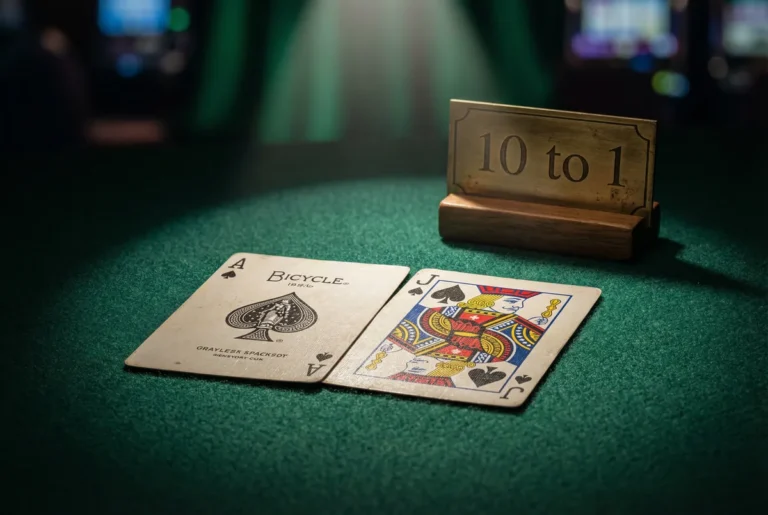
The original black jack bonus paid 10:1 for one specific two-card combination. Modern casinos pay 3:2 for any natural and…