The Deadliest Casino Blackjack Myths That Keep Costing Players Real Money
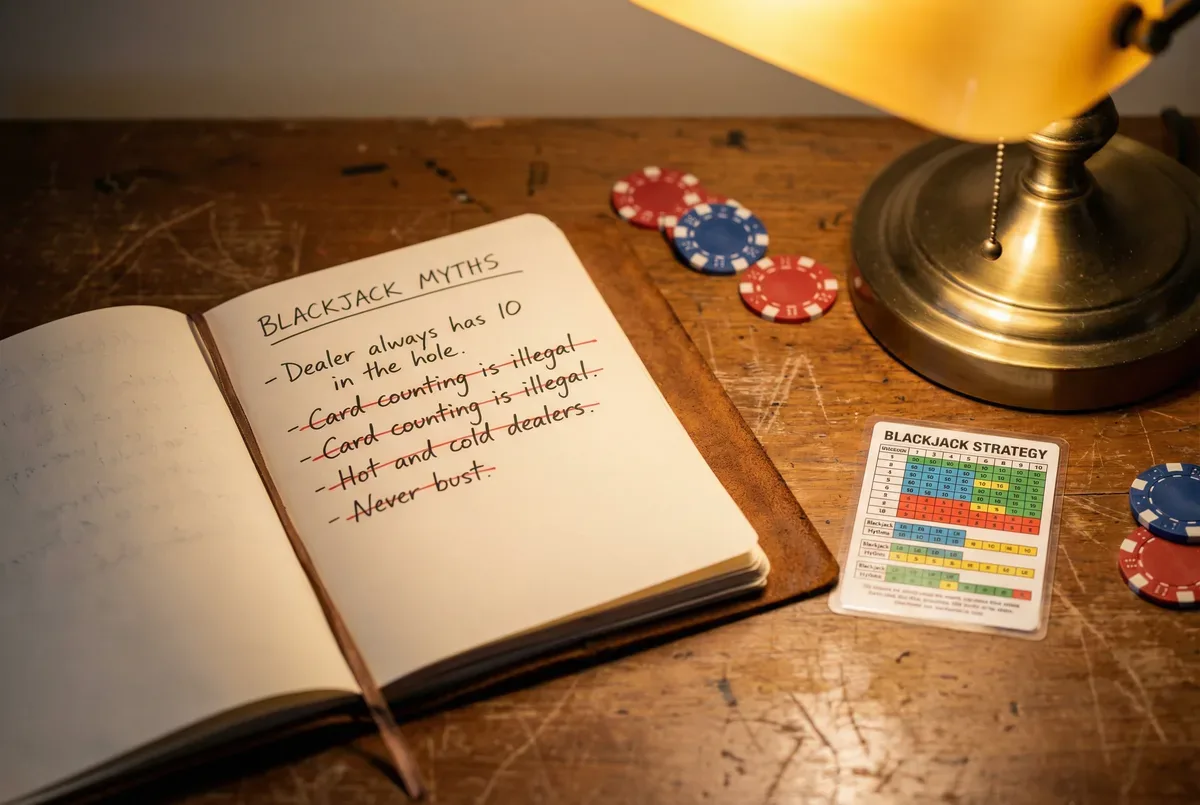
Blackjack mythology persists because the game produces memorable sequences that feel causally meaningful a bad hit by the third-base player, a dealer who wins seven hands in a row, a natural blackjack that you chose not to insure. The human brain assigns cause and pattern to random events, and casino environments are specifically designed to reinforce emotional responses. What separates professional players from recreational ones is the ability to assign accurate probability to every belief they act on. Each myth discussed below has a specific, quantifiable EV cost when acted upon and that cost compounds across every session.
Myths Are Not Harmless: Each One Has a Dollar Cost
Common Myth
“The dealer always wins ties, so pushes favor the house”
Players remember losing when they should have won, but pushes are invisible in memory they neither feel like wins nor losses
The Reality
Pushes are genuinely neutral the player loses nothing on a tie
This myth has no EV cost unless it causes players to stand on weaker hands 'just in case' which is then a separate error
Why Does the Third-Base Mythology and It True Cost?
Third base the seat to the dealer’s far right, last to act before the dealer carries an enormous mythological weight. Players at other seats blame the third-base player for dealer wins when their decisions go wrong. The belief is that third base has special responsibility for, or control over, the table’s outcomes. Mathematically, this is completely false. Third-base decisions are cards drawn from a randomly shuffled deck. Each card removed is equally likely to help or hurt the table across any meaningful sample.
The real EV cost of this myth is indirect but significant. Players who believe in third-base control avoid the position for fear of being blamed, or play conservatively in that seat refusing correct hits on borderline hands because of perceived social pressure. A player who stands on hard 14 against a dealer 7 from third base to avoid taking a card that might help the dealer is making an error worth approximately -0.24 EV per unit. Multiply this by the frequency of similar situations across a session and the social pressure of mythology is costing real money.
Dealer Shows
Your Hand
You are at third base and all other players are standing. Hitting hard 14 against dealer 7 is correct, but you know taking a card will be blamed if the dealer makes 21. What is the correct play?
Third-base social pressure is one of the most expensive myths in recreational blackjack. The mathematically correct play does not change based on seat position or other players' opinions. Hit every time.
What Is Hot and Cold Streaks?
The belief in streaks that a table running hot will continue hot, or that a dealer on a winning streak is due to lose is the gambler’s fallacy in its purest form. Each hand of blackjack is not independent of the previous hands in terms of card composition (which is why counting works), but it is independent of win/loss sequence. A dealer winning seven consecutive hands does not make the eighth hand more or less likely to be won by the dealer. The deck does not track outcomes.
The EV cost of acting on streak beliefs is high. Players who increase bet size after a winning streak chasing momentum are implementing a positive progression system with no mathematical basis. Players who reduce bets after a cold run waiting for the tide to turn are delaying bet increases that their correct spread should be making. Both behaviors destroy the linear relationship between count-based betting and edge expression.
Advantages
- Recognizing a genuinely bad shoe early (multiple player busts) is reasonable exit signal
- Extended poor results can sometimes signal game conditions have changed (penetration cut, rule change)
Disadvantages
- Acting on streak beliefs by changing bet size without a count basis destroys EV
- Progressive systems built on streaks have zero mathematical foundation
- Leaving a table because it 'feels cold' ignores the memoryless nature of correctly shuffled decks
What Are the Always-Insure-a-Blackjack Myth and What It Costs?
Even money on a blackjack taking insurance when you hold a natural and the dealer shows an ace feels like a guaranteed win. The casino frames it as “locking in a win” rather than as what it mathematically is: a 7.69% house-edge side bet. In a six-deck game, the dealer has a ten in the hole roughly 31% of the time when showing an ace. Insurance pays 2:1, which is a break-even price only when the dealer has a ten 33.3% of the time. At 31%, insurance is a losing bet on every hand. Accepting even money (the insurance equivalent when you hold a blackjack) costs approximately 0.038 units per occurrence relative to declining. Over a year of professional play, this compounded decision costs several units in pure EV from an action that feels like prudent risk management. If you want to test the per-session cost of each of these myths over real hands with real money at stake, verify myth vs math at a real-money live dealer table provides exactly that environment every mythological decision you make costs actual currency, making the math visceral rather than theoretical.
Myth-Proofing Your Live Table Decisions
Applying this knowledge in live play requires consistent execution.
Frequently Asked Questions
No. Ties are pushes the player neither wins nor loses their bet. No standard casino blackjack game pays the dealer on a tie. The myth persists because pushes are psychologically invisible compared to wins and losses, but they have zero negative EV impact on the player.
No. This is one of the most documented myths in blackjack research. Third-base decisions draw cards equally likely to help or hurt the table. Over any meaningful sample, third-base play has zero net effect on other players' EV. The social pressure to play conservatively from third base is mathematically irrational.
No. Even money is an insurance bet, and insurance loses in the long run in a six-deck game where the dealer has a ten only 31% of the time (break-even requires 33.3%). Declining even money and accepting the push-or-win outcome of a natural blackjack is the correct basic strategy play.
Before you test these plays at a real table, run them through our free blackjack simulator practice unlimited hands at zero cost until every move becomes automatic.
Mathematical Risk Warning
Acting on blackjack myths by modifying basic strategy or bet sizing adds between 0.5% and 5% to your effective house edge per affected decision. Across a 200-hand session, mythology-based deviations can cost more in expected value than an entire session of correct play recovers. Every strategic decision must be grounded in documented EV.
Blackjack Academy is an educational resource. All strategy is based on mathematical expectation. Always play within your means.

Written by
Mark AnurakProfessional card counter since 2009 · 500,000+ hands logged · Former Macau advantage player. Studied under Thorp, Griffin & Wong methodology. Full bio →
Learn More
Continue your education with these related lessons.
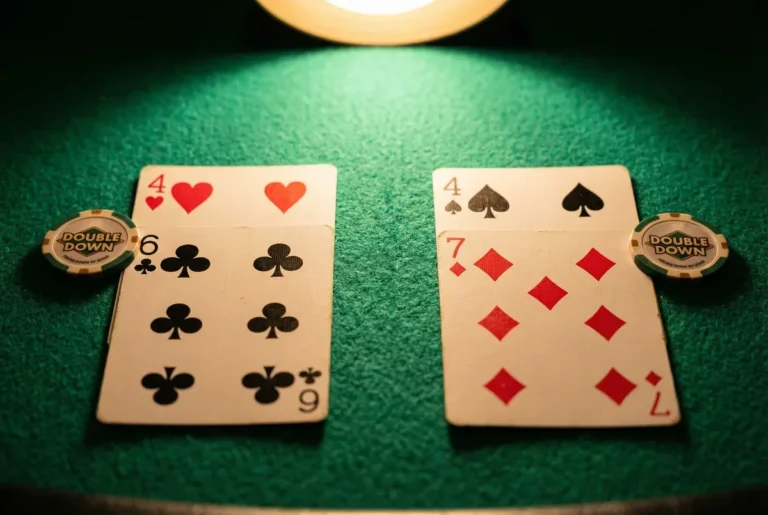
When Double After Split Makes Splitting 4s Profitable
Splitting 4s is wrong in standard blackjack but add double after split (DAS) and the calculation flips against specific dealer…
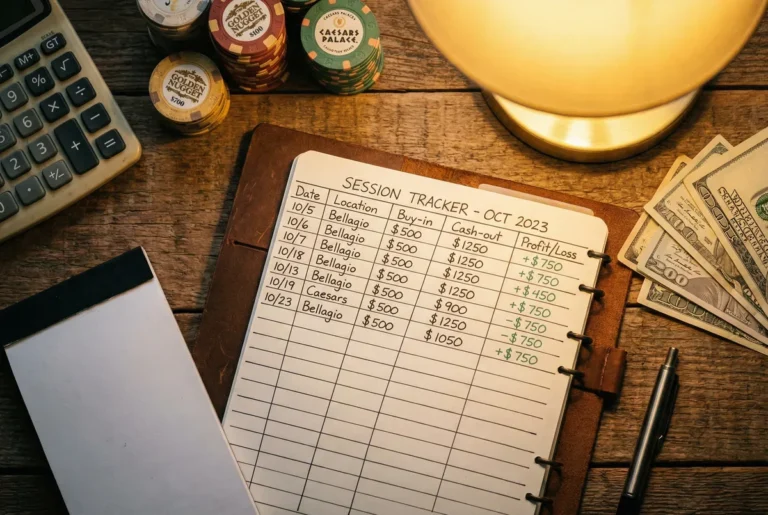
What Professional Blackjack Players Actually Earn
Real earnings data for professional blackjack players: why $25–50/hour is a realistic ceiling, how bankroll size determines hourly rate, and…
Saving Money by Surrendering Hard 15 Against a 10
Surrendering hard 15 against a dealer 10 saves half a bet on a hand you will lose nearly 60% of…