
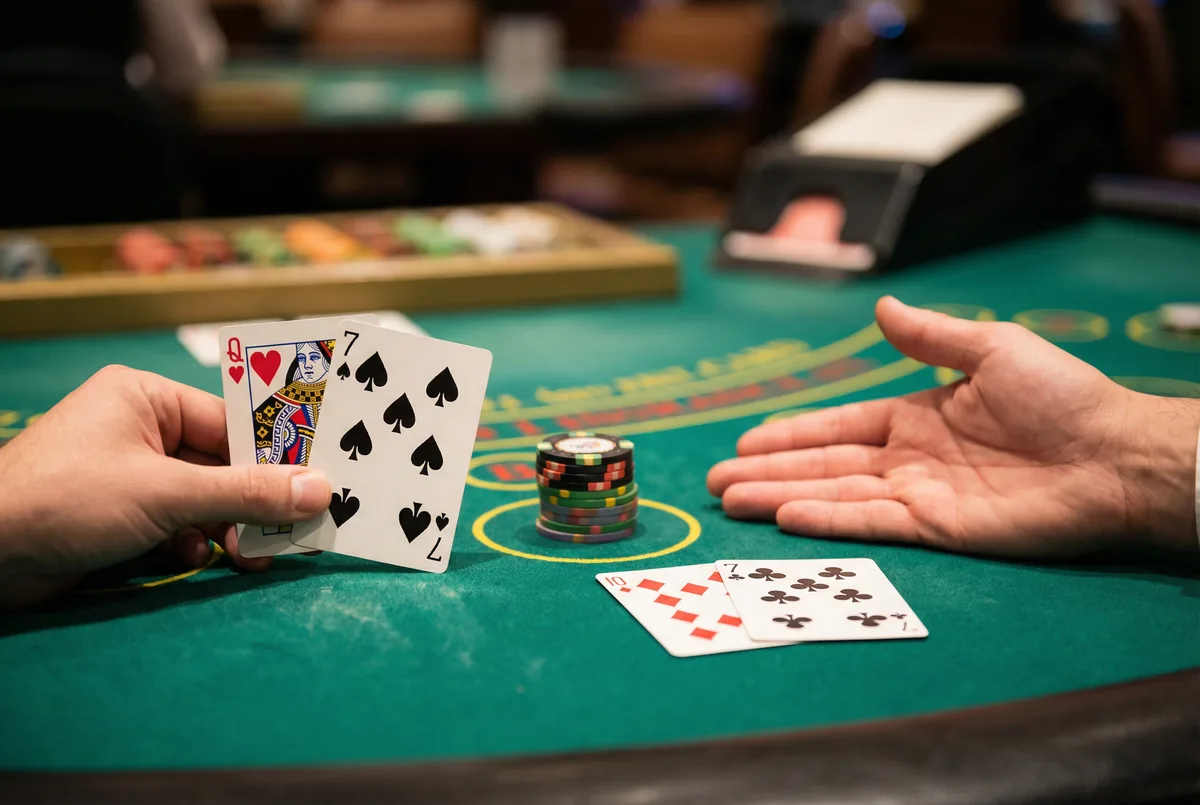
What Really Happens During a Push or Tie and How to Handle It
A push in blackjack occurs when the player and the dealer end a hand with the same total. The player’s bet is returned no win, no loss and the round ends without any transfer of money. Pushes happen most frequently on totals of 17, 18, 19, and 20, since these are the most common standing totals for both the player and the dealer. A push is not a favorable outcome from an expected value standpoint, but it is neutral: unlike a loss, it costs you nothing on that hand. Understanding when and how often pushes occur helps you see the full probability landscape of each session.
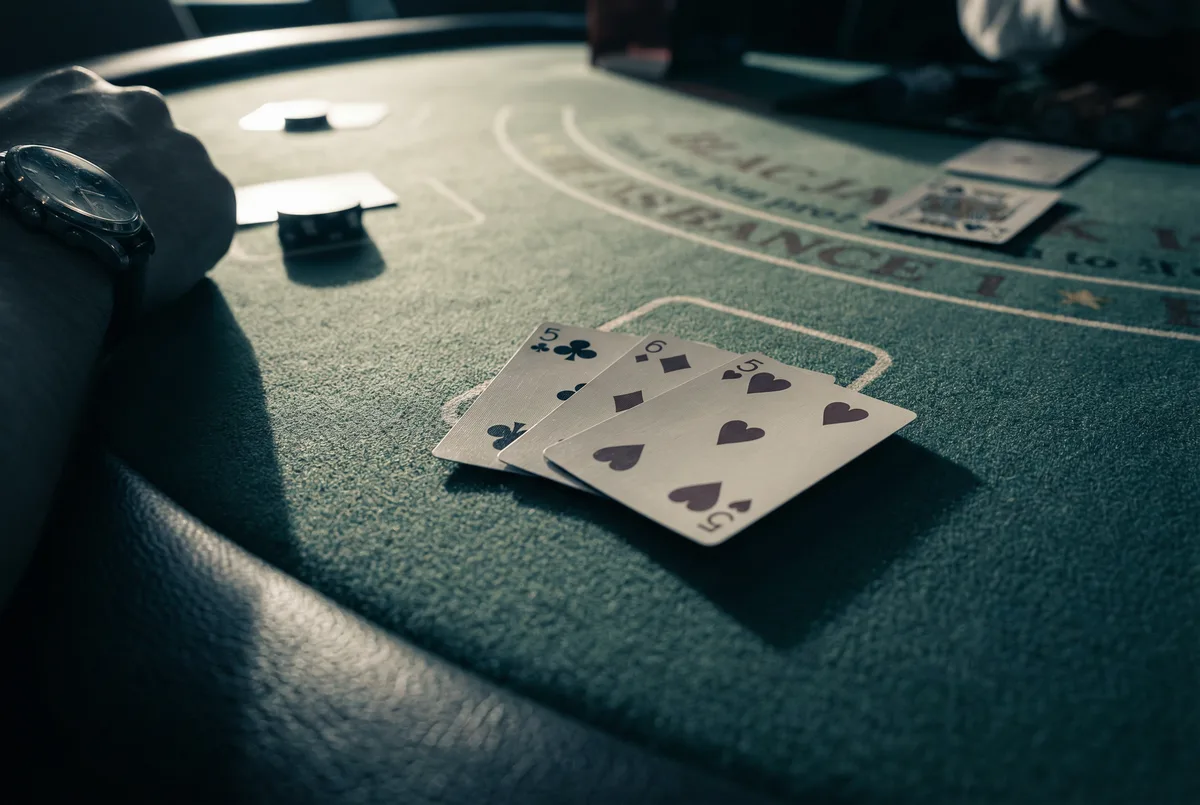
A Push Means No Money Changes Hands
Overall push frequency
% of all hands
Push on 17
% of player 17 hands
Push on 20
% of player 20 hands
Which Hands Produce the Most Pushes?
Pushes are most common on high standing totals. When you stand on 20, the dealer must reach exactly 20 to push and with four ten-value cards per suit and a high proportion of face cards in the deck, 20 is one of the most common dealer final totals. Totals of 17 also push regularly because the dealer stands on hard 17 by rule, creating a floor that frequently aligns with player 17 hands.
Totals of 12 through 16 push almost never when the player stands, because the dealer is required to draw through these totals. For a player standing on 15 to push, the dealer would have to reach exactly 15 without busting which is rare because the dealer will keep drawing until 17 or above. This is one of the reasons standing on stiff totals against strong dealer upcards is so costly: you almost always need the dealer to bust rather than push.
A push is not a result to be annoyed by it is a neutral outcome in a game where any non-push hand is a binary win or loss. In a 100-hand session, approximately 8 hands will push. Those are 8 hands that cost you exactly zero.
How Does Variant Rules That Change How Pushes Are Resolved?
Standard blackjack always pushes on identical totals. But several blackjack variants change this rule in ways that significantly alter the blackjack house edge. In Free Bet Blackjack, if the dealer reaches exactly 22, instead of busting, all remaining player hands push regardless of the player’s total. This rule shifts numerous winning hands into pushes and is the primary mechanism by which Free Bet Blackjack’s no-cost doubles and splits are funded.
Common Myth
“A push is just like winning at least you didn't lose”
Players feel relieved to get their bet back and treat pushes as minor victories
The Reality
A push is a neutral EV event no cost, but also no return on a wager that had positive expected value going into the hand
Standing on 20 wins approximately 88% of the time and pushes ~11% the push frequency is part of the total expected value, not a bonus
How Push Frequency Affects Your Expected Win Rate?
Push frequency is built into every blackjack basic strategy calculation. Because pushes return your bet without profit, they reduce the number of hands with positive outcomes while not affecting losses. This is accounted for in the blackjack house edge calculation the 0.5% blackjack house edge against a blackjack basic strategy player already incorporates roughly 8% push frequency. Any variant rule that converts wins into pushes (like the dealer-22-pushes rule) increases effective blackjack house edge by removing expected winning outcomes. When comparing games or tables, always check if any variant push rules are in effect. The live dealer rooms at experience this rule with real money on the line immediately run standard push rules, but because real money is at risk there, confirm every rule before your session starts.
Using Push Knowledge in Live Play
Bringing these principles together at a real table requires practice under live conditions.
Frequently Asked Questions
No. Pushes are recorded as neutral hands in casino tracking systems. Your theoretical loss for comp calculations is based on win/loss hands only. Pushed hands do not count toward your wagered amount for comp purposes.
The player always loses when they bust, regardless of what the dealer does. If you bust first and the dealer also busts, your bet is lost. This sequential play where the player acts before the dealer is the primary source of the casino's house edge.
No. A natural (two-card ace + ten-value) beats any non-natural 21, including a dealer 21 made from three or more cards. The natural only pushes against another natural.
Before you test these plays at a real table, run them through our free blackjack simulator practice unlimited hands at zero cost until every move becomes automatic.
Mathematical Risk Warning
Variant push rules like dealer-22-pushes significantly increase the house edge by converting wins into ties. Always verify the push rules for any game before wagering real money.
Blackjack Academy is an educational resource. All strategy is based on mathematical expectation. Always play within your means.

Written by
Mark AnurakProfessional card counter since 2009 · 500,000+ hands logged · Former Macau advantage player. Studied under Thorp, Griffin & Wong methodology. Full bio →
Learn More
Continue your education with these related lessons.
History of the First American Blackjack Rules from 1825
The first written American rules for twenty-one appeared in 1825. They looked nothing like the game you play today. There…
Complete Glossary of Blackjack Terms Every Player Should Know
Do you know the difference between a hard hand and a soft hand? Between penetration and a burn card? Every…

Why the Name Changed from Vingt-Un to Blackjack in the Gold Rush
The name blackjack is less than 120 years old. The game it describes had been played for over 300 years…