

Why Most Card Counters Quit Before They Profit
A card counter with a 0.6% edge does not win 60 cents per $100 wagered on every session. They win that amount as a long-run average across tens of thousands of hands, while experiencing massive variance in any individual session, week, or month. Most people who learn blackjack card counting understand this in theory. Almost none of them are emotionally prepared for what it means in practice: running at a loss for weeks, accumulating a 50-unit downswing that looks identical to what a losing basic-strategy player would experience, and watching the edge remain invisible to experience while the mathematics insist it is there. At 10,000 hands with a 0.6% edge and a standard deviation of about 1.1% per hand, the edge begins to separate from random noise in a statistically detectable way. Below 5,000 hands, you cannot distinguish a skilled counter from a flat-bet blackjack basic strategy player based on results alone.
Why 10,000 Hands Is the Minimum Evaluation Window for Counting
0.6% edge player expected win over 1,000 hands
units (with ~$110 typical swing)
What Is the Variance Timeline?
Here is what the variance timeline looks like for a counter with a 0.6% edge betting a 1-to-8 spread with a $25 minimum. Expected session results for a 4-hour session of roughly 200 hands: expected value is about +$30, but one standard deviation in either direction spans roughly ±$300. That means losing $270 in a legitimate positive-EV session is a one-standard-deviation event absolutely normal by the math. Over a full month of 20 sessions (4,000 hands), a 50-unit downswing remains entirely plausible. Many counters hit month two of a losing trend and conclude that counting does not work, abandoning a skill that would have produced consistent profit over the following year.
The tipping point for most quitters is not a single catastrophic loss it is the cumulative emotional weight of sustained negative results that the mathematics say are normal. The counter’s logical mind knows the variance is expected; the emotional mind interprets each loss as evidence that the system is broken. This cognitive dissonance, repeated across hundreds of sessions, erodes discipline precisely during the period when discipline matters most.
Common Myth
“If card counting works, you should see profits within the first few weeks of casino play.”
The idea of an edge implies consistent winning most people expect results proportional to their advantage on a short timeline.
The Reality
A 0.6% edge is invisible in results across the first 5,000 hands. A 50-unit downswing within the first 10,000 hands happens to 18% of all counters with this edge not due to mistakes, but pure statistical variance.
This is why professional counters measure performance over 50,000–100,000 hands minimum before drawing conclusions about the validity of their system.
What Is the Psychological Grind?
Three psychological mechanisms destroy counting discipline before the edge has a chance to materialize. The first is result-based confidence: counters who win early assume they have mastered the skill; those who lose early assume they are doing something wrong. Both groups are misreading noise as signal. The second is loss aversion losing three consecutive sessions feels psychologically worse than the equivalent expected value calculation suggests, leading to bet-sizing changes, increased aggression, or abandonment. The third is the invisible edge problem: blackjack basic strategy players can blame bad luck. Counters know they have an edge, which makes losing feel like a personal failure rather than normal variance.
The professional response to all three mechanisms is the same: evaluate the process, not the results. Track whether you are executing the count accurately, applying correct bet spreads, and making correct index plays. These process metrics can be evaluated after every session. The results metric cannot be evaluated meaningfully until 10,000+ hands have accumulated. Every counter who stays focused on process through the variance period eventually sees the mathematical edge emerge in their results. The counters who quit never cross that threshold.
Keep a session log that tracks process metrics count accuracy estimate, index plays made correctly, bet spread adherence not just chip profit and loss. After 50 sessions, your process log will tell you whether you have a counting skill problem or a variance problem. Confusing the two is what ends most counting careers prematurely.
How Does Bankroll Work as the Physical Mechanism of Quitting?
The practical mechanism that forces most counters out before 10,000 hands is inadequate bankroll. A counter with 50 units can be entirely wiped out by a normal variance swing before the edge has had time to show. The minimum recommended bankroll for a counter using a 1-to-8 spread is 200–300 units. Below that, the probability of ruin before 10,000 hands becomes significant not because the edge fails, but because normal variance exceeds the reserve. Counters who enter the game undercapitalized are not making a strategy error; they are making a bankroll error that guarantees premature exit regardless of how well they count.
Build Tolerance for Variance in Live Sessions First
The only way to develop genuine psychological resilience against variance is to experience it in real money situations before the stakes are high enough to threaten your bankroll. Start at the stay the course past the break-even point at a live table tables at minimum stakes, deliberately logging sessions and tracking process versus results the emotional experience of losing at a table where real money is on the line, even small amounts, is categorically different from losing play-money chips. Only money you can genuinely afford to lose should be used for this calibration phase. Real financial discomfort is real build your tolerance deliberately before scaling.
Frequently Asked Questions
Approximately 10,000 hands are needed before a 0.6% edge begins to separate clearly from statistical noise in results. Below 5,000 hands, a skilled counter's results are indistinguishable from a basic strategy player on variance alone. Evaluating counting effectiveness in fewer hands produces meaningless data.
A 50-unit downswing is statistically normal for a counter with a 0.6% edge using a 1-to-8 spread. This event occurs for approximately 18% of such counters within their first 10,000 hands not as a result of mistakes, but pure variance. A minimum 200-unit bankroll is recommended to survive this without quitting.
Most counters quit before accumulating the minimum hands needed for their edge to show (10,000+). The combination of normal variance, inadequate bankroll, and psychological response to sustained losses drives abandonment before the math has time to work. The edge is real the timeline for seeing it is longer than most people expect.
Before you test these plays at a real table, run them through our free blackjack simulator practice unlimited hands at zero cost until every move becomes automatic.
Mathematical Risk Warning
Card counting edge is real but operates over a long time horizon measured in tens of thousands of hands. Short-term results positive or negative do not validate or invalidate the method. Never interpret a winning or losing session as evidence about the quality of your counting system.
Blackjack Academy is an educational resource. All strategy is based on mathematical expectation. Always play within your means.

Written by
Mark AnurakProfessional card counter since 2009 · 500,000+ hands logged · Former Macau advantage player. Studied under Thorp, Griffin & Wong methodology. Full bio →
Learn More
Continue your education with these related lessons.

Online Blackjack vs Live Casino Which Gives You the Better Counting Edge
Learning card counting has a four-stage progression and online live dealer blackjack is the ideal intermediate step before committing real…

How Casinos Use Shuffle Countermeasures to Beat Card Counters
Casinos deploy a precise arsenal of shuffle countermeasures from continuous shuffle machines to mid-shoe reshuffles specifically designed to neutralize card…
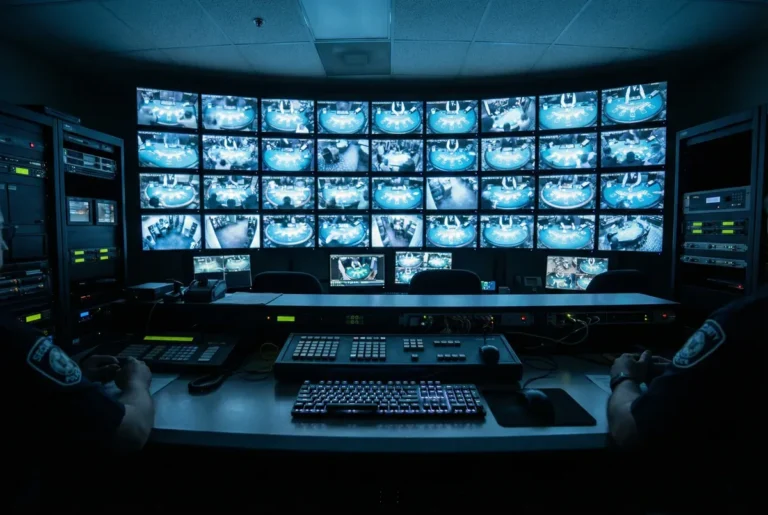
How Casino Surveillance Identifies Card Counters
Modern casino surveillance uses RFID chips, facial recognition, and betting pattern analysis to identify card counters. Learn exactly what surveillance…