
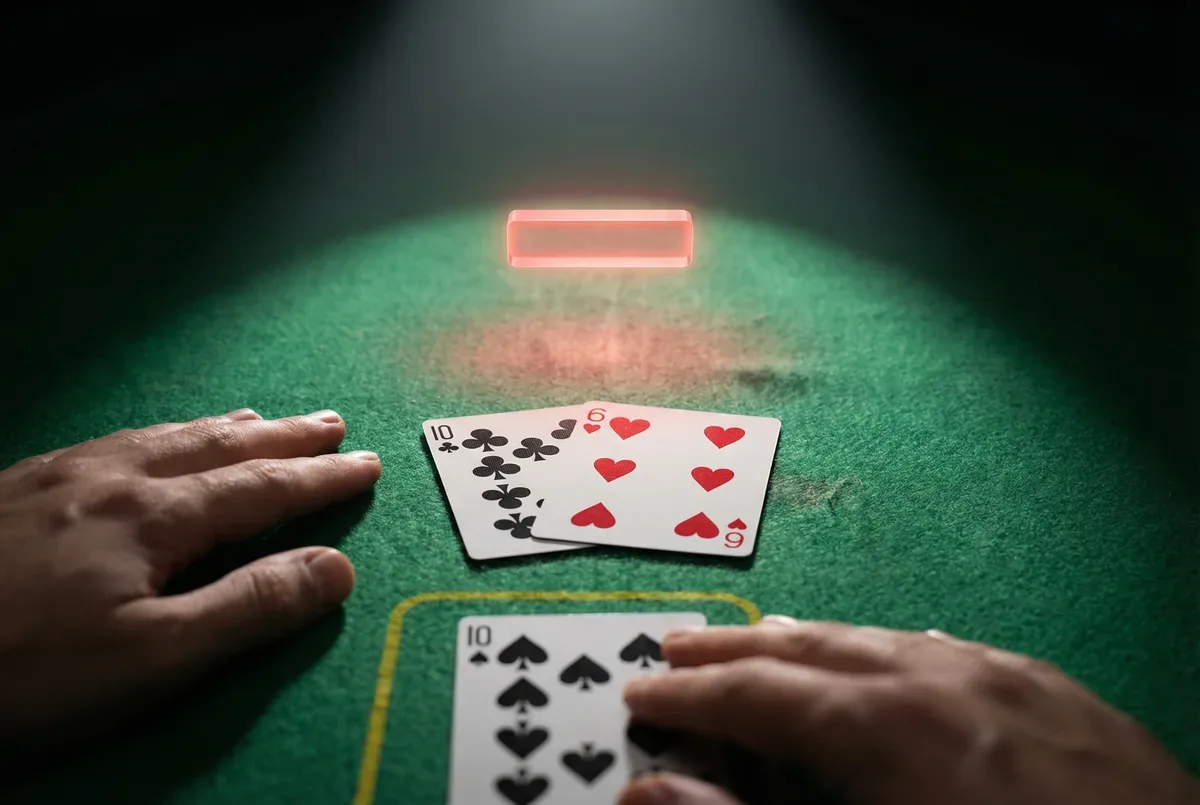
Real Expected Value Numbers for Every Blackjack Hand Type
Expected value (EV) is the average amount you win or lose per unit wagered on a given hand, assuming optimal blackjack basic strategy on every decision. It is expressed as a decimal fraction: an EV of +0.10 means you expect to net 10 cents for every dollar wagered on that hand over many repetitions. An EV of -0.50 means you expect to lose 50 cents per dollar. Not every blackjack hand is equal the 18 distinct hard totals from 8 through 20, the soft total hands, and the 10 pair types each carry specific expected values spanning a wide range. Understanding this spectrum changes how you think about the game. Some hands are genuine advantages. Most are positions where the only goal is minimizing loss. Basic strategy is the complete answer to which action achieves that on every cell.
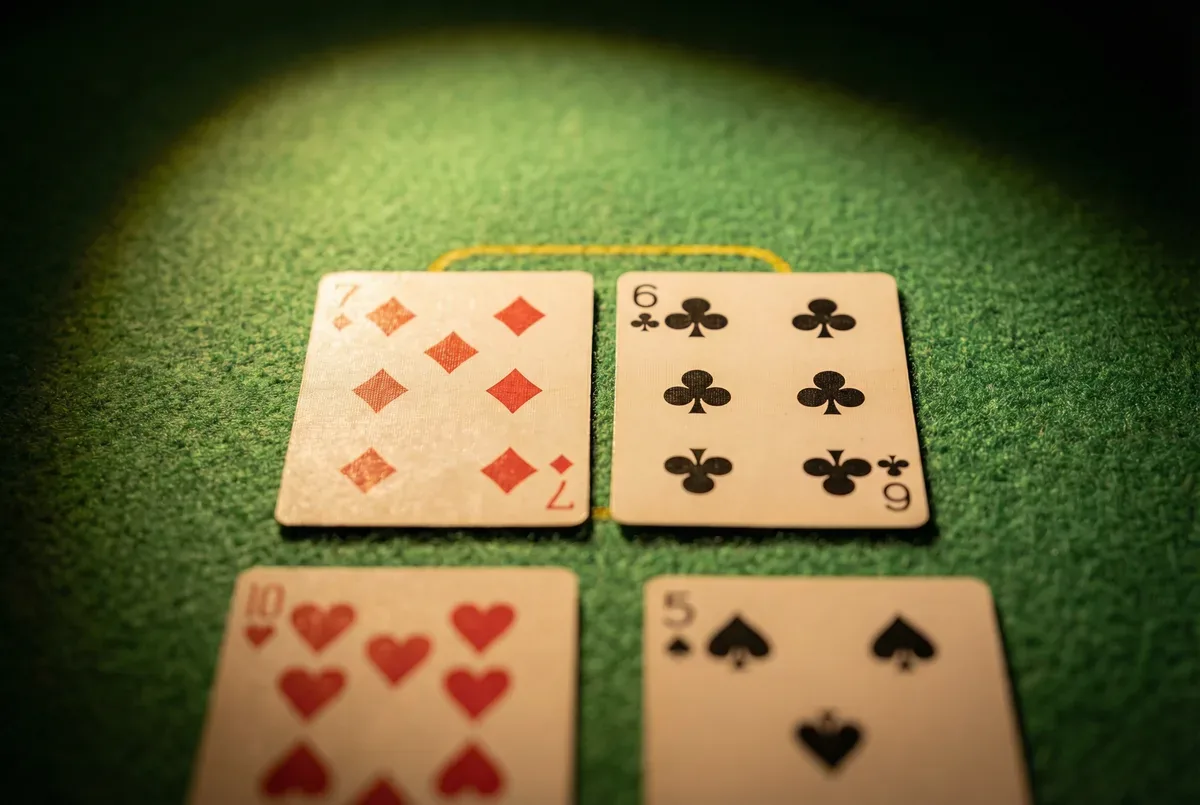
What Expected Value Means for Each Hand You Are Dealt
Natural Blackjack EV
% per bet
Hard 20 avg EV
% all upcards
Hard 11 vs dealer 6 (double)
% best double
What Is Expected Value of Hard Hands?
Hard totals form the majority of decisions at any blackjack table. Their expected values, averaged across all dealer upcards with optimal blackjack basic strategy, range from deeply negative at the low end to strongly positive at the high end. Hard 20 is the strongest non-natural hand its average EV across all dealer upcards sits around +0.67. Hard 19 averages around +0.40. Hard 18 is positive but narrowing, roughly +0.12 to +0.20 depending on deck count and dealer rules. These three totals are straightforward standing hands where the strategy question is settled: stand, preserve the advantage.
Hard 17 is where EV turns close to zero and begins declining against stronger dealer upcards. Against dealer 2 through 6, hard 17 carries modest positive expectation because dealer bust probability is elevated. Against dealer 7 through Ace, hard 17 is negative the dealer completes high totals that beat 17 more often than not. The average EV of hard 17 across all dealer upcards is approximately -0.05 to -0.10. Hard 16 averages approximately -0.47 to -0.54 depending on game conditions one of the worst starting positions in the game. Hard 15 trails close behind at around -0.42 to -0.50. The entire stiff range (12 through 16) is negative on average; blackjack basic strategy answers the question of how to lose least, not how to win.
At the power end, hard 9, 10, and 11 are the game’s best doubling opportunities. Hard 11 against dealer 6 doubled produces approximately +0.69 per unit the highest EV of any double-down opportunity in standard strategy. Hard 10 against dealer 5 or 6 follows close behind. Hard 9 against dealer 6 doubled yields around +0.30. These three totals are the only hard hands where correct doubling against favorable dealer upcards consistently produces EV above +0.50 per original bet.
Best EV Matchups
Worst EV Matchups
- +0.69
- +0.57
- +0.78
- +0.30
- Hard 16 vs dealer 10 (hit)
- Hard 15 vs dealer 10 (hit)
- Hard 14 vs dealer Ace (hit)
- Hard 13 vs dealer Ace (hit)
How Does Expected Value of Soft Hands and Why They Are Systematically Underexploited?
Soft hands carry a structural advantage over equivalent hard totals. Because the Ace counts as 11 without bust risk, soft hands can be doubled without the immediate bust exposure that hard doubles carry. Soft 18 (Ace-7) doubled against dealer 6 produces approximately +0.46 EV. Simply standing on soft 18 against dealer 6 yields around +0.30. The correct play, doubling, and captures an additional +0.16 per bet, and recreational players who stand on soft 18 against dealer 4, 5, or 6 give up that gain on every qualifying hand they encounter.
Soft 17 (Ace-6) is misplayed by standing. Standing on soft 17 has average EV near -0.05 to 0.00. Hitting is always better because you cannot bust. Against dealer 3 through 6, doubling soft 17 produces EVs in the +0.10 to +0.25 range. The upgrade from standing to hitting to doubling on soft 17 is a real and consistent EV gain that applies every time the hand appears. Soft 13 through soft 16 are generally negative against strong dealer upcards but become positive-EV doubles against dealer 5 and 6, where bust probability peaks. Missing the soft-double range is the most common EV leak in recreational blackjack basic strategy play.
Soft 19 (Ace-8) and soft 20 (Ace-9) are straightforwardly strong hands stand on both without exception. Soft 19 EV against dealer upcards ranges from approximately +0.25 to +0.65. Soft 20 is competitive with hard 20. The temptation to double soft 19 against a weak dealer upcard is a mistake that sacrifices EV on a near-winning hand in exchange for additional variance with no corresponding gain.
The highest individual EV moves in basic strategy are the soft-total doubles against dealer 4 through 6 not defensive plays, not pair splits, not even natural blackjack on a per-hand-encountered basis. If your only goal is maximizing EV from strategy execution, mastering the soft-double ranges and applying them without hesitation is the highest-return practice available to a non-counting player.
What Is Expected Value of Pairs?
Pair splitting decisions carry more EV variance than any other action category. The gap between correctly splitting Aces versus playing soft 12 is approximately 0.40 to 0.60 per bet the single largest EV benefit achievable from a single decision in the game. Splitting Aces against any dealer upcard averages approximately +0.40 to +0.50 per original bet. Not splitting Aces produces average EV near 0.00 or slightly negative. Every occurrence where a player fails to split Aces is a measurable and avoidable EV loss.
Splitting 8s is the other absolute pair rule. Hard 16 is the worst hand in blackjack with EV from -0.47 to -0.58. Splitting 8s converts hard 16 into two 8-starting hands, each with reasonable probability of reaching 18. Against dealer 2 through 7, split 8s produces near-breakeven or modestly positive EV. Against dealer 8 through Ace, it remains negative but less negative than any alternative. The EV of splitting 8s versus playing hard 16 shows a consistent improvement of approximately 0.08 to 0.15 per bet, which is real and cumulative over a session. Splitting 5s, by contrast, converts a strong hard 10 doubling hand into two weak 5-starting hands EV cost of approximately 0.40 to 0.60 per bet versus the correct double.
Applying EV Thinking at the Table Without Running the Numbers
You do not compute EV at the table. Basic strategy is the precomputed output of all these calculations. What EV knowledge provides is the understanding of why the chart says what it says which makes non-intuitive rules feel grounded rather than arbitrary. When the chart says double soft 18 against a dealer 5, the EV analysis explains why. When the chart says split 8s against a dealer Ace, the EV comparison explains why the counterintuitive action still reduces expected loss. Understanding the mechanism reduces second-guessing and makes the rules stick under real conditions.
If you want to experience how the EV of different hands plays out in real conditions where variance, bet pressure, and table pacing shape how the math feels the live tables at see this edge in action at a live table offer a realistic environment. Go in with clear expectations: real money is on every hand, and short-run variance means even the strongest EV hands lose frequently. The EV numbers are long-run averages. They only manifest reliably over thousands of decisions, not across a single session.
Frequently Asked Questions
A natural blackjack carries the highest EV of any hand at approximately +0.49 per unit bet at 3-to-2 payout, accounting for pushes when the dealer also has a natural. Among non-natural starting hands, hard 20 and correctly doubled hard 11 against weak dealer upcards carry the highest average EVs in the +0.50 to +0.70 range per original bet.
Hard 16 against a dealer 10 is one of the worst hands in blackjack. Hitting produces EV of approximately -0.54 per unit. Standing is slightly worse at around -0.56 to -0.58. Neither action is profitable. Basic strategy selects hit because it loses less. This is a damage-control decision, not a winning play but the difference between the best and worst action is still real money over many hands.
Yes, consistently. Soft 18 has higher expected value than hard 18 because the two-value Ace enables additional action doubling, hitting without bust risk. The structural advantage of the flexible Ace means soft hands of the same numerical total are always worth more than hard hands, particularly when doubling opportunities against weak dealer upcards are available and correctly exploited.
Before you test these plays at a real table, run them through our free blackjack simulator practice unlimited hands at zero cost until every move becomes automatic.
Mathematical Risk Warning
Positive expected value on specific hands does not guarantee winning sessions. Even the strongest starting positions lose frequently due to short-run variance. EV numbers are long-run averages over thousands of hands any individual session can produce any result. Every hand played with real money carries genuine financial risk.
Blackjack Academy is an educational resource. All strategy is based on mathematical expectation. Always play within your means.

Written by
Mark AnurakProfessional card counter since 2009 · 500,000+ hands logged · Former Macau advantage player. Studied under Thorp, Griffin & Wong methodology. Full bio →
Learn More
Continue your education with these related lessons.
When Doubling Down Is Wrong
The five hands beginners over-double soft 19, hard 12, pair of 5s as 10, hard 10 vs Ace, hard 9…
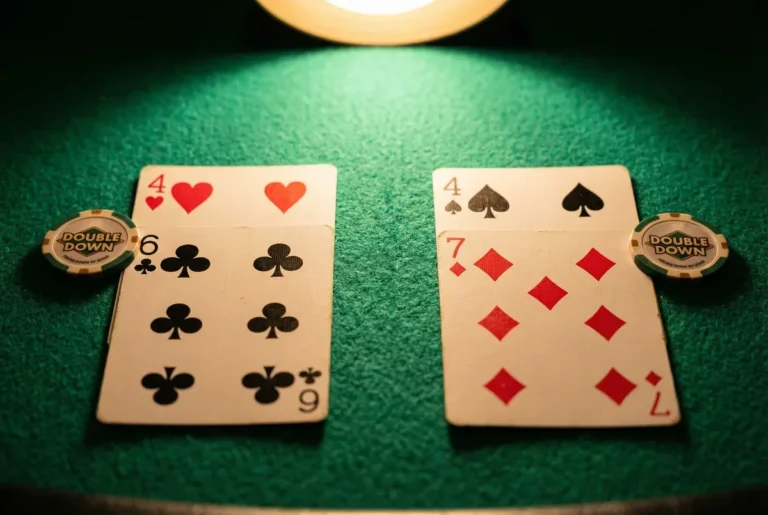
Complete Post-Split Strategy Guide for Playing Blackjack After Splitting
Post-split strategy explained: playing each split hand independently, why split aces get one card only, re-splitting rules, and doubling after…
How Much the No Double After Split Rule Costs You
Playing without Double After Split costs 0.14% of your expected edge but the real damage comes from not adjusting your…